My First International Trip

It’s never too late to start learning about the world.

International travel came late to me. Sure, I had been to Canada and Mexico, but I hardly considered that “international travel.” After all, I was born only 25 miles from Canada, and we considered them neighbors. Of course, driving to Alaska entailed more miles within Canada than in US territory. And living in San Diego meant Mexico was just a quick jog south. I did have a passport, but only because I needed one to fly into Vancouver to start an Alaska cruise.

That all changed ten years ago when, at the tender age of 65, I embarked on a new career as a seasonal employee in Alaska. Suddenly instead of being surrounded by career-minded professionals, I was working with retirees, college students, and international students. There was also a whole new group to me; I’ll call them The Wanderers. They were a whole cadre of seasonal workers who went from one seasonal job to the next. Alaska in the summer, Florida or ski resorts or Antarctica in the winter. In between, they traveled. Sitting in the EDR (Employee Dining Room), I would hear their stories of Europe, Australia, Southeast Asia, Central America-they all had wanderlust. Some were more passionate than others, but they all had a suitcase ready to go.

Halfway though my first season, my friend Diane (a dedicated Wanderer) sat across from me in the EDR one evening and said she found a condo in Switzerland for $300 for the week, and would I like to go? Before I even stopped to consider it, I was in! The rest of the season was spent making plans for the places we wanted to see and how to get around. We would meet at the train station in Geneva; Diane was coming from Paris, and I was coming from the Geneva airport.

Back at home, I packed my bags and made all the arrangements, and finally it was time to go. As my hubby drove me to the airport I got a case of the heebie jeebies. “I’m going to a foreign country alone. I only speak English. I’ve never been to Europe. What if I can’t find Diane? What if I get lost? Yada yada yada.” Dear husband assured me I would do fine, and it would be an adventure to remember.

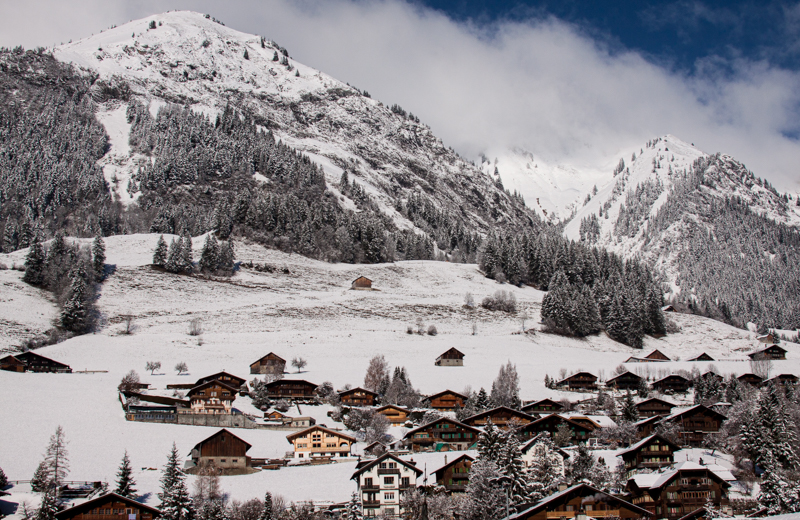
Arriving in Geneva early in the morning, I went through customs and was terrified that I wouldn’t be able to understand the customs officer. But he spoke English. “Where will you be staying, madame?” I nervously pulled out the hotel confirmation and hesitantly told him I’d be going to the ski resort city of “lay-SIN”. He smiled and shook his head ruefully, and said, “Ah, LAYson” in his wonderful accent that made me wish I had taken French in high school. Stamp! And off to downtown Geneva to explore until time to meet Diane at the train station.

According to my friend Diane, you are never lost if you are with someone. You are just exploring new places.

The train station had a place to store my bag (only one-orders from Diane), and I grabbed my camera to go exploring. I was so enchanted with the city that I didn’t have time to be nervous! Until it got near to the time to meet Diane. What if she missed the train? What if it’s late? What if I can’t find her? But at the appointed time, there she was, there we were, and there we went.

The first revelation to me was that language wasn’t really a problem. Nearly everyone spoke English, which embarrassed me for not being able to speak a word of another language. There were times when it was a challenge. The policeman we asked to tell us where the head of the trail down the mountain to Aigle started. He spoke very little English, but we did get his warning about “No go. Rocks. Very bad.” We went anyway, and I had the bruises afterward to prove it. And the woman selling cheese at a village Christmas market. She called another vendor over to explain that she made the cheese herself from her cows, and provided instructions on how to use it for fondue. And the restaurant we loved (and went back to, because it was wonderful) where our server carried on a fun conversation with us, then went to tend her other customers in German, French, and Italian.

We went to a castle that was a thousand years old, and a town that was about the same age. We wandered through cities where stores like Benetton showed their wares in the windows of buildings that were hundreds of years old. They don’t tear down their old buildings to build malls that will stand empty in 30 years. They just refurbish and repurpose them.

I learned a lot from that trip. First, according to Diane, you are never lost if you are with someone. You are just exploring. Second, people everywhere are kind, interesting, and willing to help if you are polite and treat them well. Oh, and the trains in Switzerland ALWAYS run on time. So don’t be late.
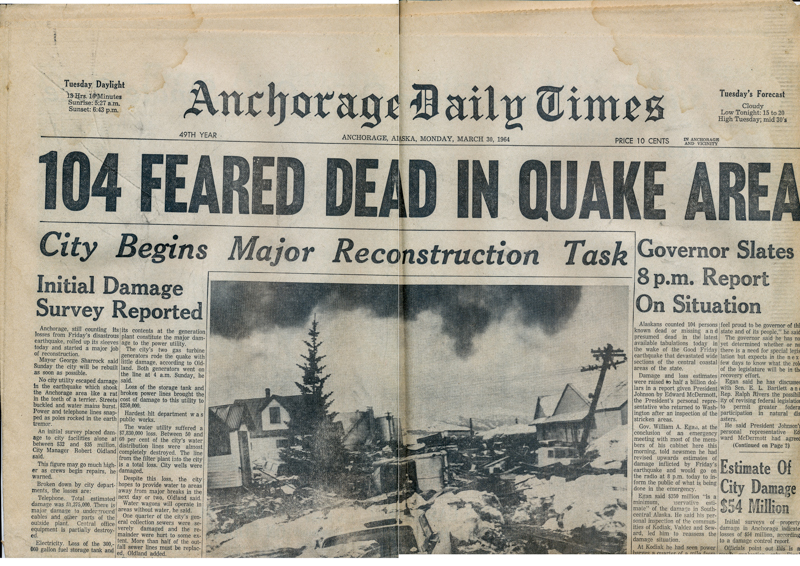
Good Friday Earthquake, Part 3

Random Tales from the Earthquake

The woman who led our volunteer organization for servicemen was driving in downtown Anchorage. When the shaking started she pulled to the curb and stayed in the car. There was a man on the sidewalk next to her holding on to a pole with a sign stating “No Stopping or Standing”. After it was over they all just stared in shock, looking at each other. Then he looked up at the sign and said, “Well, I wasn’t really standing, you know.”

A local Anchorage store put a sign on their door that said, “Closed due to a shakeup in management.”

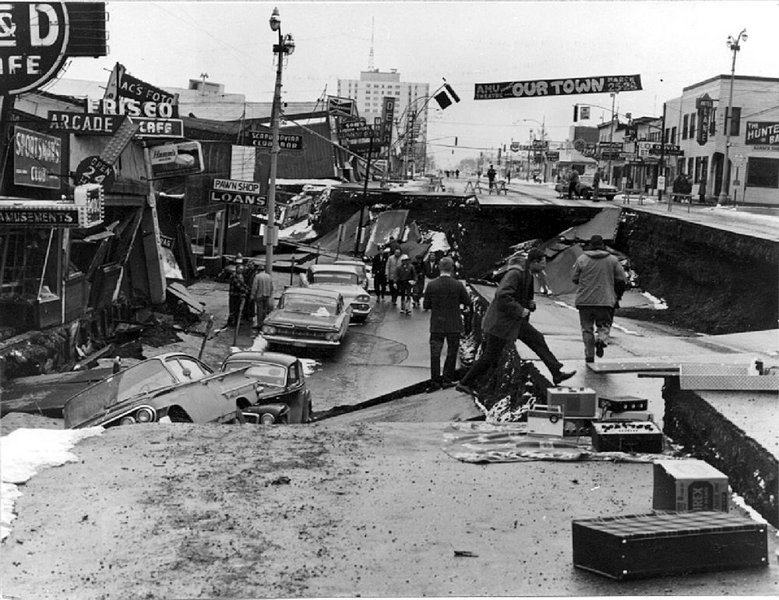
My mother had a friend who was a bartender in one of the bars that was part of the area downtown that sank 20 feet or so. He said there was a patron sitting at the bar who never moved from his barstool through the whole quake. After it was over, he proudly held up his glass and said, “I didn’t spill a drop!”

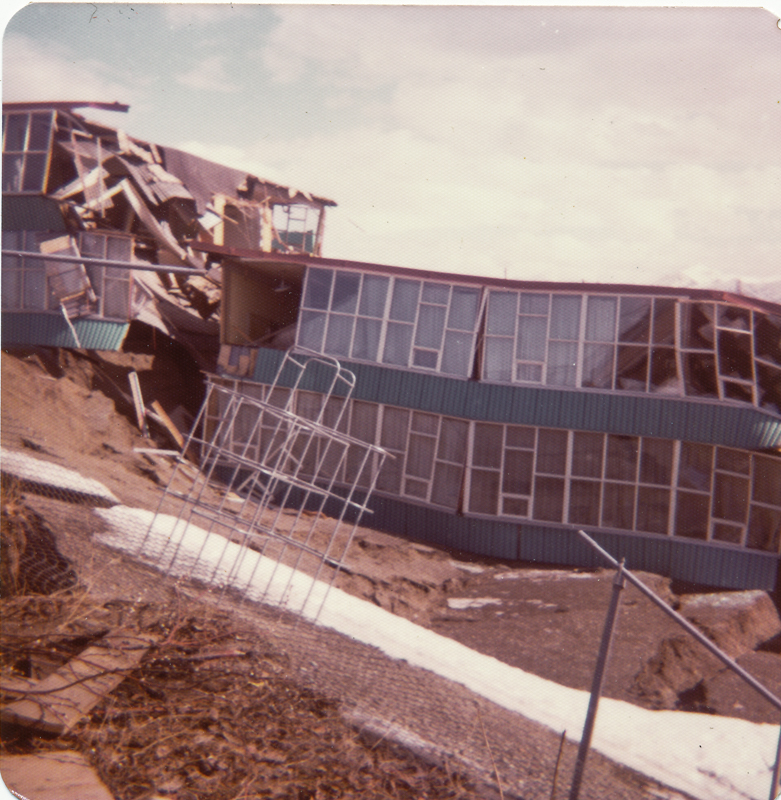
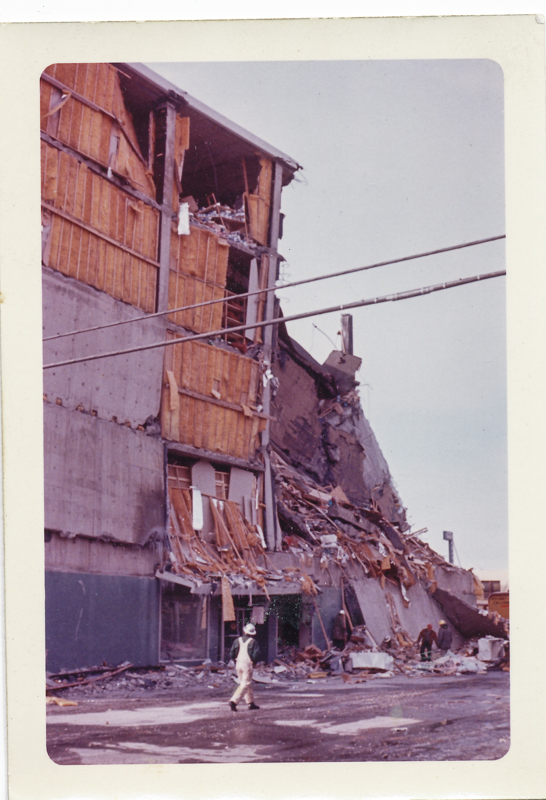
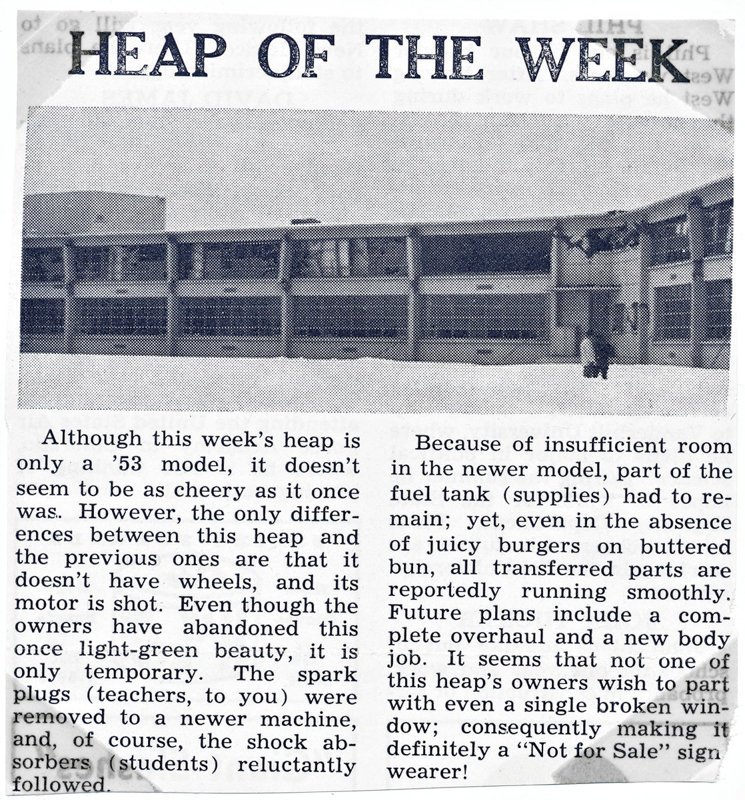
I was senior at West Anchorage High School, and the second floor of the school collapsed during the quake. We finished the year doing split shifts at East High. However, our graduation announcements, ordered months before, still held a drawing of the school. I sent them out to family and friends with a note telling everyone it was just the latest “Earthquake Joke.” West High is still there, but it’s only one story now. Although the main stairway still exists; it just doesn’t go anywhere.

Our senior prom was delayed, and we ended up having it at Ft. Richardson a week or two later than planned. And graduation, instead of taking place in the West High auditorium, was held in an airplane hanger on Elmendorf Air Force Base. It was an experience to remember!

While greatly damaged, Anchorage was by no means the hardest hit. Valdez was completely destroyed, with a large part of the town sinking into the sea. The town was relocated four miles away, where today it is the terminus of the Alaska Pipeline. Seward was also hard hit, first by a tsunami, and then fires from damaged fuel storage tanks near the docks. It was cut off for several days, since the Seward Highway and the railroad were impassible. Seward is situated on Resurrection Bay, wedged between the sea and the mountains, with only the one way in and out.

I got a first-hand report from a schoolmate, who had gone to Seward for the Easter break to stay with her mother, who worked there. She told me that after the shaking stopped she started to run to where her mother worked, but she was stopped by a man who told her they needed to go up the mountain. He pointed to the sea, which had emptied out a good portion of the bay. He knew what she didn’t: that a tidal wave was coming. Seward got not just one wave, but several. They ended up spending the night on the side of the mountain, along with many others. It was cold, so he gave her his jacket. When she told me her story, she said she never found out who the man was, but she still had his jacket. Oh, and her Mom was OK. She was also on the mountain, but in a different area.

Good Friday Earthquake Part 2

In the aftermath of the earthquake, the people of Alaska started taking stock and figuring out what to do next. A house blew up due to a gas leak, so we were told to move out until the utility could get to each home to check for leaks. I couch surfed for the next couple of weeks at a friend’s house, while my mother decamped to another friend. I headed to the YMCA to volunteer and was immediately put to work as a gofer.

The day after the earthquake, the military came to our neighborhood with a water truck and we all lined up for fresh water. My mother owned a restaurant so we weren’t short of food, but I did end up standing in line at the grocery store the following Friday (I think it was Piggly Wiggly) for canned goods. They were letting a few people at a time go in to buy limited amounts. I could peek through the doorway and see that shoppers were navigating through aisles with groceries still scattered here and there. They were selecting goods from the floor as well as the shelves. My interest in canned goods ended when we had a strong aftershock and I decided there was no way I was going into that building.

Also during that week I stood in line for hours waiting to call my grandparents to assure them that we were OK. Again, the military had set up a telephone bank so we could contact our families. One call per family.

For weeks after, I would wake in the middle of the night, knowing another shock was on the way. I would hear it coming, like a train approaching, and then the closet doors would start to shake. Everything would rumble, then I would hear it receding. Years later I told my geology professor the story of my experiences, and he was thrilled that I was the first person he had heard first hand describe the first set of waves (alpha waves move faster but are smoother) that precede an earthquake. That was why so many of us would wake in the night just BEFORE an aftershock started. Also why animals and birds seemed to anticipate an earthquake and start barking or take flight.

Moon Over Ferry

Alaska’s homesteaders are a unique breed unto themselves.

In reviewing the old posts to my blog I came across one where I promised to tell the story of the “Moon Over Ferry” at a later time. 

This is one of my favorite stories to tell, and my coworkers and guests enjoyed hearing it on our tours through interior Alaska. It’s a bit long, so settle back and pretend you’re on a motor coach traveling from Fairbanks to Denali.

We are driving on the Parks Highway, which is one of the few major thoroughfares in Alaska. It connects Anchorage and Fairbanks, and was built in the early 1970s. Before then, the homestead communities in that area depended on the Alaska Railroad for transportation, mail, and freight. The little town of Ferry was one of those. There is a railroad bridge across the Nenana River, and just on the other side was a log cabin that served as the Post Office. The train would come through daily, exchange mail, and deliver boxes and packages. If you look down to the left you can see the river, and spot the occasional rooftop of a homestead in the far-flung community of Ferry.

When the Parks Highway was completed, the residents of Ferry put up mailboxes on the highway and the cabin was turned into a community center. It meant the good folks in Ferry could finally drive to Fairbanks or Anchorage to do their shopping.

Just one problem: the community was on the OTHER side of the river from the highway, and the only way across was the railroad bridge. That didn’t really bother the residents of Ferry, since they are an independent and inventive lot. They built garages on the highway side of the river, and used 4-wheelers to cross the railroad bridge to their homes.

Their use of the railroad bridge eventually came to the attention of the officials of the Alaska Railroad. Concerned for the safety of the community, as well as the risk to their trains, they posted a sign at the bridge that forbade crossing the bridge. 

Never underestimate the inventiveness and persistence of an Alaskan homesteader.

The good citizens of Ferry took down the sign and sent a letter to the officials in Juneau thanking them for the wood and the nails, since they are hard to come by in the bush country.

The railroad came back and bolted a metal sign with the same message.

Another letter from the citizens of Ferry to the officials in Juneau: “Gee, thanks for the bolts and the metal work. We could really use those.”

Finally, the railroad crew erected concrete barriers, preventing any motorized vehicle from accessing the bridge.

Undaunted, the good folks of Ferry decided they needed to send a message to the railroad. So every time the passenger train, loaded with tourists, came through Ferry, everyone in town would gather along the tracks and moon the train. Hence, “Moon Over Ferry.”

The railroad figured they would get tired of this gambit, but what they didn’t count on was the stubbornness of a bunch of homesteaders who could make the time to gather twice a day. And have fun doing it! A month went by, and still they mooned the trains.

Finally, the railroad officials gave in and built an addition to the side of the bridge just wide enough for a four-wheeler to fit. Success!

That’s not really the end of the story, though. The good folks of Ferry enjoyed their gatherings so much, that they decided to keep the tradition (just to remind the Alaska Railroad who was really in charge). On every fourth of July the entire community gathers for a cookout. When the afternoon passenger train comes through, everyone gathers by the tracks and moons the train as all the tourists snap photos of this unique Alaskan tradition. 

This story is true. Mostly.

About My Stories…

Since I decided to start blogging again, I started to think about the stories I plan to tell. So: Pay Attention Please! 

I tell different types of stories. There are stories, memories, and musings. All my stories are based in fact. However, they are created to entertain. When I told stories to my tour guests, I usually ended with the statement: “This story is true. Mostly.” So my stories will be true. Mostly.

When I relate a memory, it is as true as my flawed memory will allow. Have you ever returned to a place that was smaller than you remembered, or come across an old flame who is less enticing than your memories of them? Events end up getting filed into our memories, and then they get dusted with the fairy dust of years and come out again somewhat changed. So forgive me if I report something that might be a bit off.

As far as musings are concerned, those are just the weird crap that pops into my mind. I usually tell those to the mirror as I’m getting ready for the day, but now I’ll put some of them down here.