First, allow me to apologize to my more loyal readers for how long it has taken me to release this and the posts that will follow. It’s been years since I’ve spent a summer at home in Montana, other than the time after my husband got sick and most of my days were spent avoiding Covid and caring for him. I’ve taken the time this summer to truly enjoy the Big Sky country where I was born, and sitting at my computer wasn’t on the agenda!
After two nights aboard ship in Budapest, we woke to find ourselves cruising the Danube. First, let me advise you: the famous song notwithstanding, the Danube is not blue. I’d call it a brownish green. But hey, if you want to write a romantic waltz, you make the river blue. It’s easy to overlook the color when you are looking at vistas you’ve dreamed about for years.
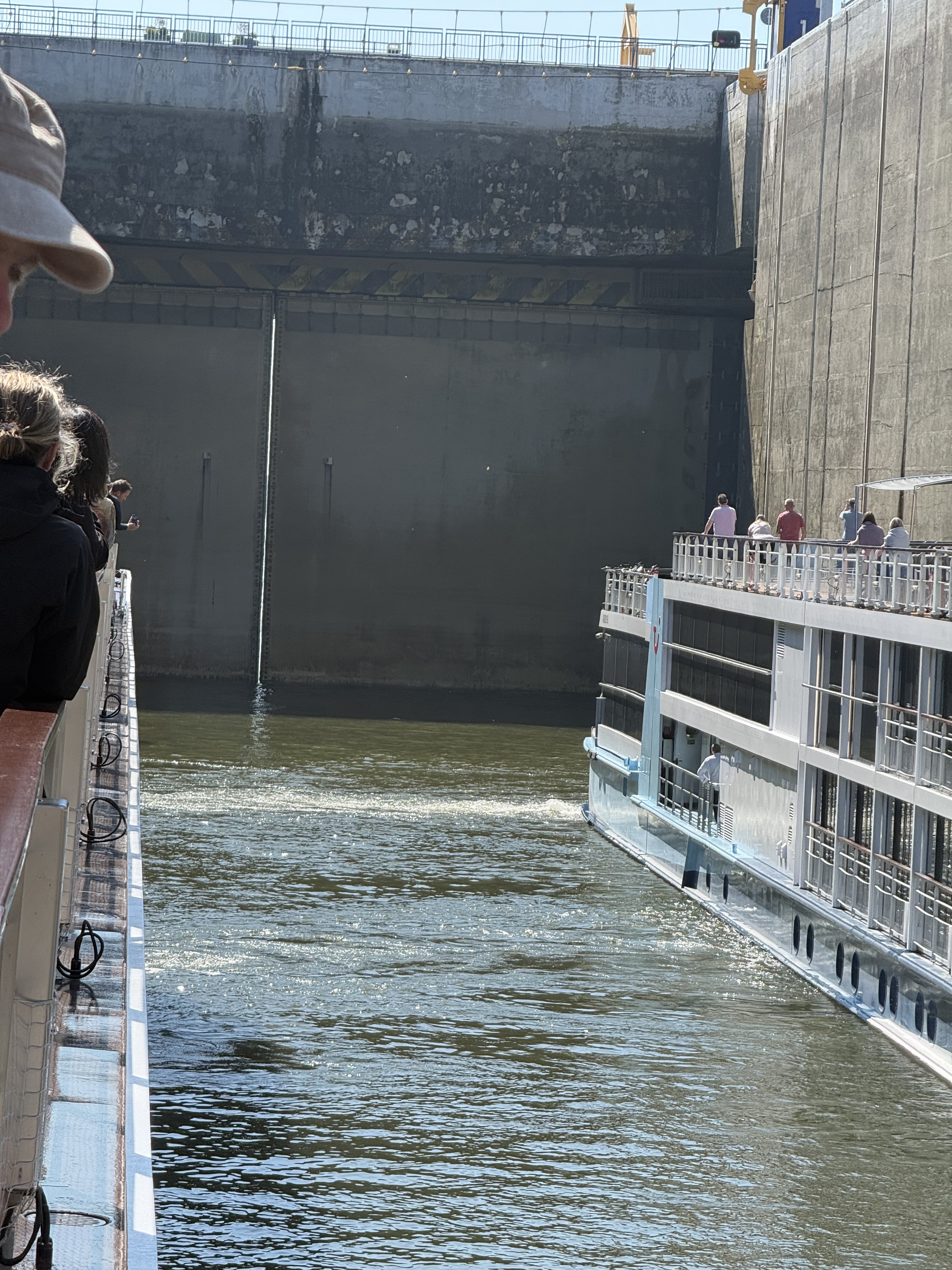
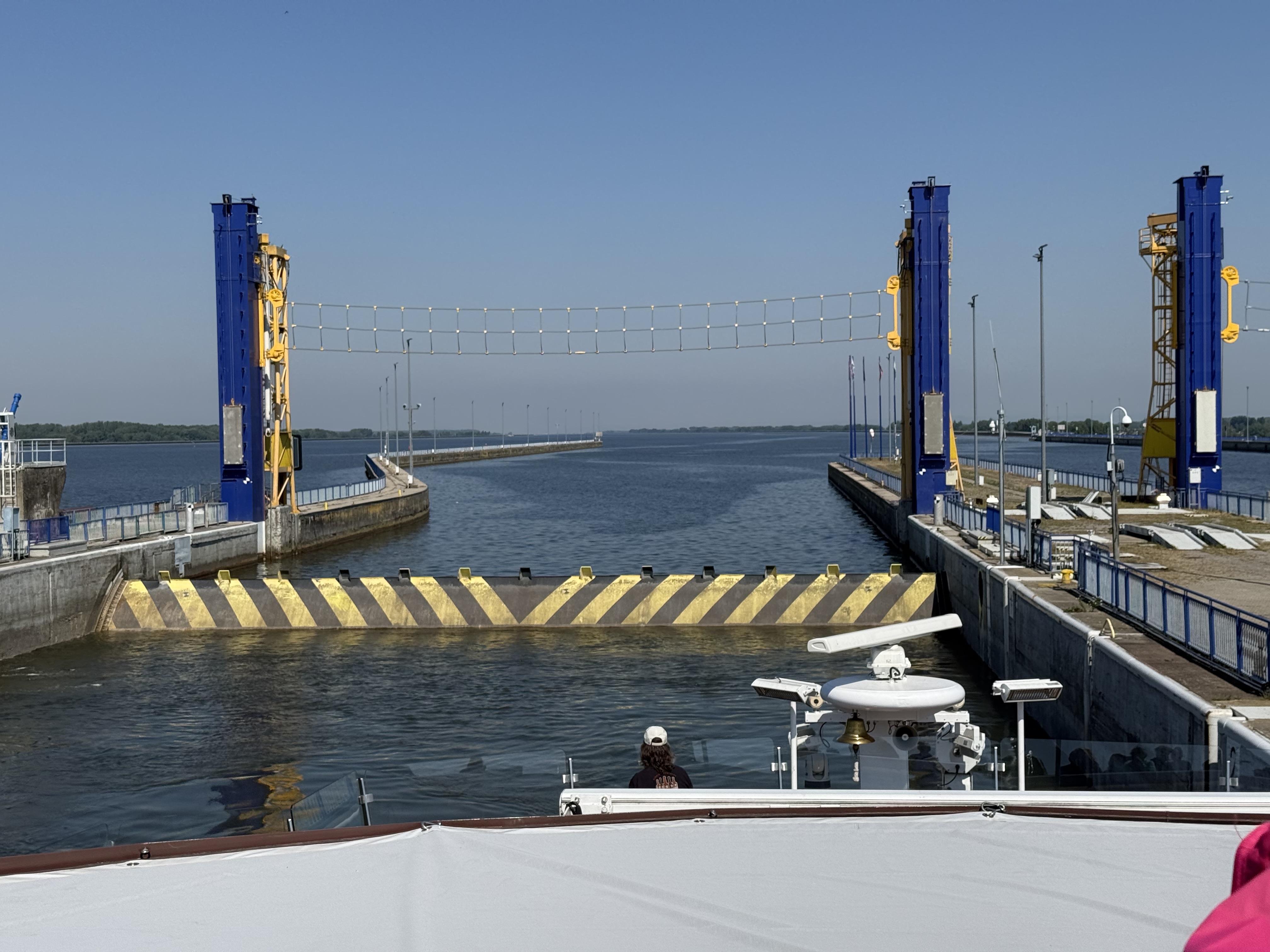
We went through our first set of locks, and of course the mechanically curious in our party had to rush up to the top deck to watch the entire operation. I was more interested in breakfast.
Bratislava, Slovakia
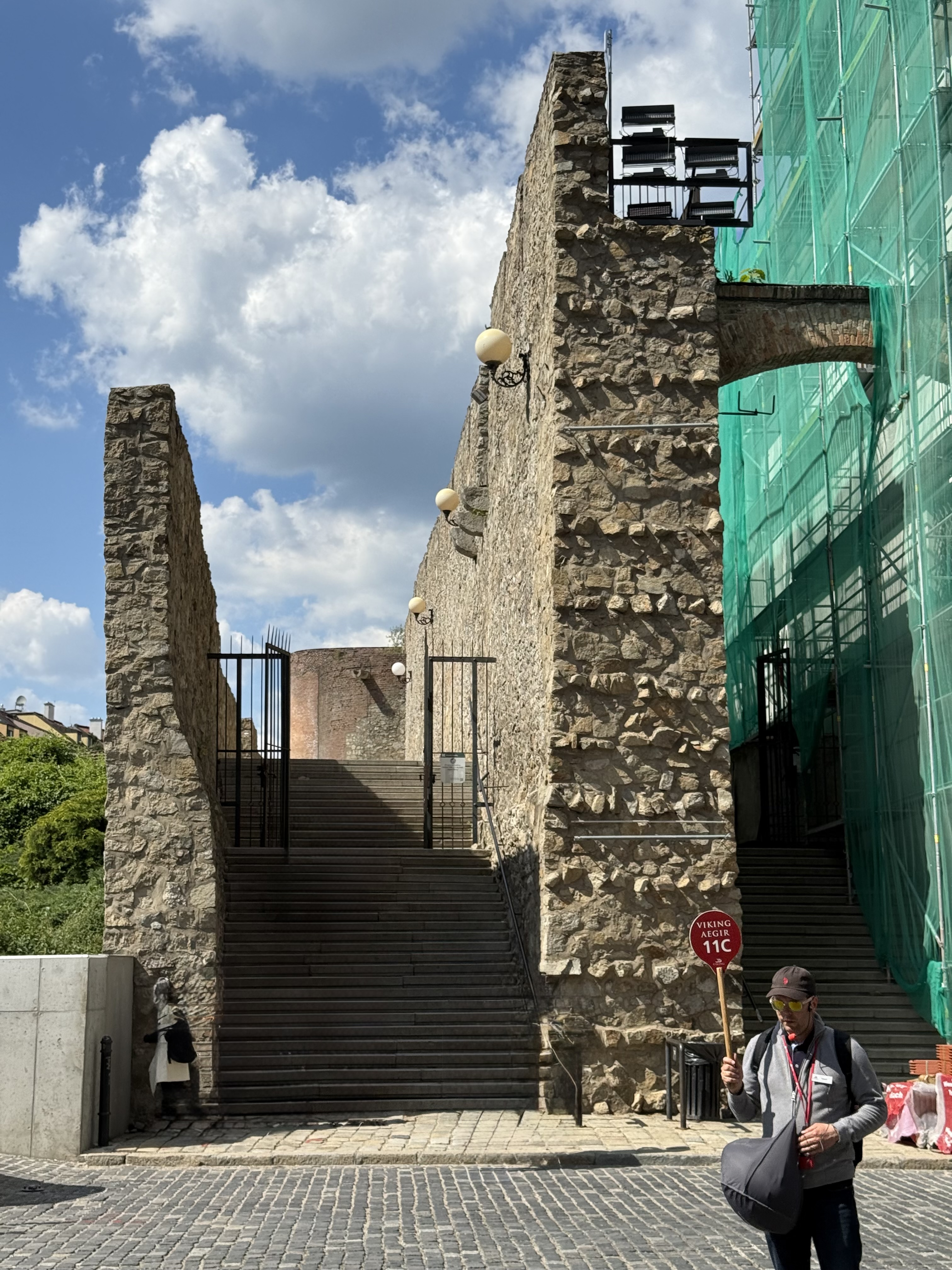
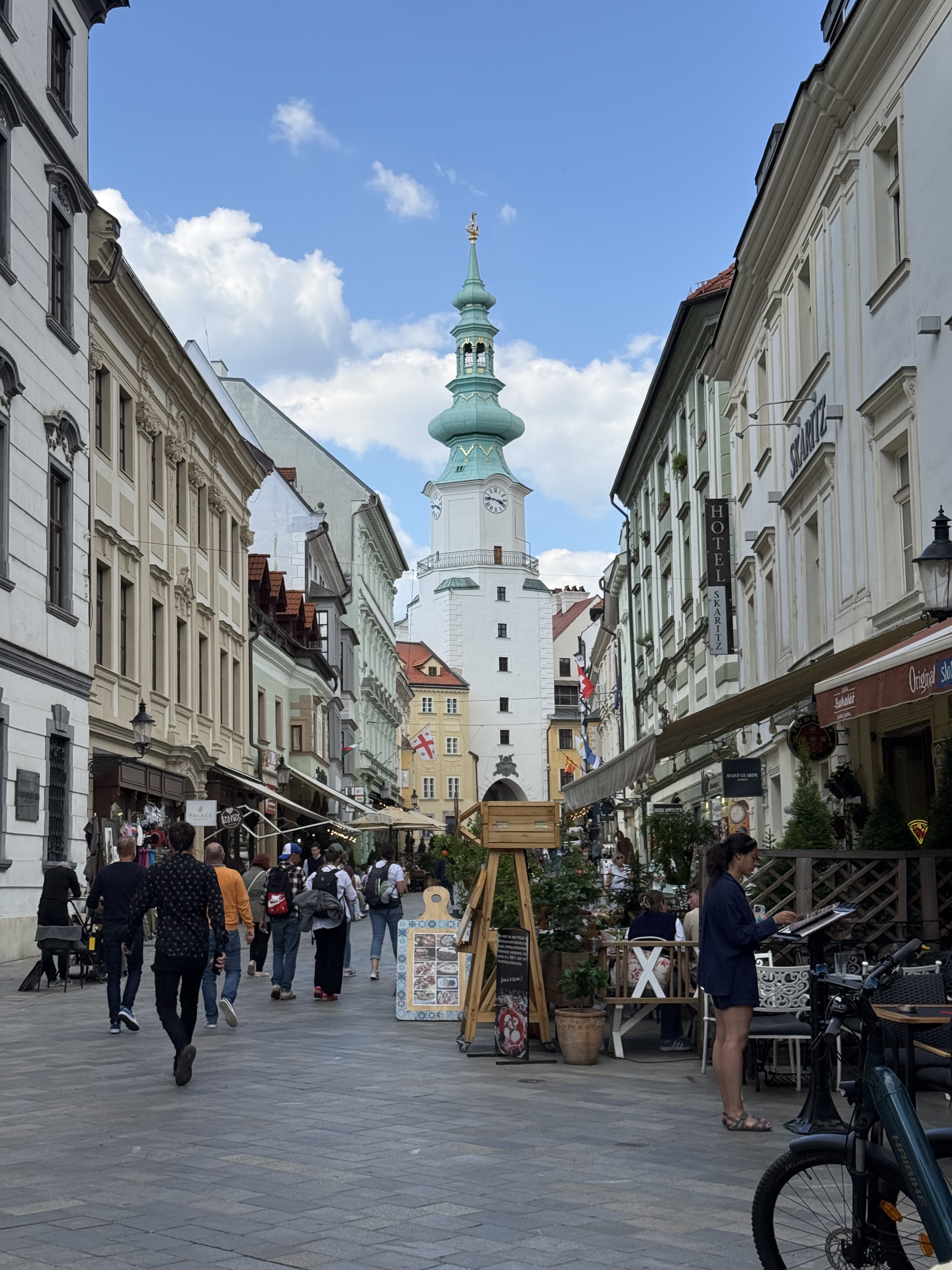
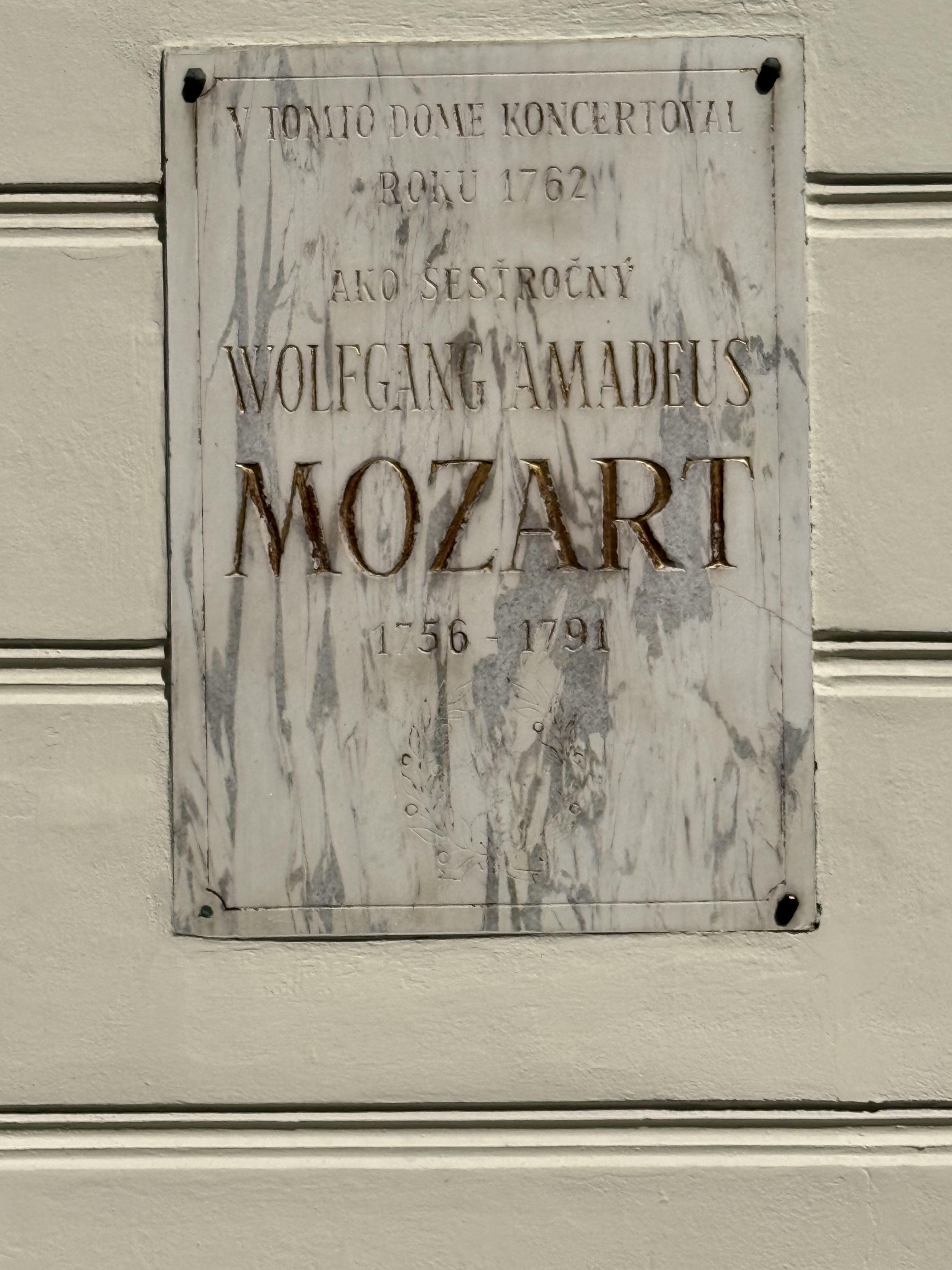
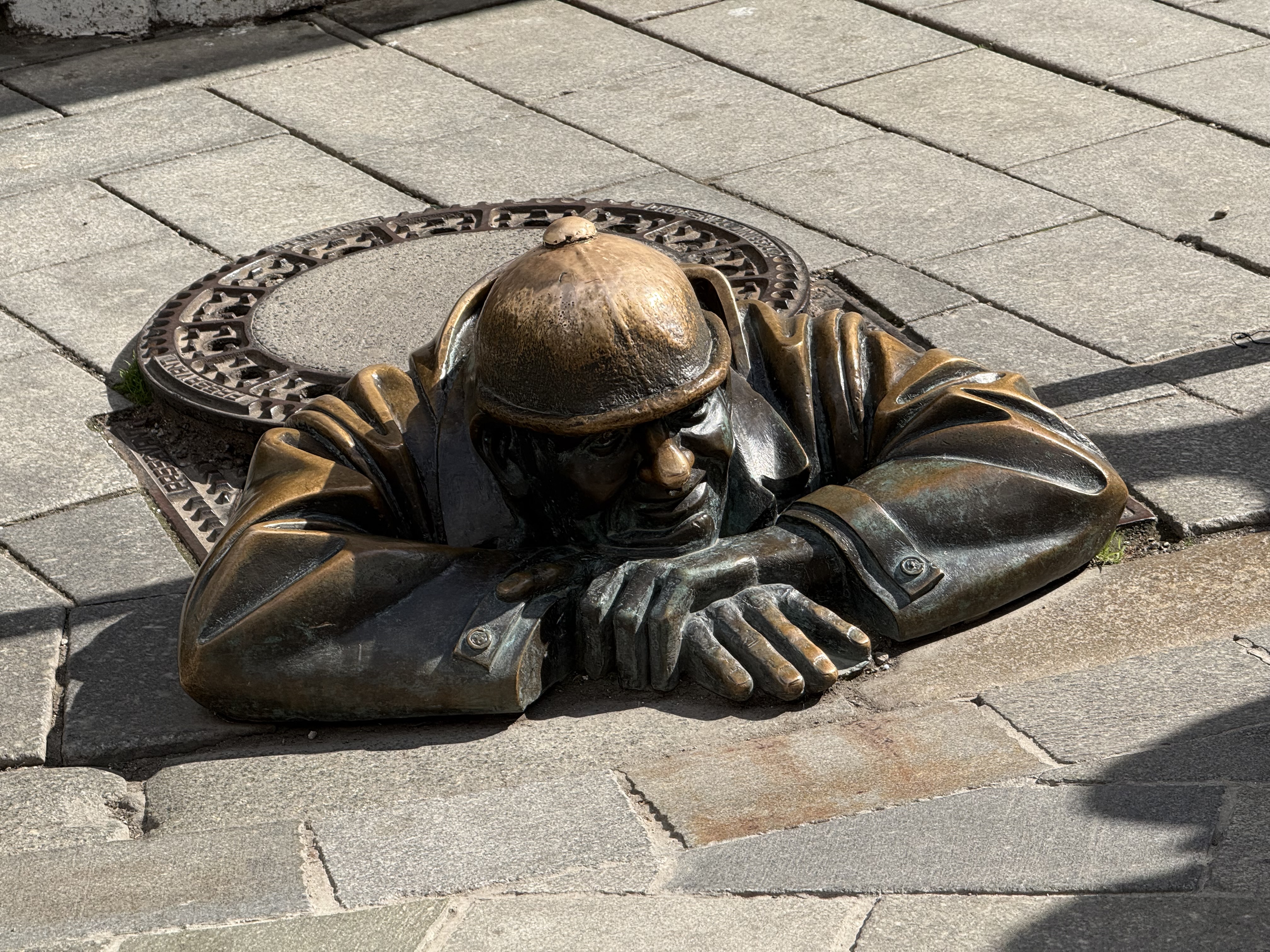
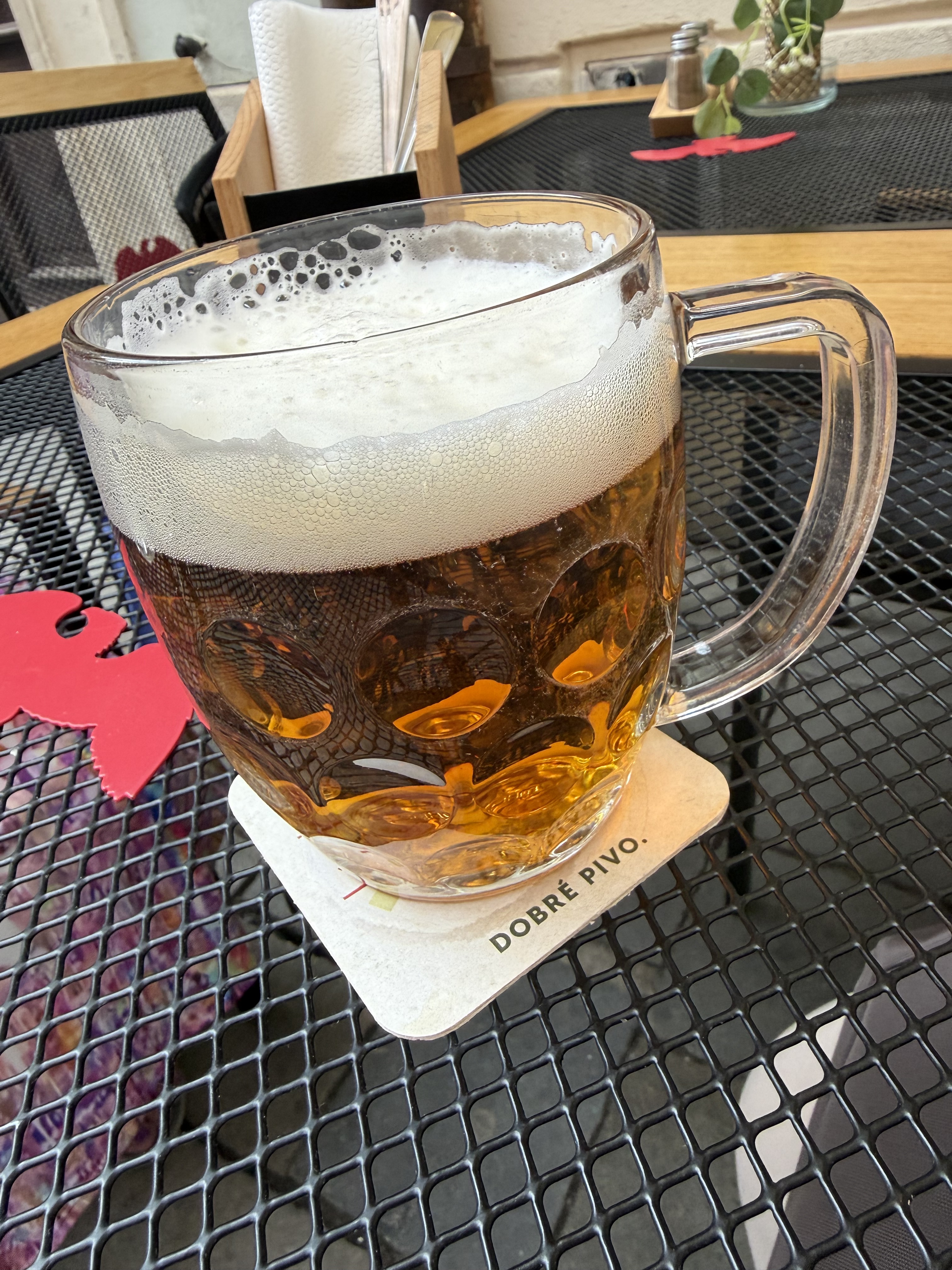
Our first port was Bratislava, and we took a walking tour of the city. Our tour guide Richard had spent a year in Oregon so he spoke excellent English. This was our first example of the advantage of river cruising: you are often able to dock right in the main part of the city or town. We met our guide as we went ashore and walked with him through the historic old town area. It’s a vibrant neighborhood filled with both history and modern day delights like pastries…and beer! We again ran into our old friend Mozart, and experienced what was left of the original walls of the city. Next to the wall and St. Martin’s Cathedral, there was a monument to commemorate the Jewish Temple that was destroyed by the communists
“Man at Work” sculpture.
At the end of our walking tour our guide gave us the option of exploring on our own, and carefully explained how to get back to our ship. We spent a couple lovely hours wandering the area and of course sampling the excellent local beer.
Vienna, Austria
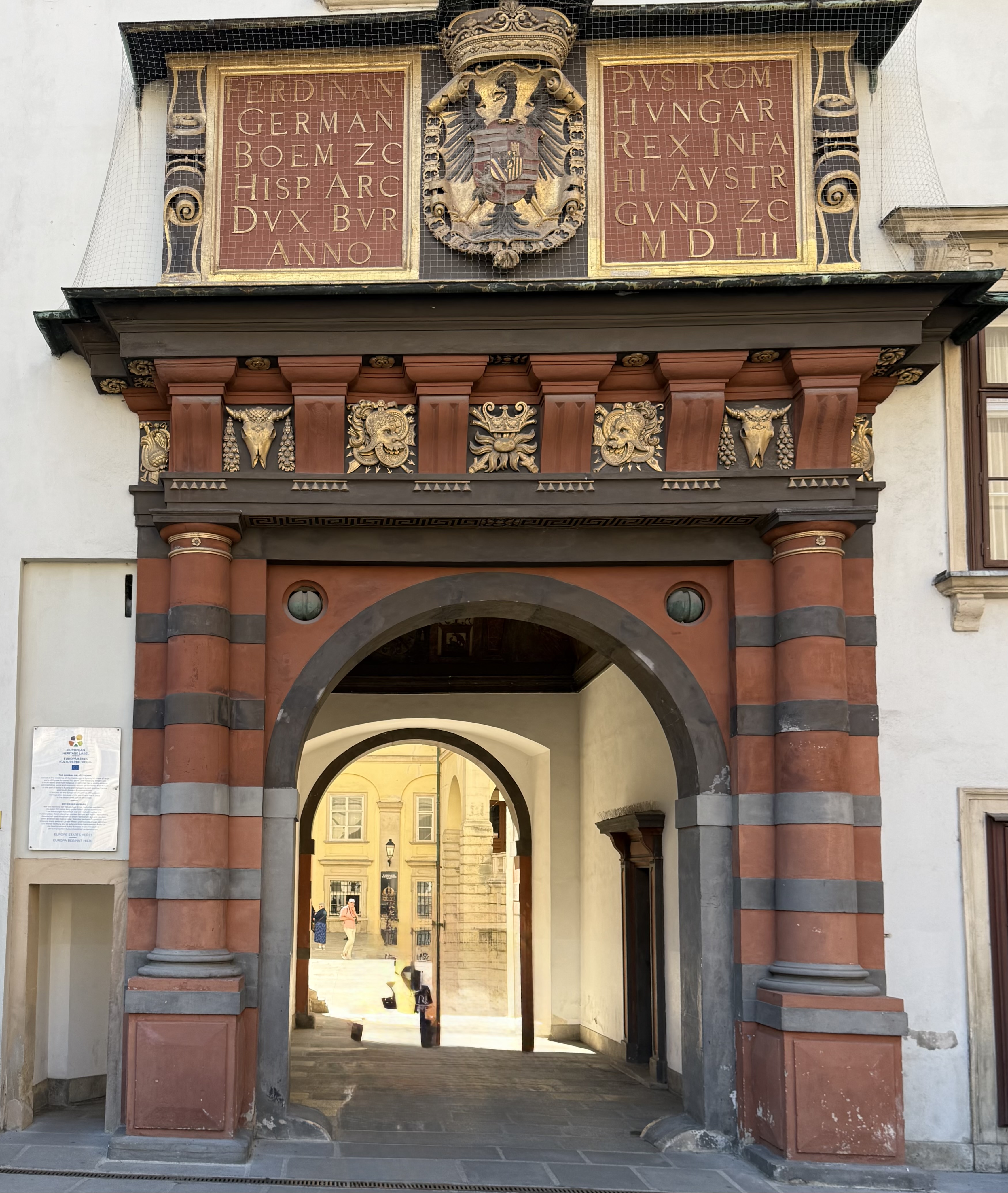
The next stop was Vienna, where we again did a walking tour of the old town. Unlike Bratislava, Vienna is a very large city, which meant we were transported to the city center by motor coach. While I prefer small towns and villages, Vienna is a lovely city with a long history and beautiful architecture.
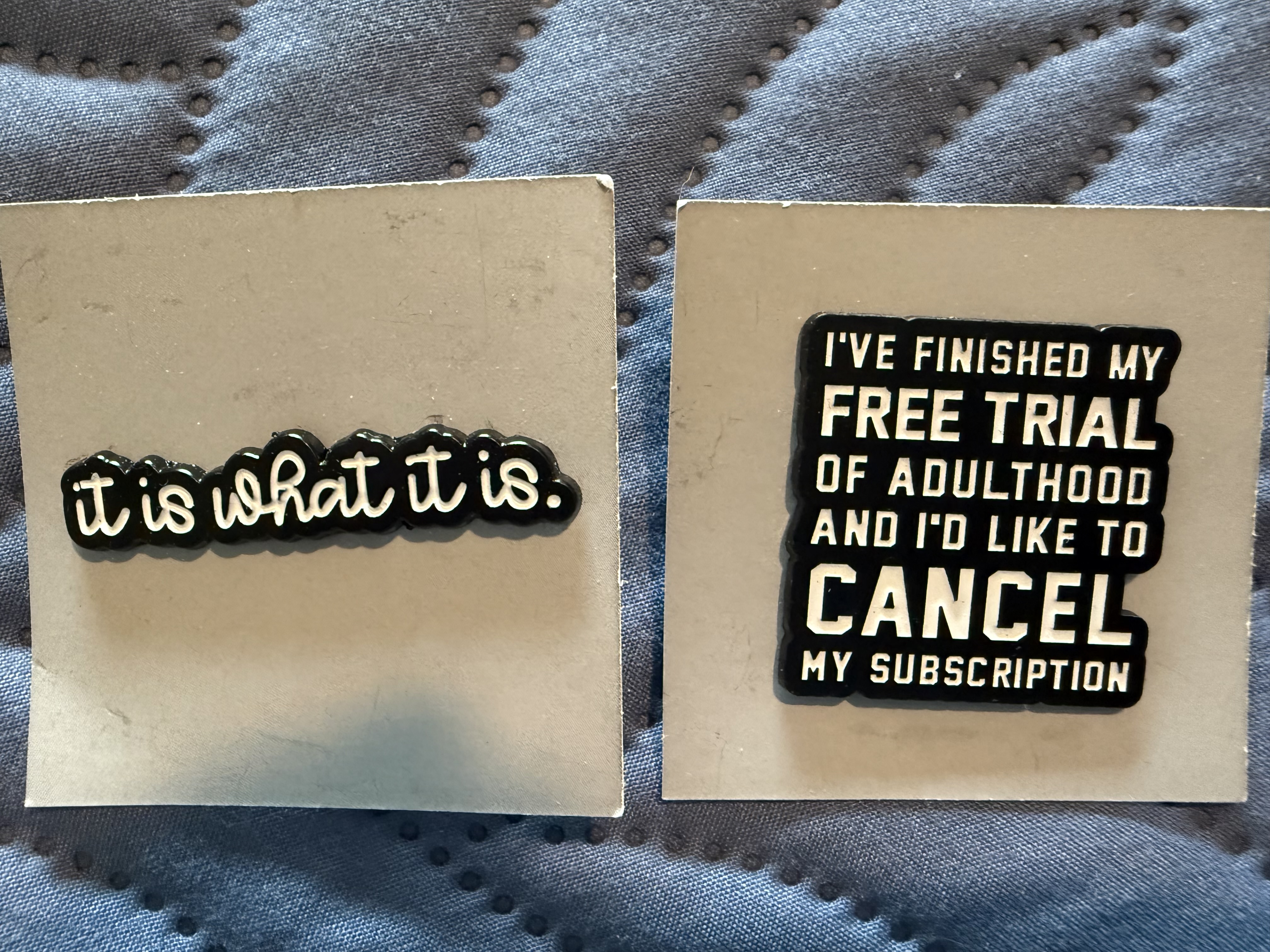
There was a market going on next to the church that seemed much like the traditional Christmas markets of Europe. The merchants were friendly and I spent most of my time chatting. Thank heaven most Europeans know English, since I’m embarrassingly poor at languages. I bought some gifts, and got into a conversation with a merchant who had funny pins. After I purchased one for a friend and another for myself, I spotted the “It is what it is” pin, telling him that was my mantra when I was growing up. So he gave it to me. Because of that chat, I’ll always think of Vienna and that gentleman every time I look at my pin.
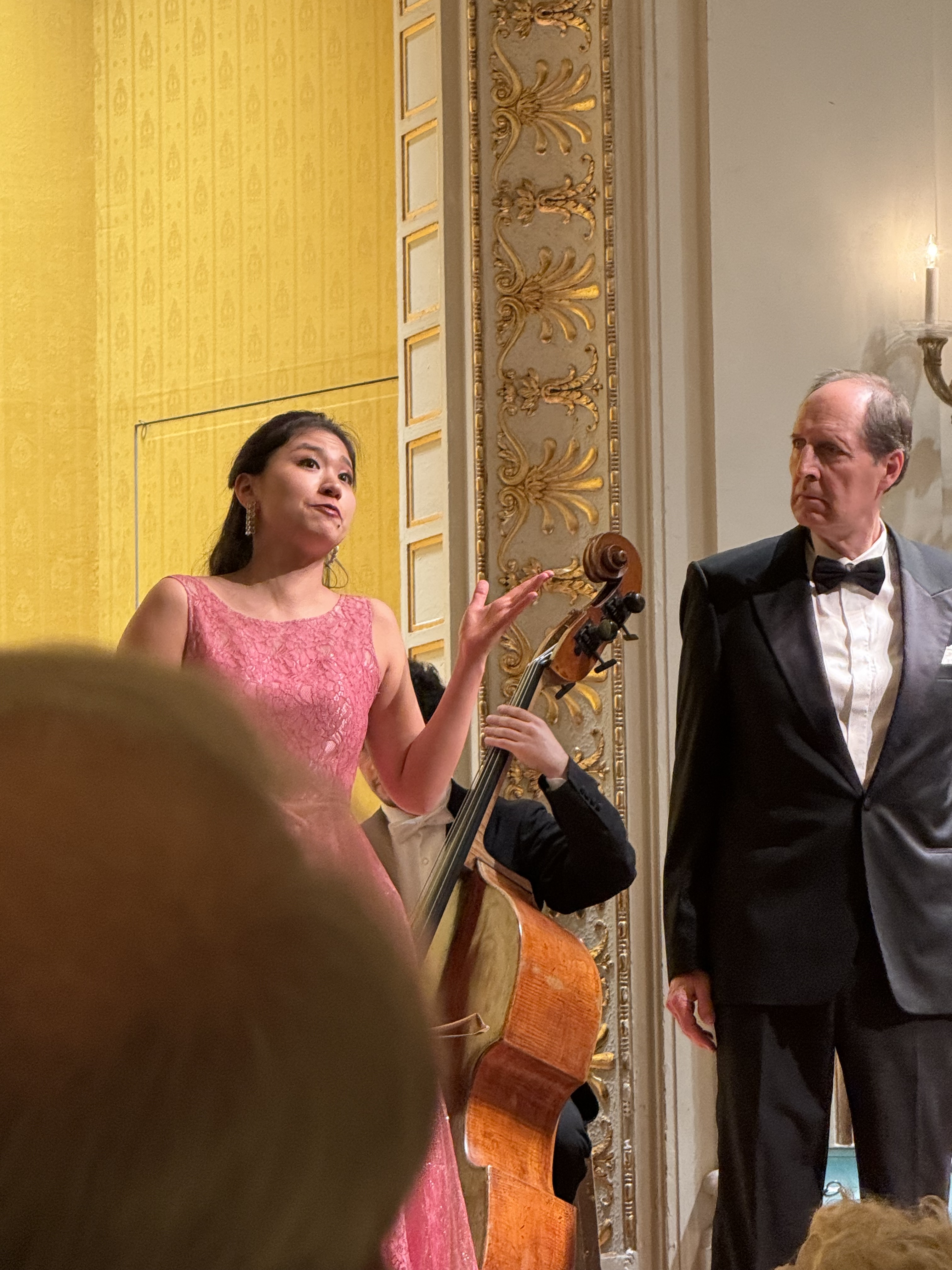
Of course, if you go to Vienna you have to go to a concert. Our whole group went off to a performance that included traditional Austrian music, a piece by Mozart (naturally), and a delightful bit of opera performed by two excellent singers who were also fun performers.
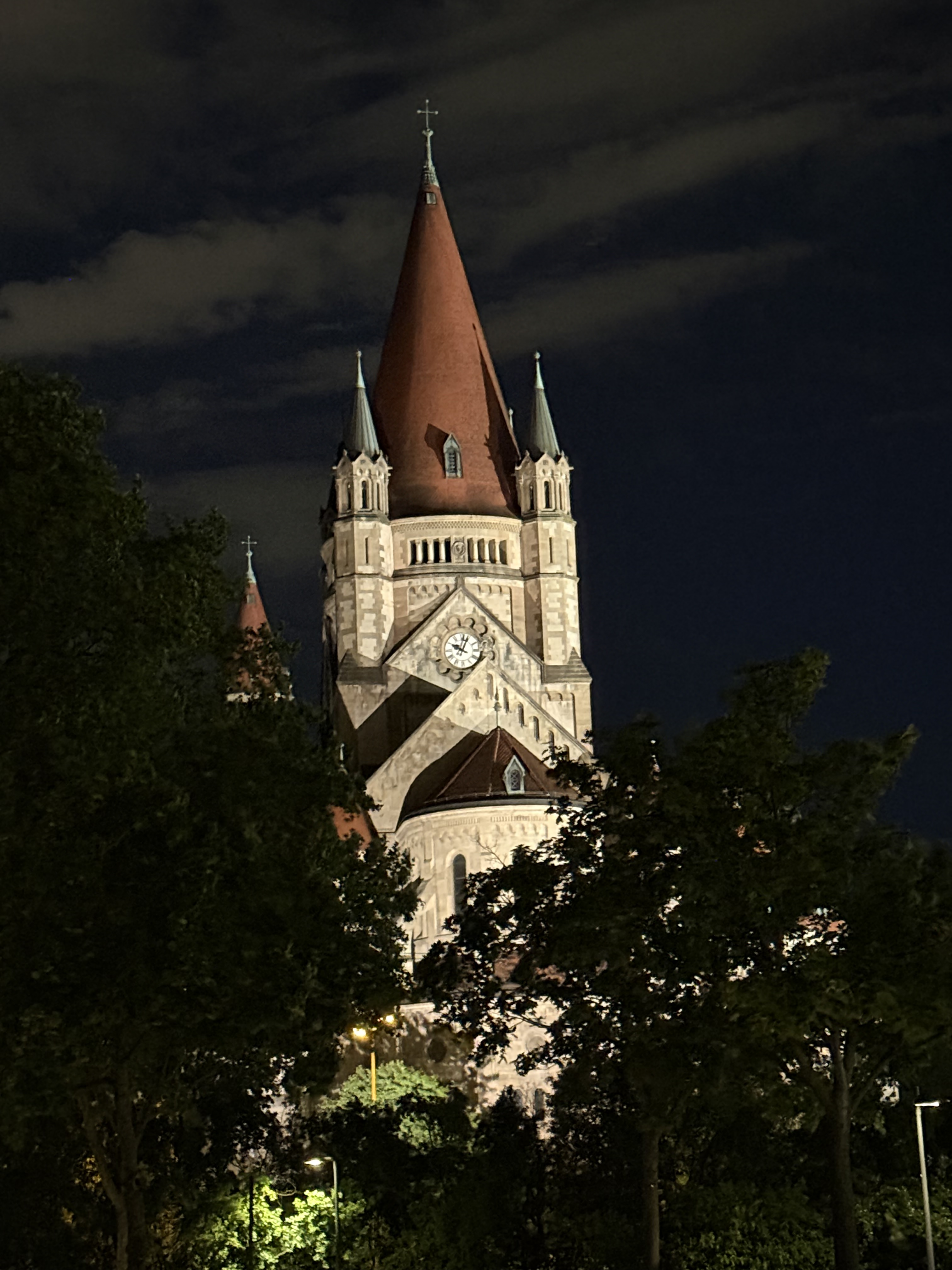
I ended the evening with a stroll on the top deck of the boat, capturing a view of a nearby church. Farewell, Vienna.
Wachau Valley
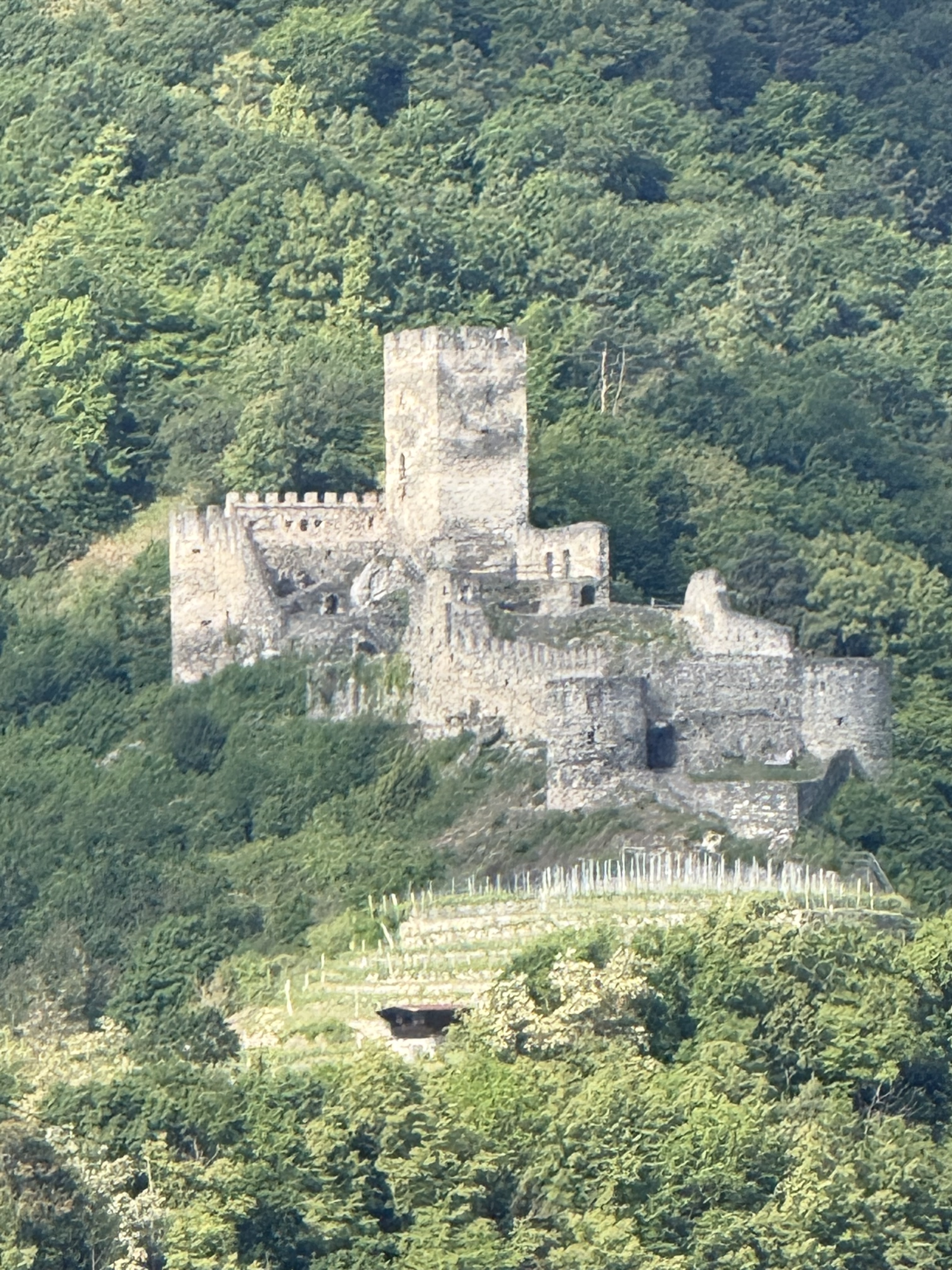
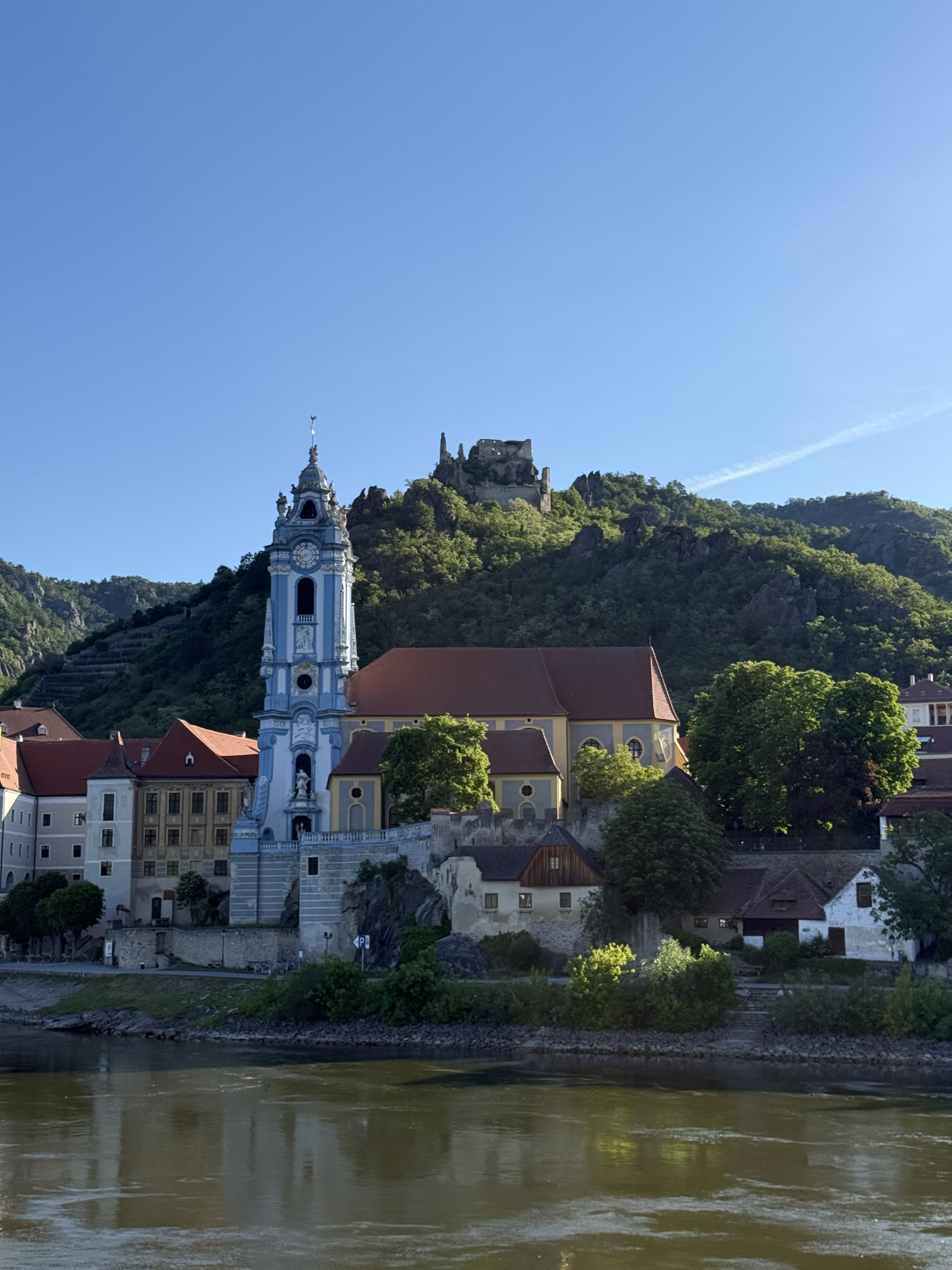
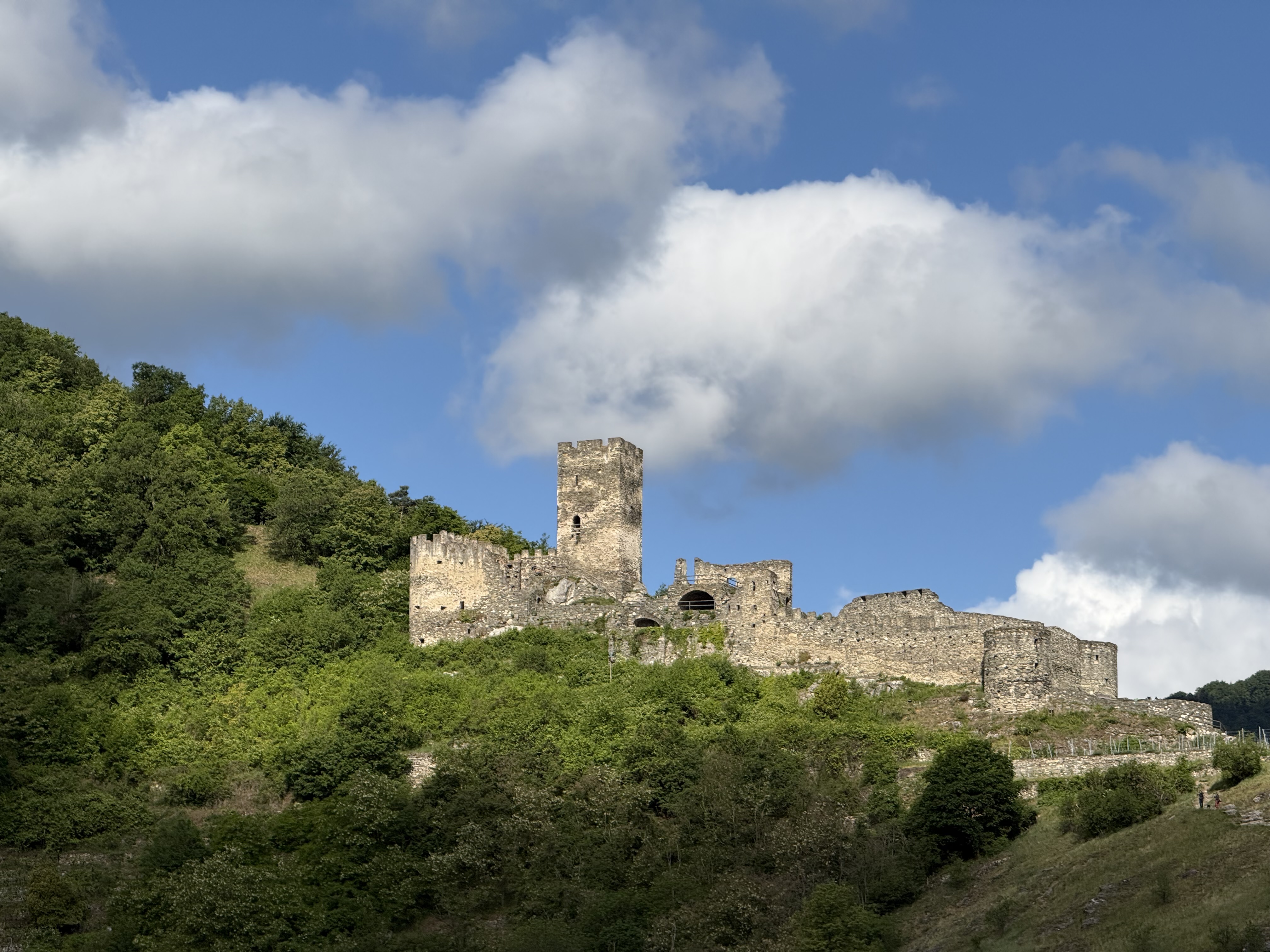
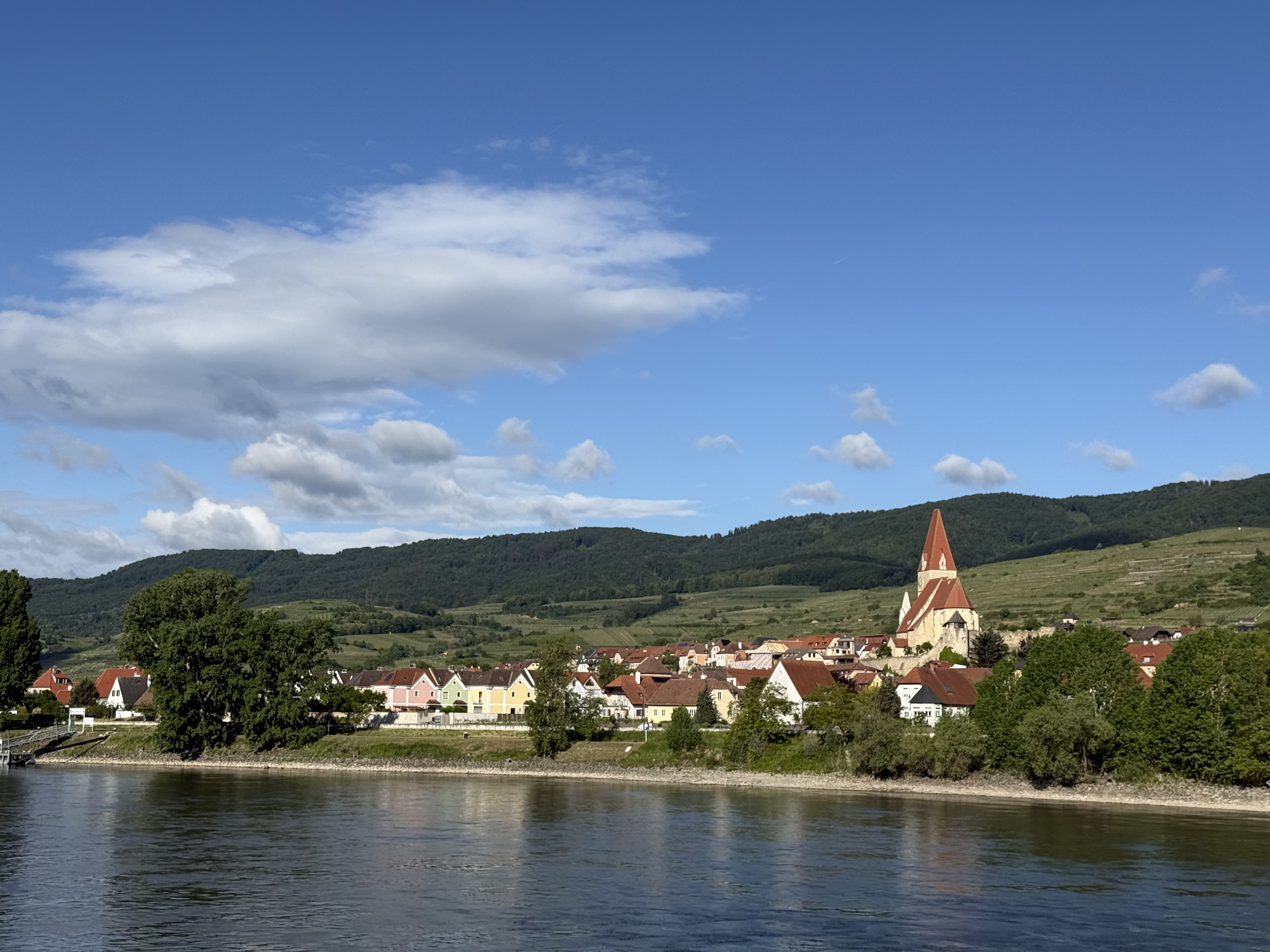
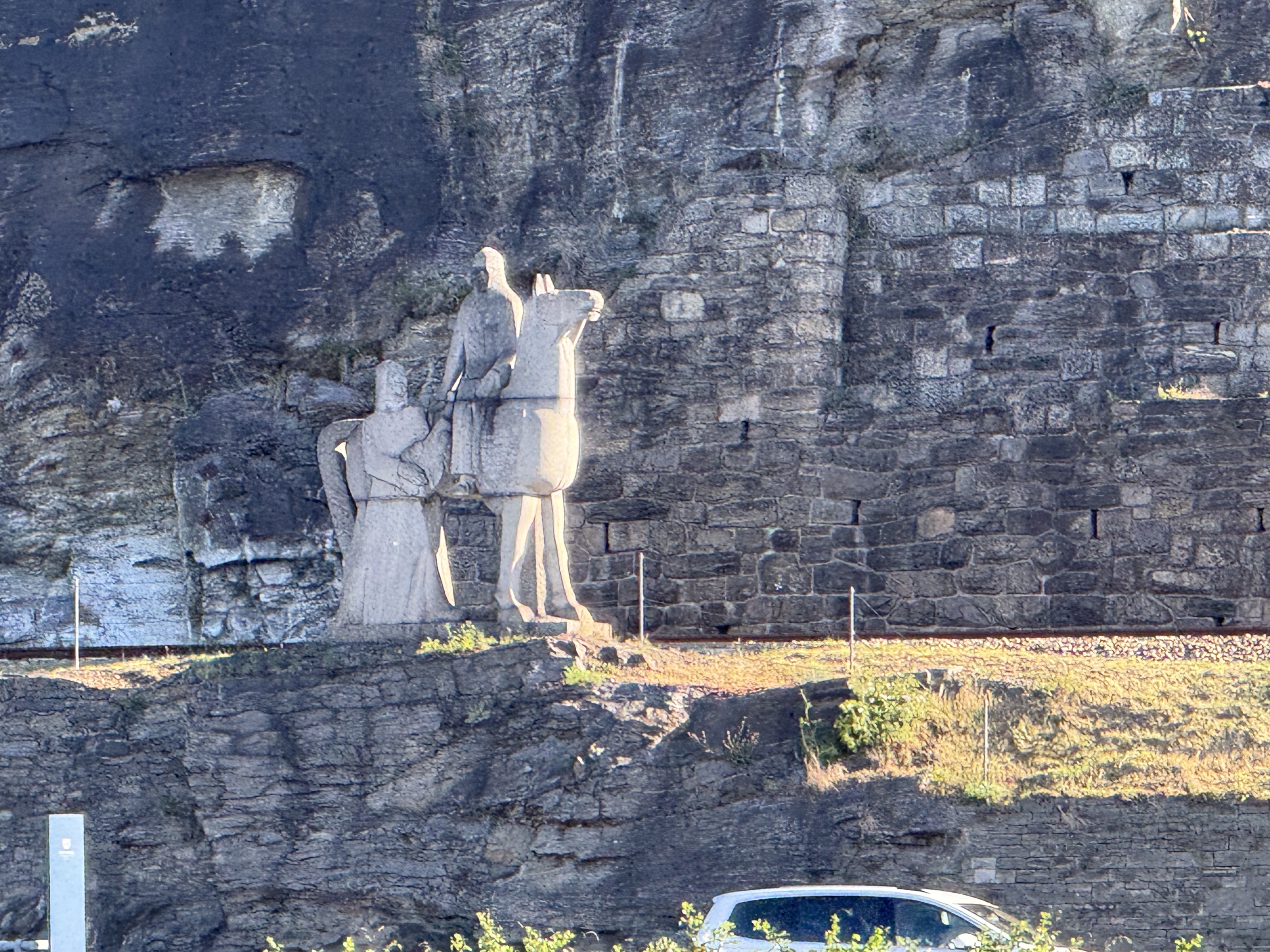
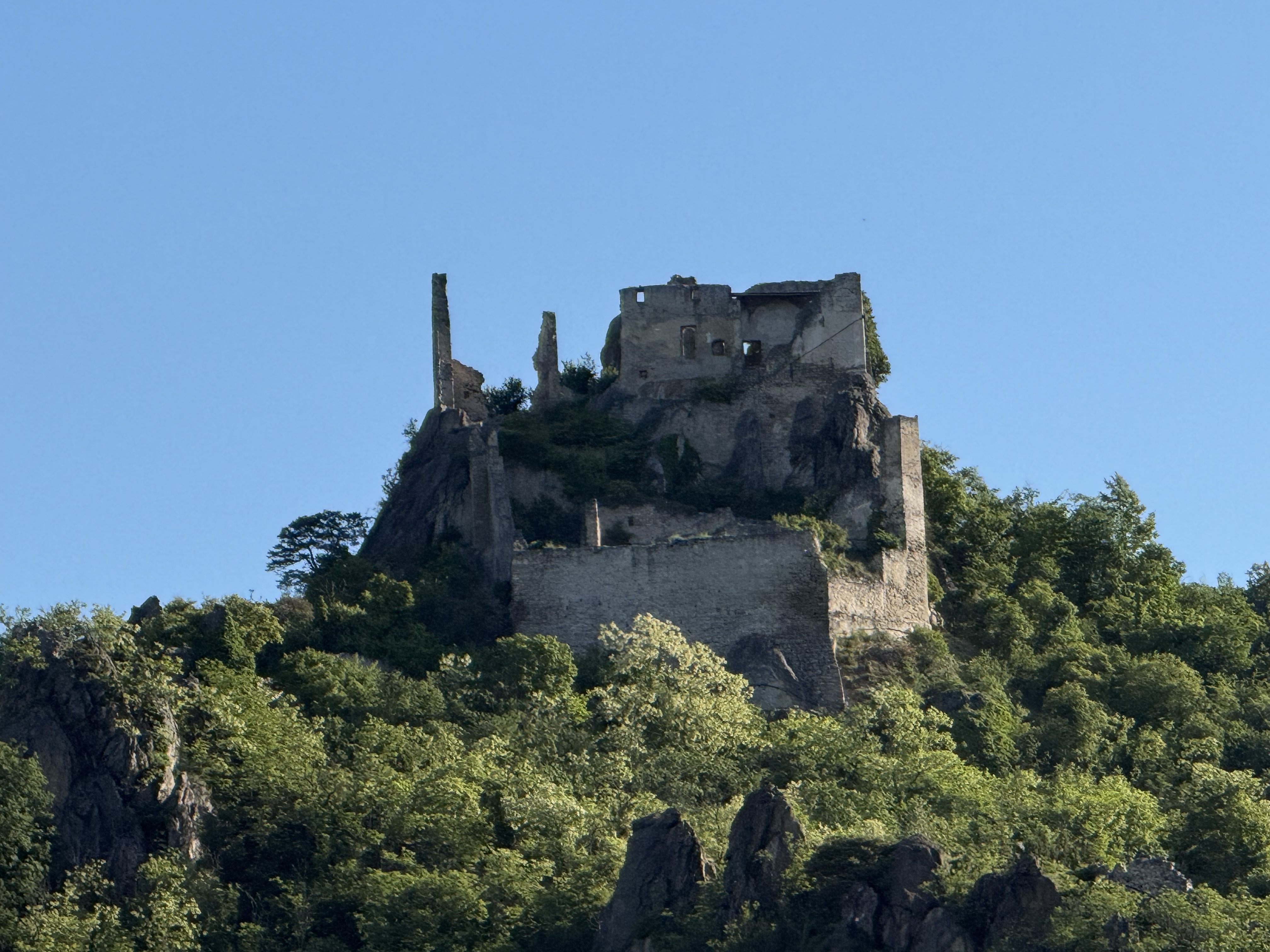
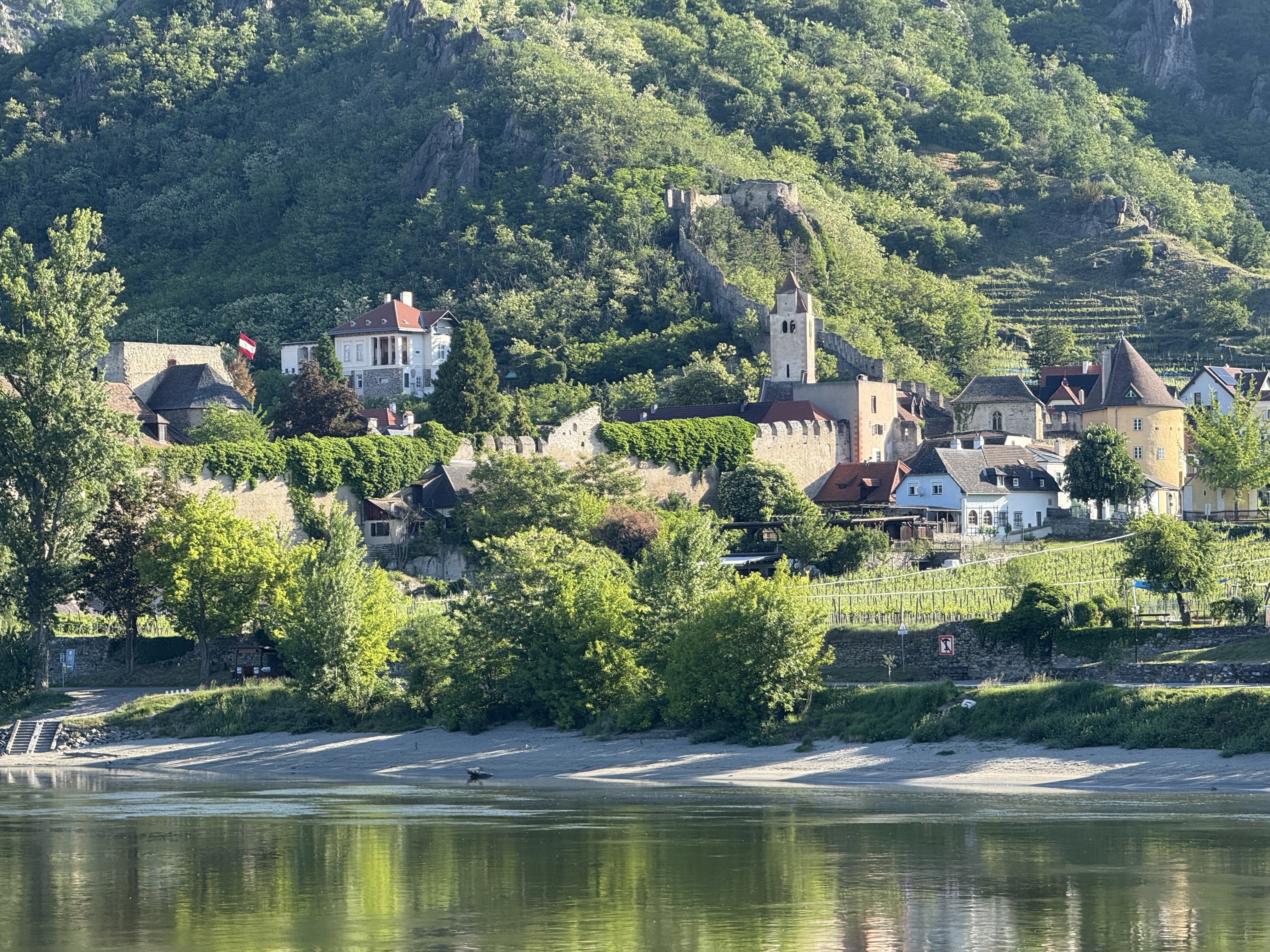
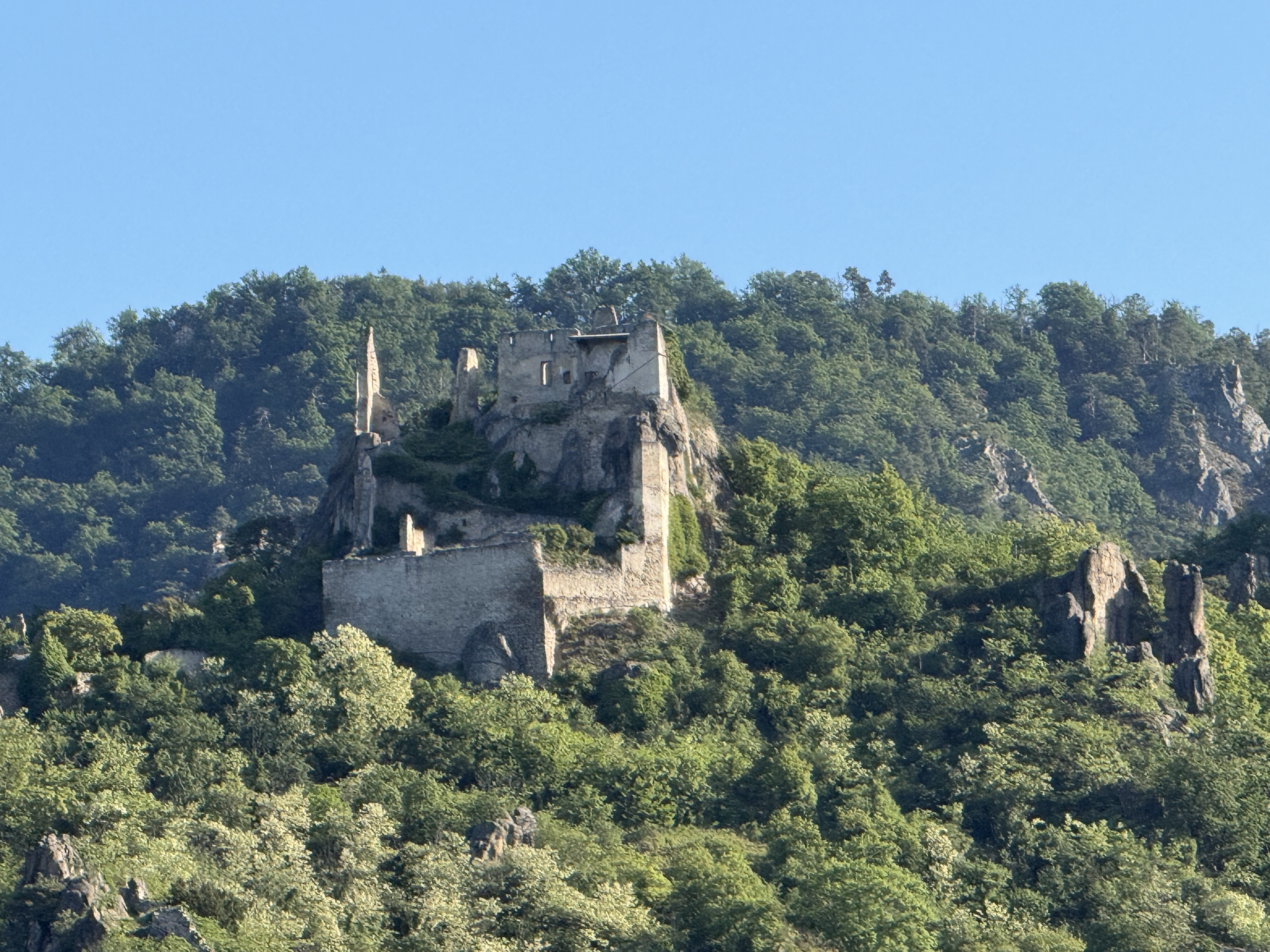
Cruising the Wachau Valley in Austria is one of the highlights of a Danube cruise. It’s filled with castles, vineyards, and lovely towns. There’s something interesting in every one of the 18 miles along this stretch of the Danube. All those castles you see in the advertisements? Here they are.
Melk, Austria
Welcome to the nicest little town you never heard of. Well, I never heard of, anyway. After the big city vibe of Vienna, this was more my speed.
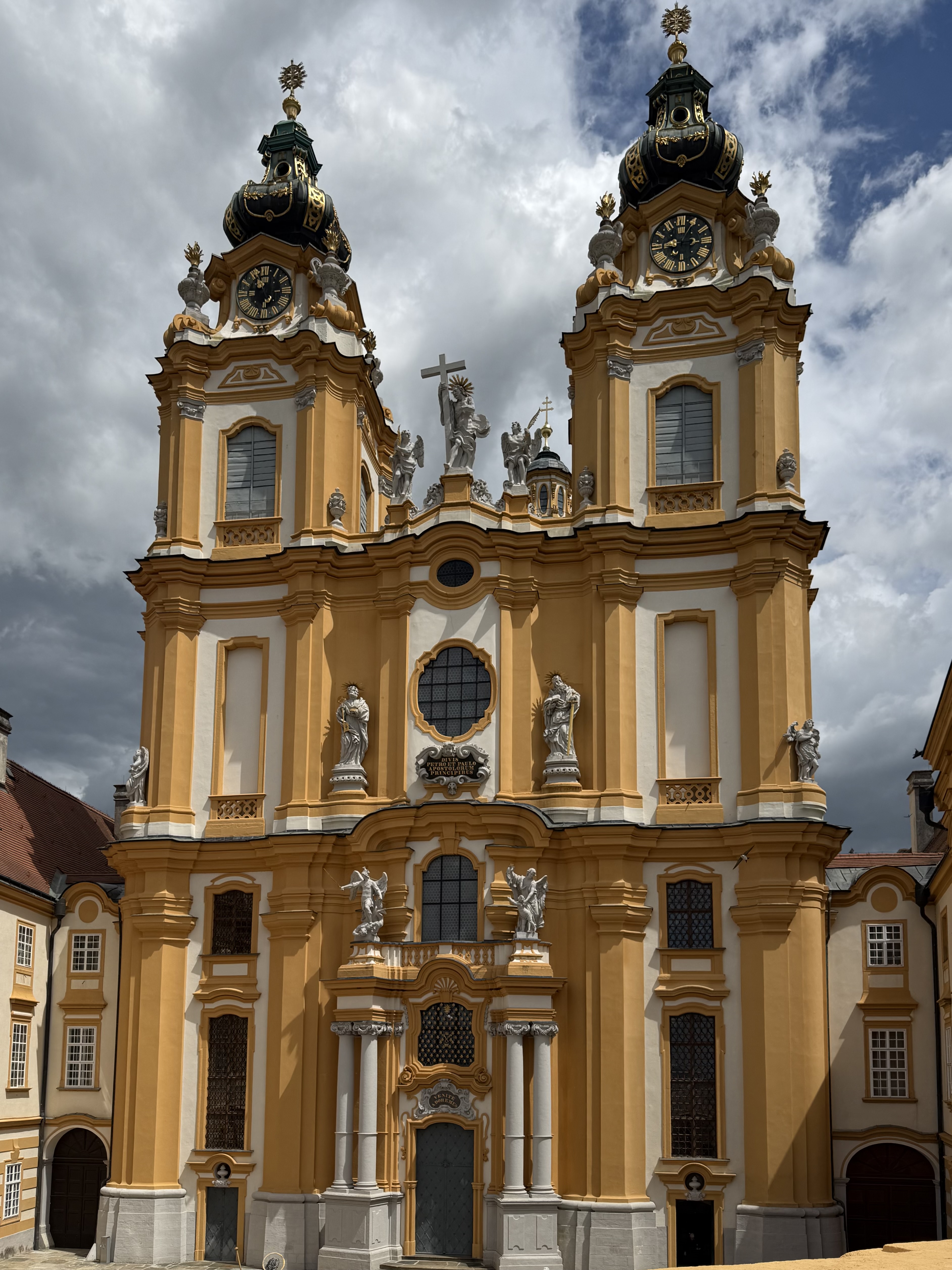
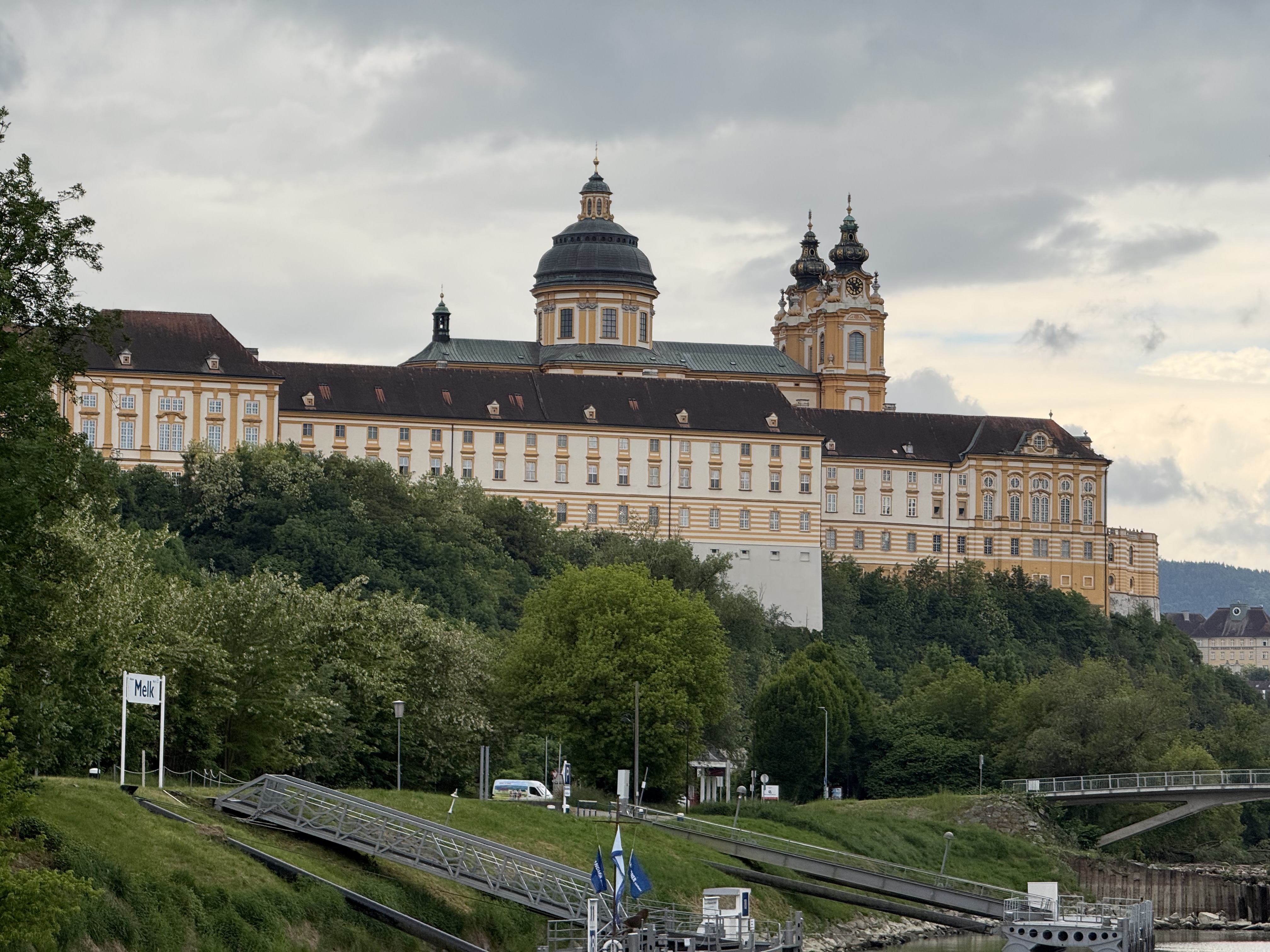
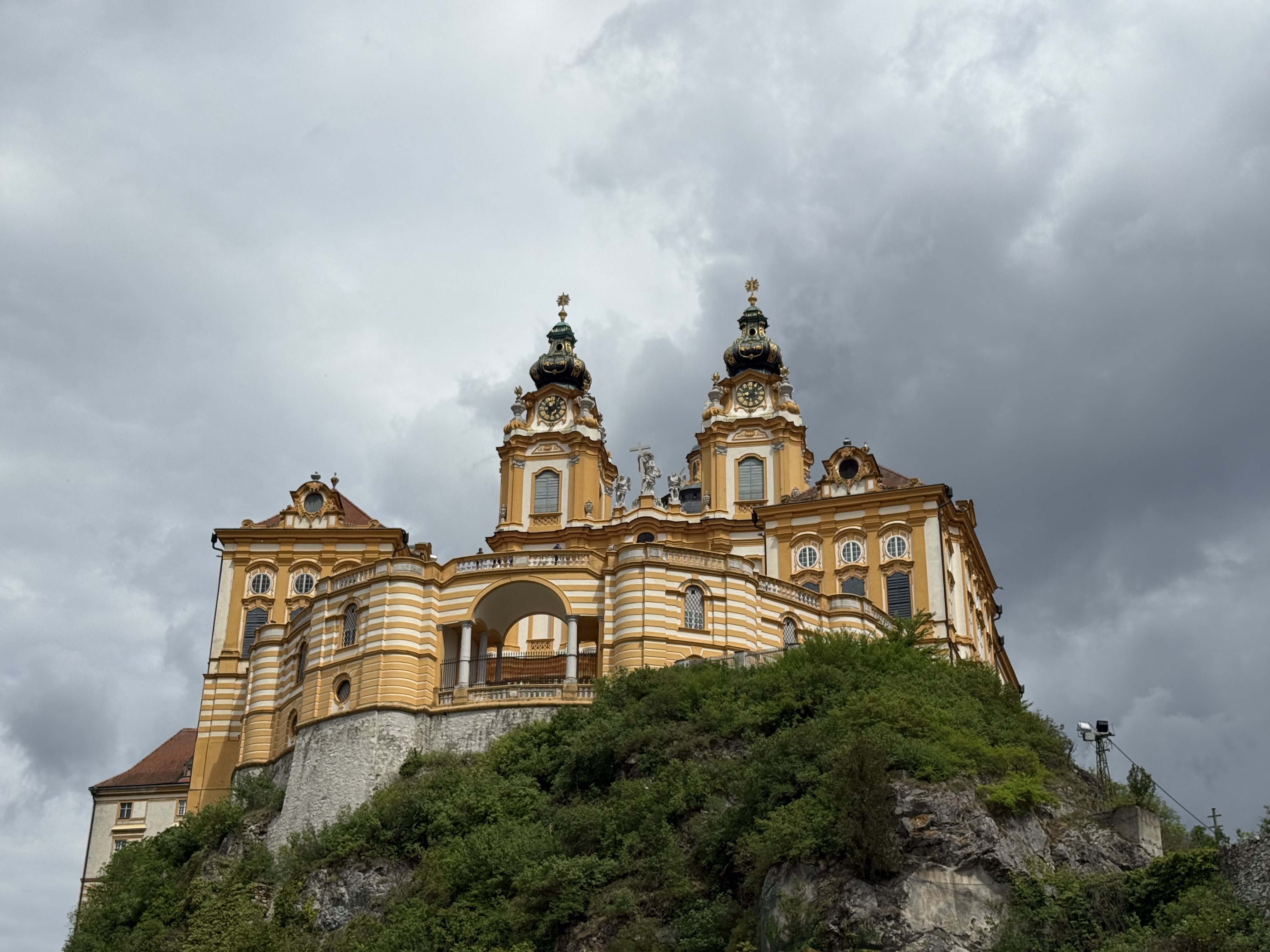
The town is home to the 1000 year old Benedictine Melk Abbey. The abbey is in a commanding location on a hill overlooking the town and the Danube. We were taken up the (fairly steep) hill in a bus and given a guided tour of the abbey. The interior is stunning, with a breathtaking library and an imposing long marble hallway. Unfortunately, photos are not allowed inside the abbey, or I’d be loading up this post with pictures! The abbey has continued as a school, today with about 900 students of both sexes attending.
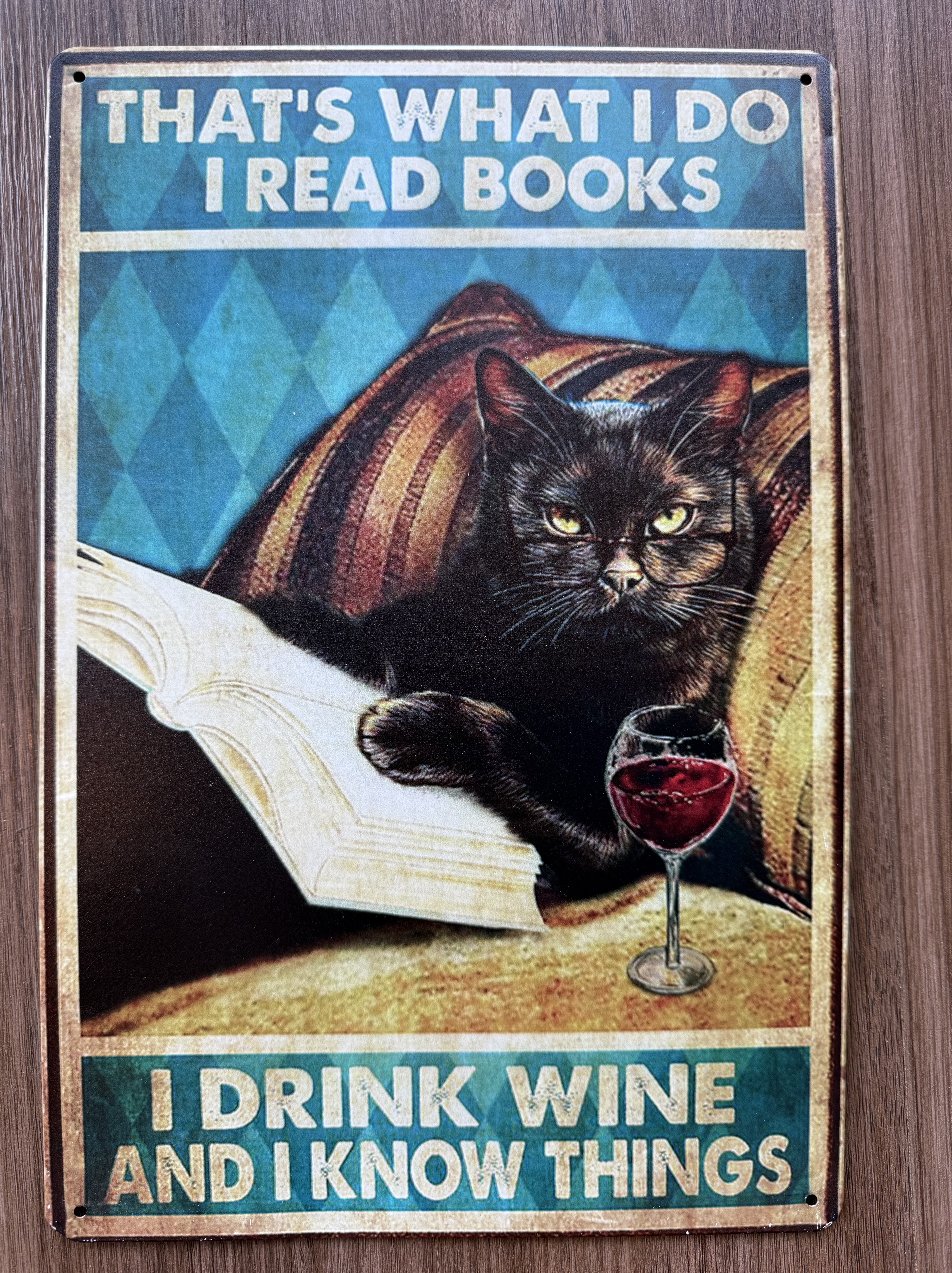
I chose to walk down the hill back to our boat, giving me an opportunity to wander through the town. Another delightful conversation with a shopkeeper at “The Cat’s House.” She assured me the only reason she kept the business going was because the cat expected to be fed and housed. I told her the story of the long service of the mayor of Talkeetna, Alaska, who was a cat. She loved the story and wrote down the name of Talkeetna so she could look it up online. The shop was filled with kitty-related items, and I came home with the perfect sign.
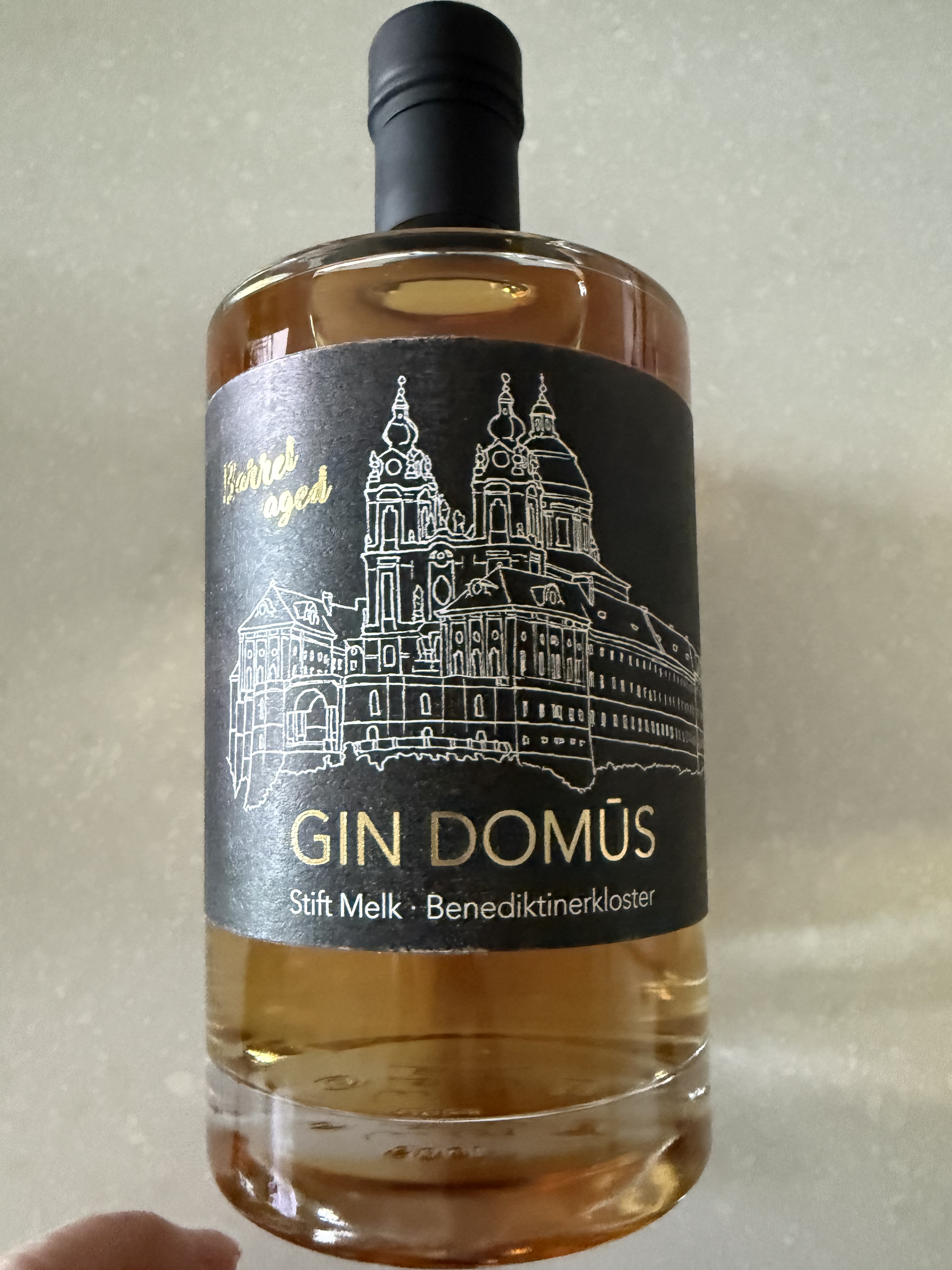
In the evening I was given a late birthday gift from my cousins: a bottle of gin from the Melk Abbey.
Linz, Austria
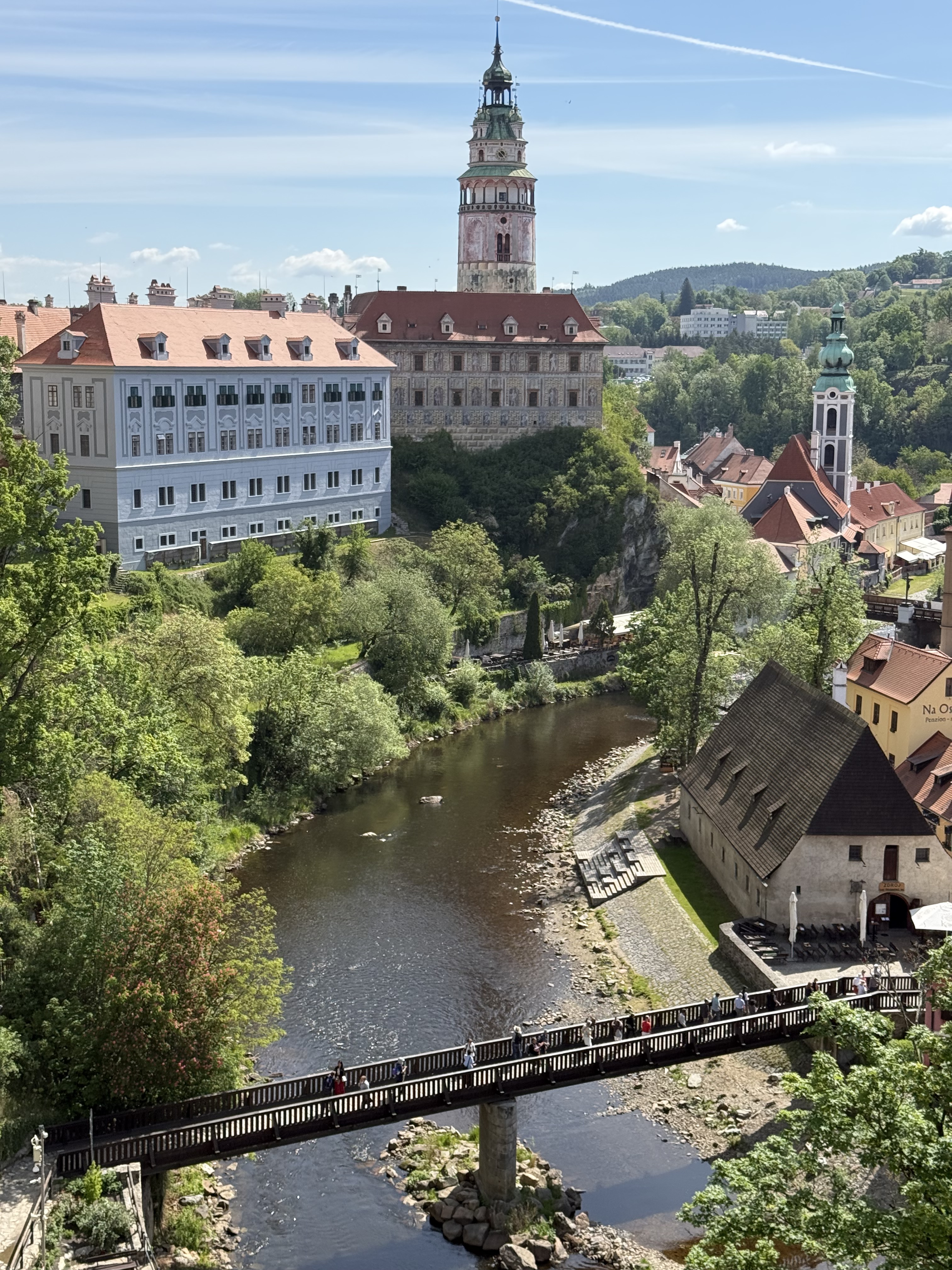
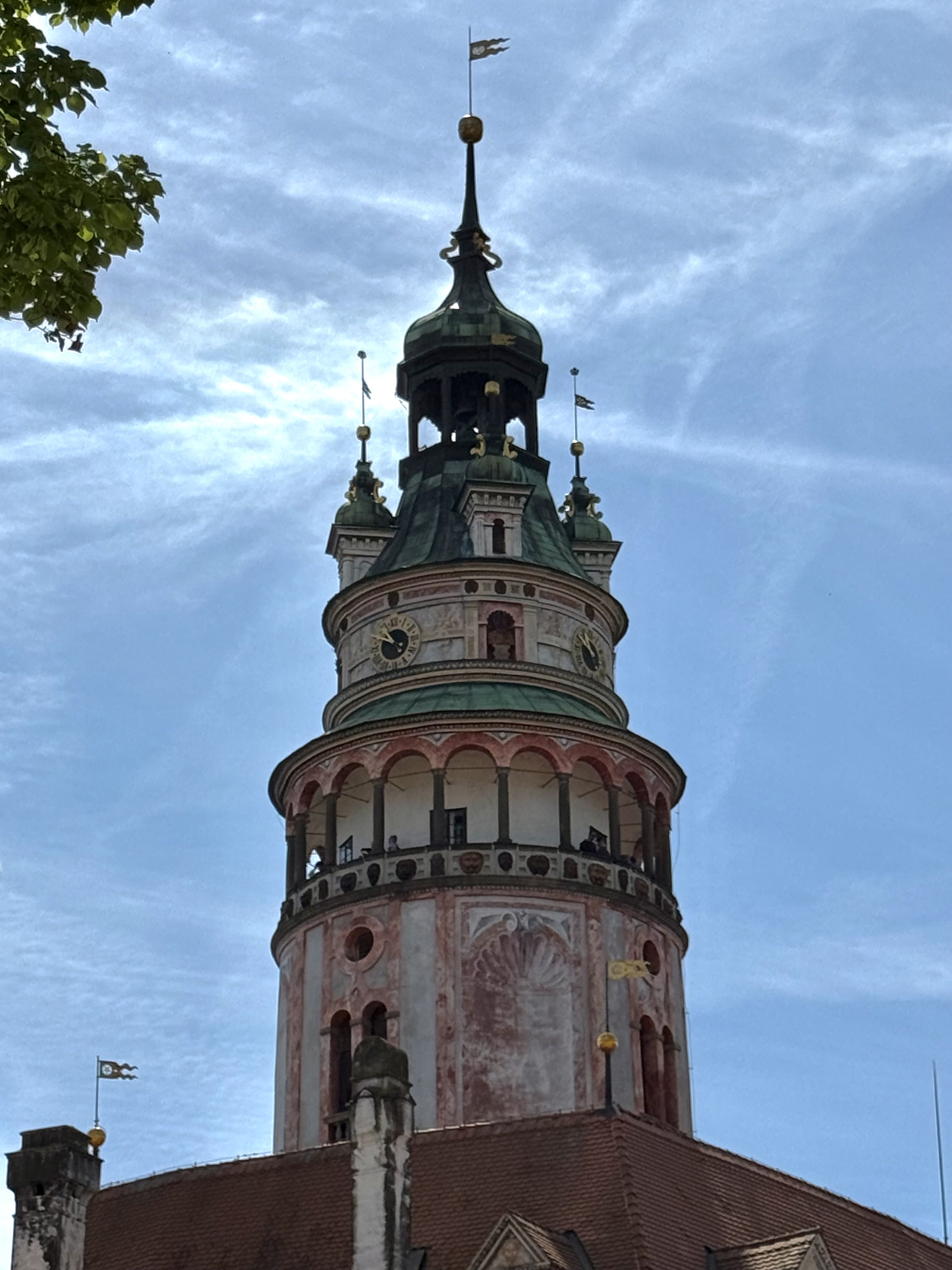
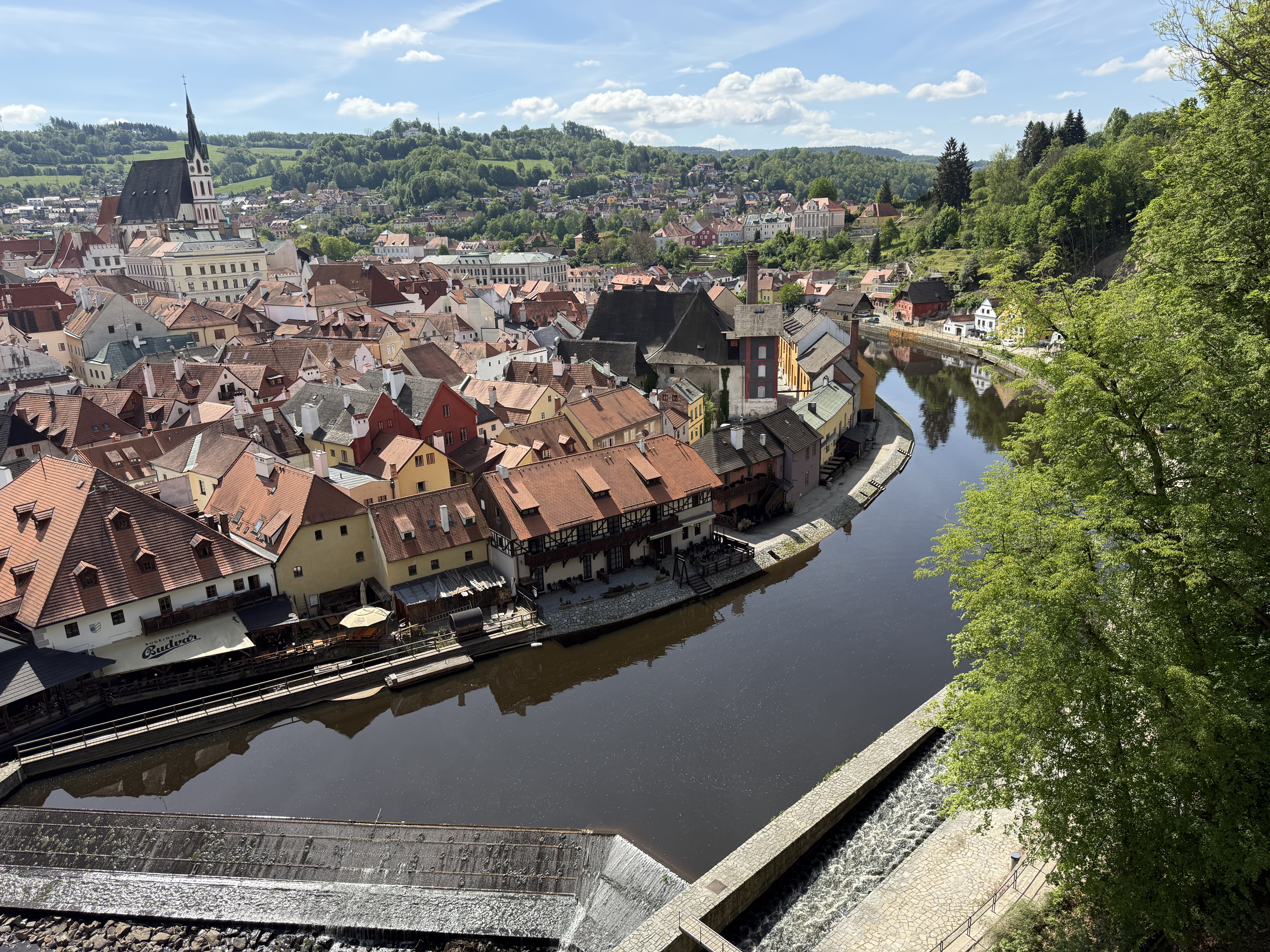
Our next port was Linz, Austria. While some of our group hied off to learn to make Linzer Torte, I opted to take a longer trip to Cesky Krumlov in the Czech Republic. It’s a medieval village with about 13,00o residents and again that many tourists.
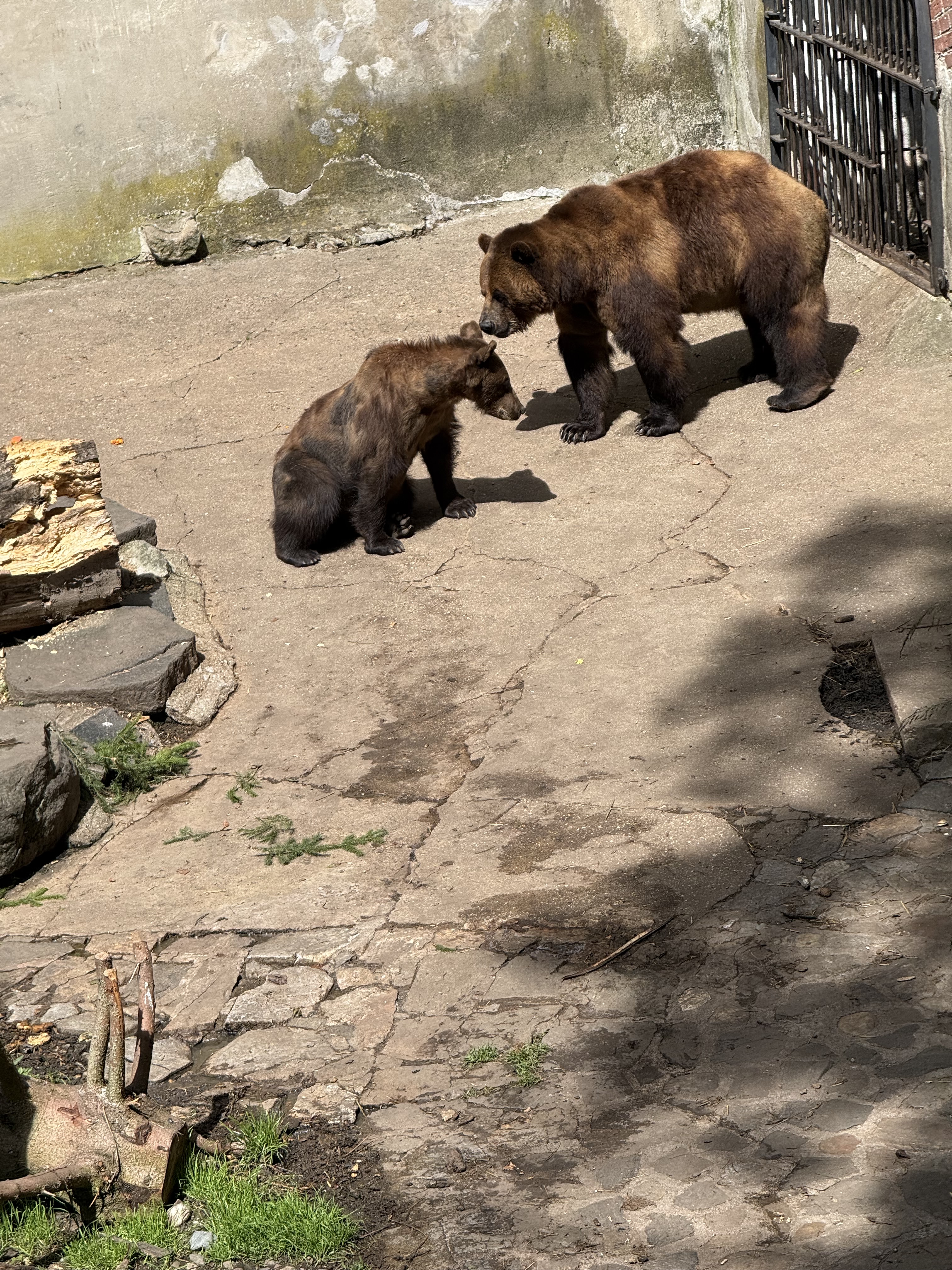
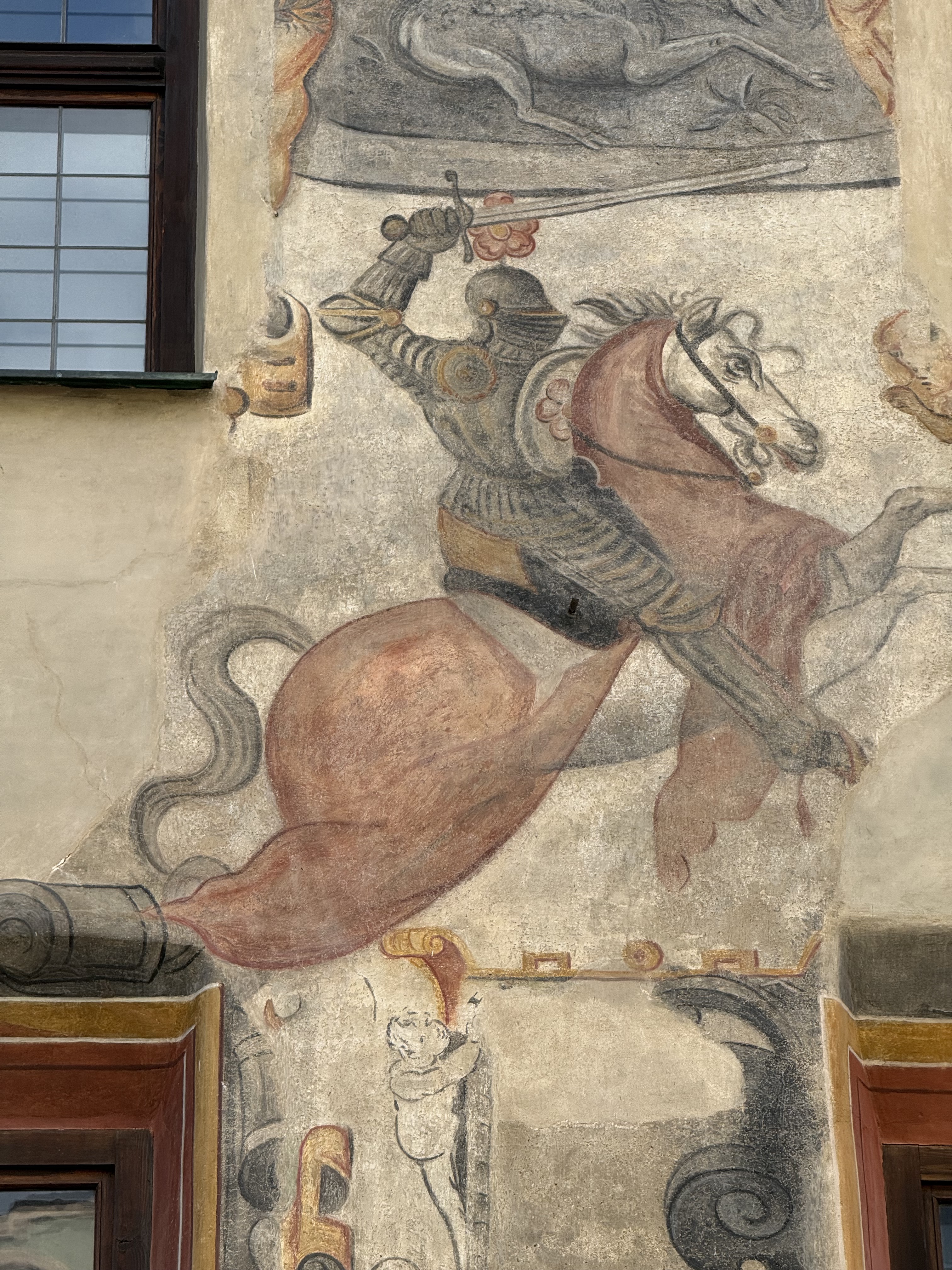
The town exists thanks to the castle complex, which was started around 1250 and added to over the centuries by the many varied owners. Today the castle complex is something like 17 acres, and seems to go on forever. Unlike many castles of the era, this one was guarded not by a moat, but by bears. There are a few remaining bears (I counted three) but I was told that when these bears die they will not be replaced. I’m glad to hear that-how boring to live your life in a stone moat that gets so hot in the summer!
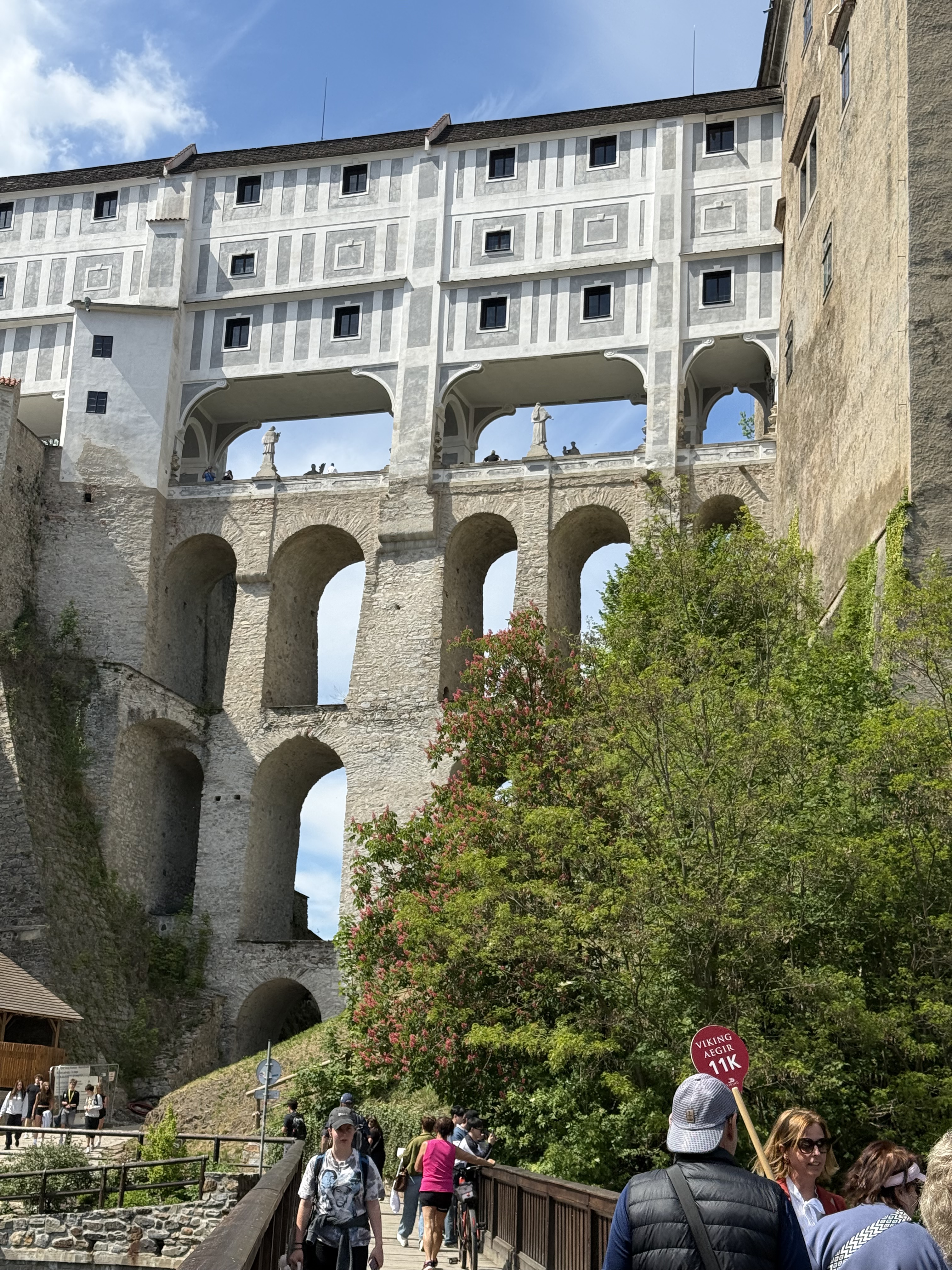
One of the connecting walkways of the castle.
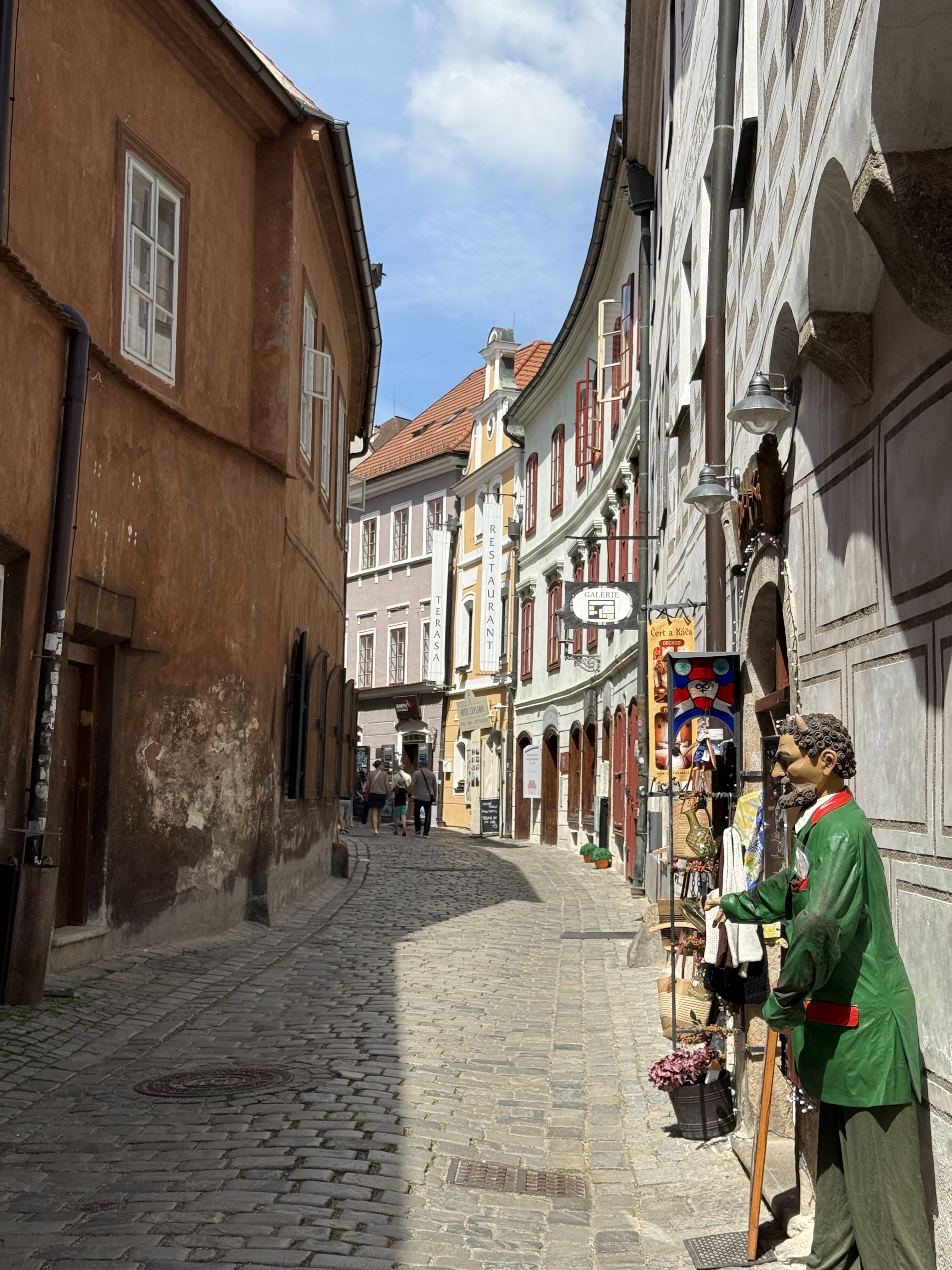
The town and castle are a World Heritage site, and the area has been preserved as it was in the Middle Ages. Cobblestones and all. I’m so glad I didn’t live in the Middle Ages. I’m beginning to really dislike cobblestones! They are pretty, but treacherous to walk on.
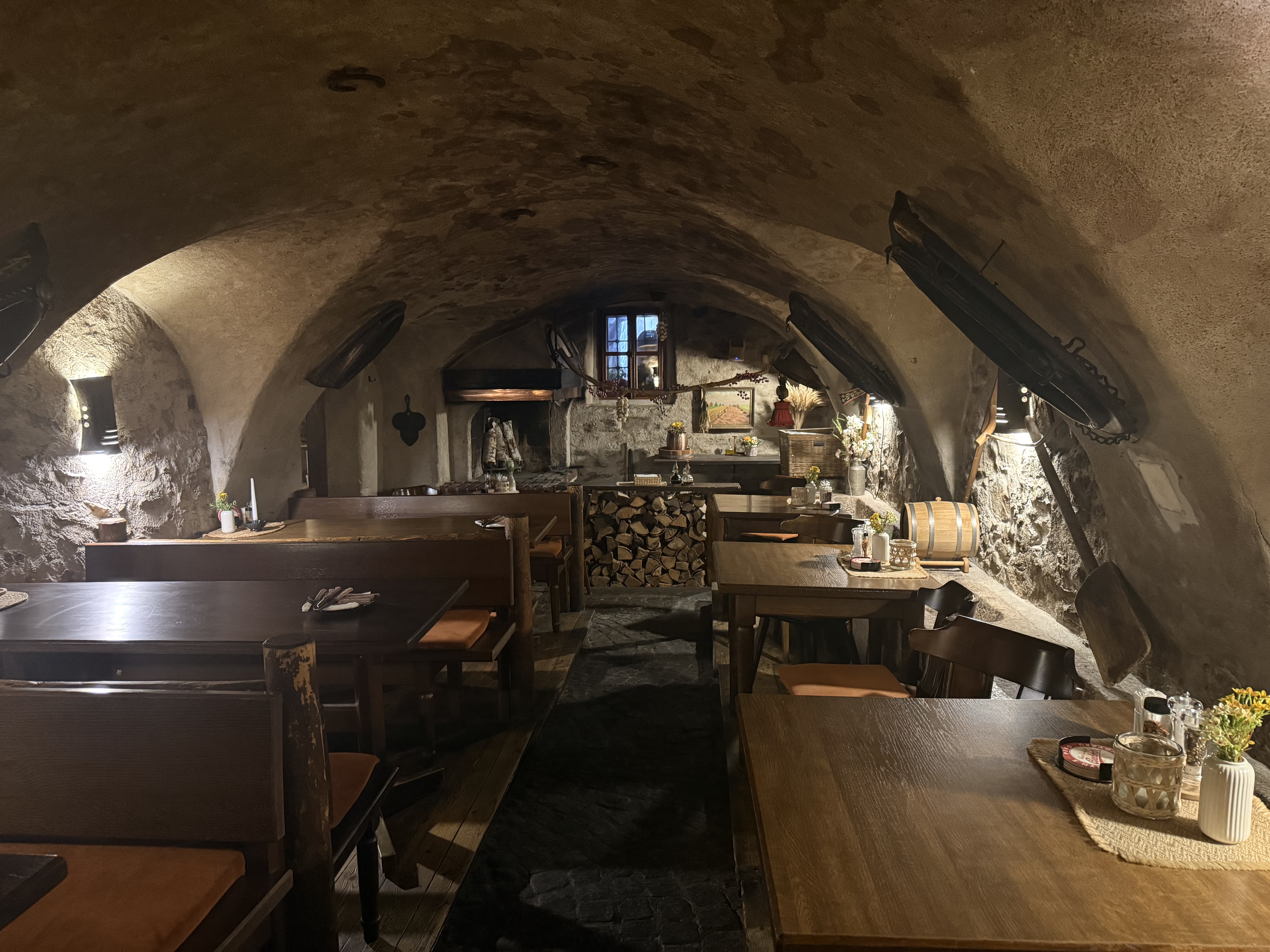
My tour included lunch in Mastal Restaurant, which is in a centuries-old building that was originally a stable. “Mastal” is “stable” in Czech. The setting was delightful, and the food was great. So was the wine! I was seated at a table with several others on our tour, and we had a good time sampling the dishes and sharing our experiences from the trip.
Passau, Germany
Our last port was Passau. We spent the day there, and then departed from the ship the next morning. We did a walking tour of the town with an amusing guide who had a good amount of “attitude” about her. I love a guide who tells it “like it is” rather than sounding like a tourism brochure.
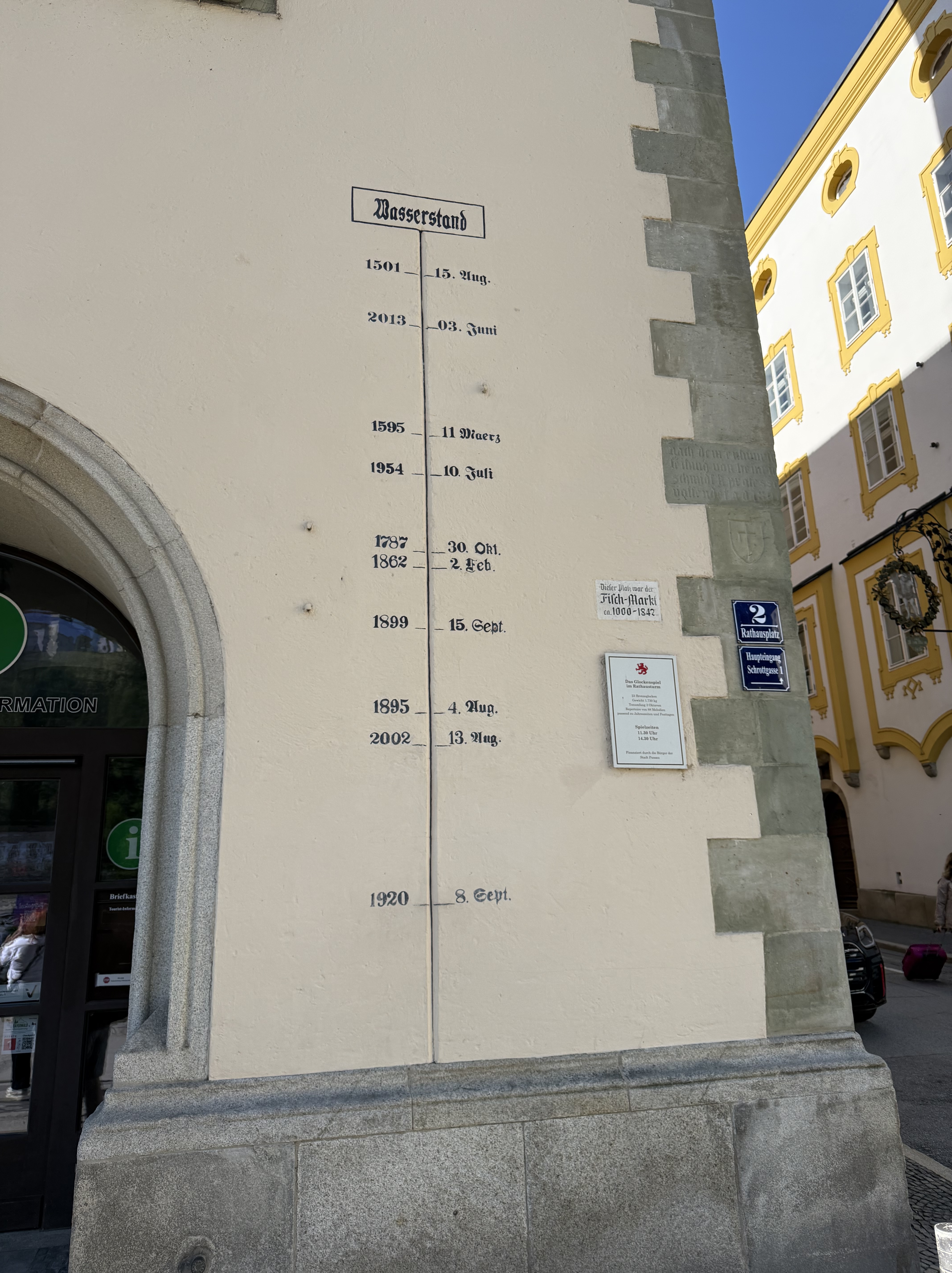
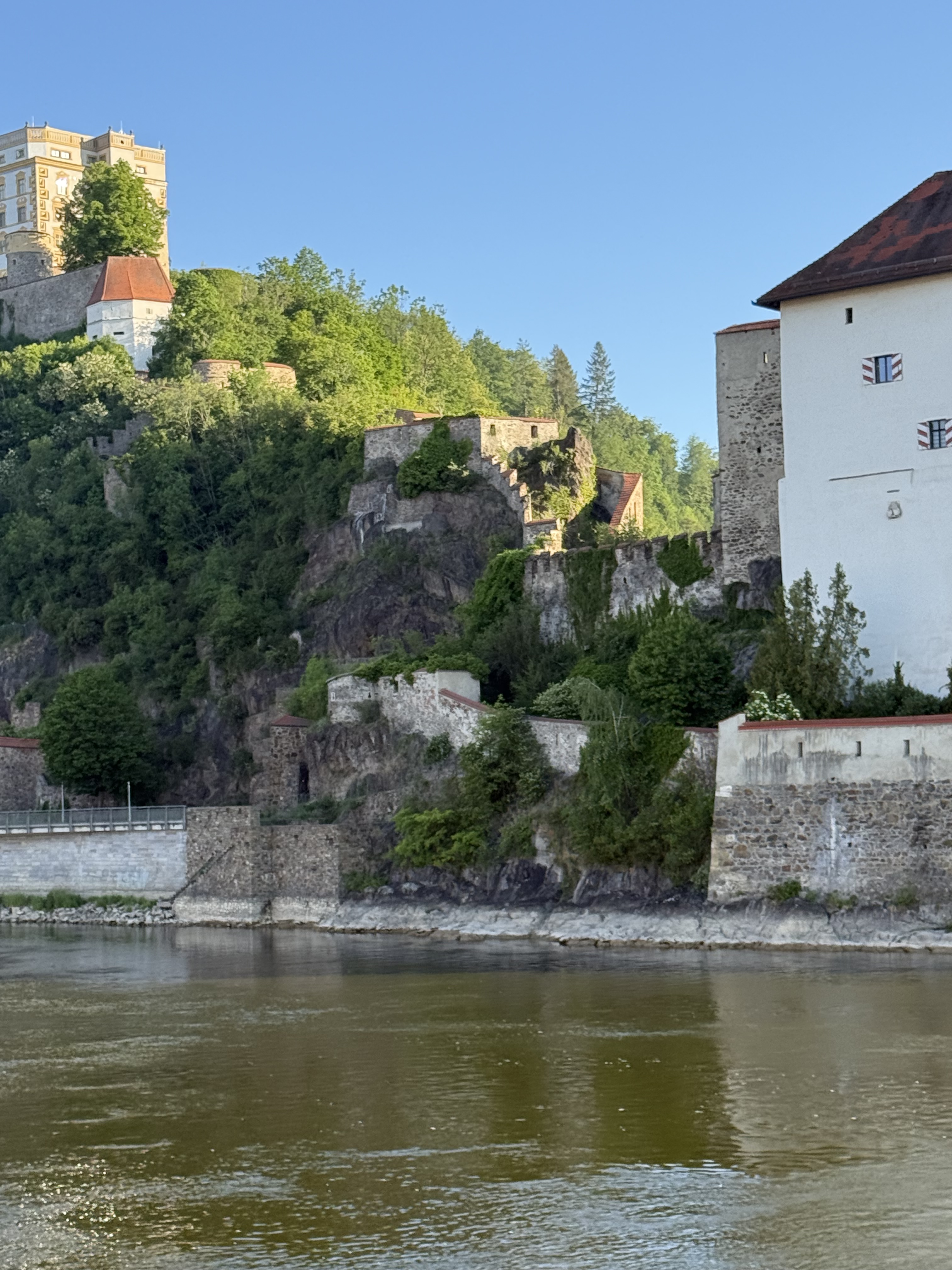
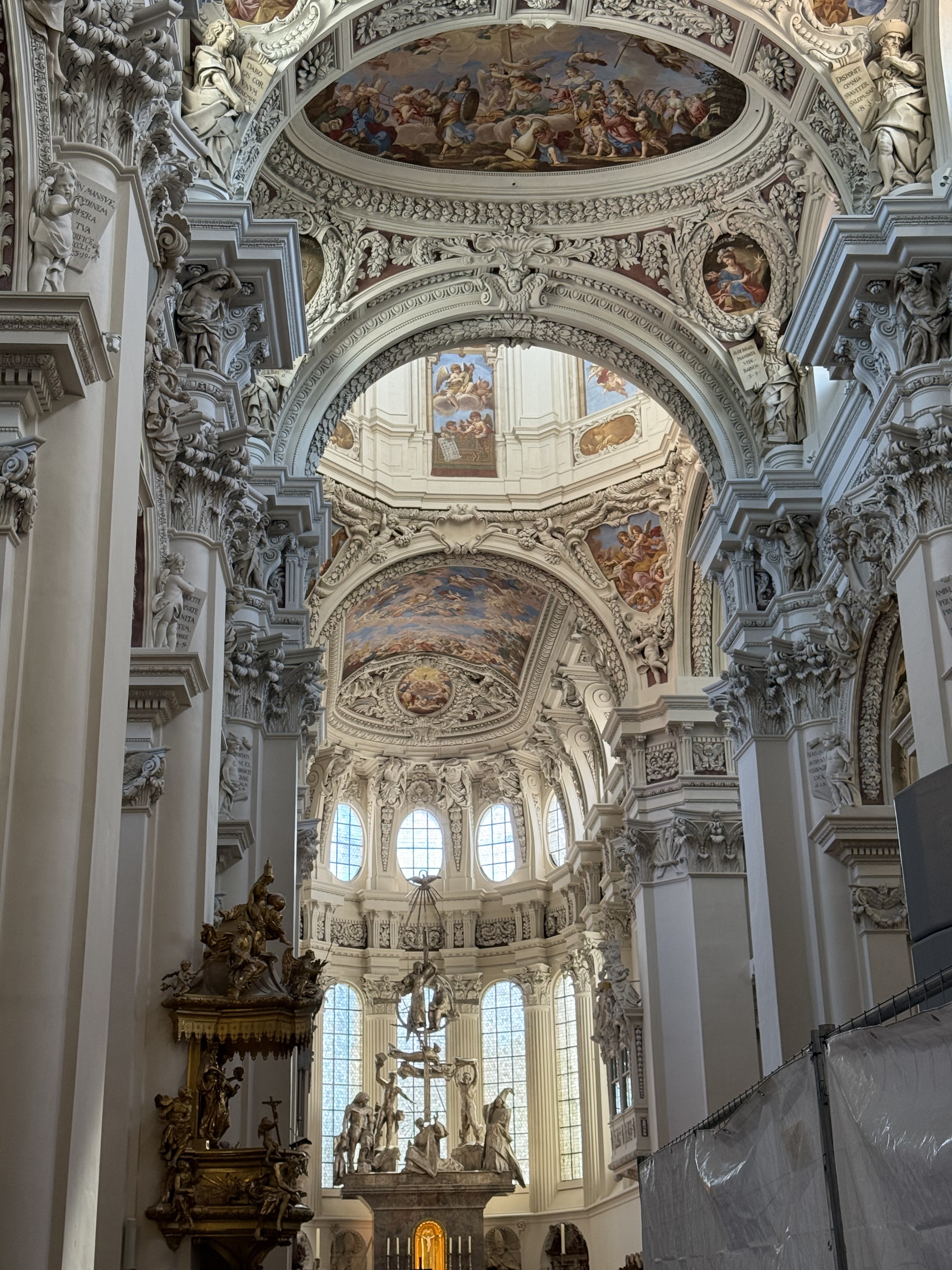
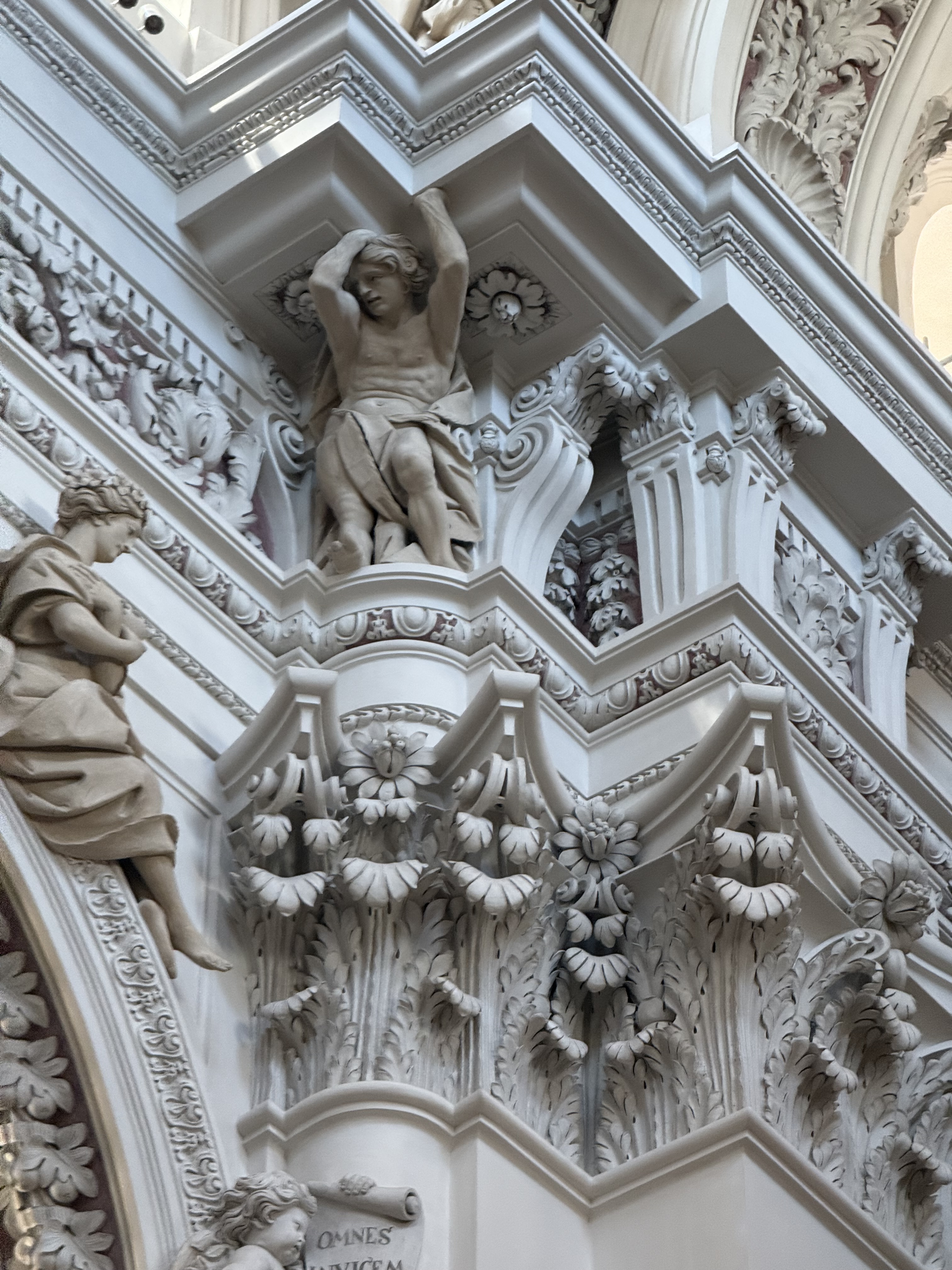
I found the architecture amazing, if a little over the top at times. It’s interesting that the town has suffered many floods, but still looks lovely today.
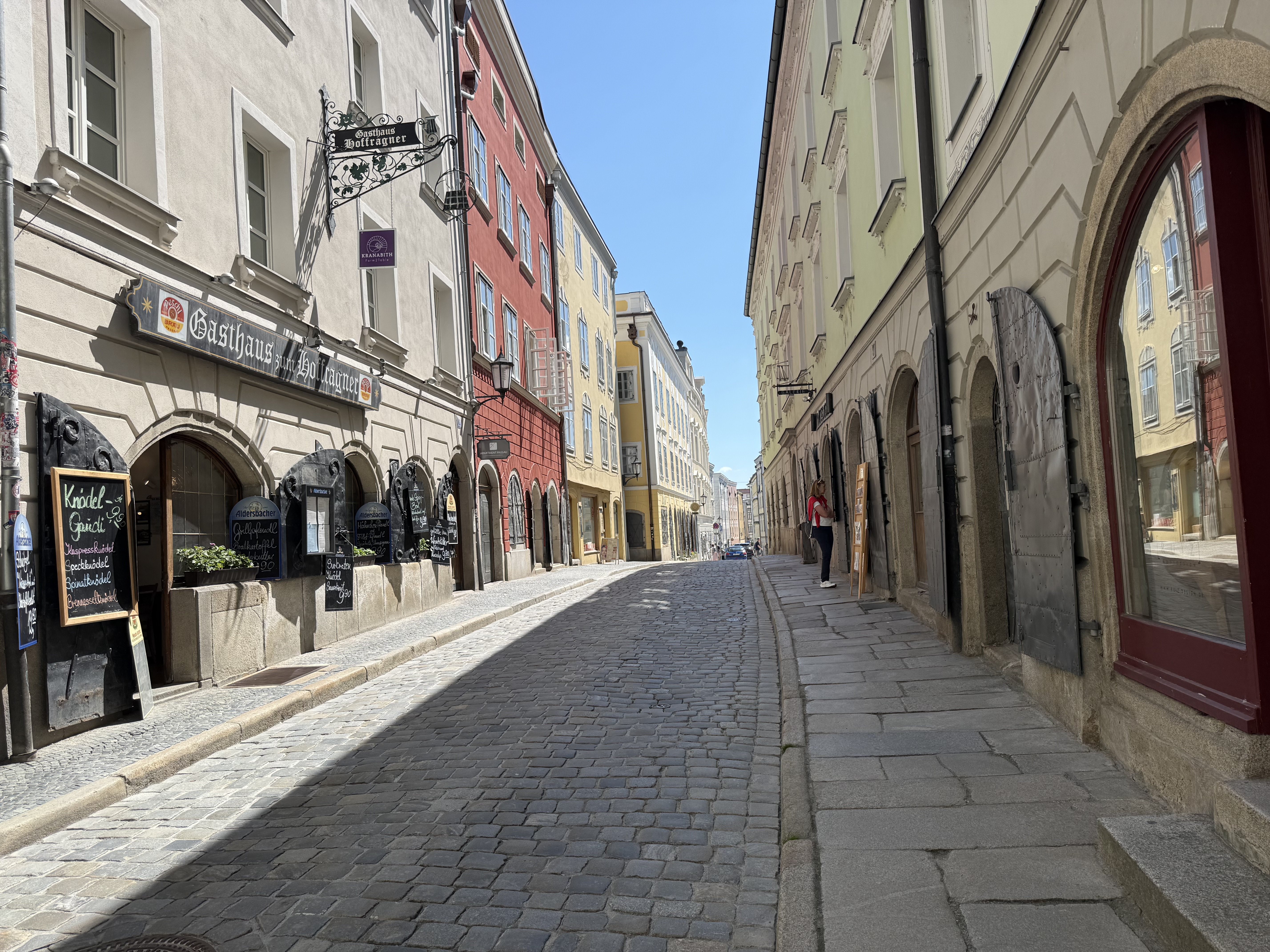
History of floods.More cobblestones!
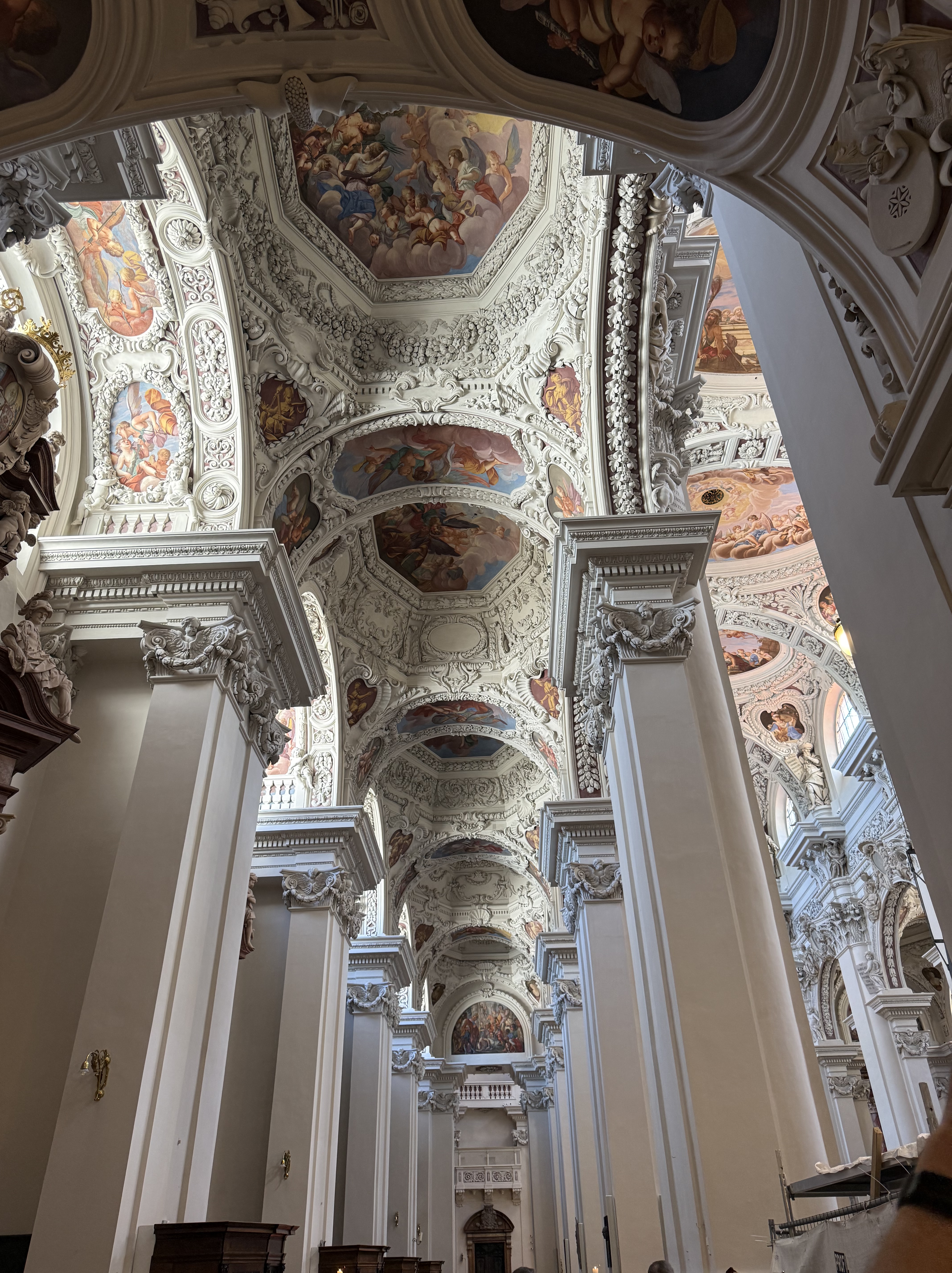
St. Stephen’s Cathedral
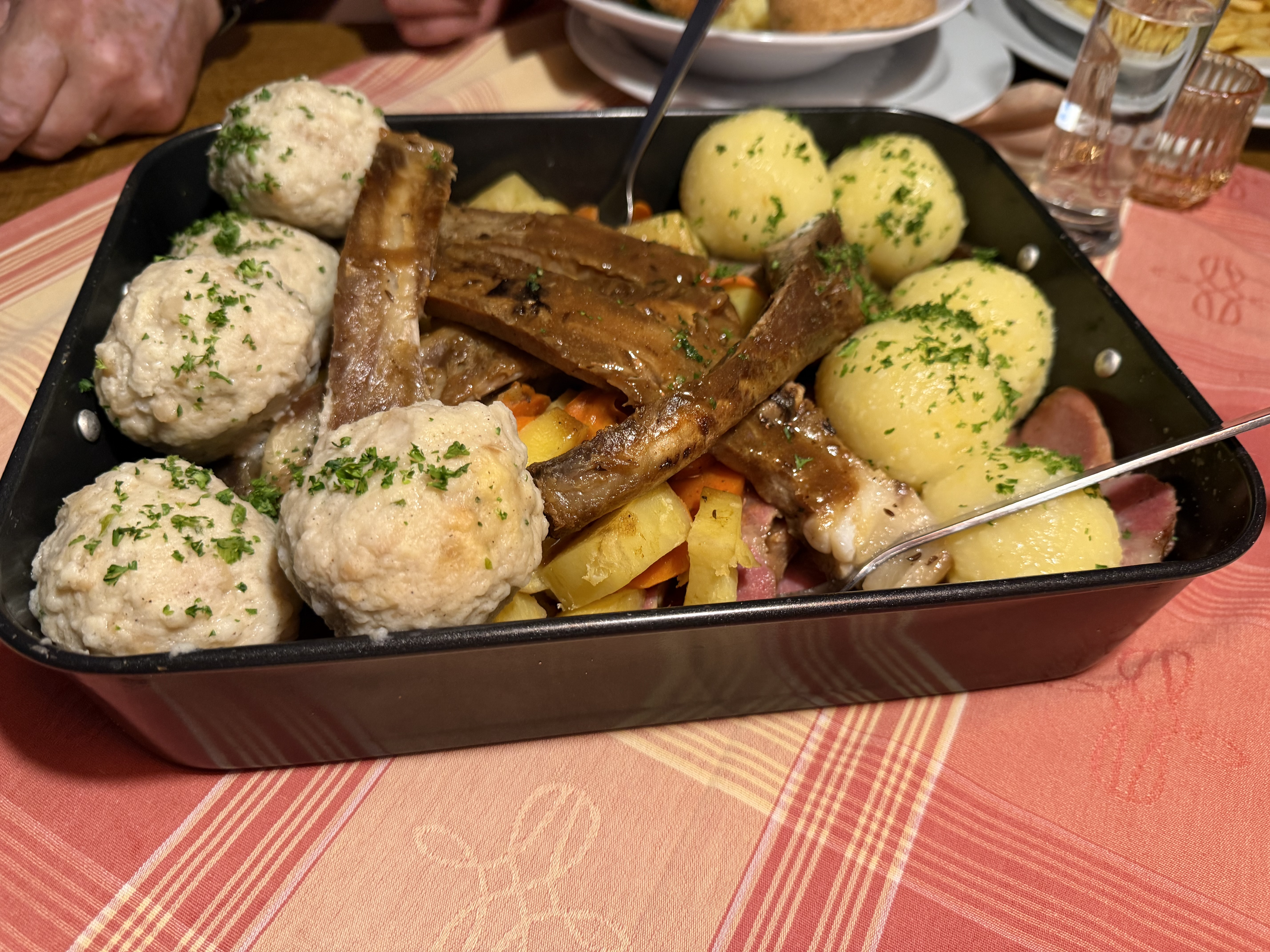
In the evening our group signed up for a traditional German dinner with music. It turned out we were the only people to sign up, so we had the evening all to ourselves. Our guide turned out to be the same woman who was our guide earlier that day, so we knew we would have a good time. Especially after she made sure we all had a beer in front of us immediately.
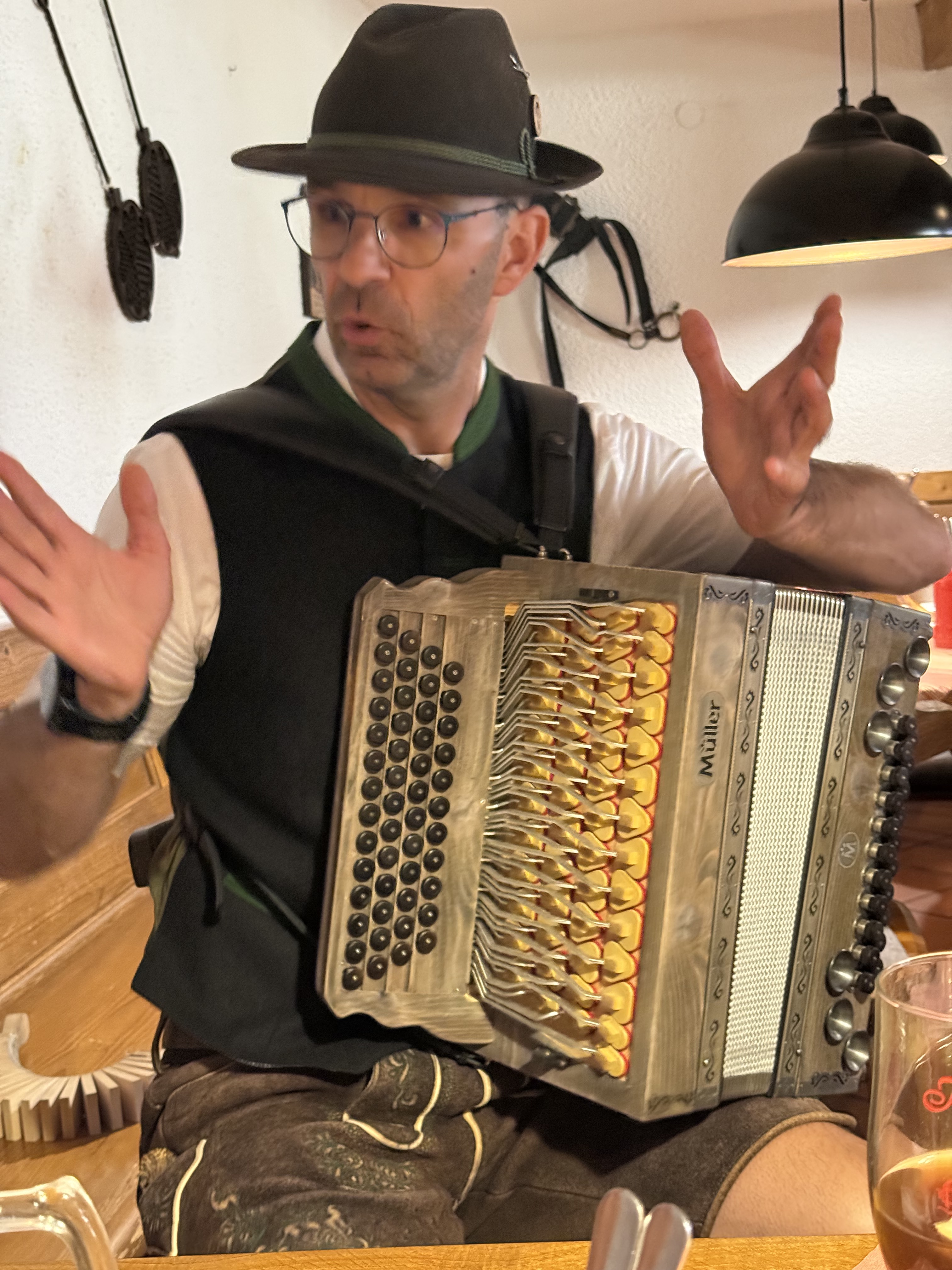
With such a small group, we had one musician instead of a whole band, and that turned out to be a lucky event. He sat with us, ate with us, and talked about his music and his instrument. He played his Chemnitzer concertina, which he had made to his specifications. It’s similar to an accordion, but the keys are different. He also had some fun wooden clackers that we got to use to keep time with his songs. He even explained his traditional German clothing.
What a lovely evening to finish our river cruise.
The next morning we were all packed and headed for the train station-Anna and me to head to Frankfurt, and the rest of our group to Munich and more beer. The train ride is a post of its own.
Leaving Prague by rail, friend Anna and I headed off to Budapest to meet my cousins and friends for our Viking cruise on the Danube. The train ride was nice, but we had a rocky start. We had reserved seats, and our ticket showed a car number and seat numbers. It was a long train, with no car numbers visible. We tried to ask rail personnel, but no one seemed interested in answering questions by two old ladies dragging suitcases. We jumped on a car just before the train started rolling, and discovered car numbers on signs INSIDE the train car. And we were about five cars away from where we needed to be. Apparently we weren’t alone, since there commenced a Keystone Kops dance up and down the aisles as riders moved either forward or back with their luggage in the narrow aisle. When we got off in Budapest, we found that the car numbers were on the outside of the train, but on the opposite side from boarding!
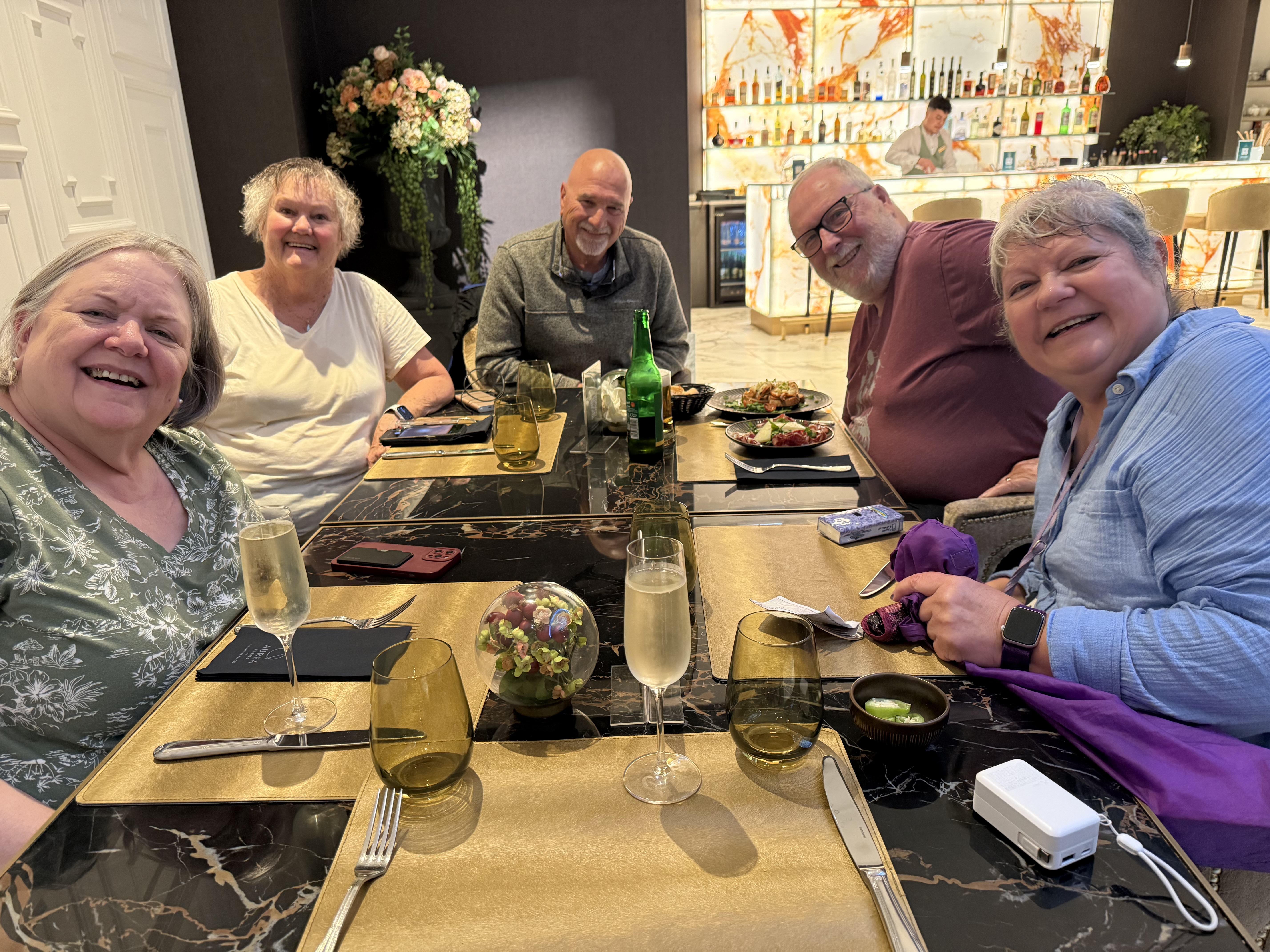
Our next challenge was on arrival at the Aurea Ana Palace Hotel in Budapest. I chose the hotel for its proximity to the ship dock (it wasn’t that close-see later in the post) and because it claimed to be “on the banks of the Danube River” (it was two blocks away and surrounded by taller buildings.) On arrival we found ourselves at the bottom of a staircase-no elevator-to get to the front desk. And when we got to our room, I found that they had put us in a room with a King bed, when I had requested two queens. We were told they had only one room left with two beds, and it was downstairs. You guessed it: no elevator. Well, at least we had a lovely view of…the other side of the building. And the windows to the balcony were locked. Bottom line: if you go, choose another hotel. I’m usually pretty good at choosing lodgings, but once in a while I get skunked. Anyway, we met our travel companions and had a nice dinner with a little bubbly to make me less grumpy. I’d say the best part of the hotel was the bartender. That’s him in the back behind the bar.
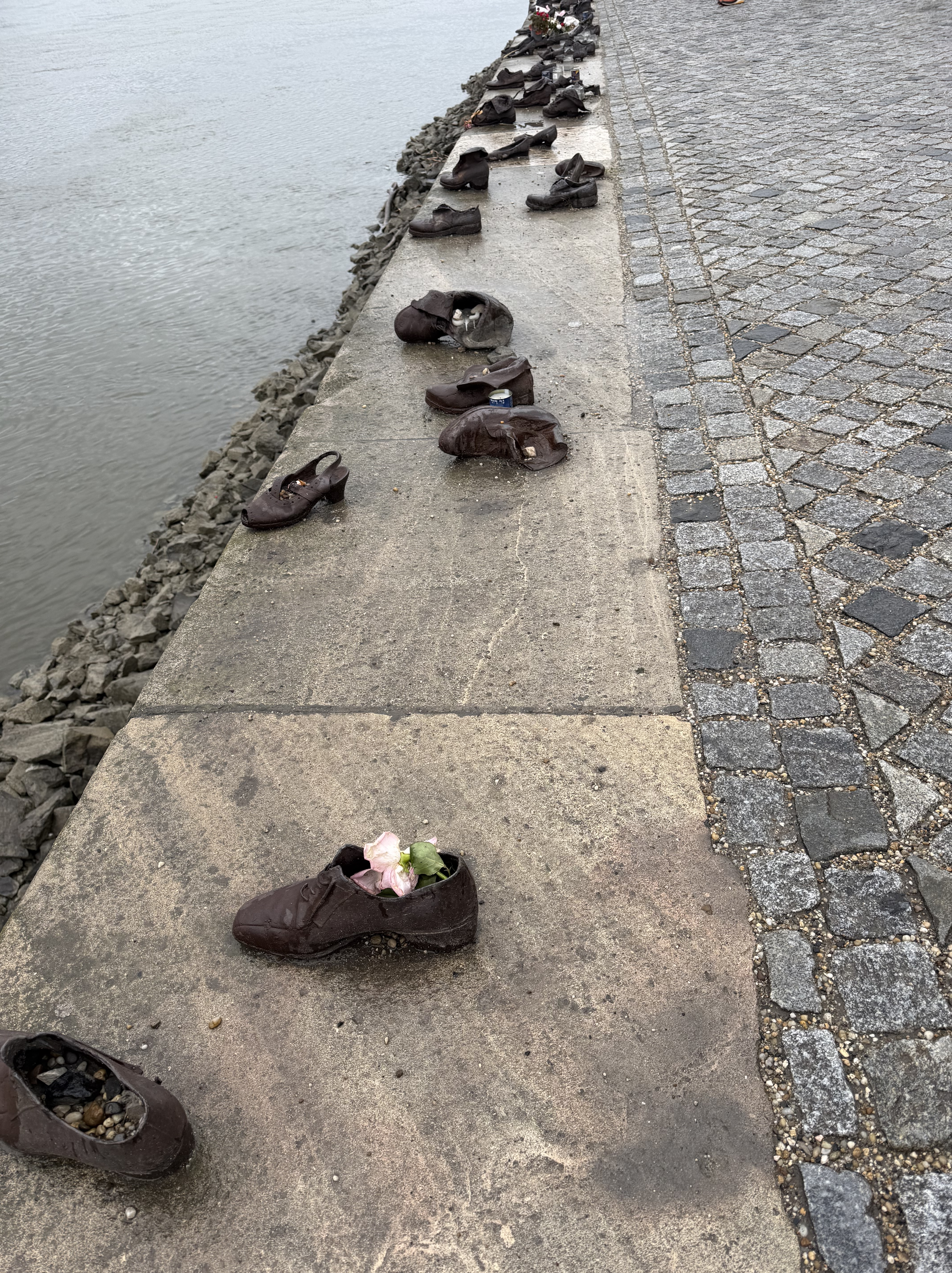
The next day we took the hop-on hop-off bus to get an overview of the city. We just rode it around to get an idea of what we might want to see more of, since we had a guided excursion planned in two days. We also explored along the Danube, and came across a place I had wanted to visit. Shoes on the Danube Bank is a memorial to the 23000 people, mostly Jews, who were murdered during WWII by the fascist Hungarian militia. They were taken to the river and made to take off their shoes, because shoes were valuable at that time. They were then shot and the bodies tossed into the river to take them away. It was a moving reminder of that terrible time in history.
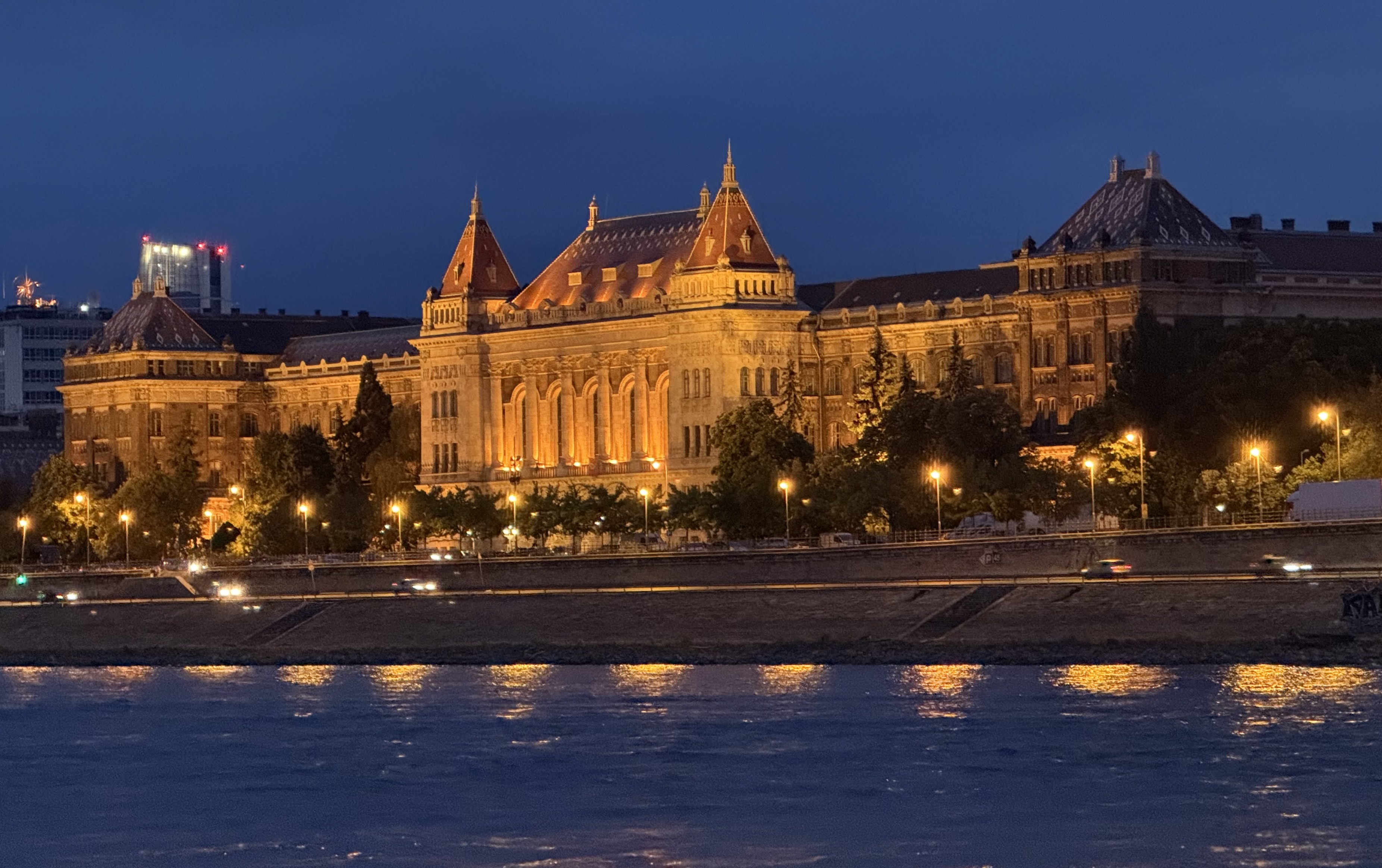
The Hungarian Parliament building by night was impressive.
The following day was the start of our river cruise. I again made a bad call: I ordered a Bolt taxi to take us to the ship. Our companions had the hotel order a taxi for them, but we wouldn’t all fit in one cab, hence the Bolt, which I’ve had great luck with in Europe.
To set the scene: it was pouring rain. The ship was at a dock over a mile down the river (there are several docks along the riverfront so the ships change docks from time to time.) We went out to wait for our taxi, and he pulled up on the corner a half block away. My friend went down and asked him to pull up to the hotel so we could load our bags. He did, with a surly attitude. He then drove us to an entrance to the riverside road, which had been closed for a marathon race the previous day, and told us to get out. We asked where the ship was. He said, “You walk,” using his fingers to indicate walking. We protested that the ship was nowhere in sight. He said “Road closed. You walk,” and he got out and unloaded our bags. So there we were, with the rain coming down like it was trying to fill up the Danube again, dragging our suitcases along a cobblestone road by the river. We walked a mile in the rain until we came to the ship. Which, incidentally, was docked in a place where taxis were pulling up right next to the boarding ramp. I know it was a mile because my Apple watch told me so. I also averaged two four letter words per yard. At least. And to make it even more ignominious, I got a text from my cousin telling me he was in the bar on the ship having his first scotch.
All that aside, we were welcomed and fussed over by the ship personnel, and headed directly to the bar in order to make me less grumpy. Again.
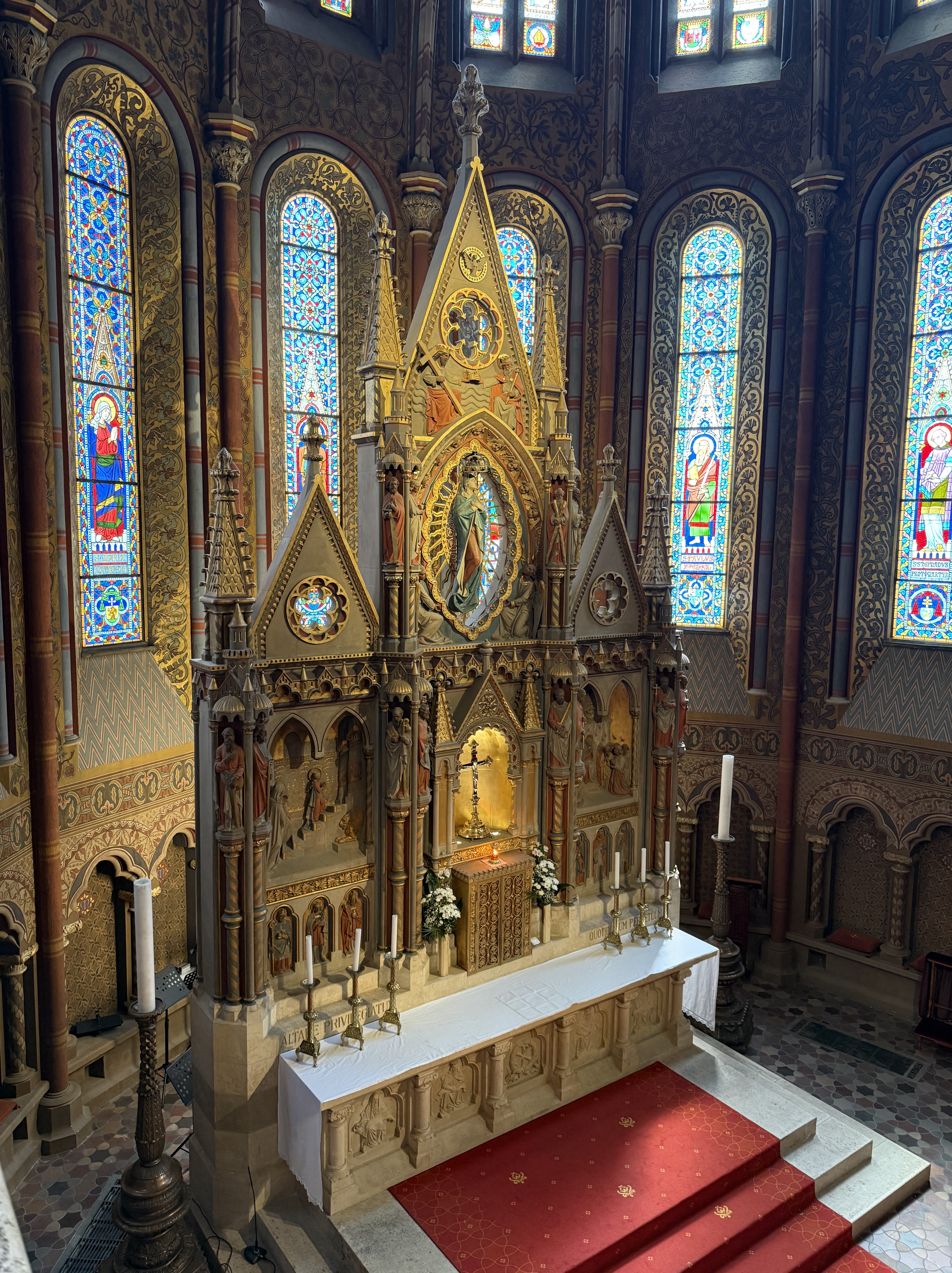
We spent two nights in Budapest aboard the ship, allowing us one full day to explore the city more throughly. We had booked a private tour, and that turned out to be one of our better decisions. There were six of us along with our driver and our guide. We met with our guide in the morning to decide on our itinerary, and off we went. First across the river to the castle district, where our guide gave us a great tour of Matthias Church.
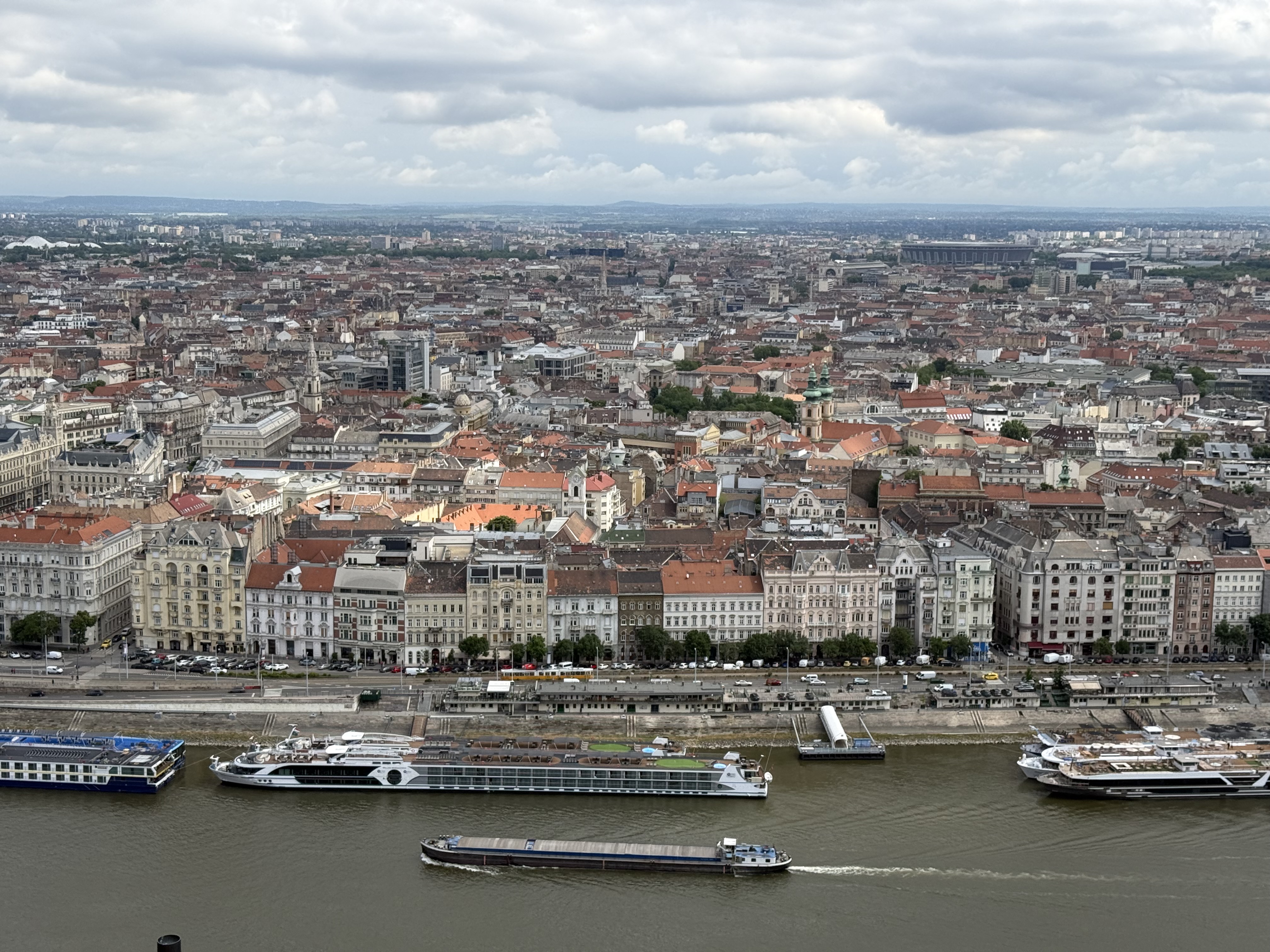
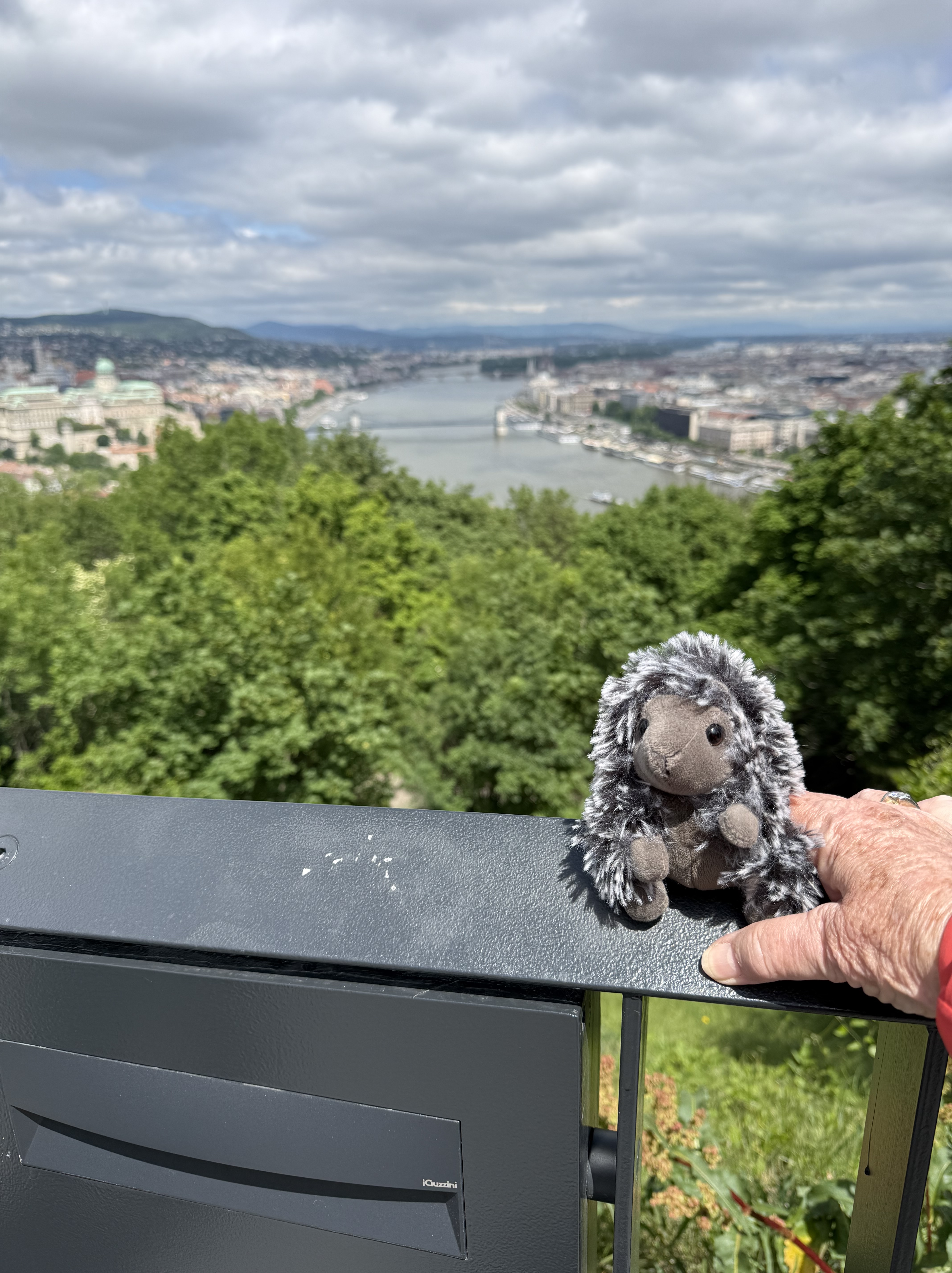
The shoreline was crowded with river boats.Polly in Budapest.
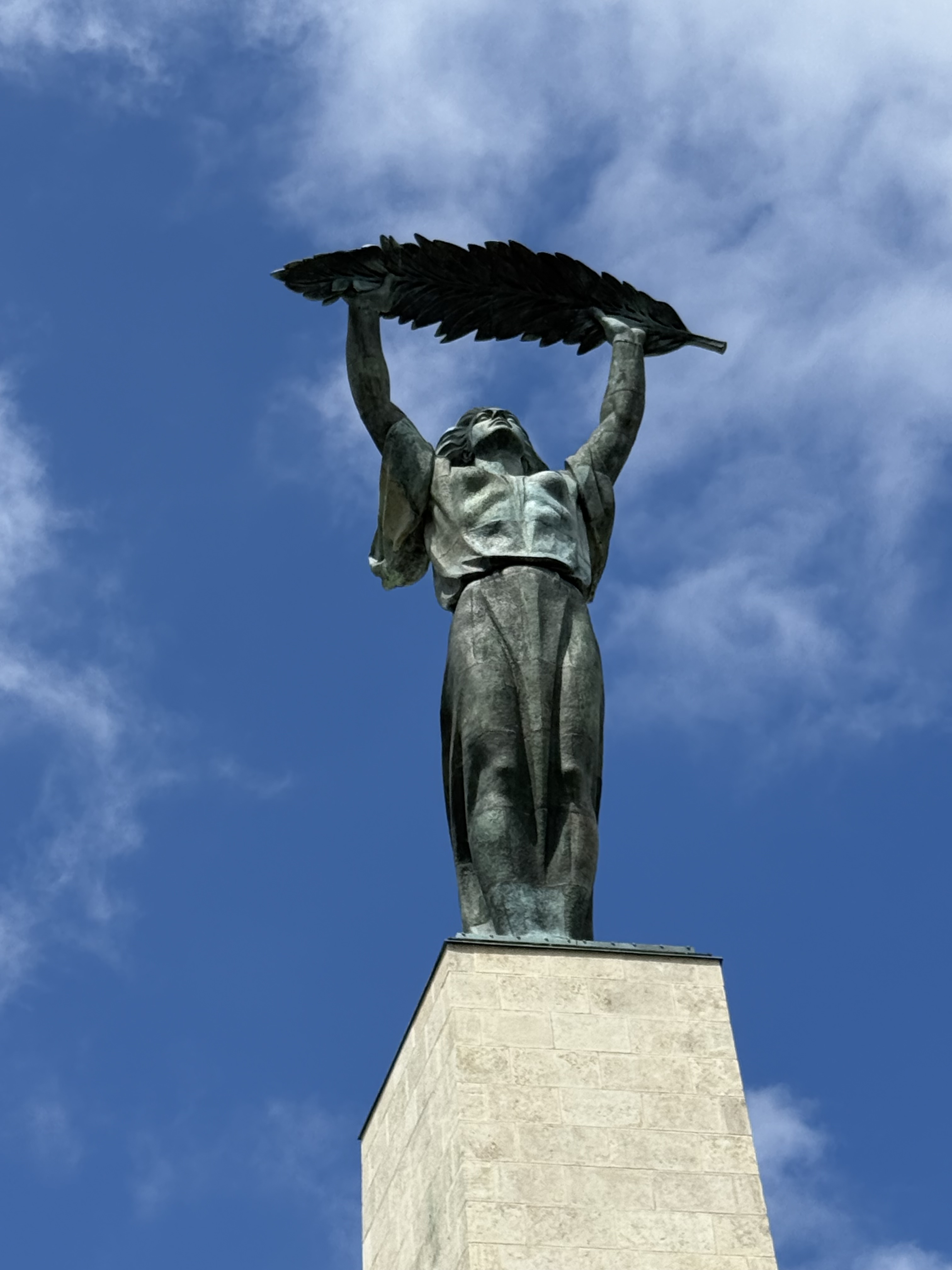
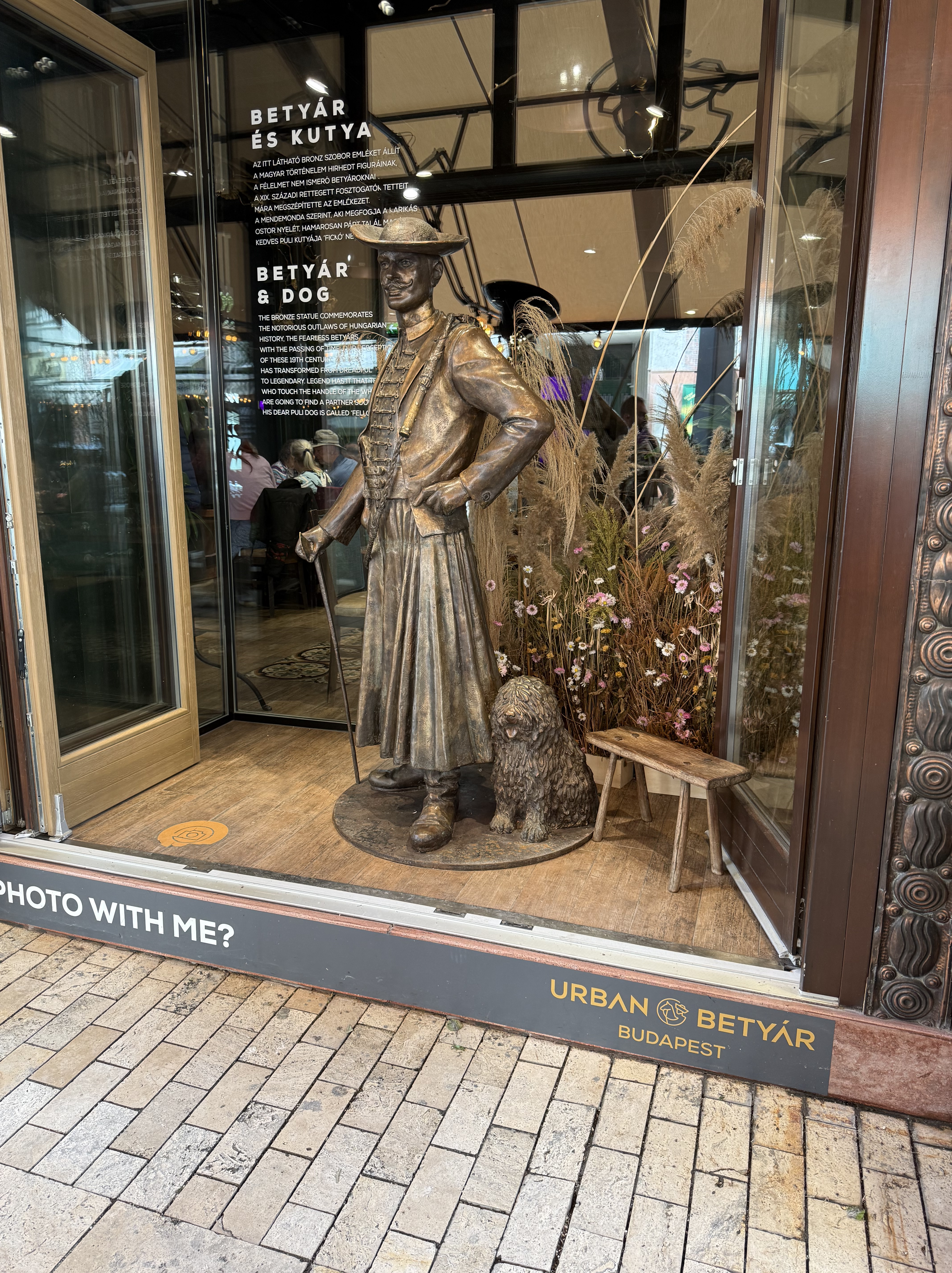
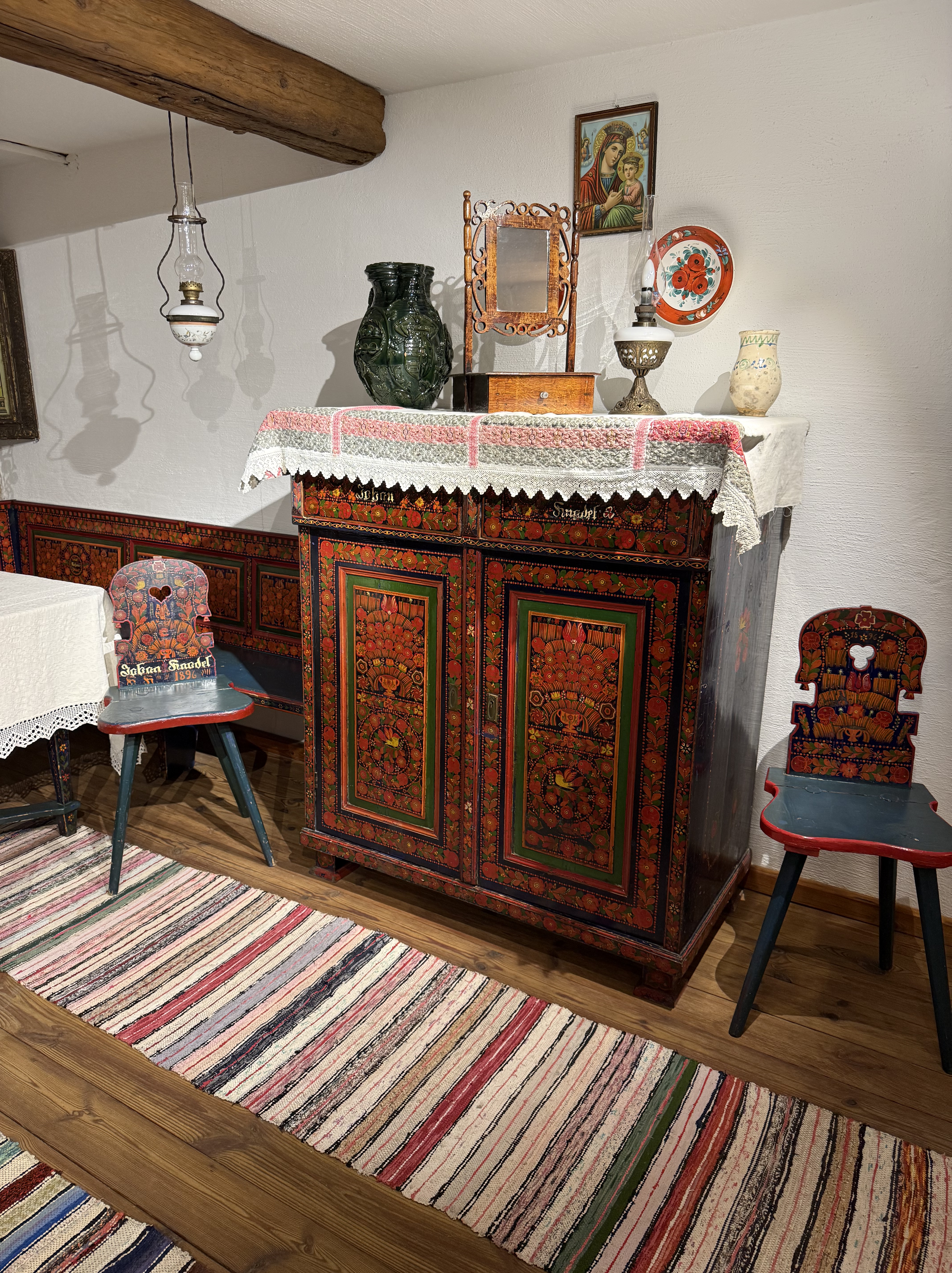
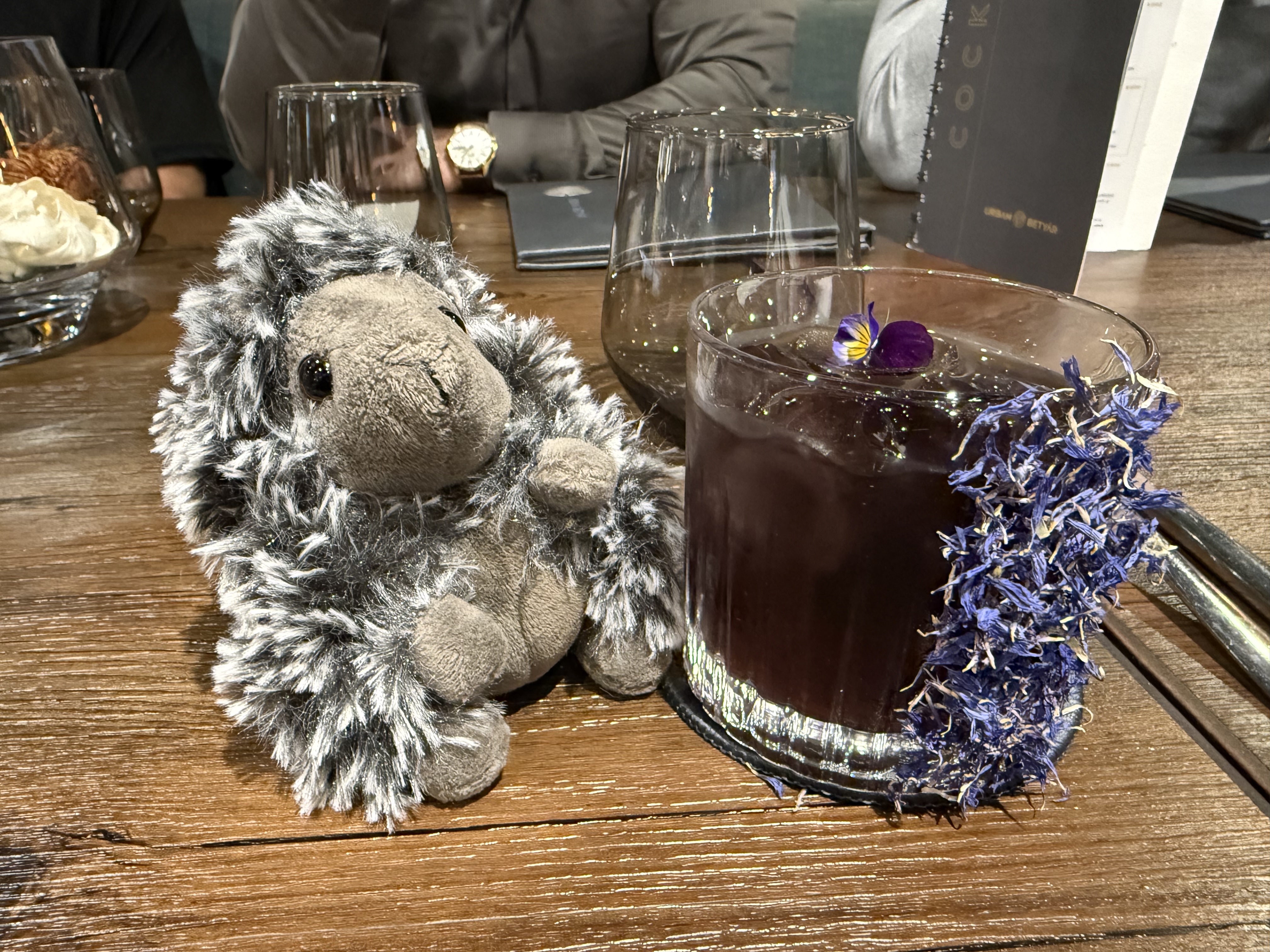
Then we went to the Citadel to take in the incredible view of the city. After a stop in a tiny art shop for my crafty and talented cousin to buy supplies, we went to a restaurant suggested by our guide. It was a great choice-the food was outstanding and it contained a museum of Hungarian life and artistry. I had a dish that included seared duck liver on a base of something similar to ratatouille. And a special drink that came with flower petals on the side!
Polly helped me celebrate my birthday with a special drink.
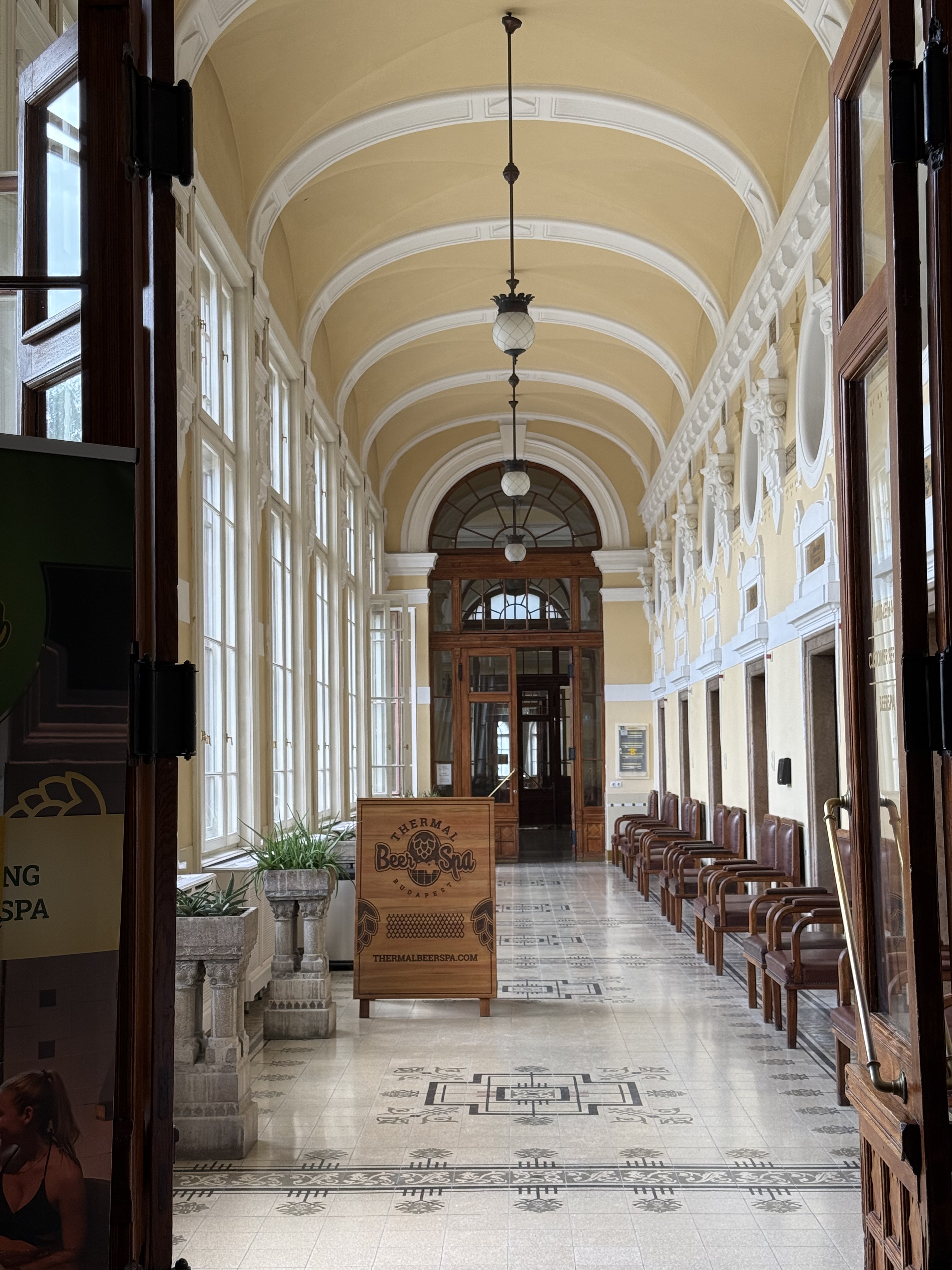
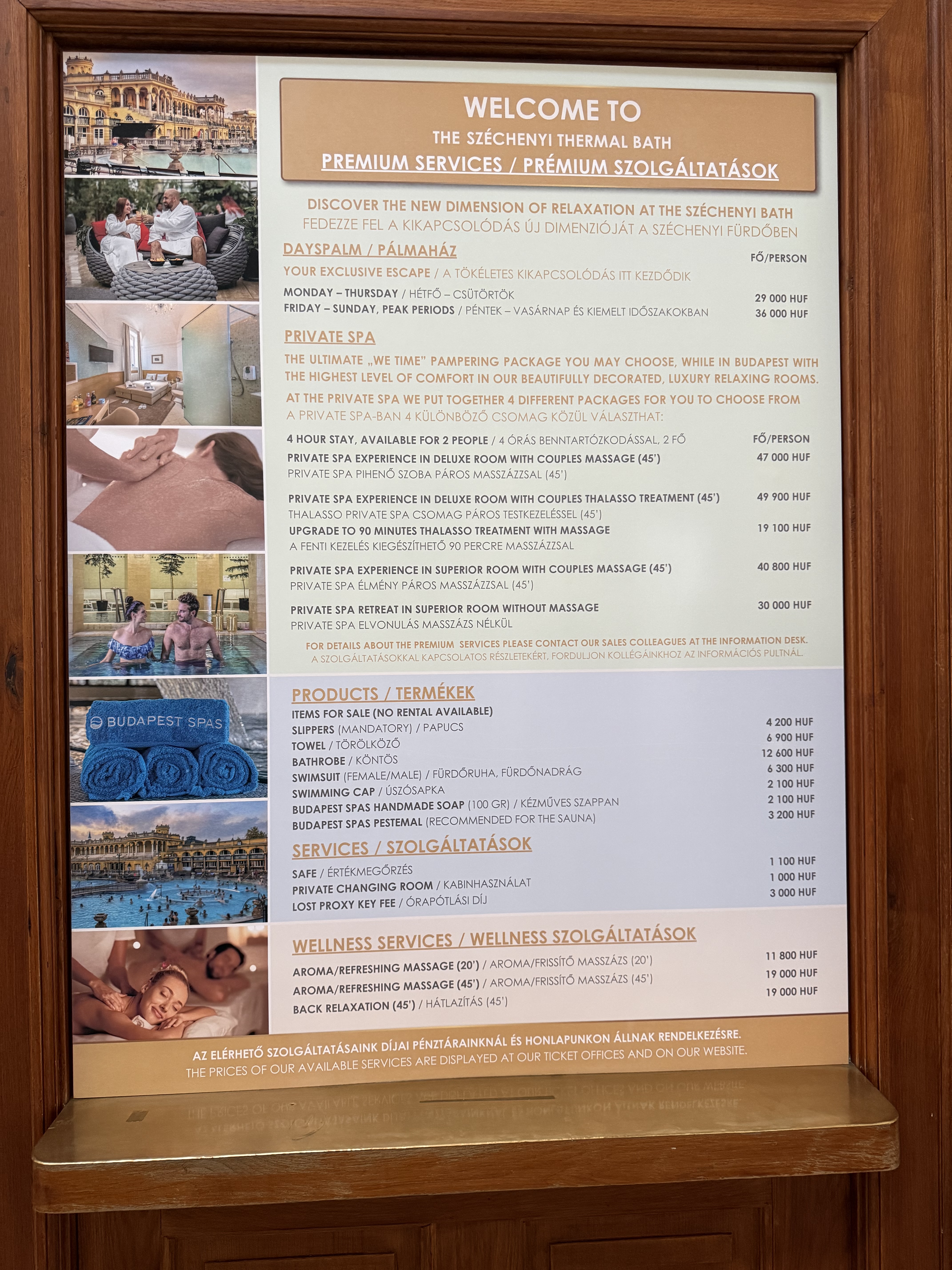
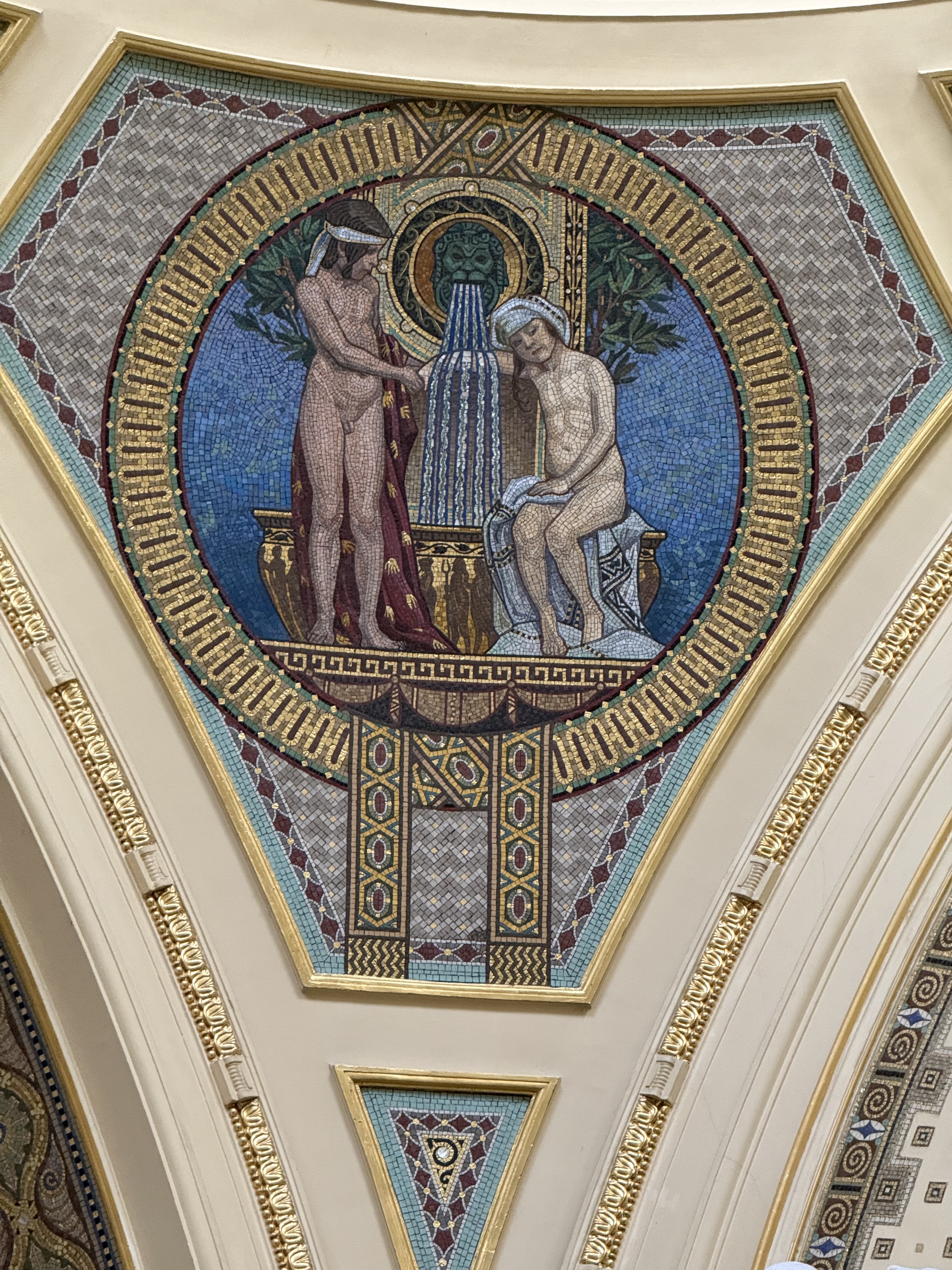
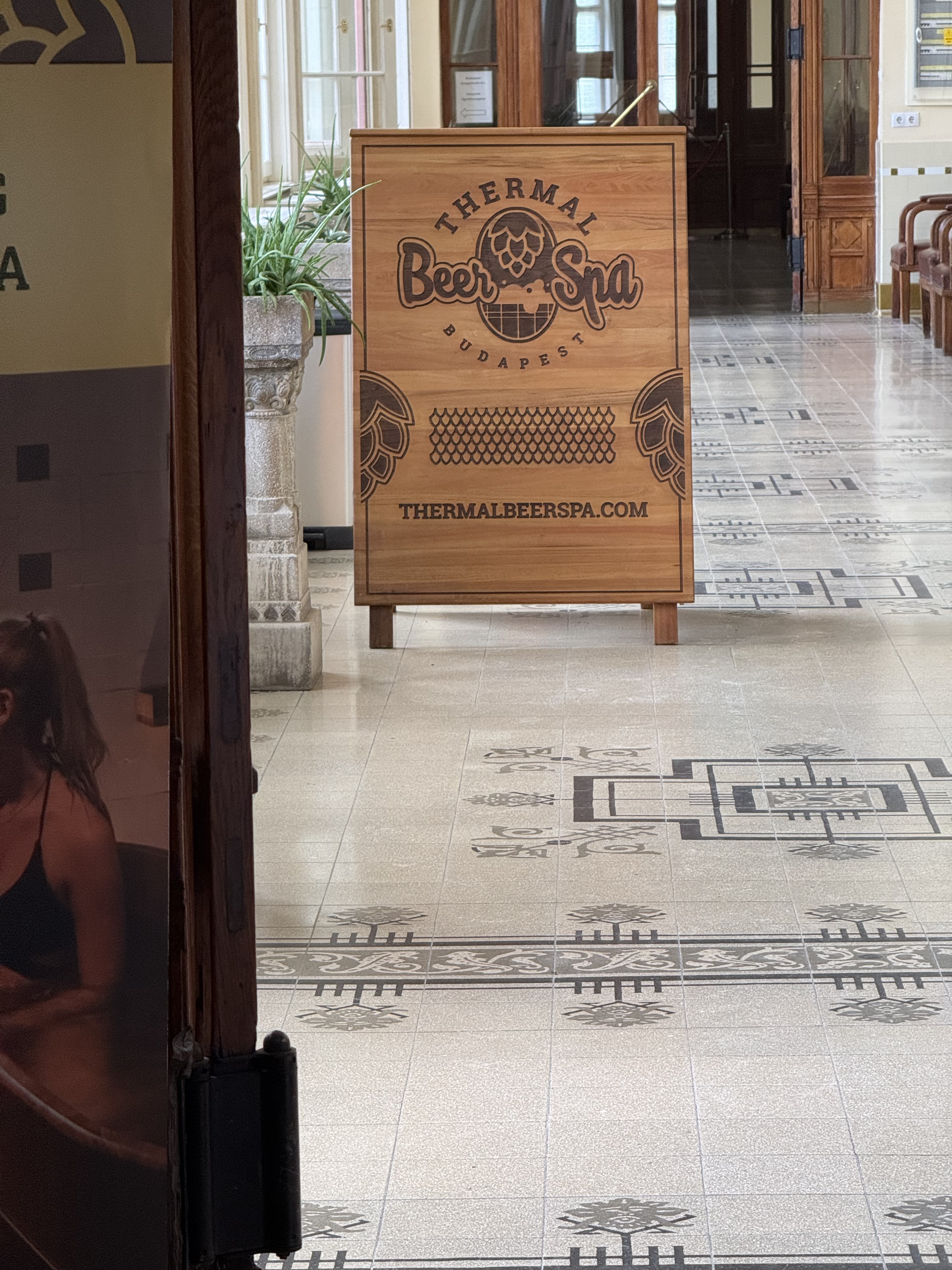
After lunch we headed out again, and made a stop at their thermal baths. How I wish I had come prepared with a swimsuit and more time! You can even bathe in beer!
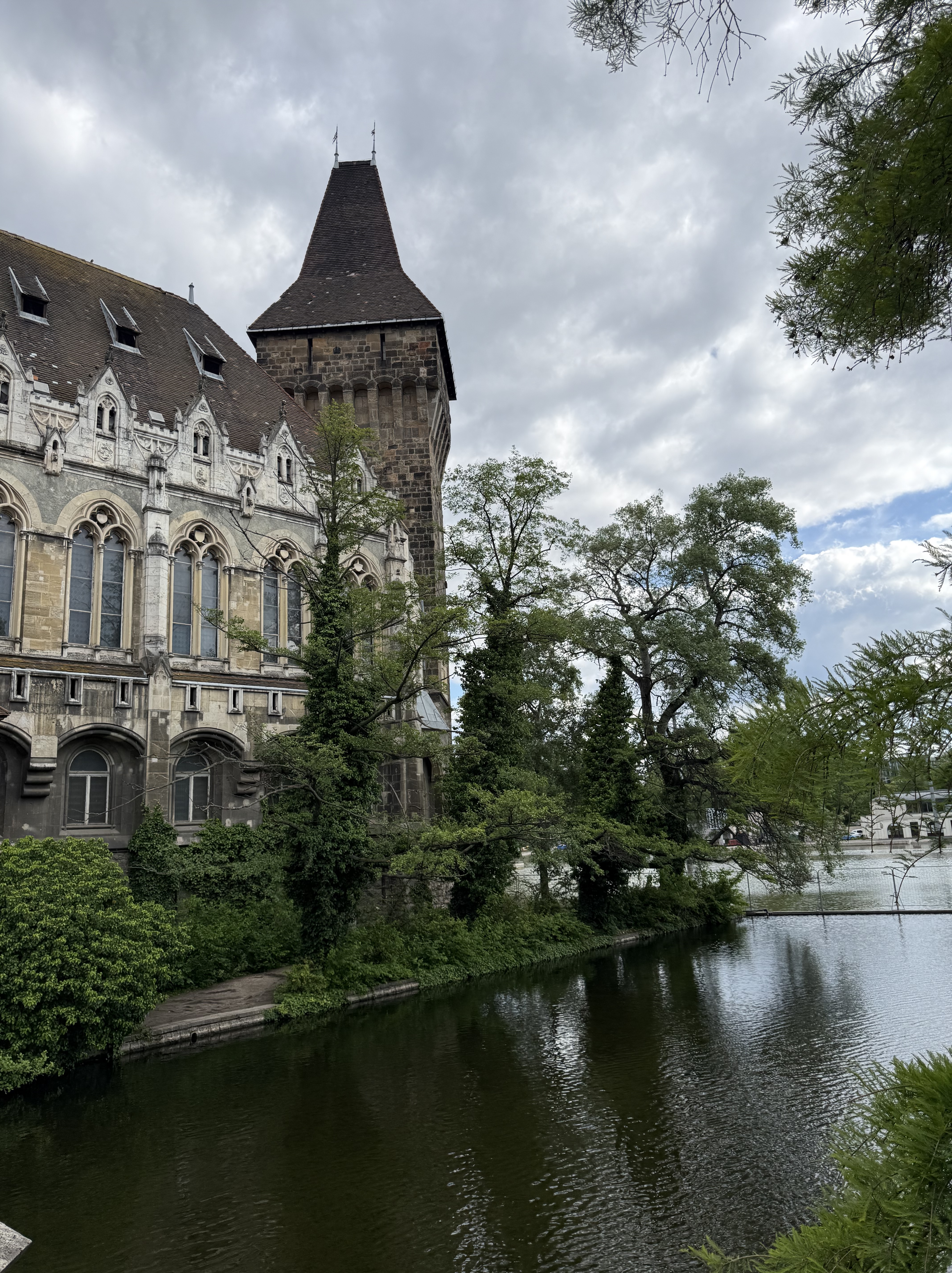
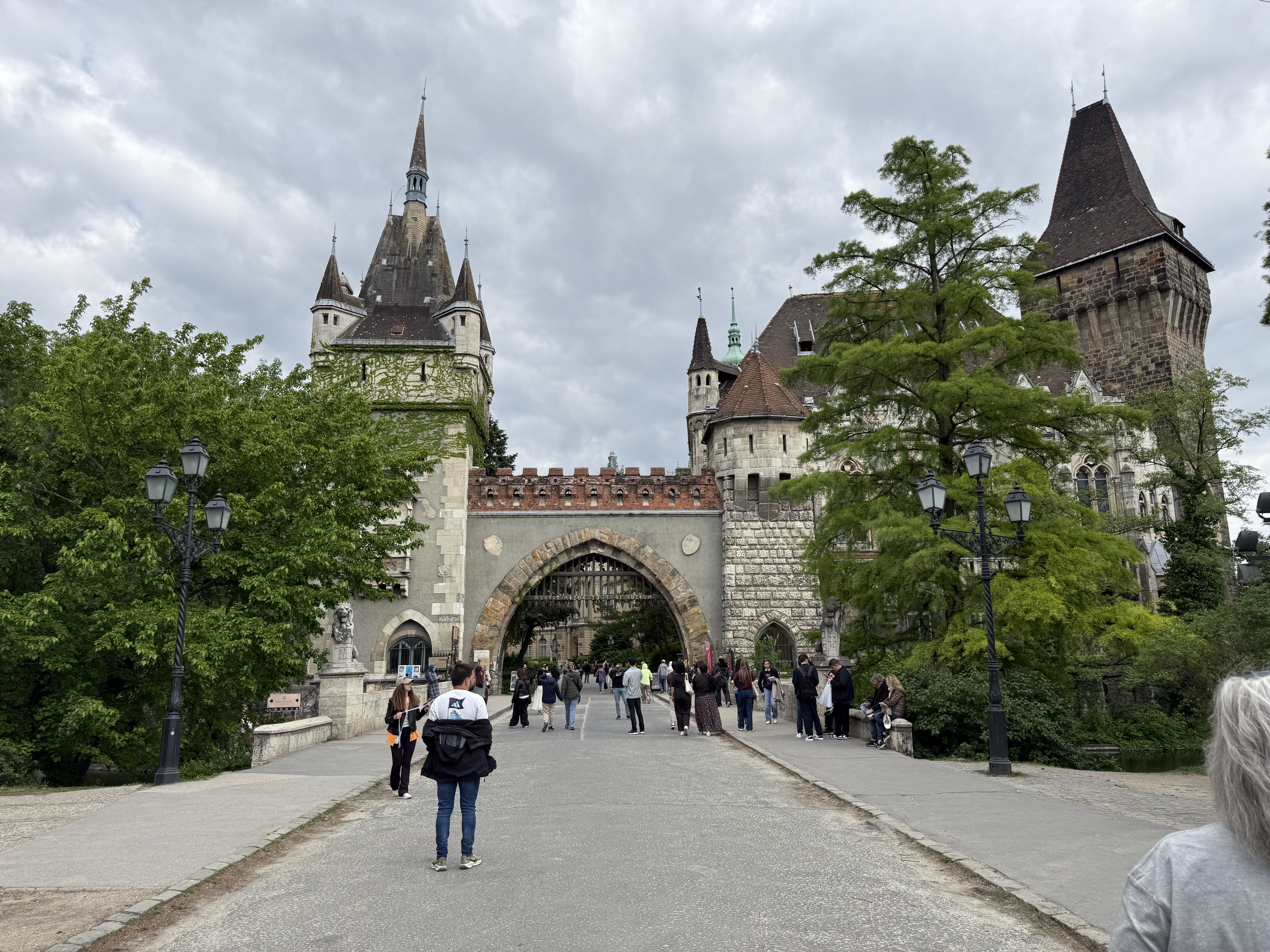
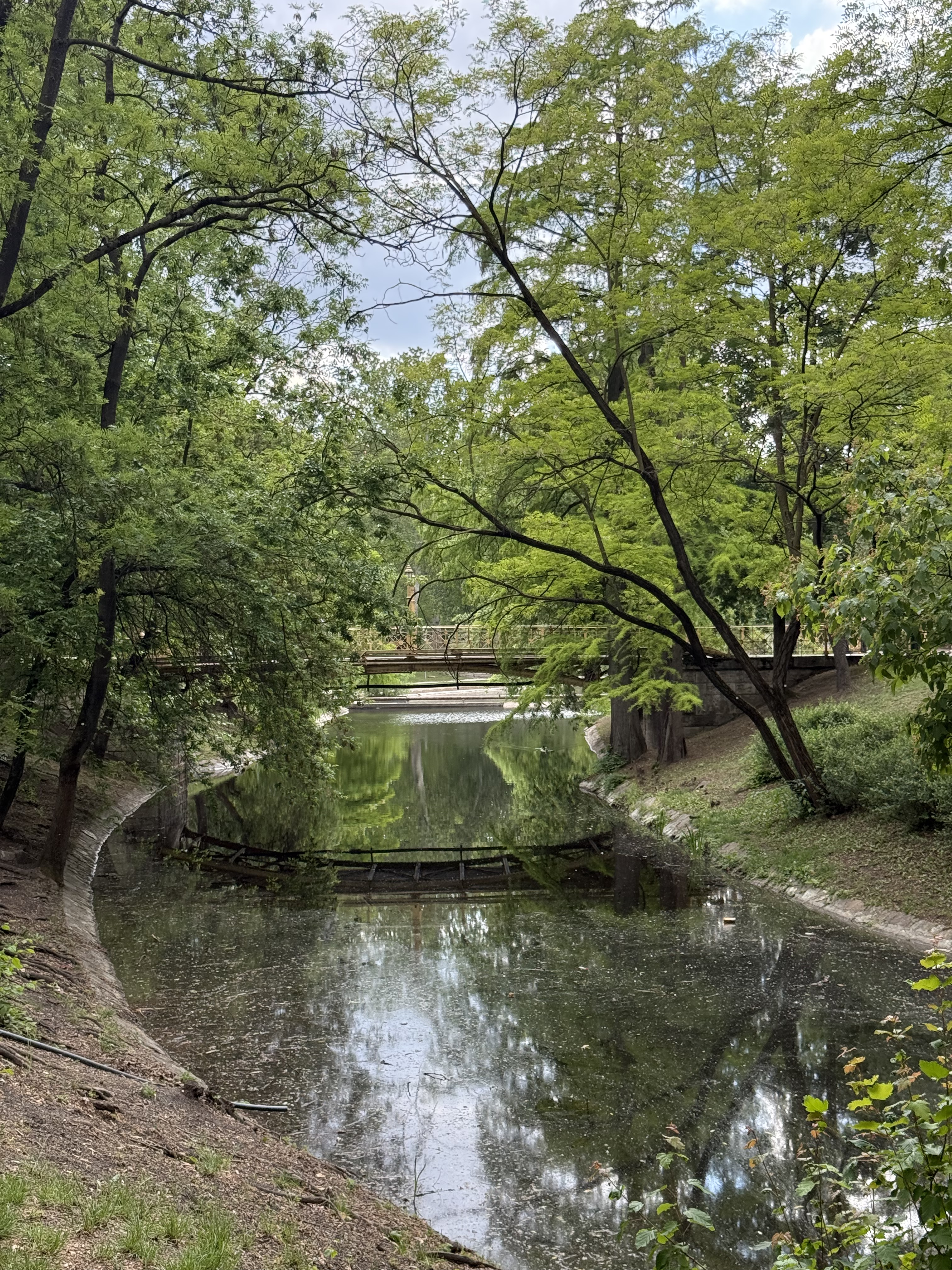
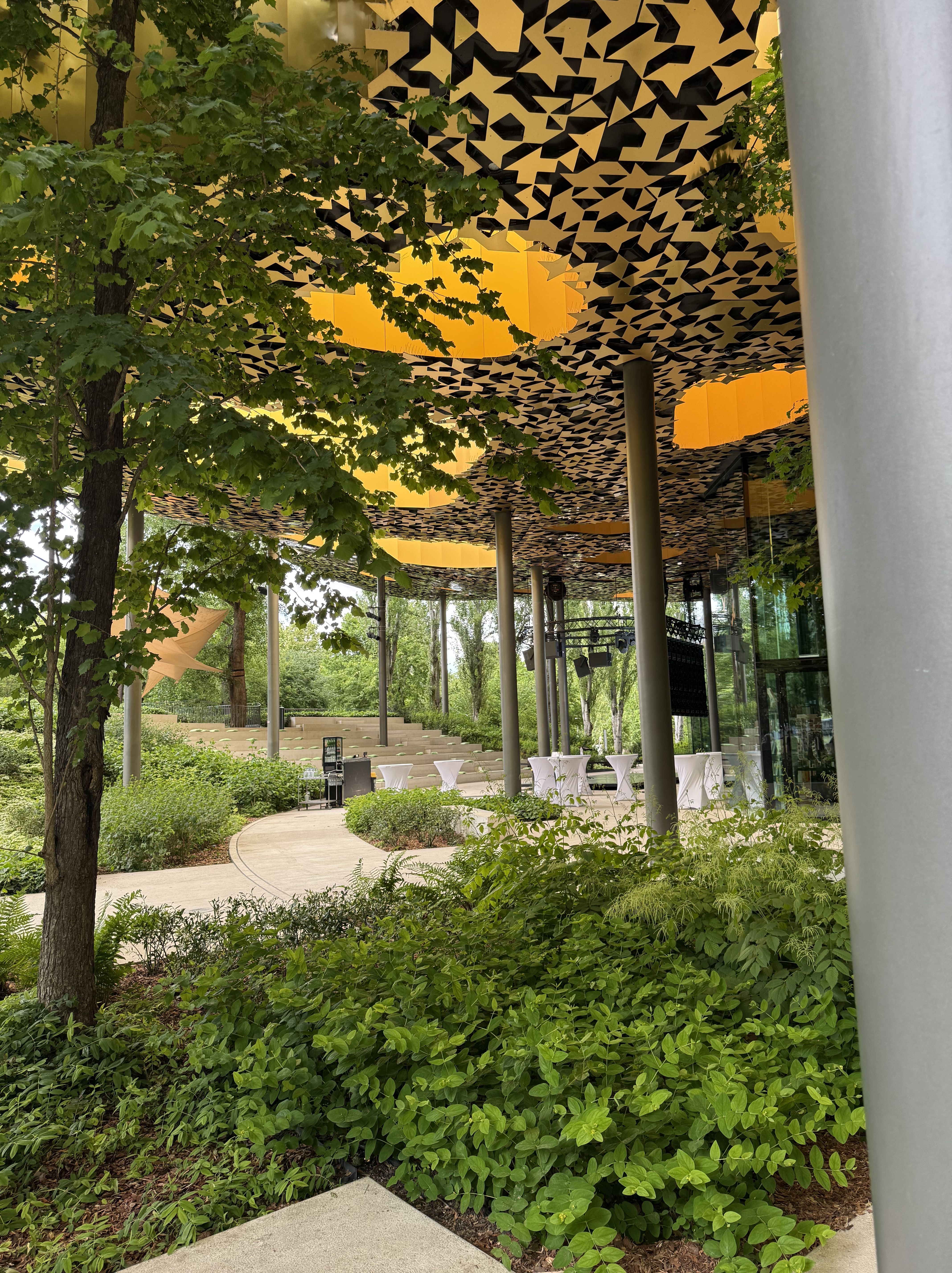
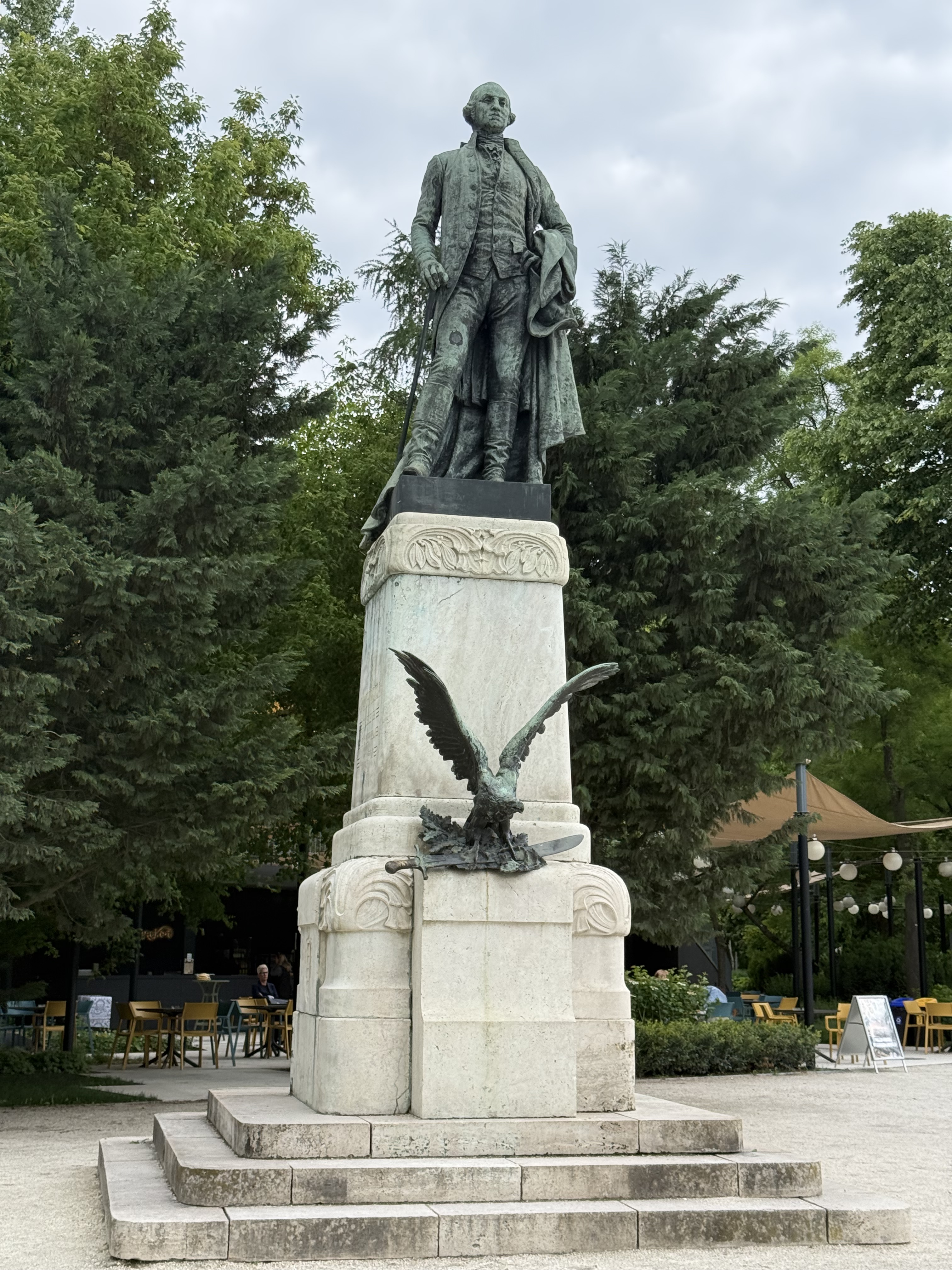
Our final stop of the day was Heroes square, filled with statues of famous and revered Hungarians. Nearby was Vajdahunyad Castle, which I thought looked like Dracula’s Castle. Turns out it was actually used as a set for one of the Dracula movies. There was a lovely venue nearby that was unfortunately closed for an event, but we did get to walk through the courtyard. It has won awards for architectural design, and I think they were well deserved. And how interesting to find a statue of a familiar American figure! Yes, that’s George Washington. I never knew he had Hungarian roots!
Our day was brought to a close with dinner on the ship and a birthday celebration to mark my eightieth year. I can’t imagine a better way to mark such an important milestone.
When we were planning this trip, part of the reason we chose this week was to celebrate my birthday and my cousins’ anniversary. Celebrating my birthday aboard a cruise ship in Budapest was so far beyond anything I ever dreamed of that it felt a bit surreal. Growing up in a small town on the Montana prairie, and then in Alaska, I could not anticipate something so amazing. I feel so fortunate to have experienced it.
First, let me make an admission. Prague was never on my bucket list. It was one of those places I heard about in passing, maybe a mention of WWII, maybe a historical reference somewhere. Prague was whim, an add-on, a “Why Not?” moment.
I had a river cruise booked with friends and relatives, starting in Budapest and ending in Passau. I invited a friend and coworker, Anna, to share the trip with me. This was to be the final adventure of my year of travel. And then I found myself with a couple of extra weeks between my petsitting in Washington state and the start of the cruise. I pulled up a map of Europe, and also my favorite train website, The Man in Seat 61: Themaninseat61.com. One of the recommended train trips was the route from Prague to Budapest; an easy trip of just a few hours and no connections. As I said, “Why not?” Incidentally, that website is probably the best travel site I’ve used, with the possible exception of Rick Steve’s site. The guy provides incredible detail, videos, ideas, and wonderful how-tos.
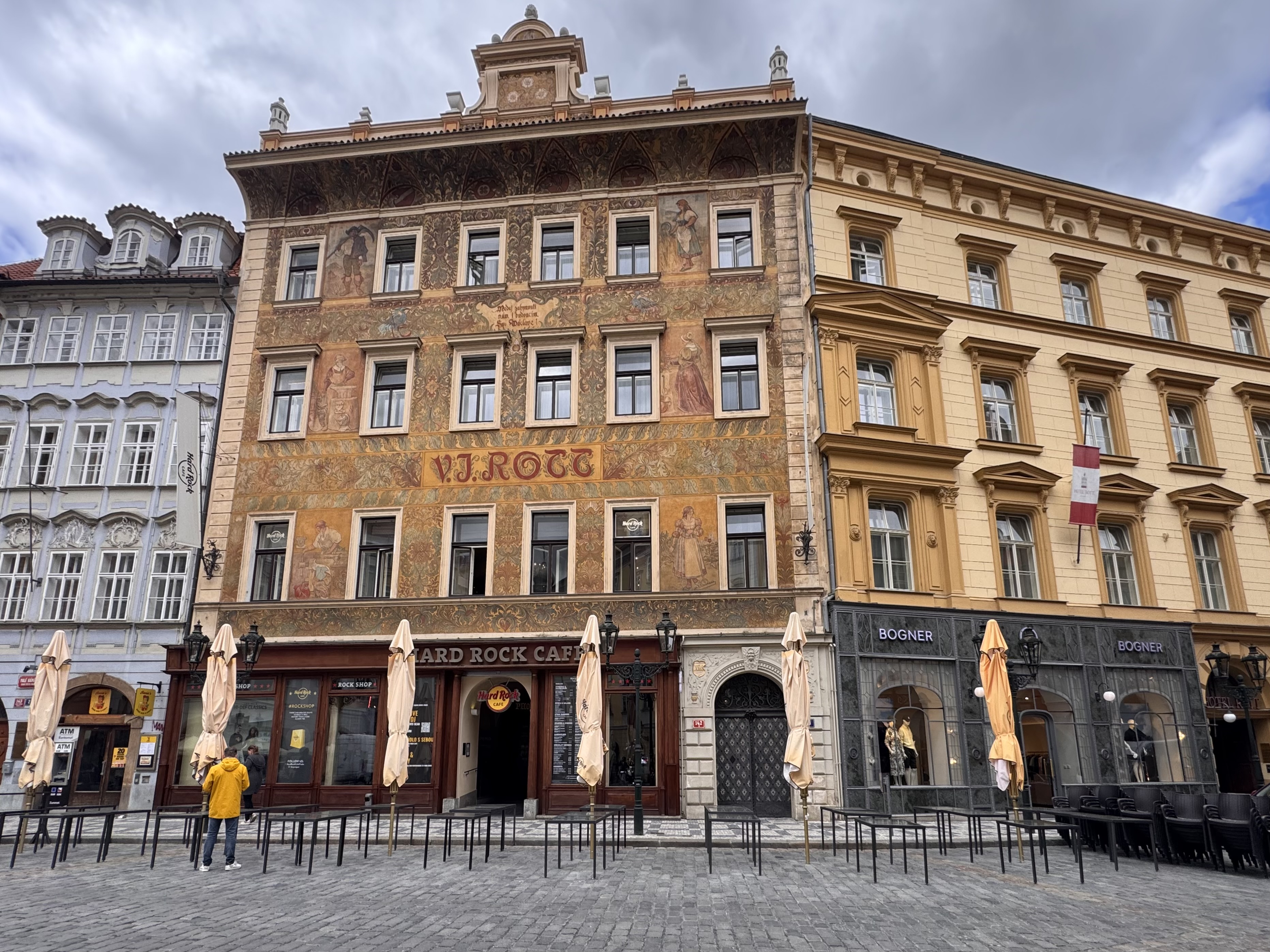
I found a great historic hotel right in the center of the Old Town area, Hotel Rott. While the building is very old, the service and accommodations are modern and excellent. We did find that the weekend had a somewhat noisy crowd outside our window, given that the Hard Rock Cafe was located in a part of the building. Celebrations tended to spill into the street. Hey, if I was fifty years younger I would have joined them!
What I didn’t expect was to be blown away by this amazing city. While it started out as an add-on, it ended up being my favorite part of the trip. Anna and I spent four days wandering the city, peeking around corners and finding interesting streets to explore.
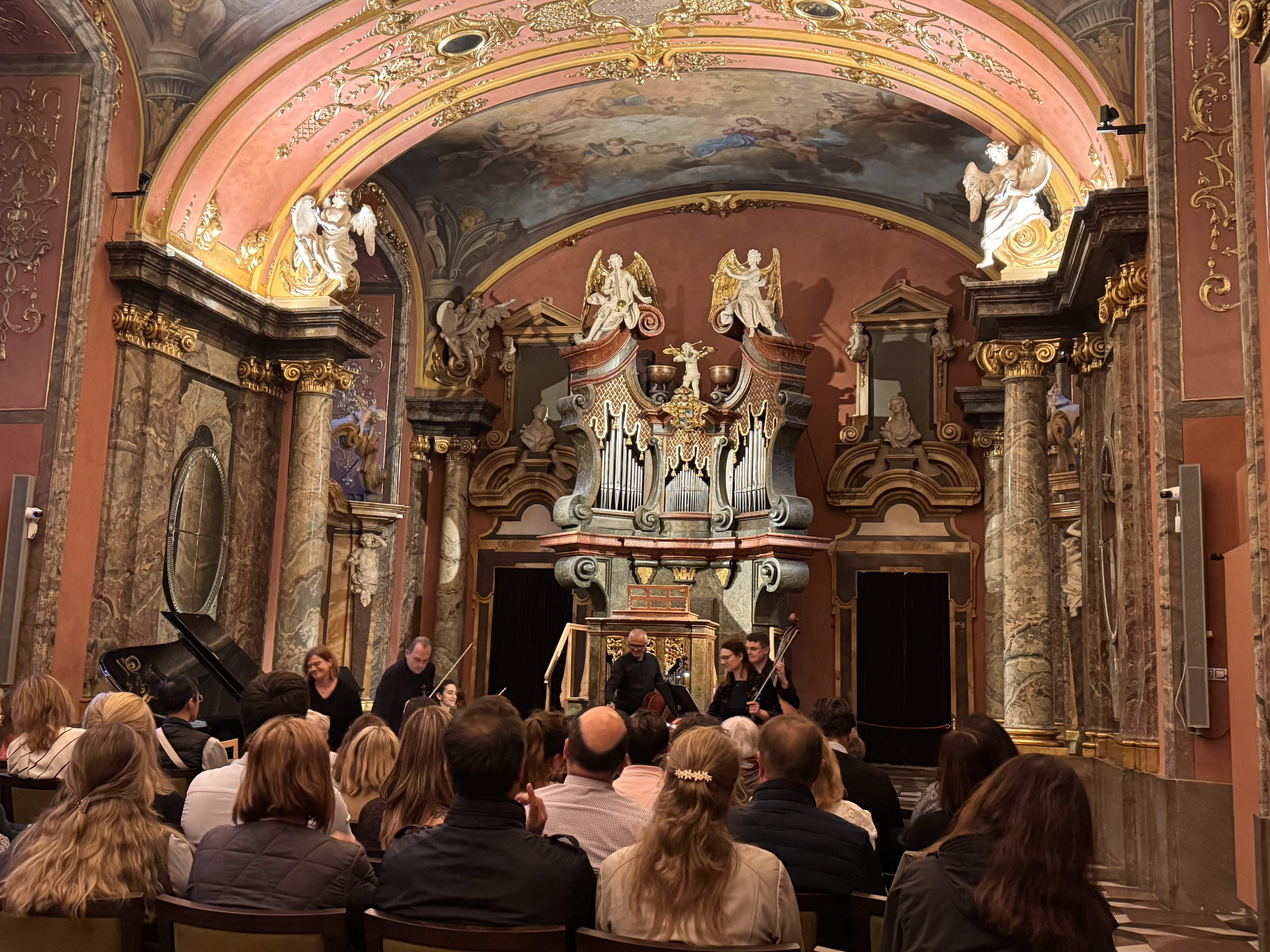
The first day we were looking for the Clementinum, which houses a lovely ancient library. It turned out we were too late, and all the tickets were sold for the day. But oh, look! There’s a sign advertising a Vivaldi concert in the same building! How amazing is it to go to a concert by members of the Prague Symphony Orchestra, in the very same room where Mozart performed?
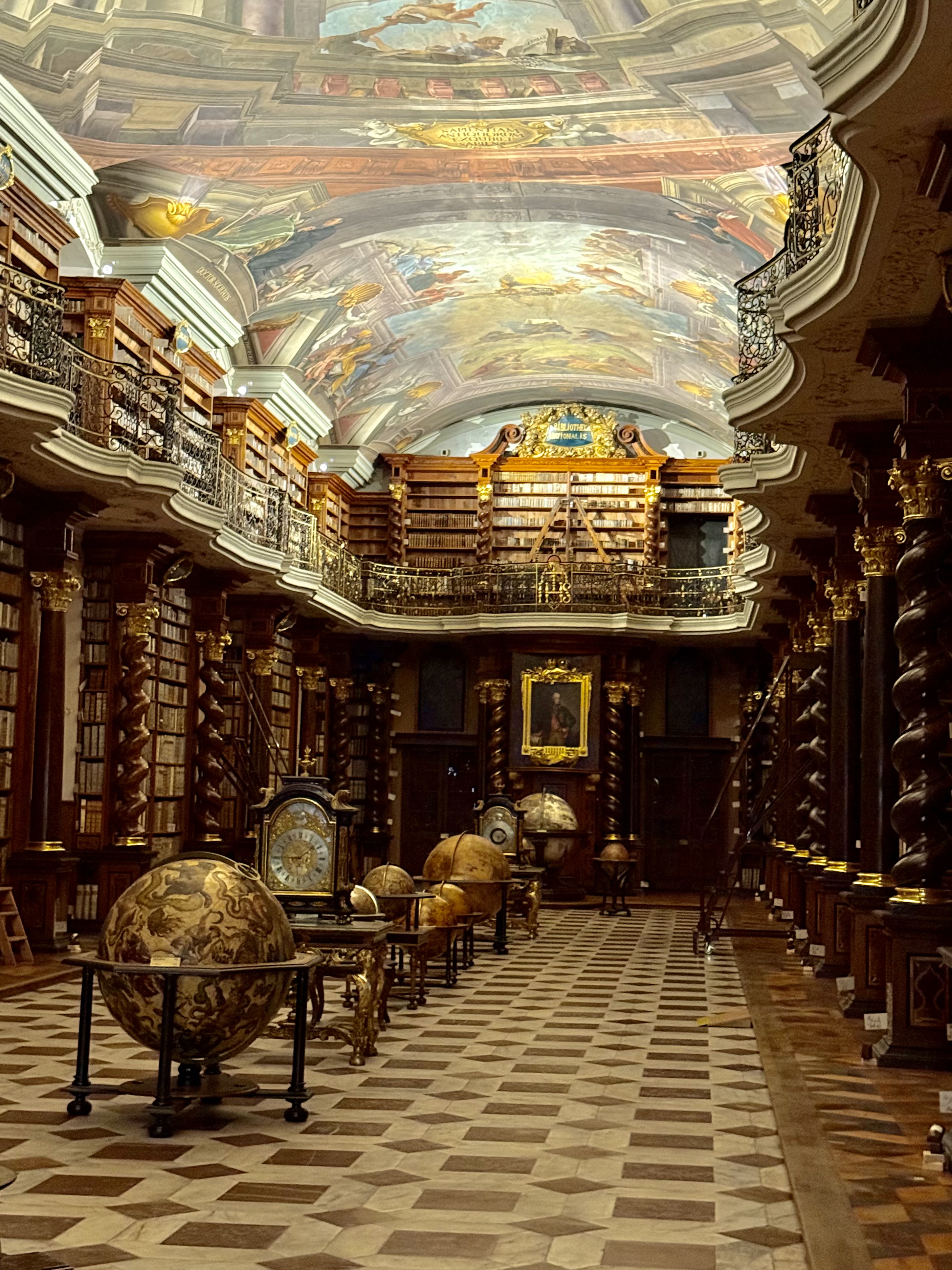
We did make it to the Clementinum the next day. Fair warning: the library is on a higher floor, accessible only by a 172-step spiral staircase. And from there you can climb again to the tower, which affords amazing views of the city. I am old, but I’m also stubborn. And also afraid I might miss something! I managed to climb all the steep stairs, with respites on each floor.
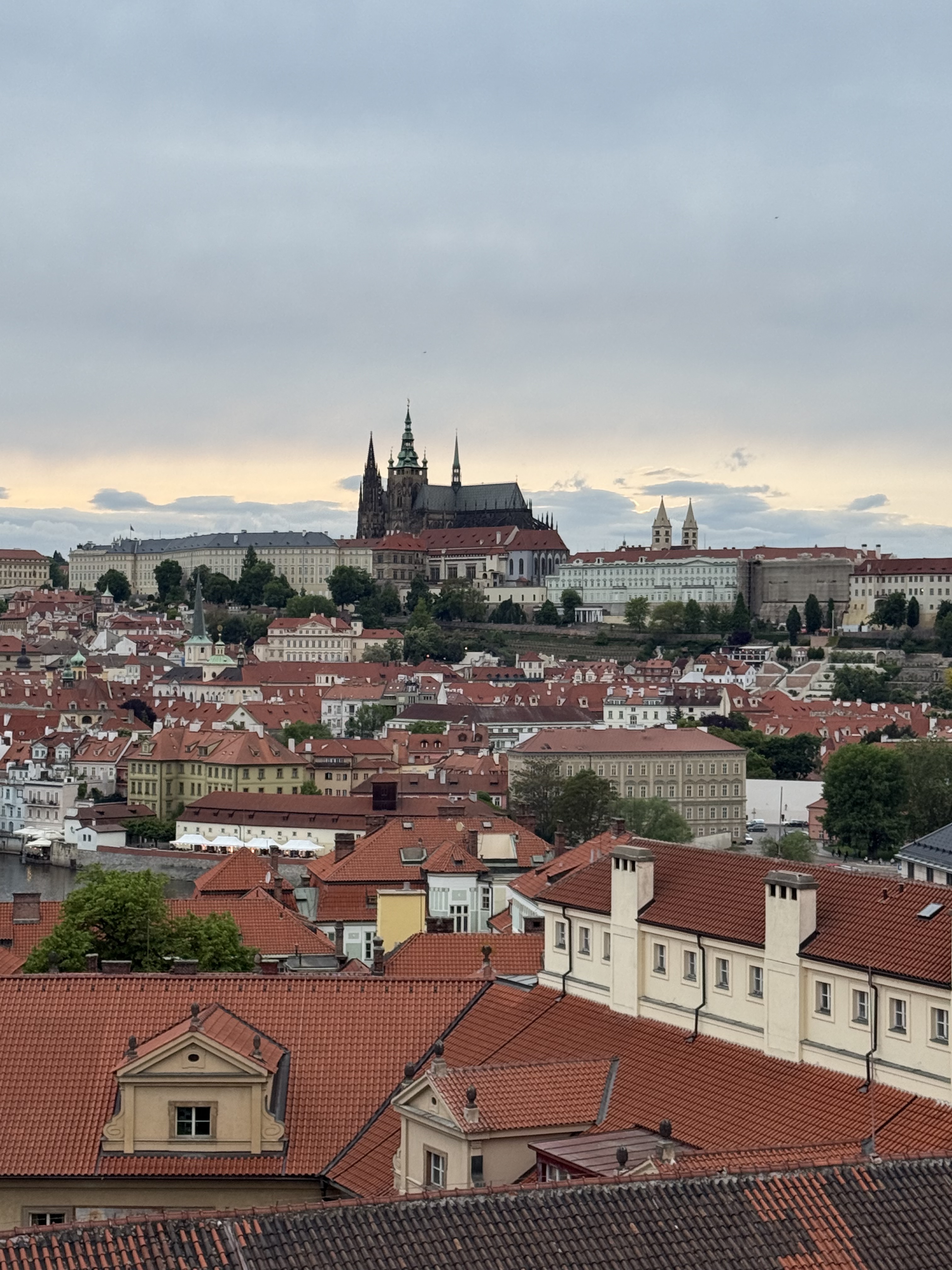
The visit to the library was brief but impressive, and the view from the tower was stunning. That’s Prague Castle in the background.
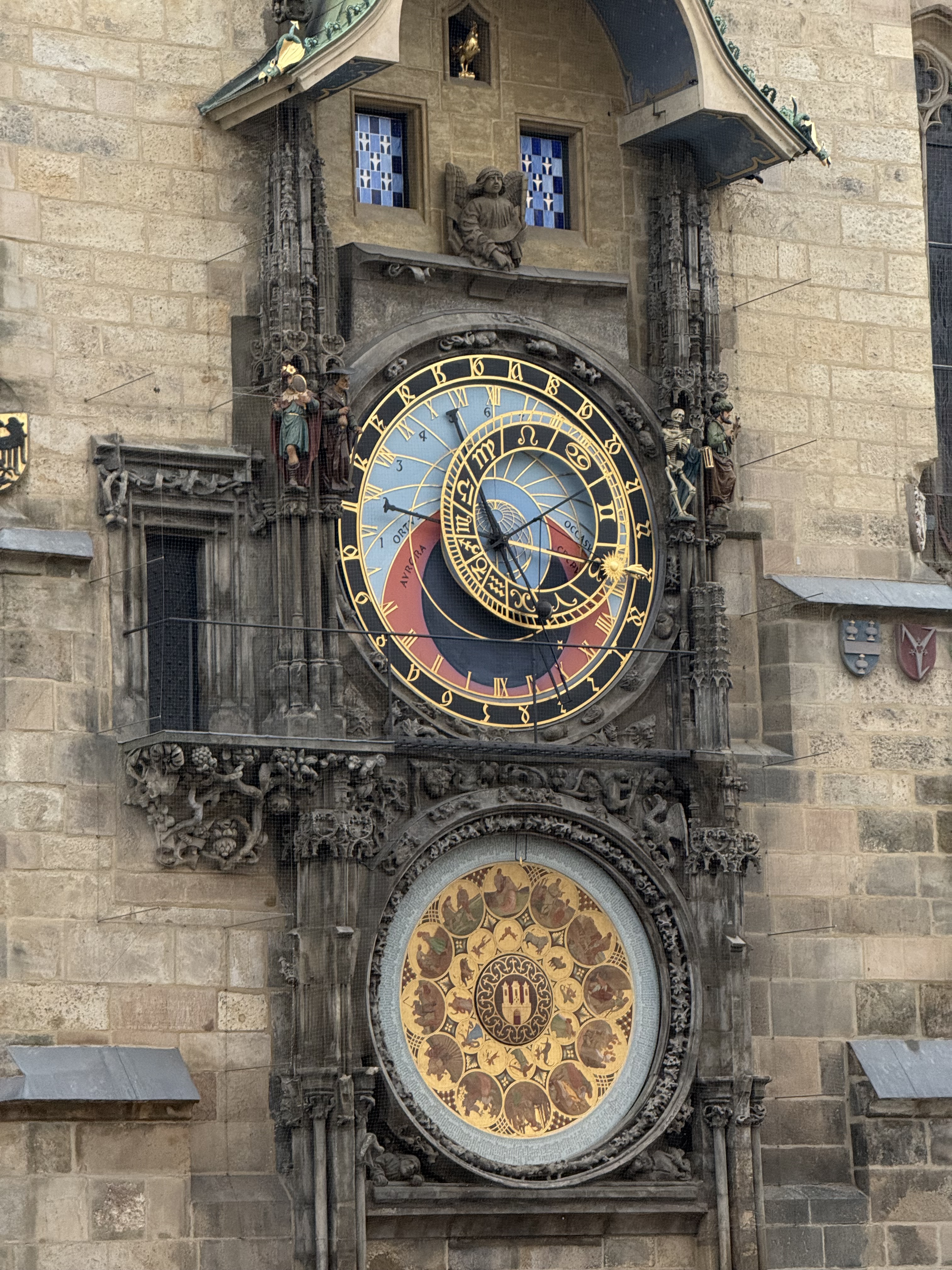
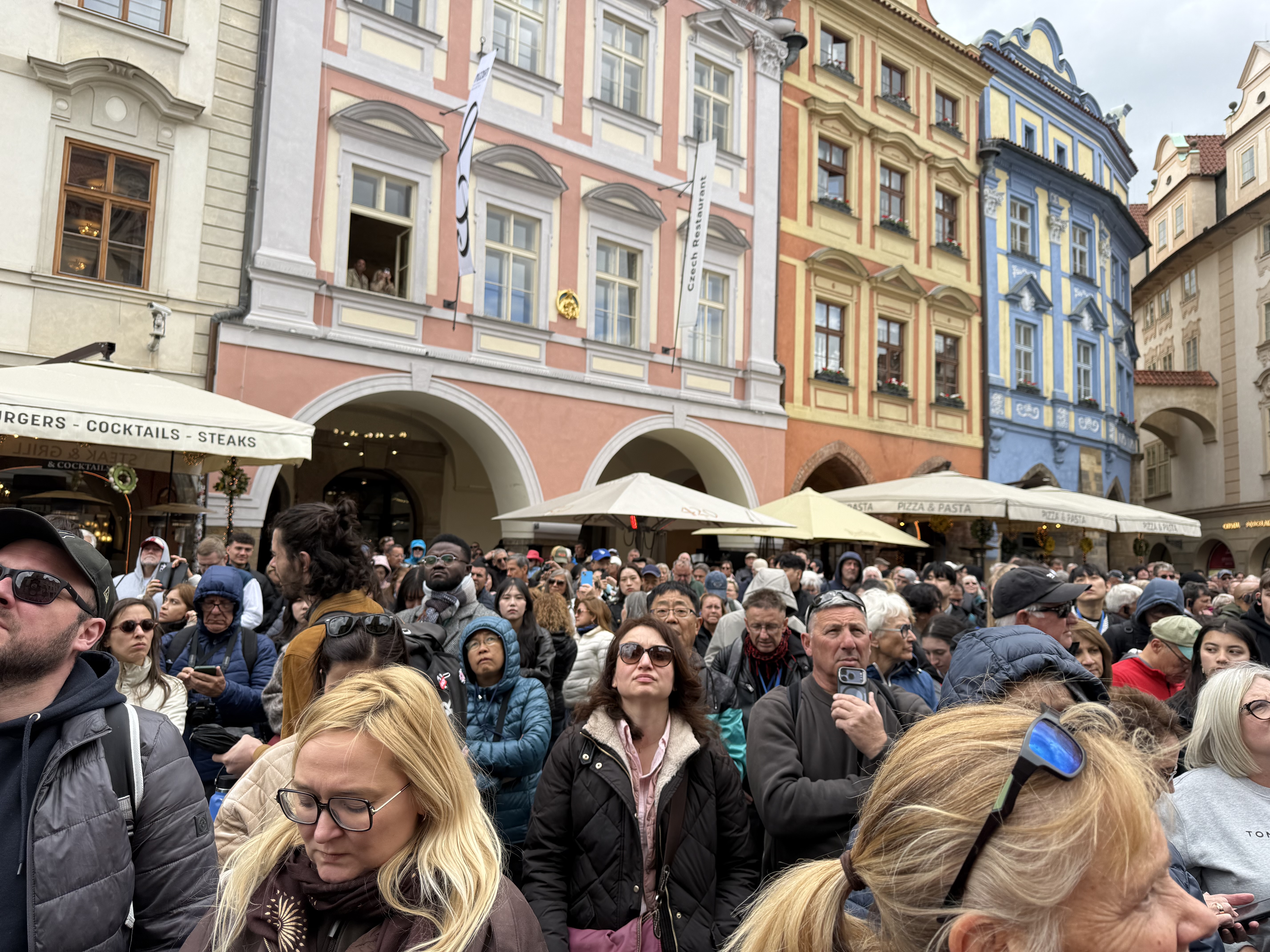
Any trip to Prague requires a stop to see the Astronomical Clock do its thing. This amazing piece of machinery was first built in 1410, and it not only tells time, it tracks the position of the sun and moon, and is a calendar. Before the bell tolls the top of the hour, the Apostles appear through doors and four figures representing Greed, Vanity, Death, and Lust provide a show to the crowds in the square.
Watching the crowd watching the clock.
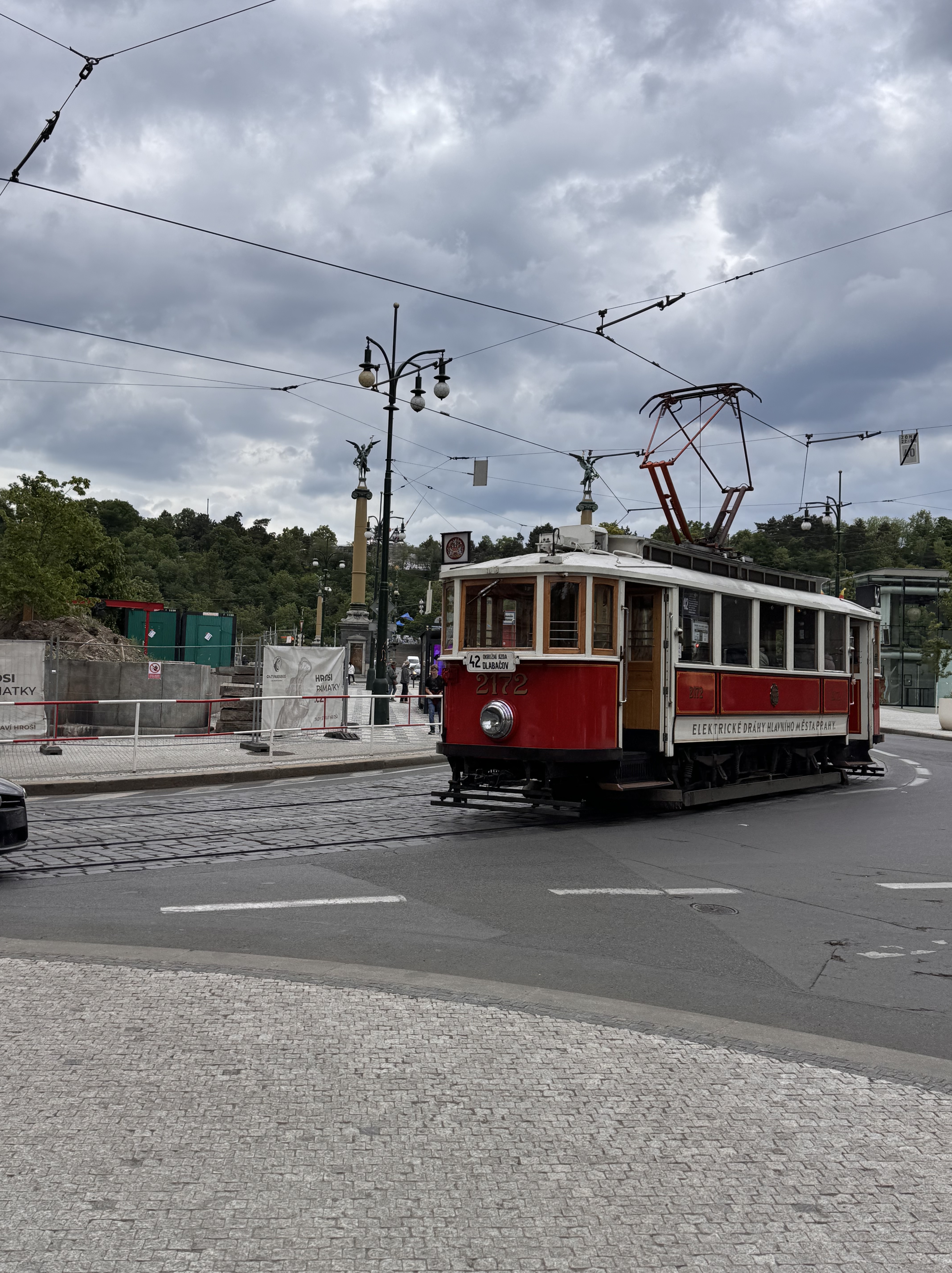
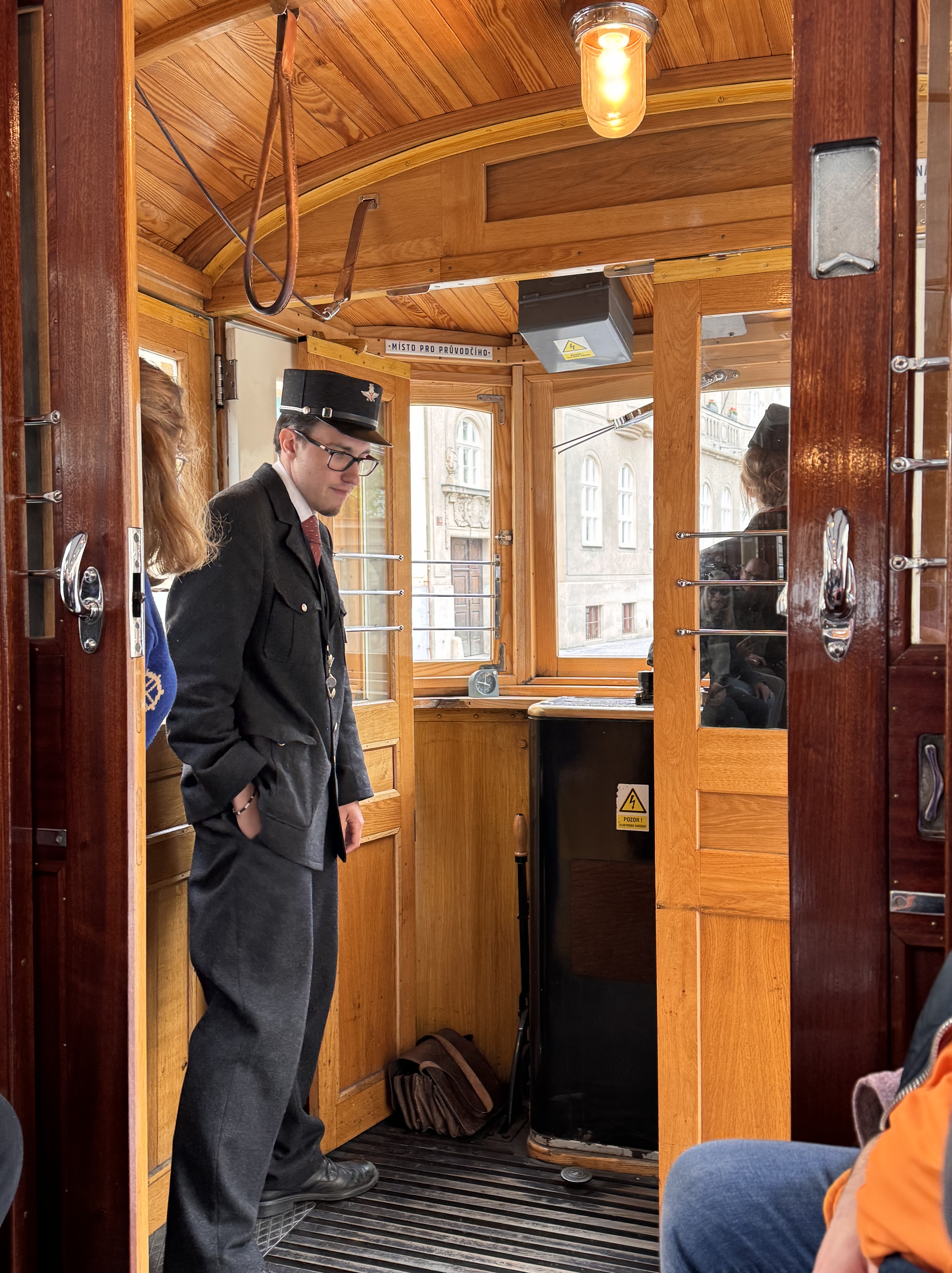
We took a hop-on, hop-off tour to get an overview of the city and visit Prague Castle. This was the most unique ride of its kind, because it wasn’t really a bus. It was an old cable car with a driver, a brakeman, and a guide. The guide was a lifesaver when she told us not to get off at the Prague Castle stop, and go to the end of the line and walk from there. Why? Because the walk from the Castle stop required and long slog uphill, while the last stop gave us an easy downhill stroll.
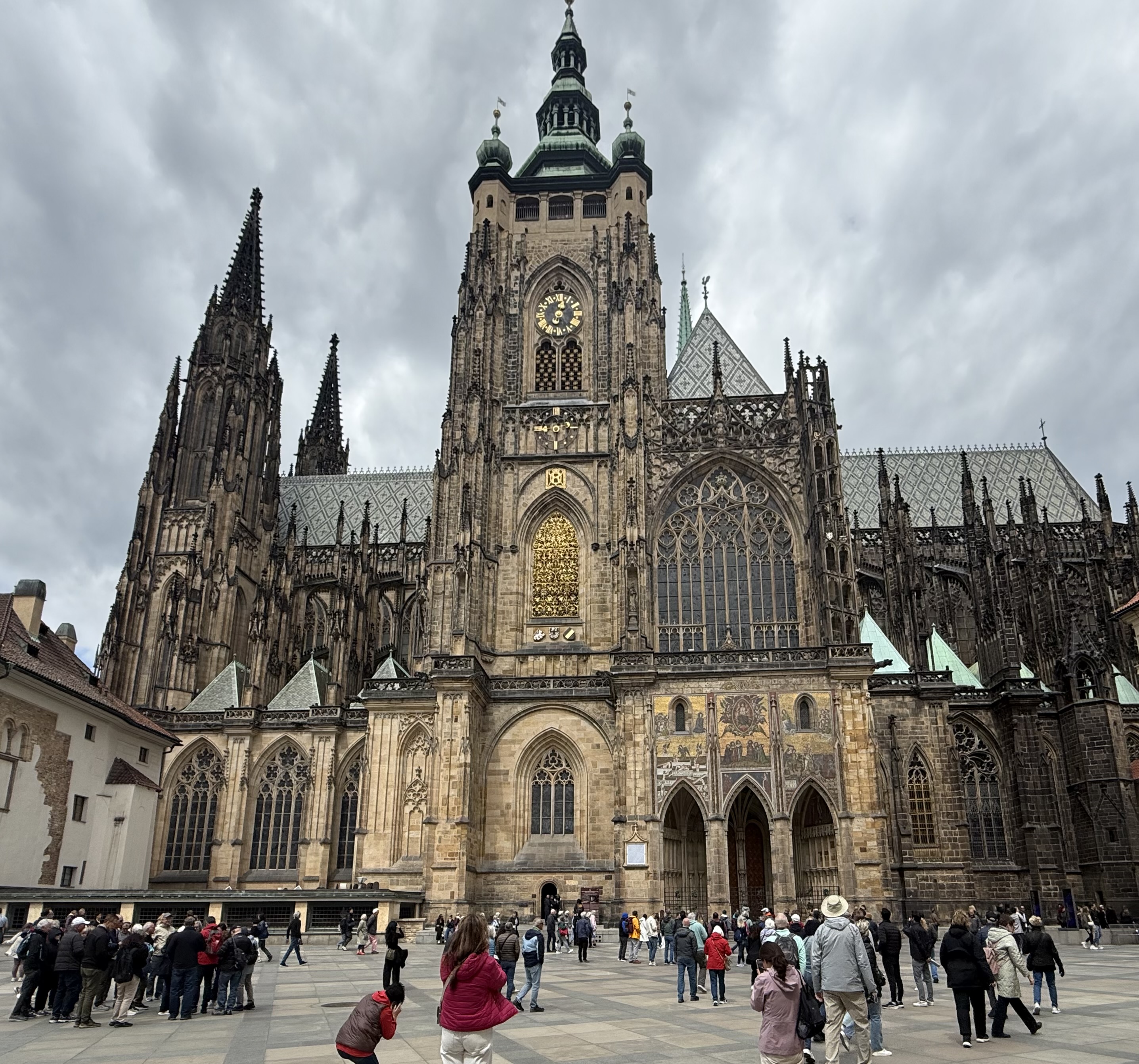
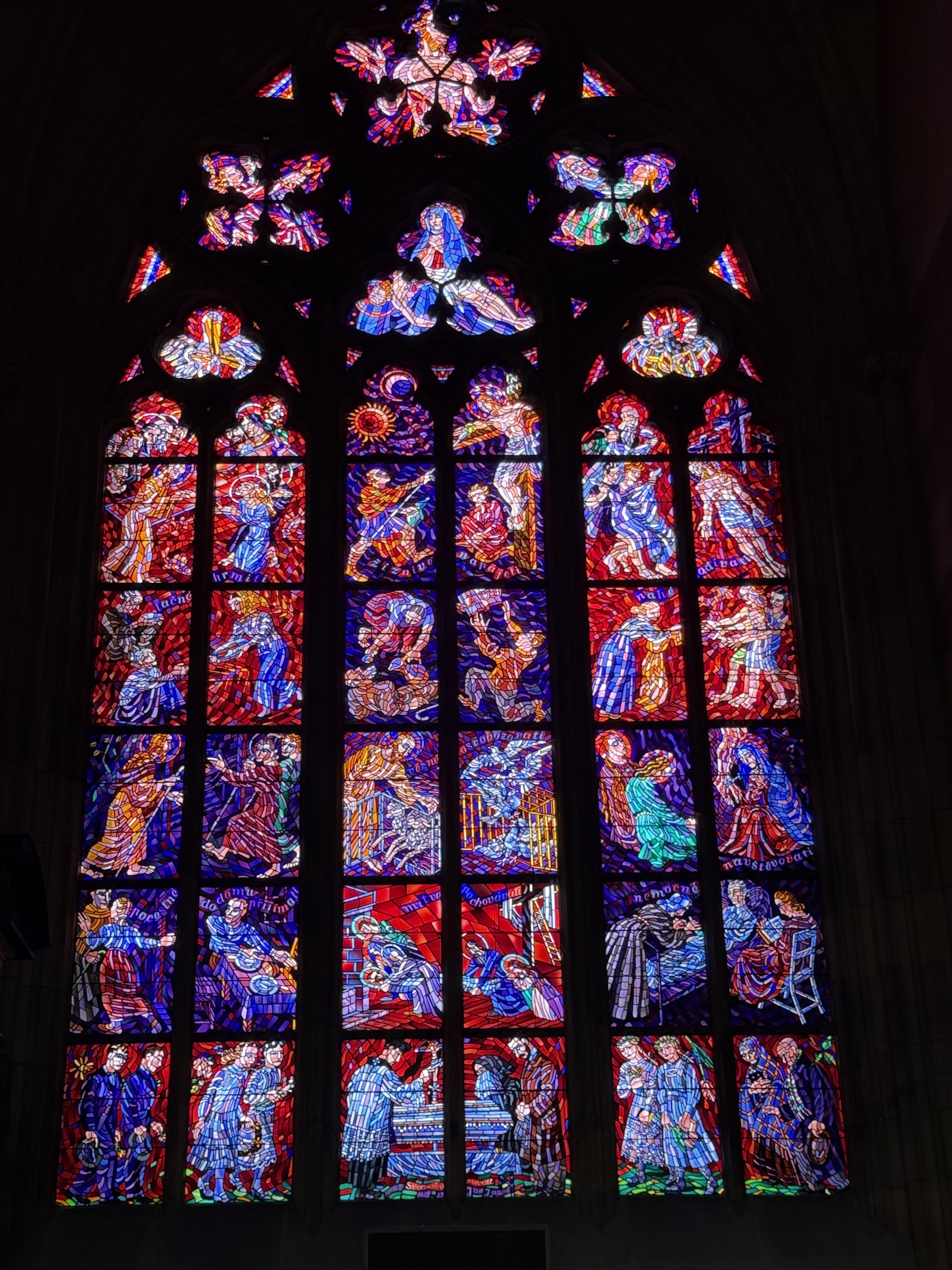
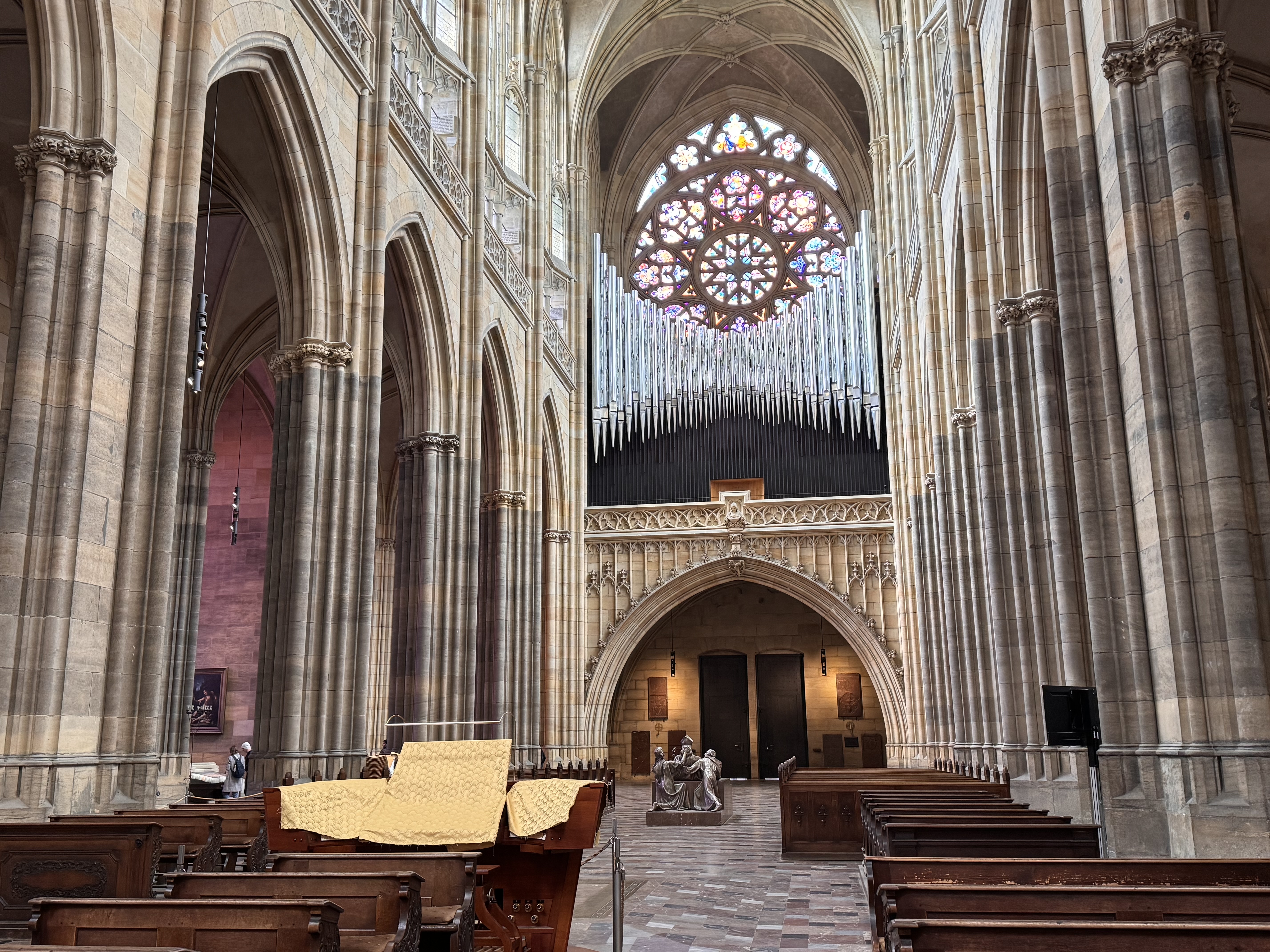
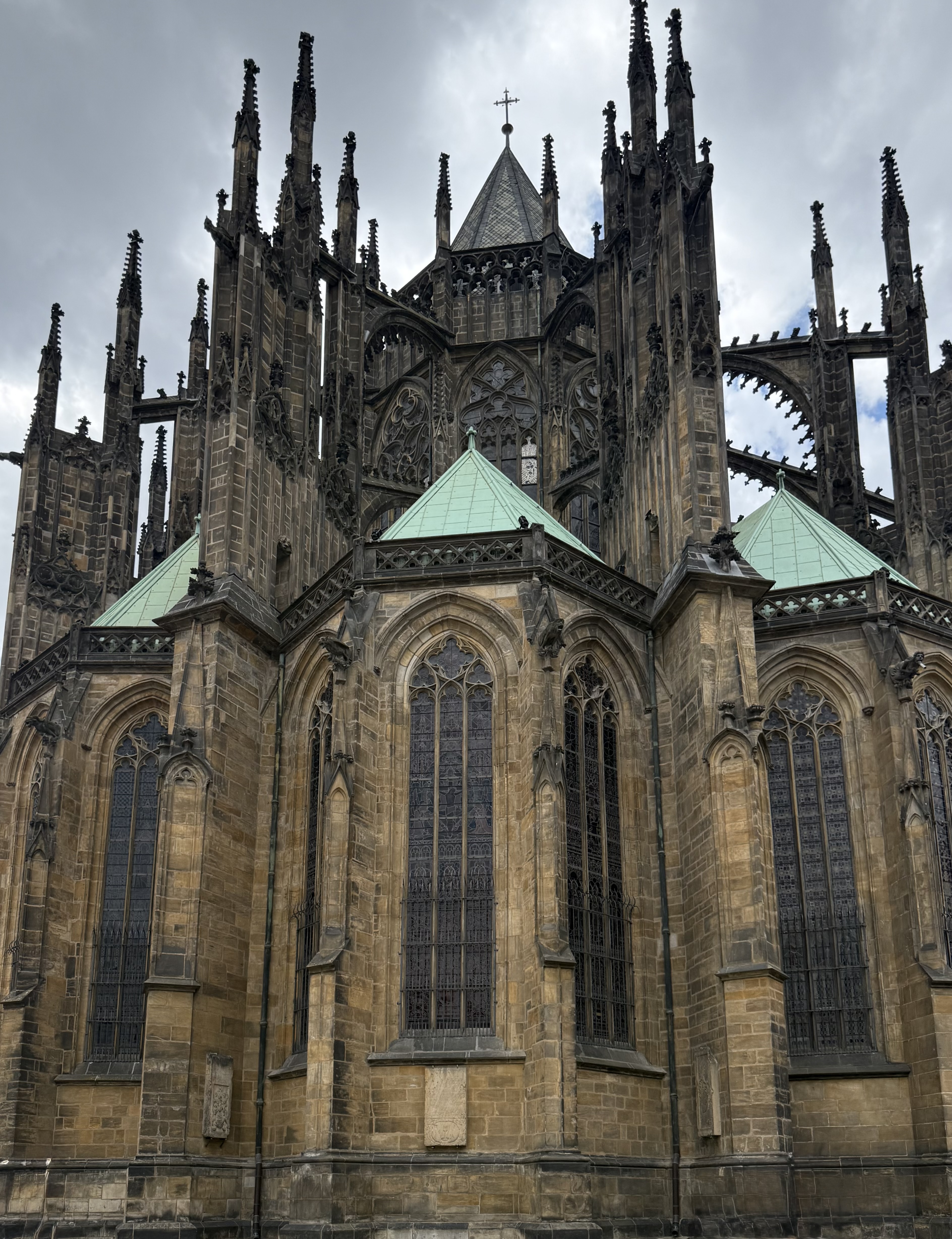
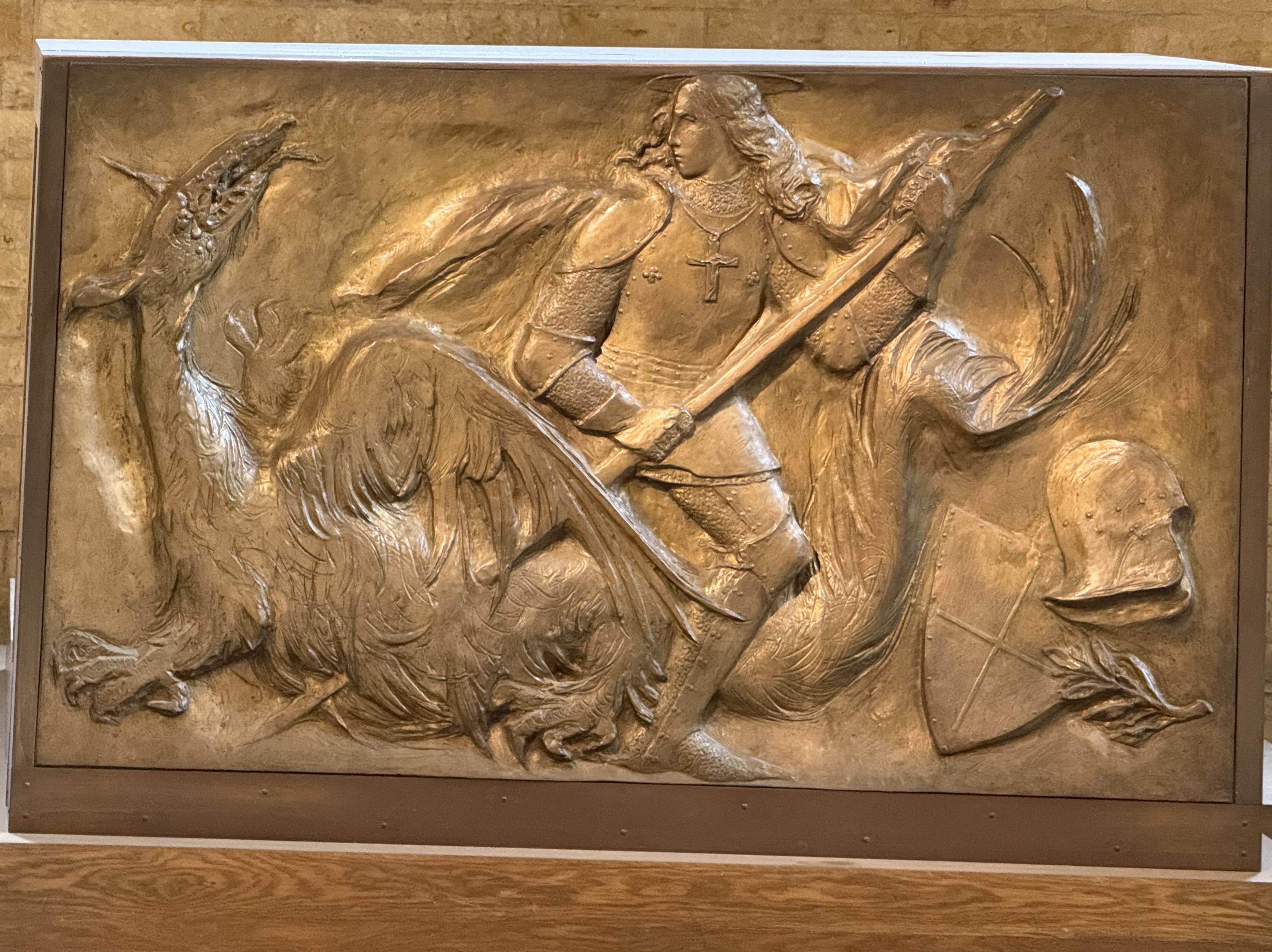
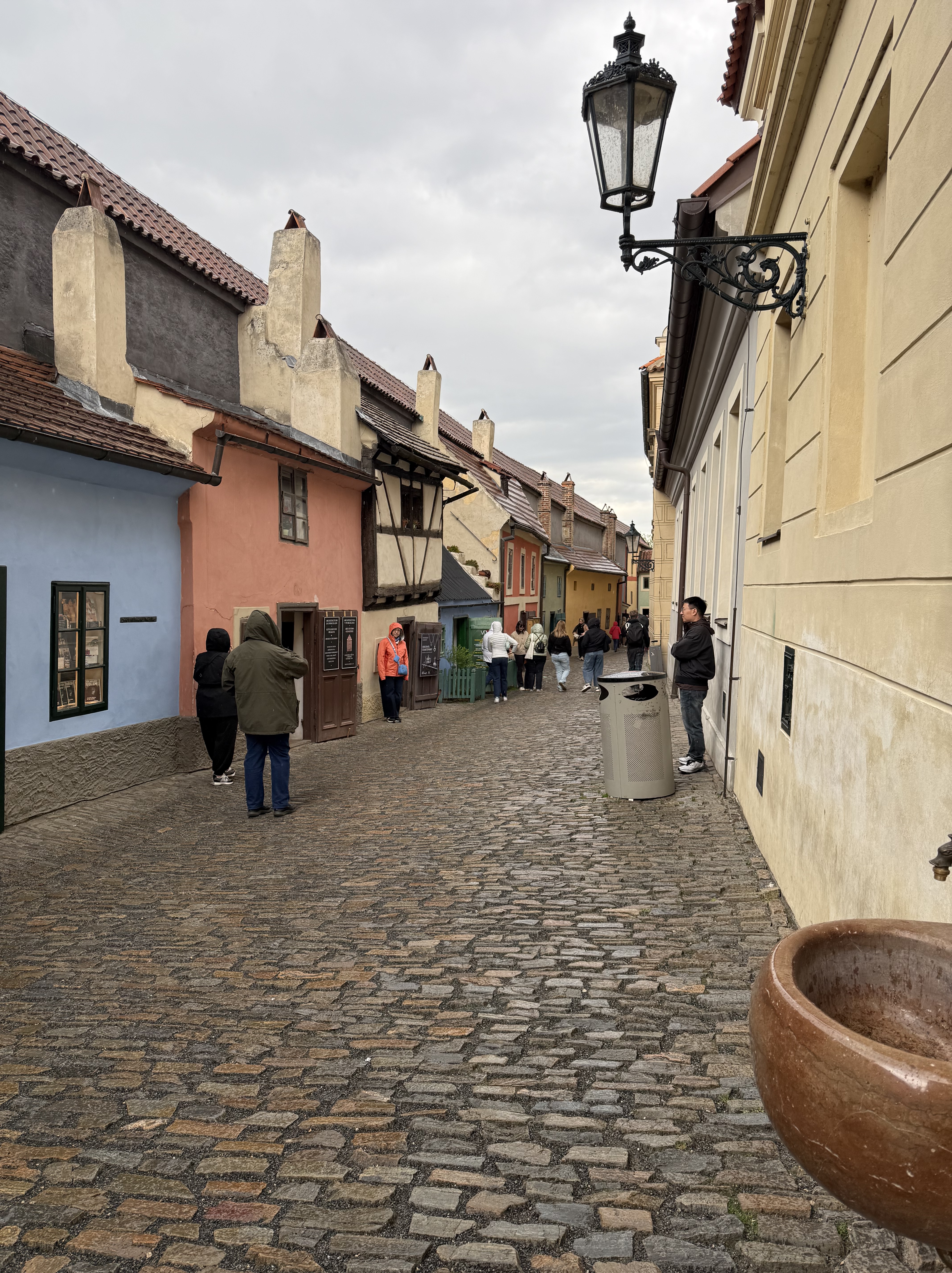
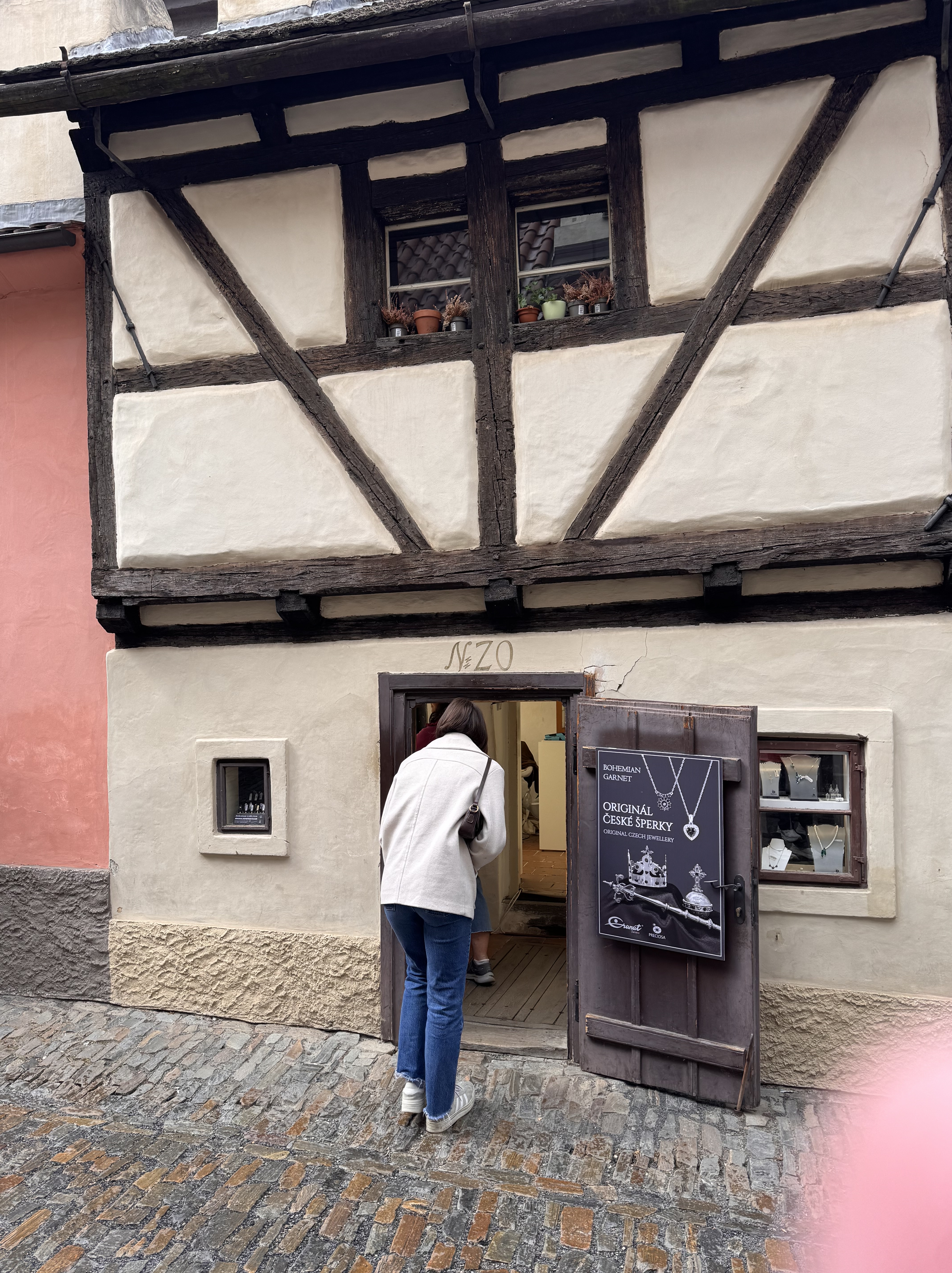
Our visit to Prague Castle took most of the day, since it’s really a complex made up of many buildings. There’s St. Vitus Cathedral, the Basilica of St. George, a monastery, palaces, museums, and the shops and apartments that at one time housed the people who served the castle. I have so many photos and such a variety it’s hard to decide at what point you might fall asleep looking through them. So I’ll just include a random gallery. Hopefully enough to entice you to consider a visit.
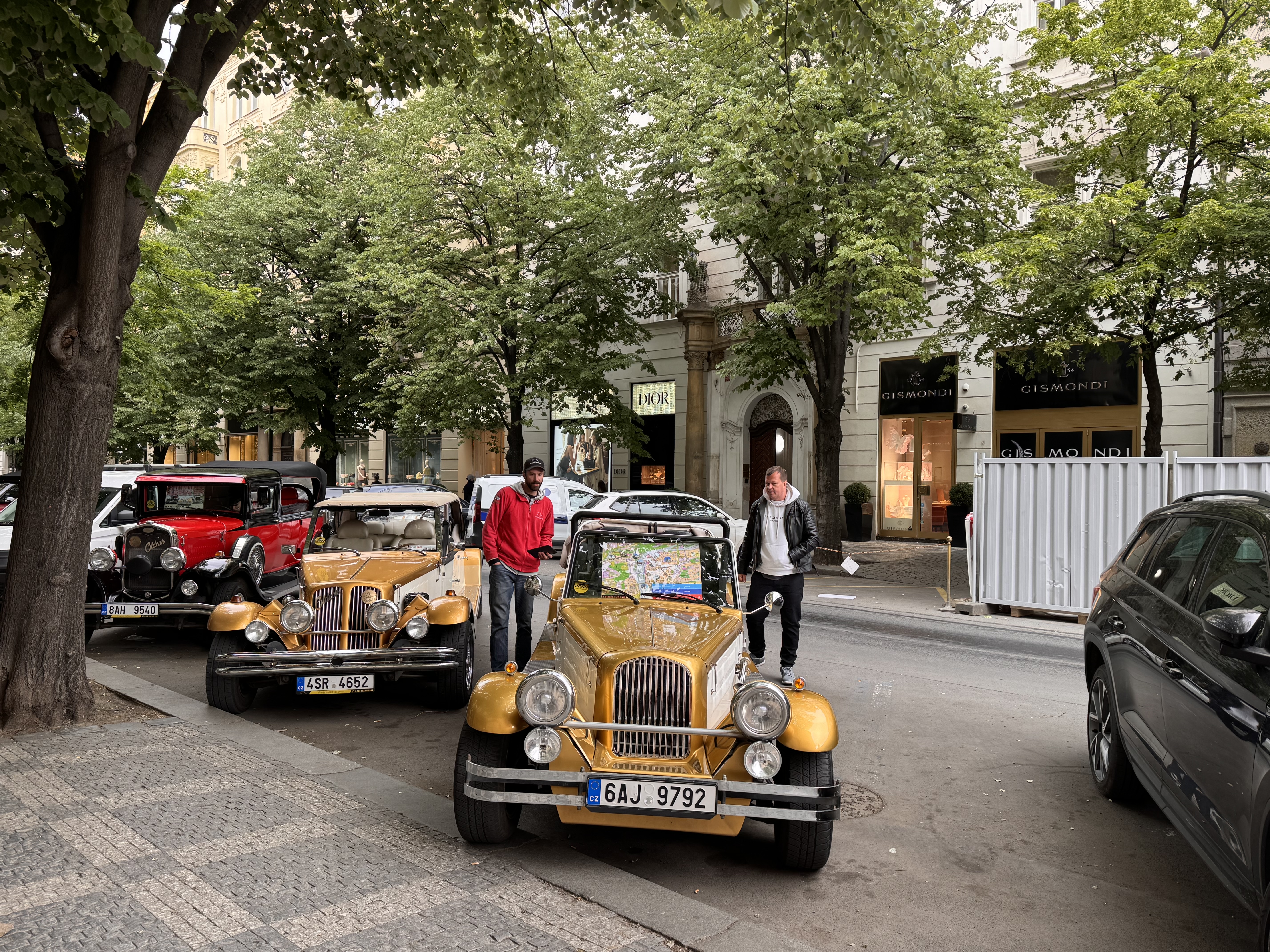
If you’re a car buff, here’s an opportunity to tour the city in style. As we were headed for the historic cable car, we passed by several of these cars just waiting to take tourists around the city.
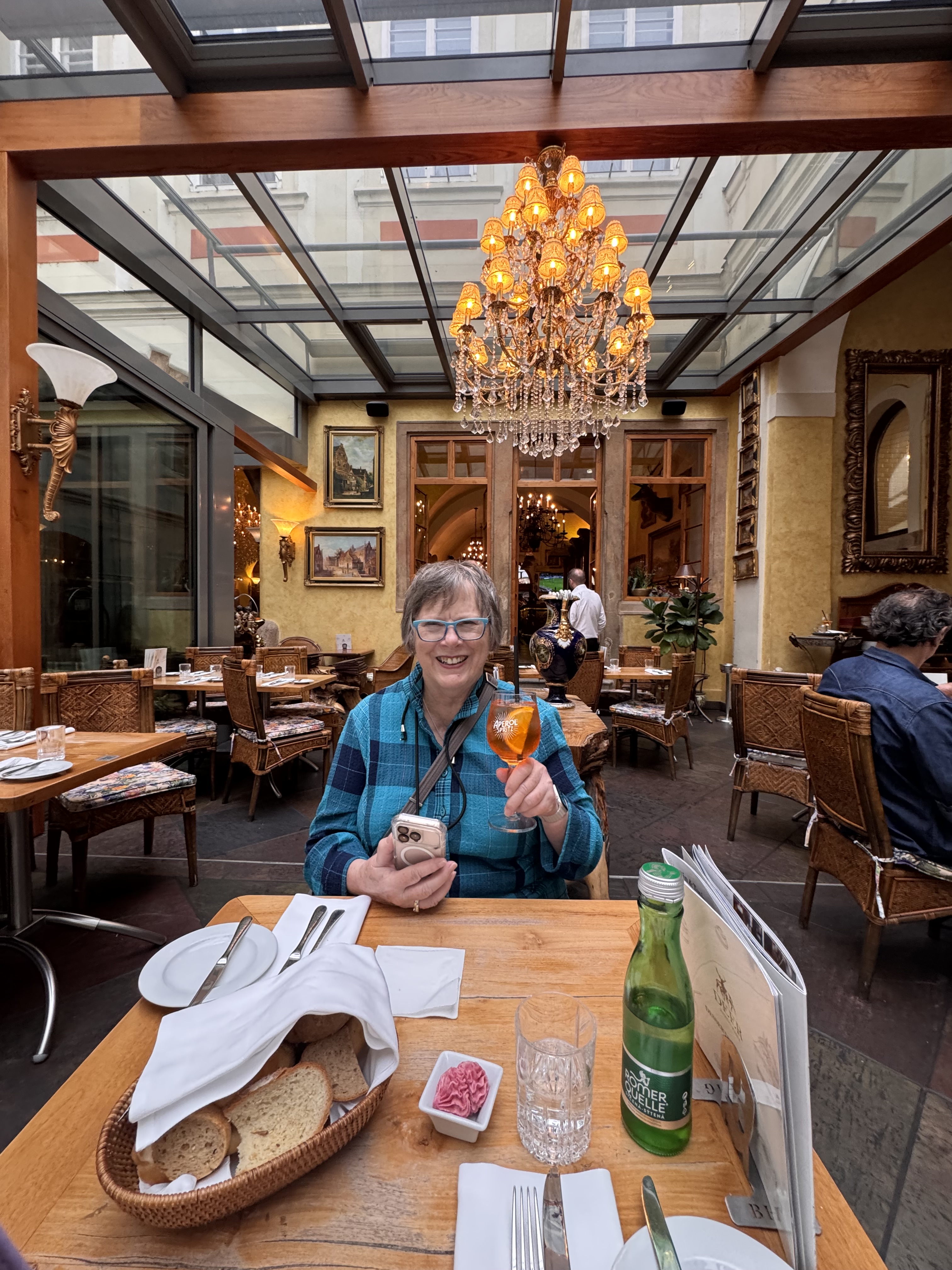
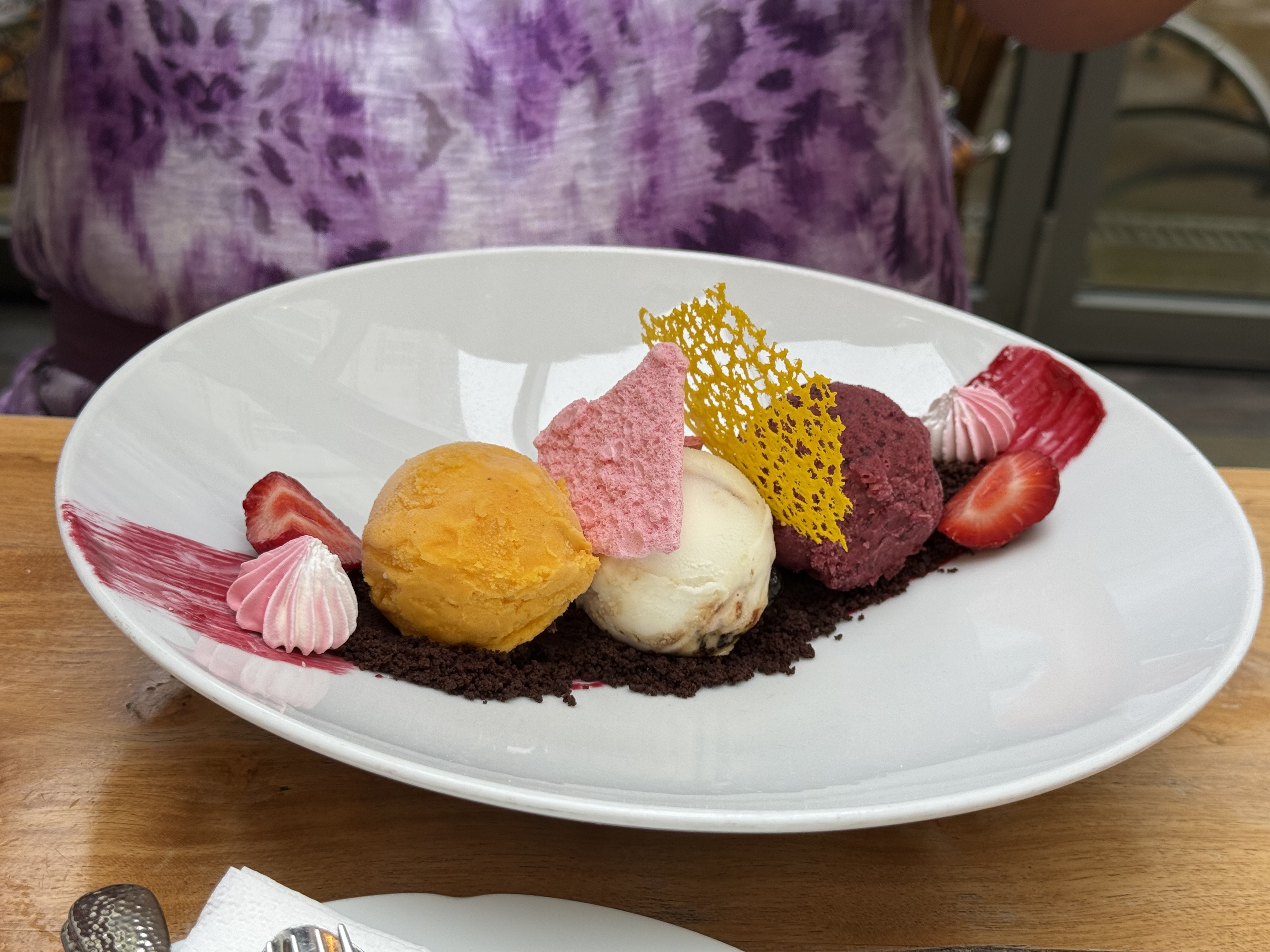
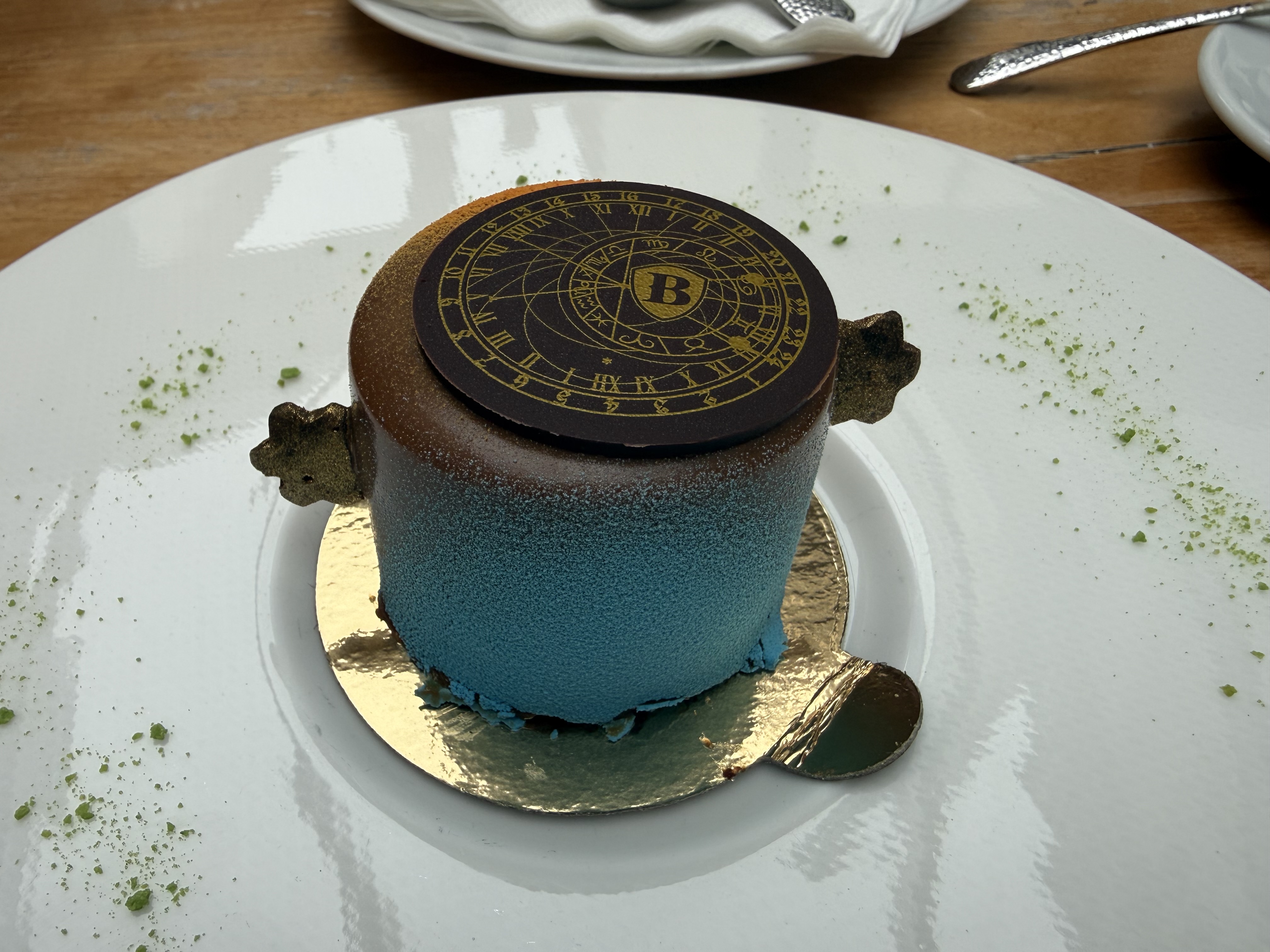
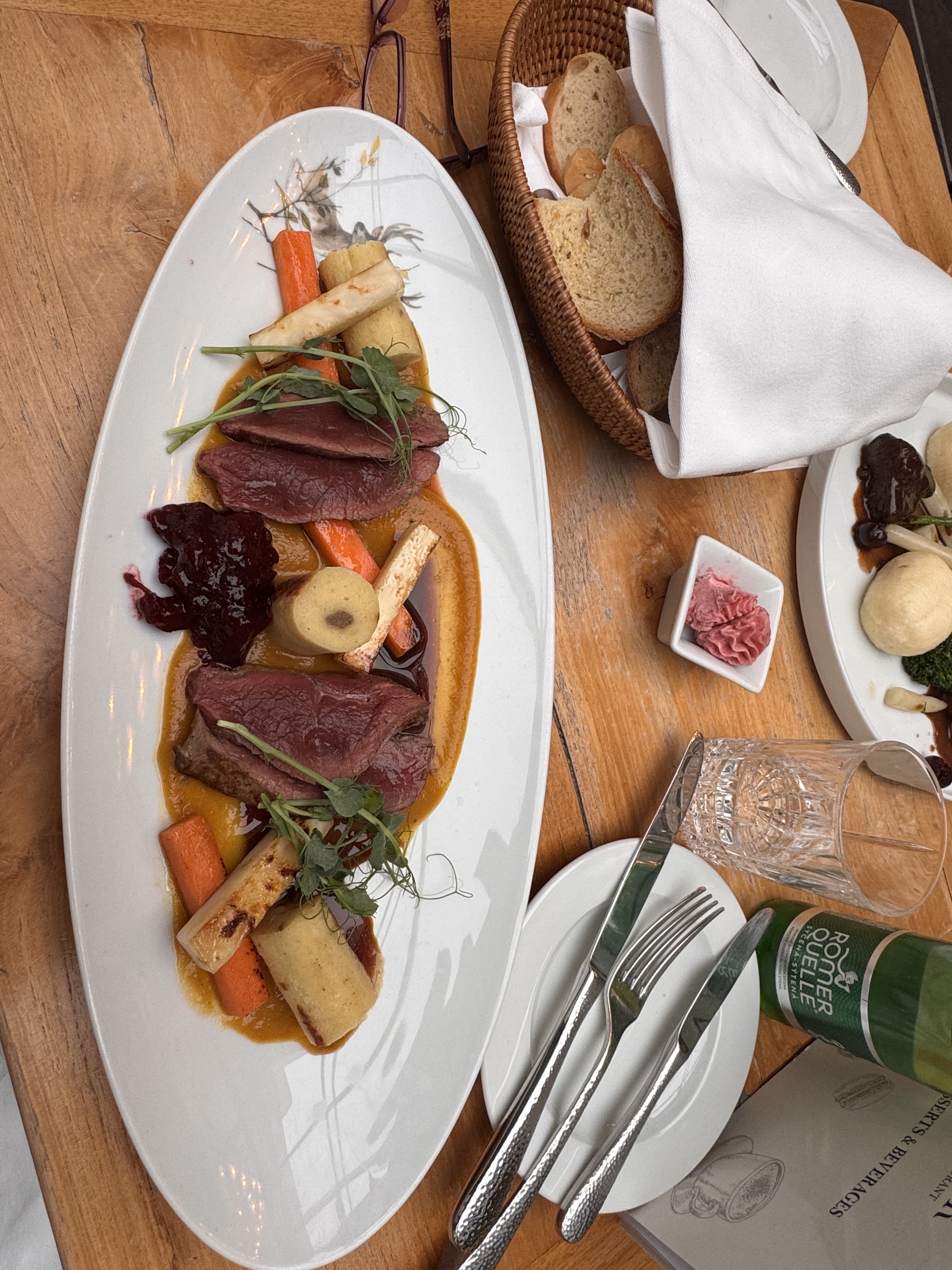
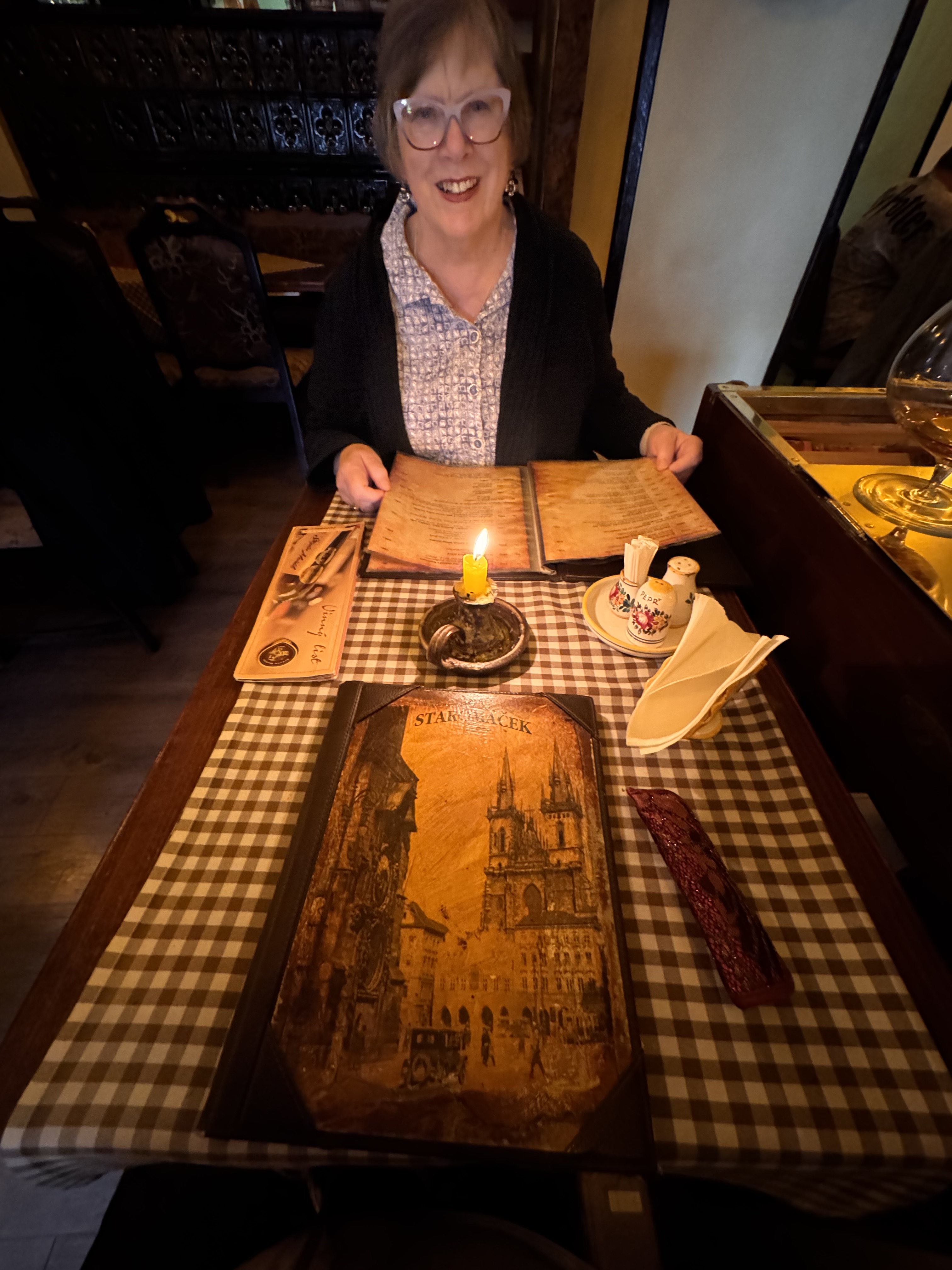
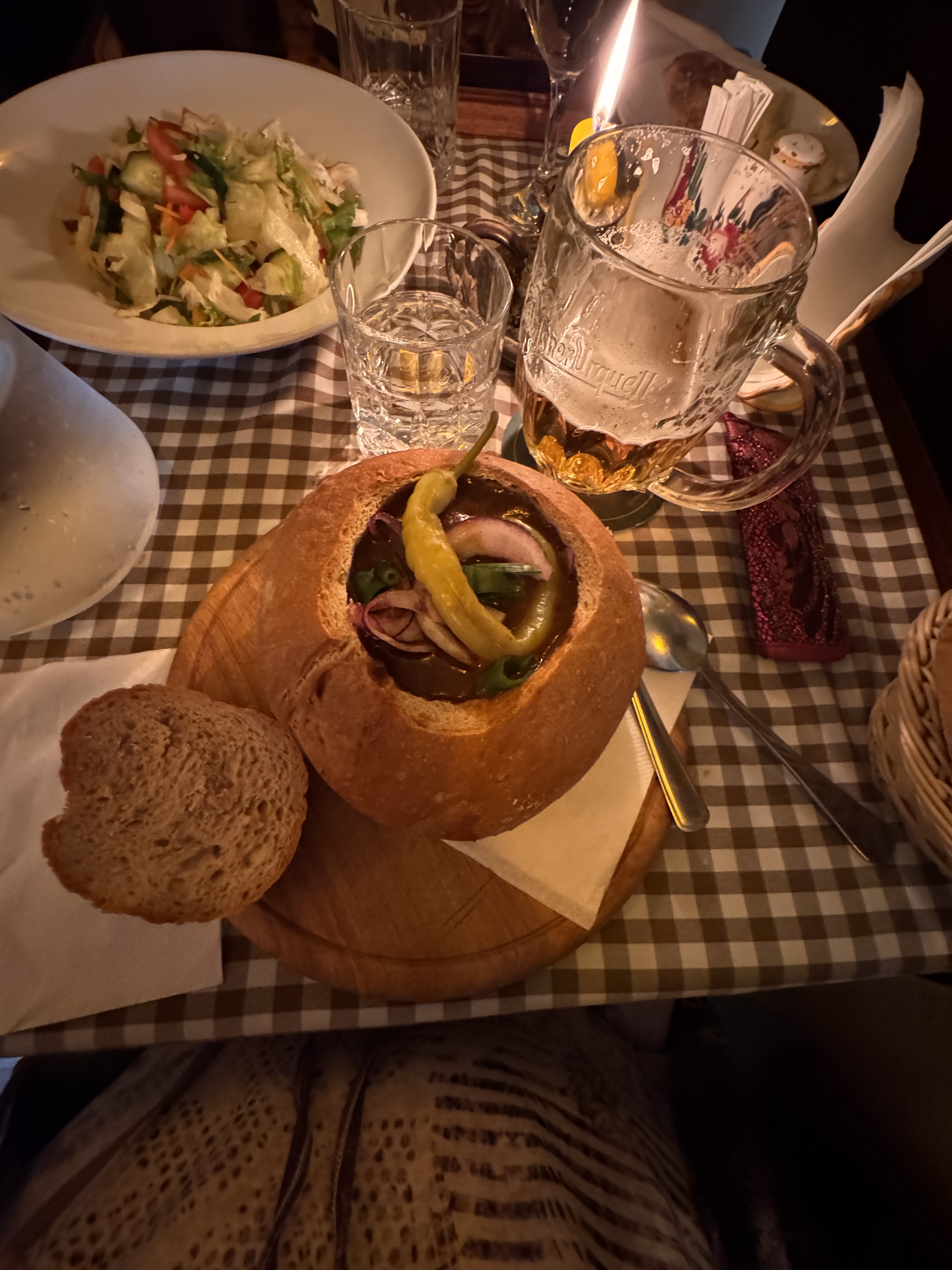
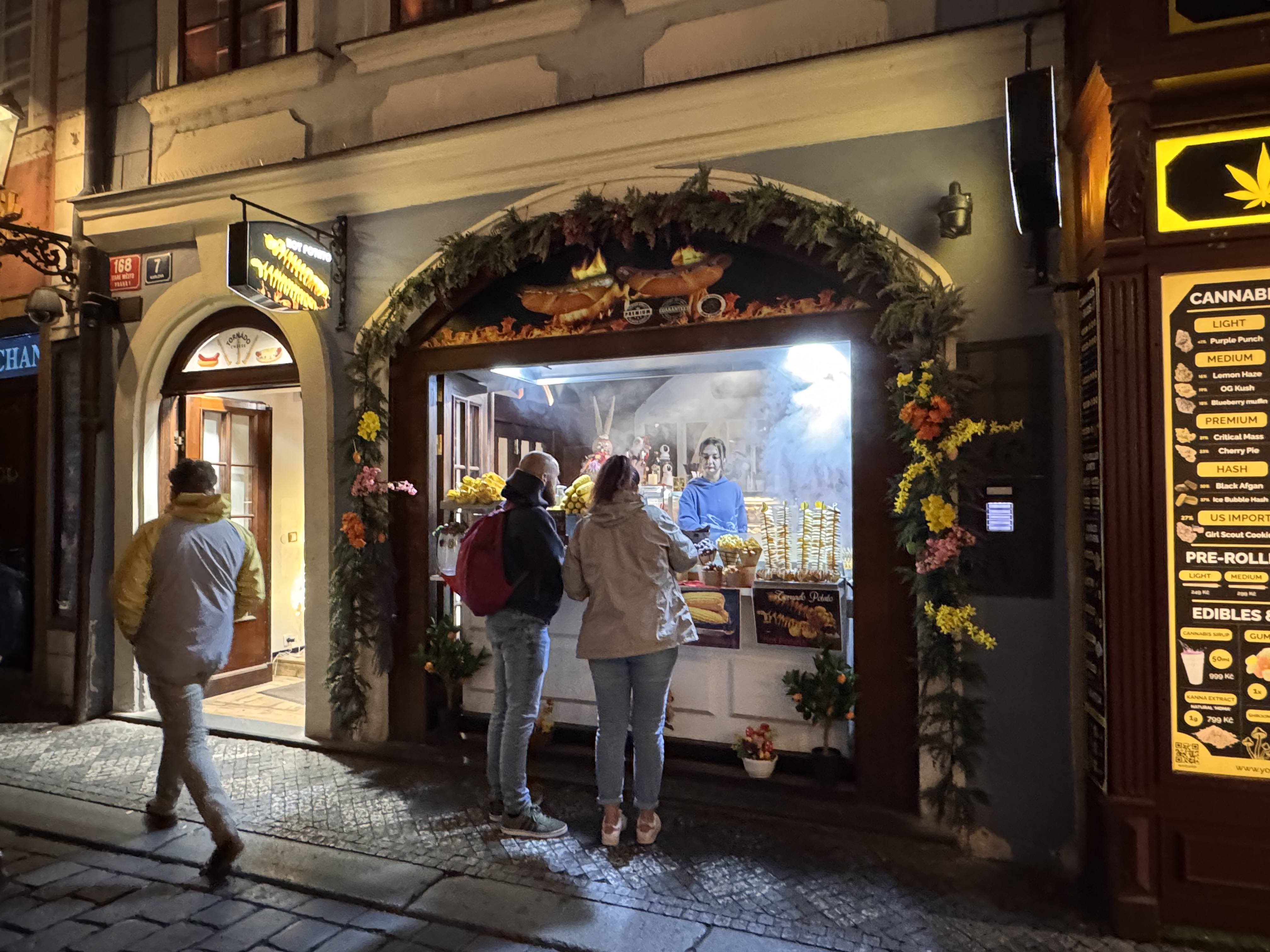
We made sure to sample the traditional foods of the Czech Republic, and it was all delicious. The settings weren’t bad, either!
Our first meal was at the Deer. Elegant!
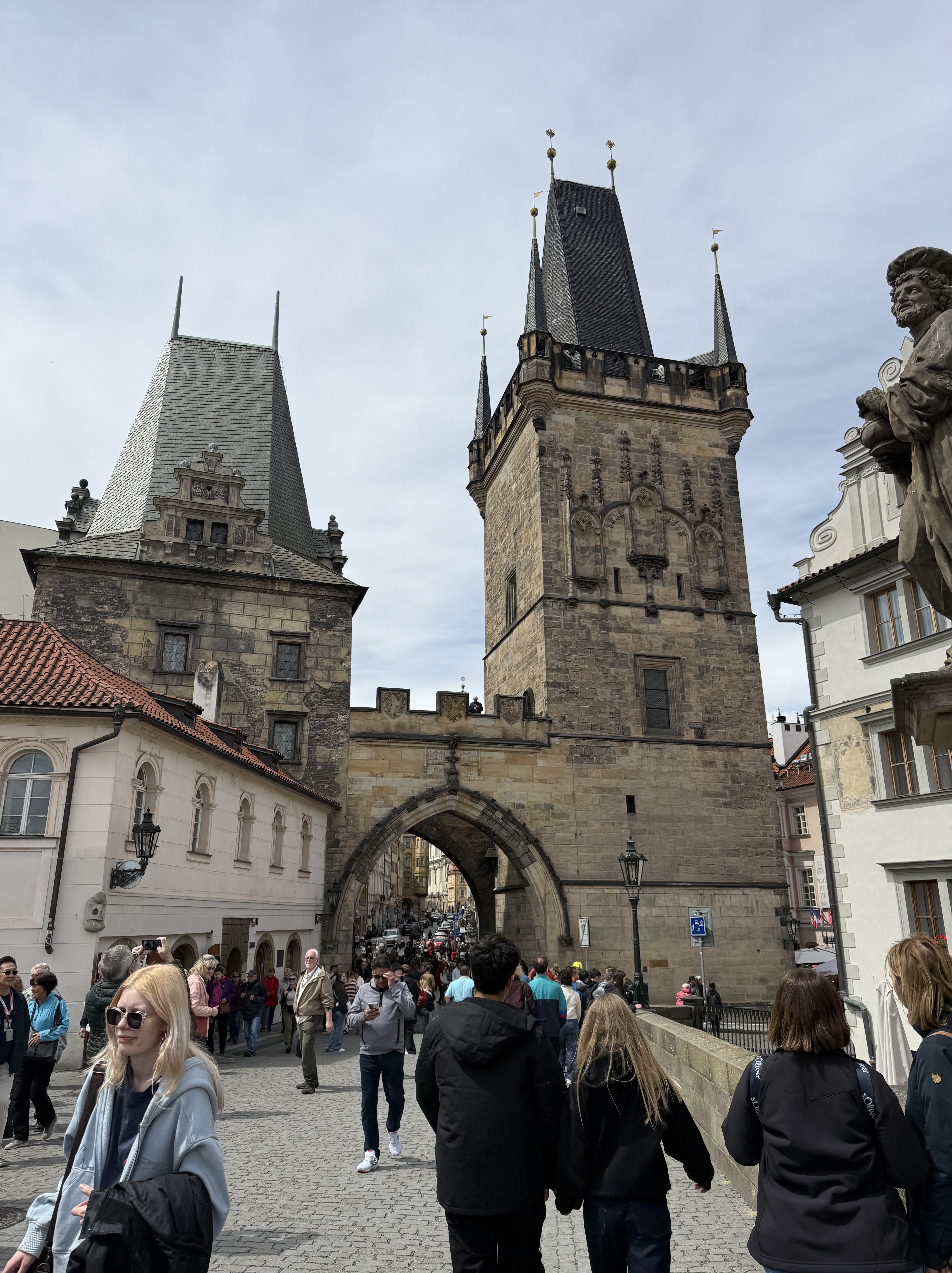
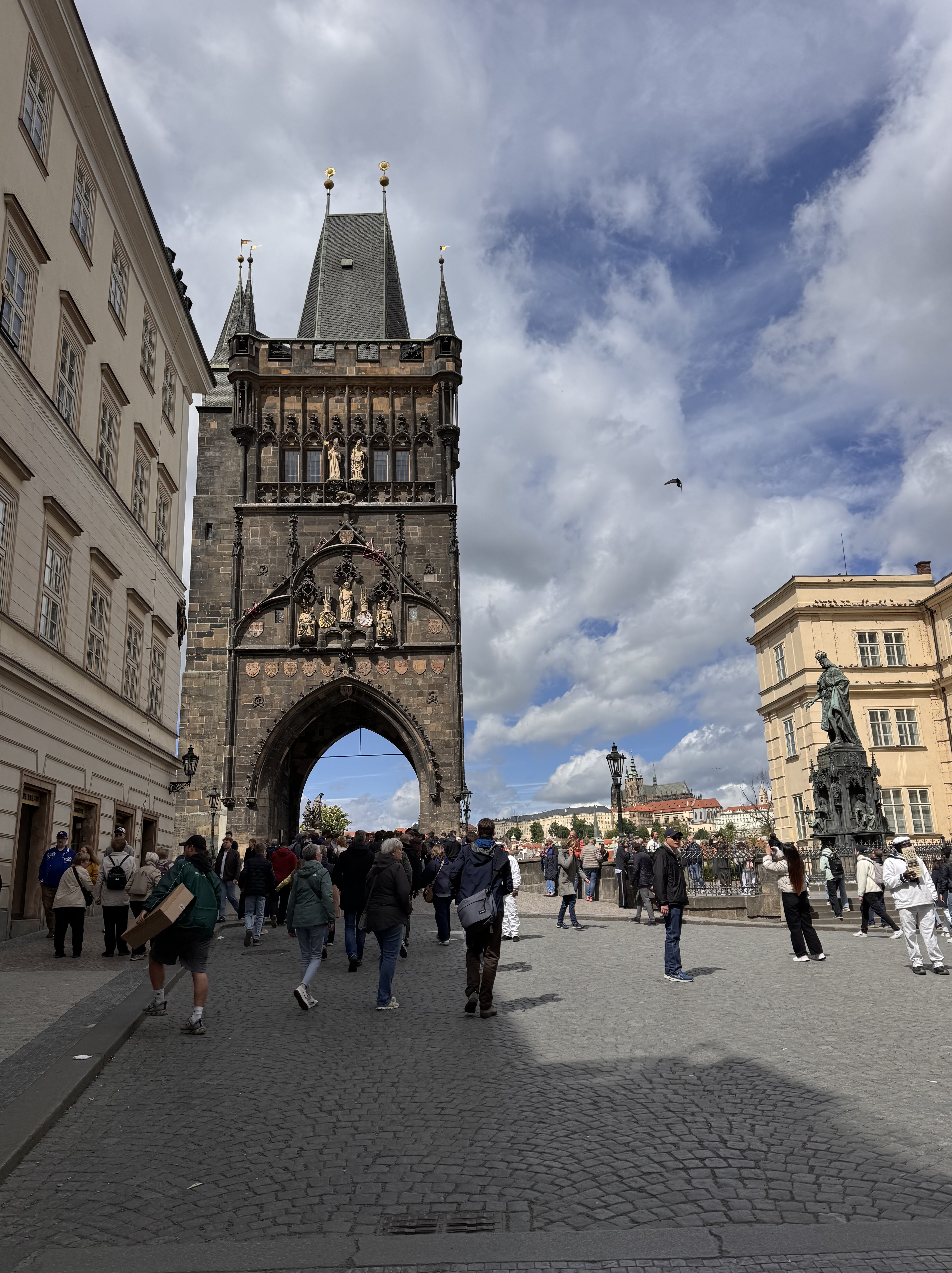
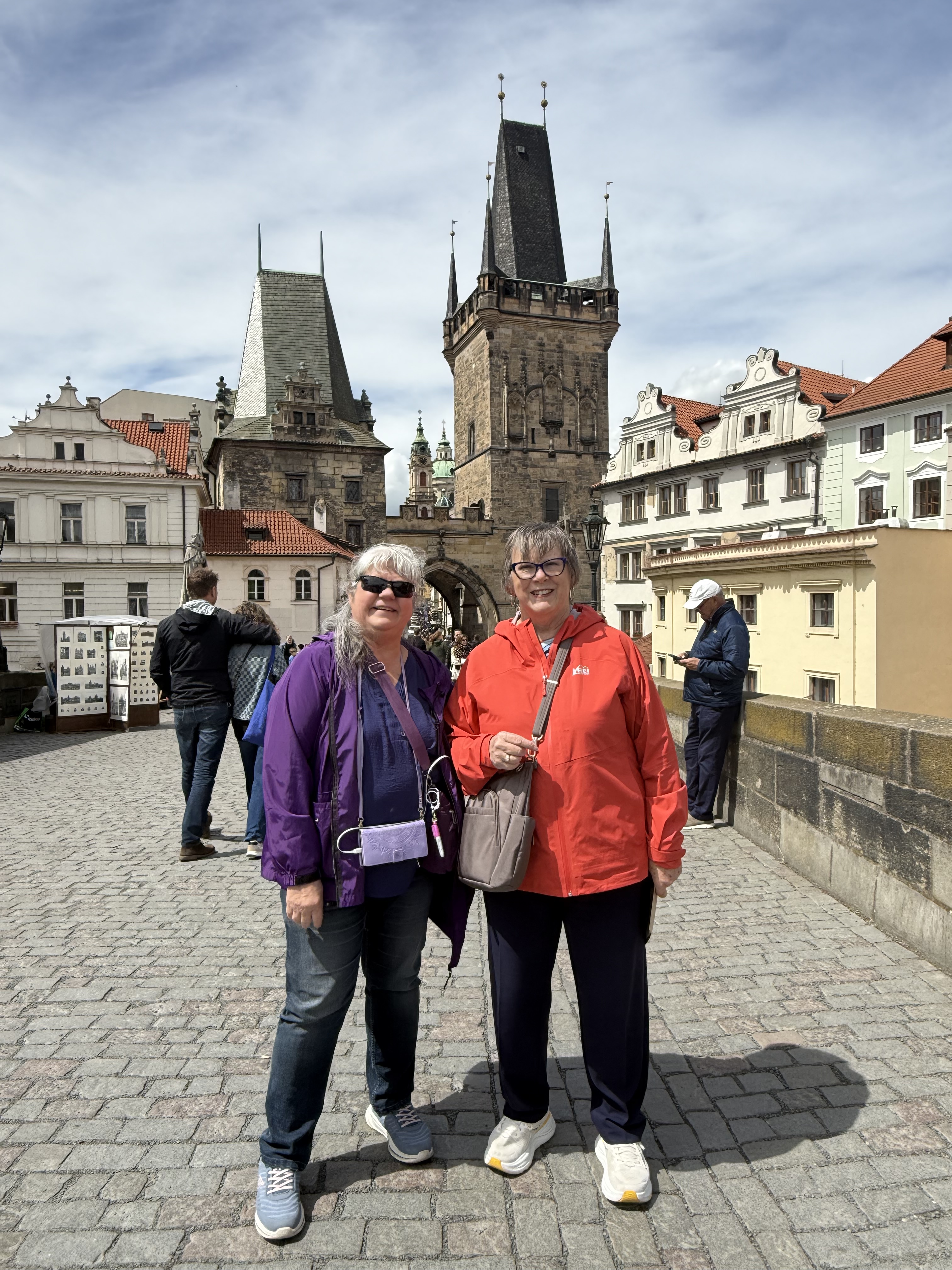
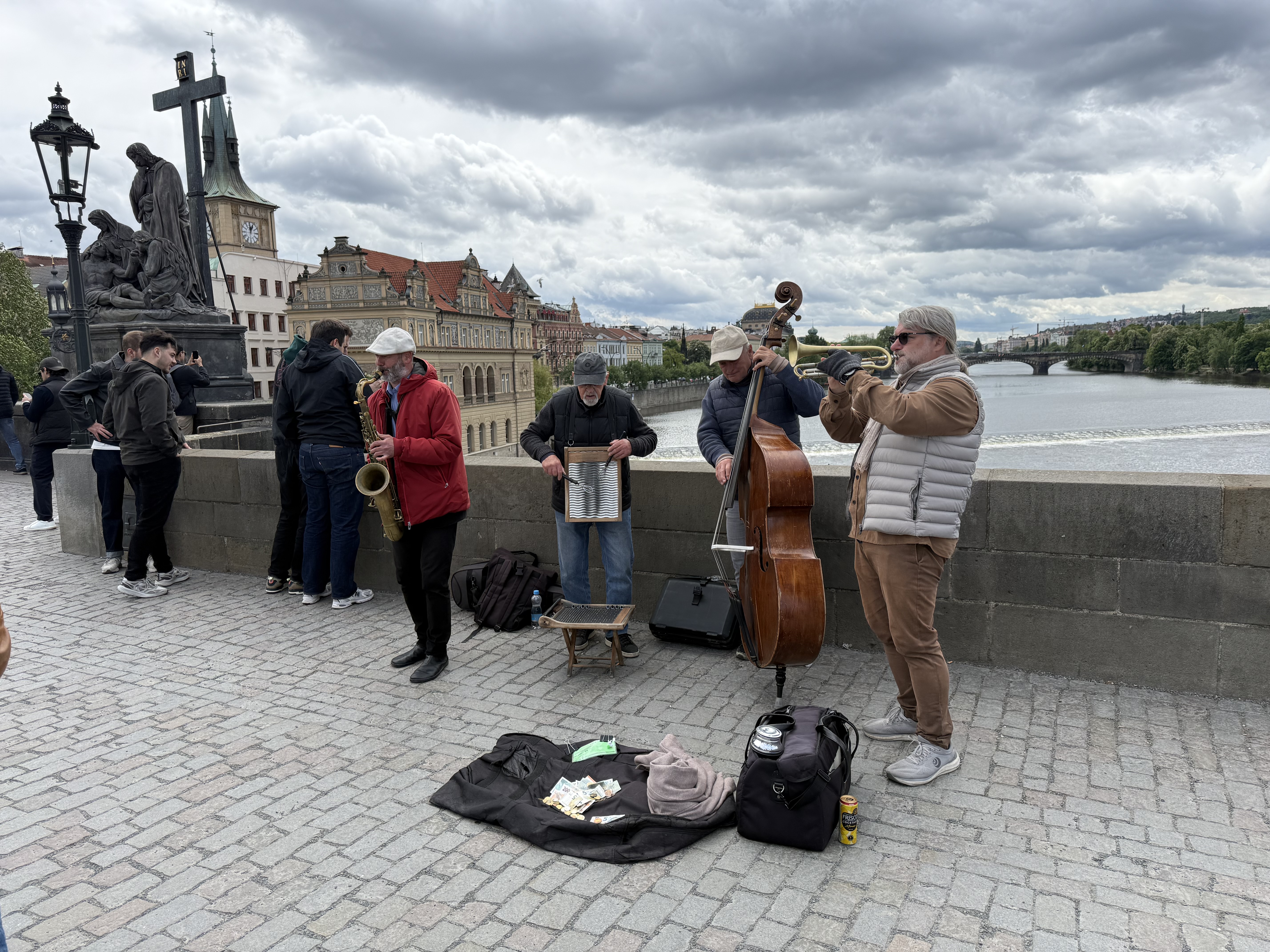
We walked across the Charles Bridge to the Lesser Town. It took longer than we expected and cost more, too. Why? Because all along the bridge there were performers and artists selling their wares.
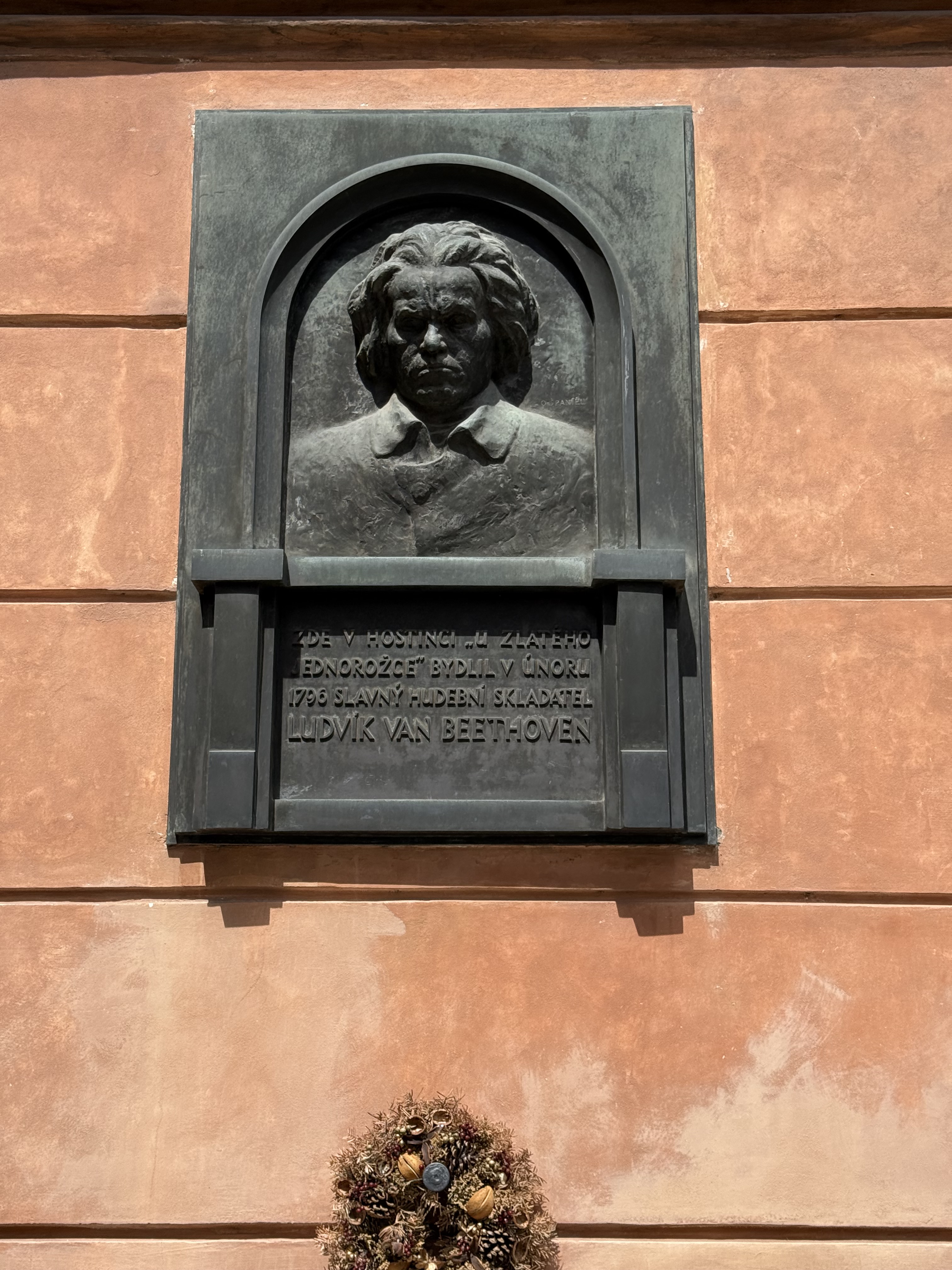
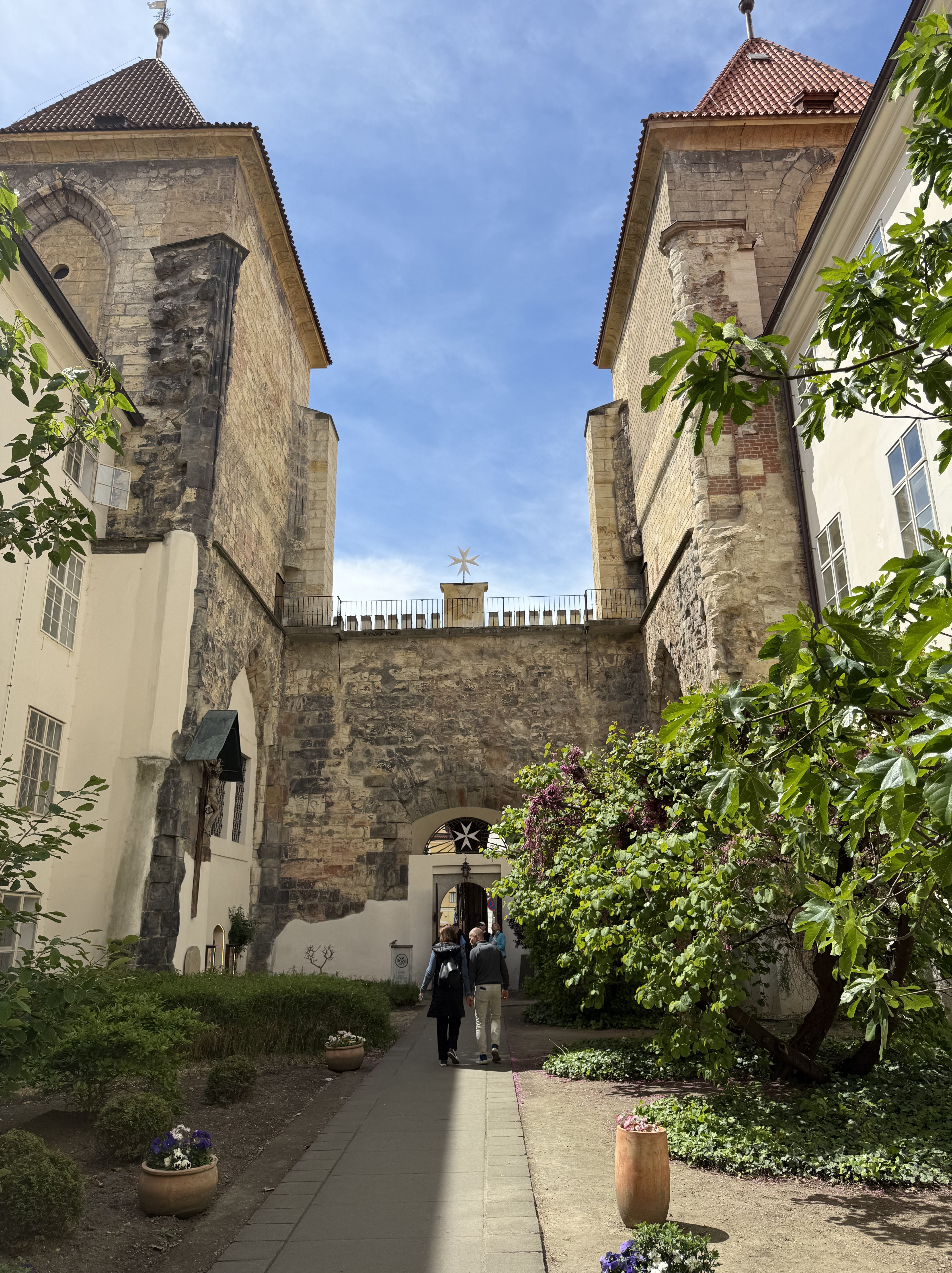
In the Lesser Town we did our usual peeking around corners and found it fascinating. We came across a building that is the current home of the Knights of Malta in Prague, and a building where Beethoven lived.
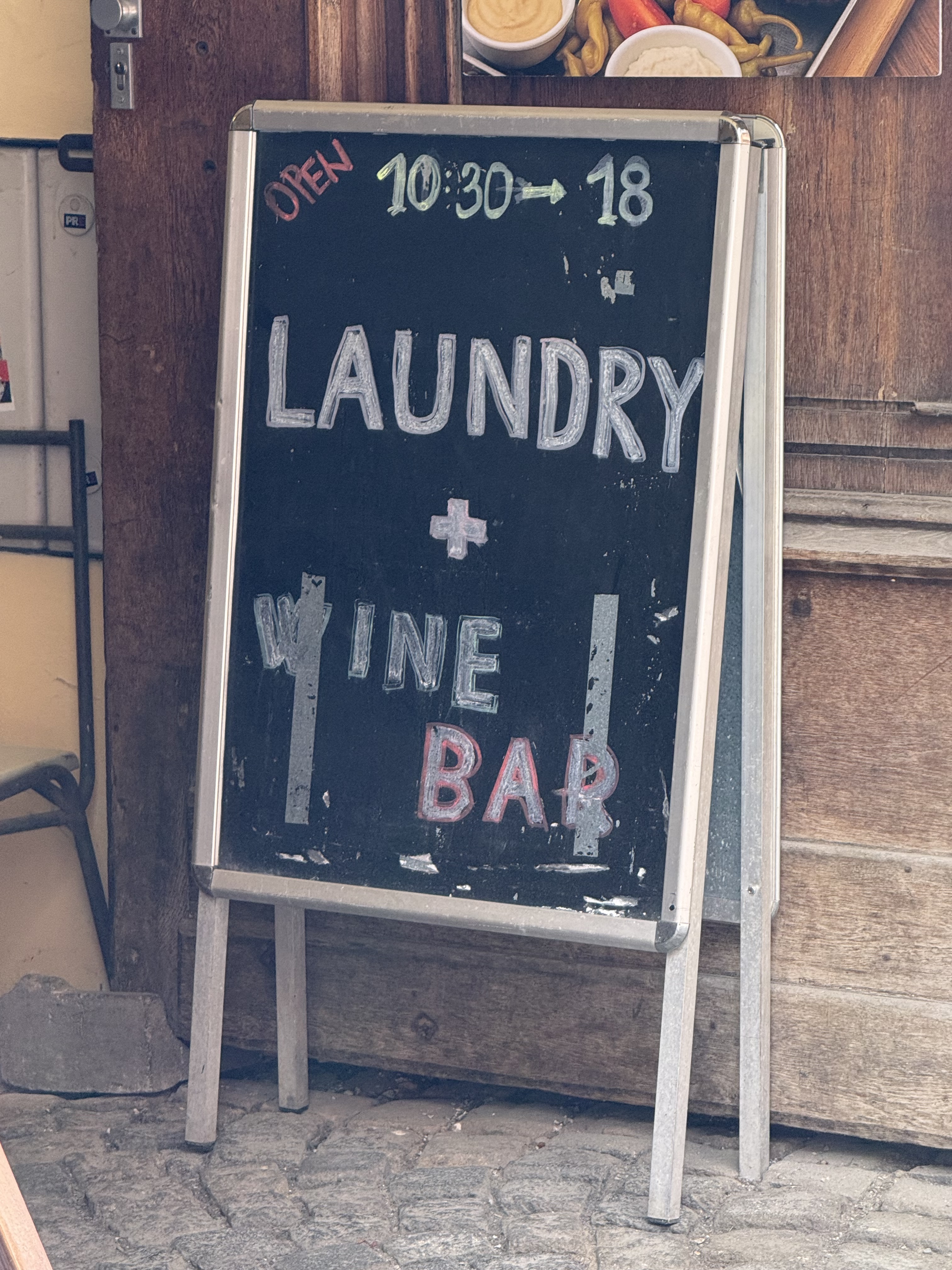
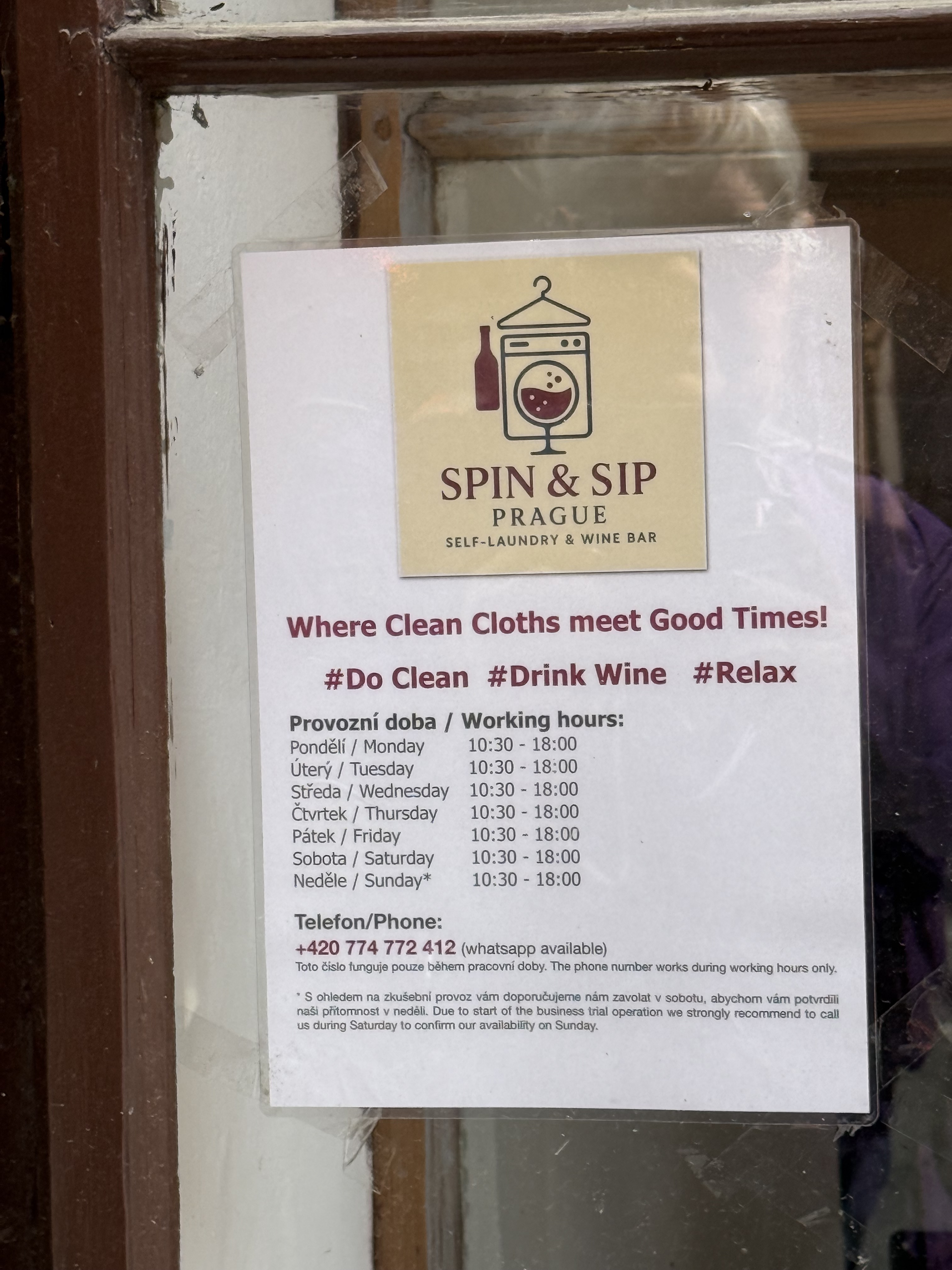
Of course, there’s always the serendipity of finding a place that tickles your funny bone. We found the Spin and Sip Laundry and Wine Bar. What a great way for a weary traveler to get clean clothes and a wine buzz at the same time. The name put me in mind of the Sip ‘N Dip here in Great Falls. But that’s a story for another time.
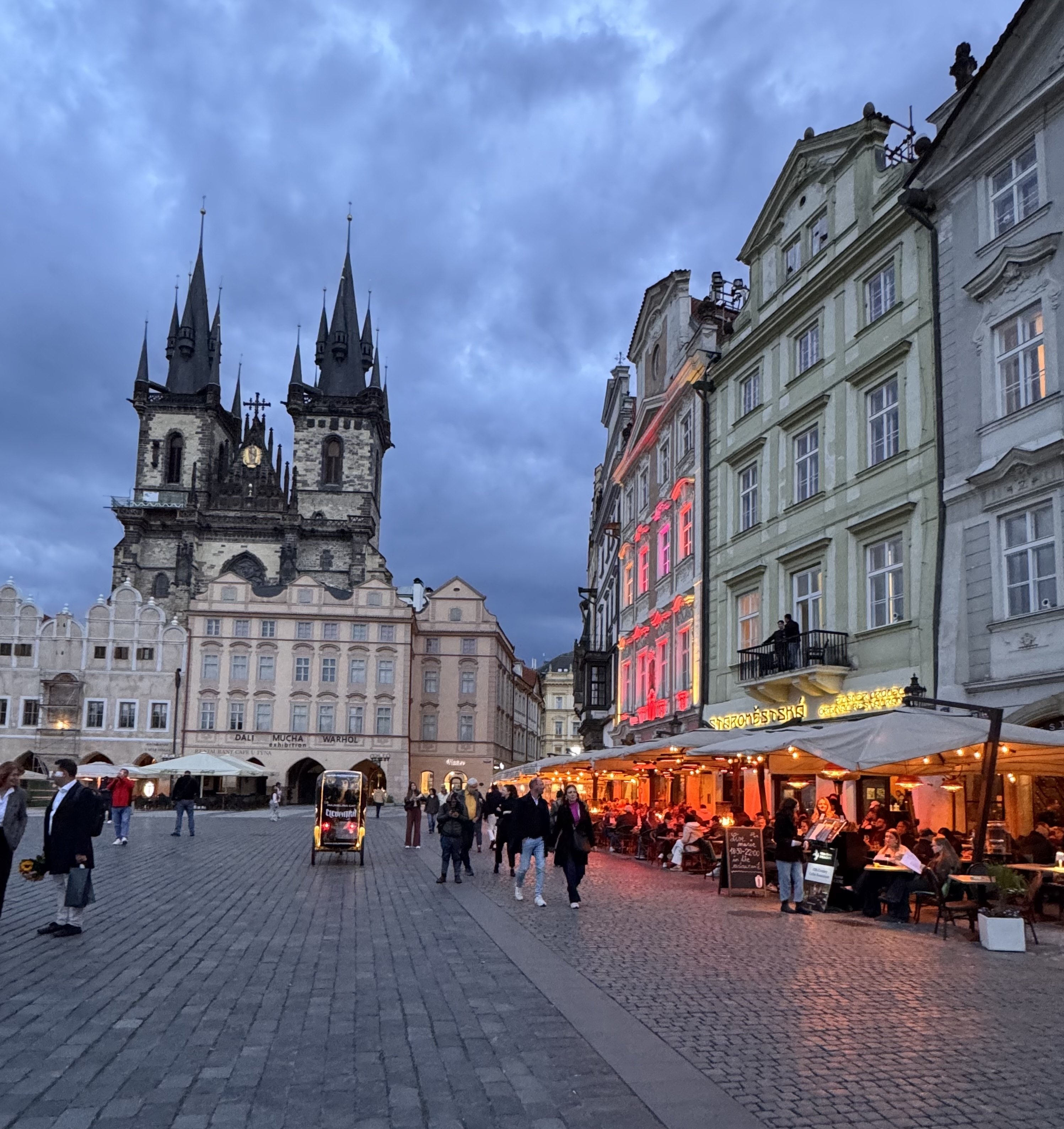
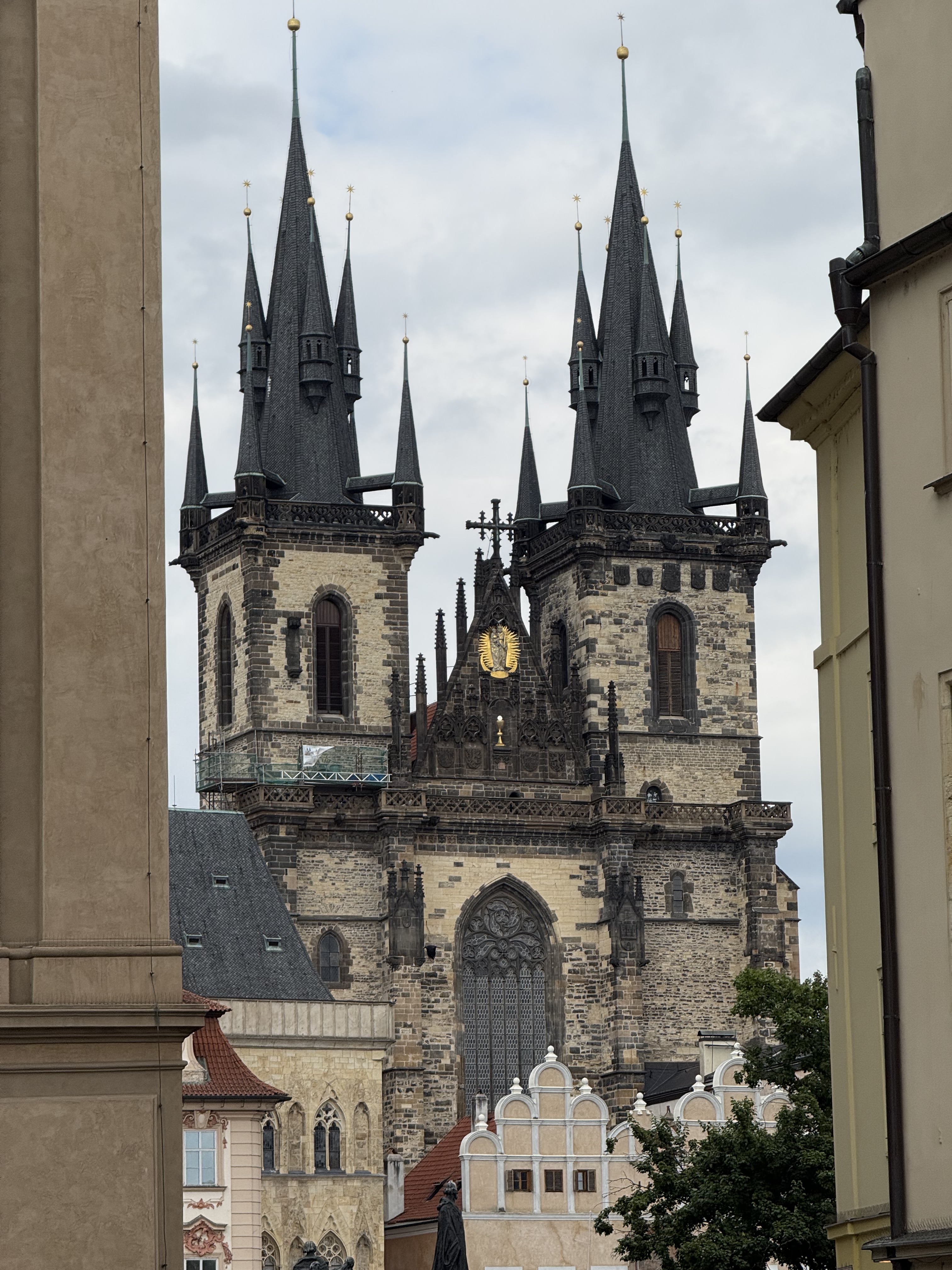
On our final afternoon we decided to visit the gothic church just off the town square, since we had been looking at the spires for four days. There’s always one embarrassing “Oh NO!” moment, and this was it. It required a bit of searching to find the entrance-they weren’t really interested in hosting tourists. And when we entered there was a mass in progress. We were required to stand in the back, behind a gate, and we were not allowed to take photos. It was so beautiful, though, that we stood for some time and listened to the mass, enjoying the serenity. And then…my phone went rang! Ouch. I rushed out the door, feeling so sorry that I had disturbed the service and the parishioners. And to make it even worse, my ring tone is: “Sympathy for the Devil” by the Rolling Stones.
After leaving Malta, I decided to give myself a break. Instead of multiple flights and airlines to get home, I flew to London for a short stay to break up the long trip.
I stayed at The Resident Soho, which is a great little hotel tucked away on a dead end street. While I arrived too late the first day for their complimentary wine hour, they made an exception and poured a glass for me so I could relax after my flight. I chose Soho for its proximity to the West End theatre district. I quickly learned it’s the go-to spot for young Londoners’ social life. Despite the chill, every evening found dozens of people populating the sidewalks, and sometimes the street, with a glass in hand. I guess the pubs get too crowded and it spills other the door.
It was still a bit chilly for sightseeing strolls, but I did plenty of walking. A trip to Fortnum and Mason to stock up on yummy gifts for my favorite cousin was a big success. I only wish I had been able to bring an entire hamper back with me. But alas, after nearly two months of gift shopping my luggage was maxed out.
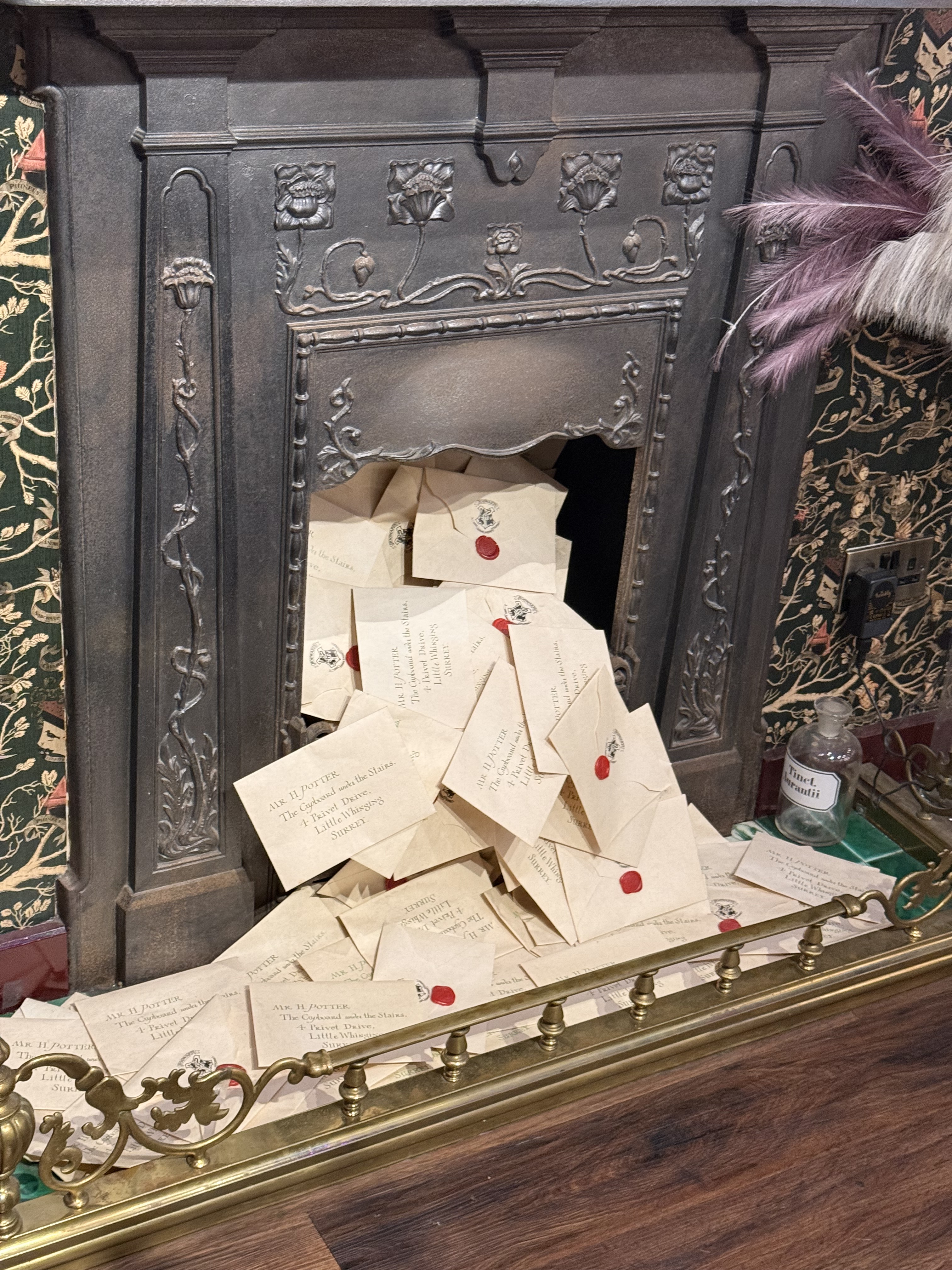
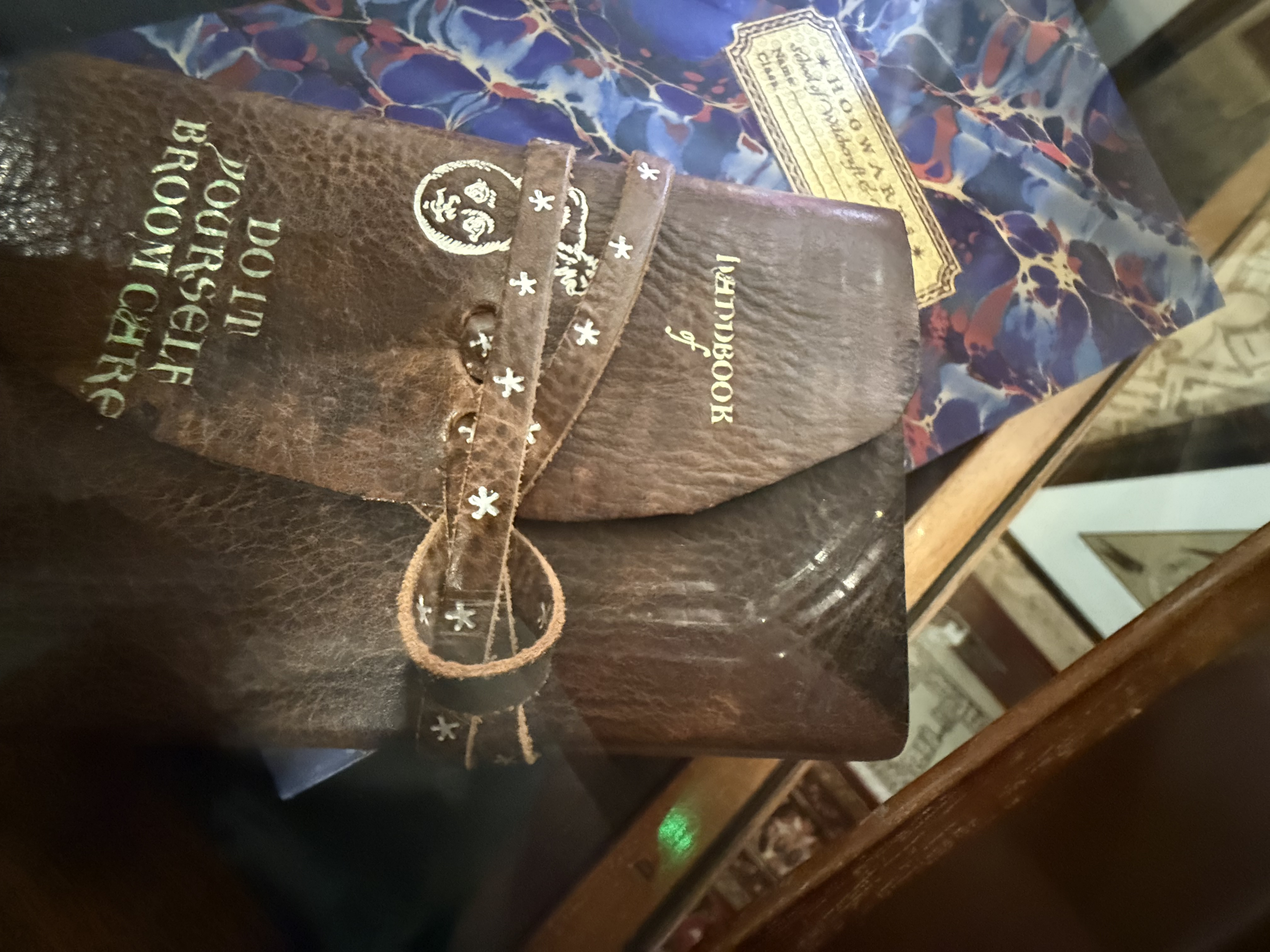
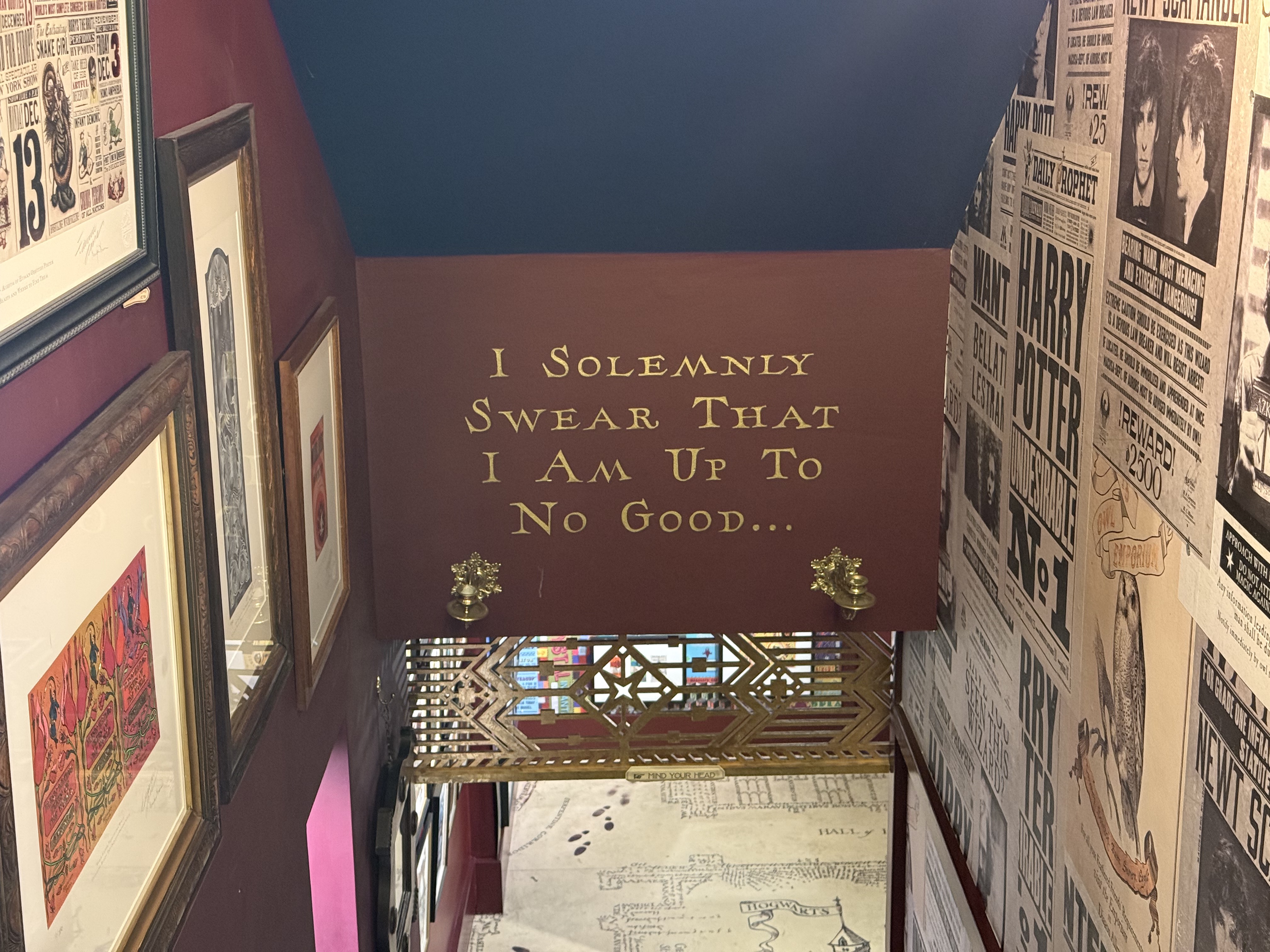
As I walked around the area early the first morning (after having amazing french toast at, of course, a French restaurant) I came across an intriguing window display. It looked like the passage in the first Harry Potter book where he gets overwhelmed with invitations to Hogwarts as they fly down the chimney. Of course, that meant I had to go back later when they were open. The store is Minalima, and it is owned by the people who did all the graphic design for the Harry Potter movies. Oh, it was so much fun to wander through the store and see items from the movies. Sometimes the best part of travel is the serendipity of finding the unexpected.
Their window display stopped me in my tracks.
Of course I had to take in a couple more plays while in London. This time it was Hadestown and Shadowlands. I loved Hadestown, and ended up listening to the music for days after. I chose Shadowlands solely because Hugh Bonneville plays CS Lewis, and I’m glad I did. The play was beautiful, sad, and touching.
It turned out that the theatre for Shadowlands was a good distance from my hotel. I walked, thanks to my Apple maps app (there were lots of turns and twists), but decided I didn’t want to walk back that late at night. So I got to take one of the classic London Black Cabs back to my hotel. It was a delightful ride through busy Soho streets, and the traffic made the drive much longer than usual. Which was great, because I got the best driver. We talked about when he came to the USA as a young man in the late 60s with a backpack and a copy of “On the Road” by Jack Kerouac. In the end he turned off the meter and charged me almost half the fare because it took so long and we had a great conversation. This is why I love to travel.
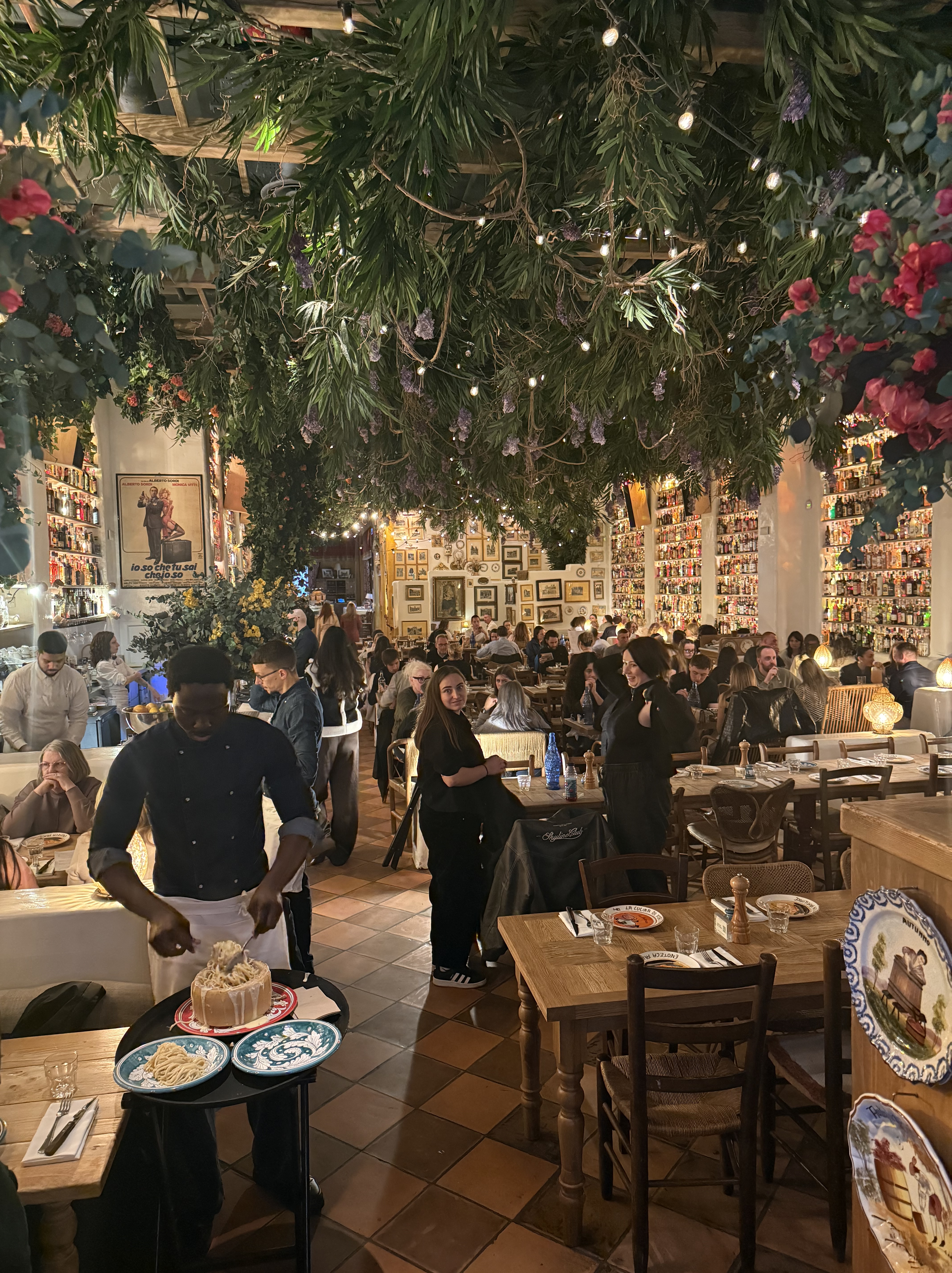
I also found a really good Italian restaurant, again thanks to my map app. Circolo Popular seems to be hidden away, sunken below street level. I walked past it twice before finding the entrance. But it was worth it. It reminded me of Mama Leone’s in New York City (which was an icon until it closed some thirty years ago.) Most of the seating was at long shared tables and the walls were lined with bottles. There was a party atmosphere, with lots of hustle and bustle. The food was great, and I ended up sharing comments on our meals with others who were sitting near me. While my meal was outstanding, I wish I had ordered the fettuccini alfredo. It’s prepared right at your table in a hollowed out parmesan wheel. Maybe I’ll have to go back and do that when I return in June.
The waiter preparing fettuccini for the table.
So now I’m back in the USA, doing some pet sitting until my next adventure. Next up is a whirlwind trip home to Montana to finally move into my own place, and then off to Europe again for a Viking River Cruise and some side trips. So, Dear Reader, stay tuned!
In the month I spent in Malta, there was a lot to experience. Since my return I’ve been mulling over how to cover it all, and I decided to go for it and do one long post. Feel free to pick and choose what you want to learn about. Get yourself a cuppa and join me in Malta, Dear Reader.
The Weather
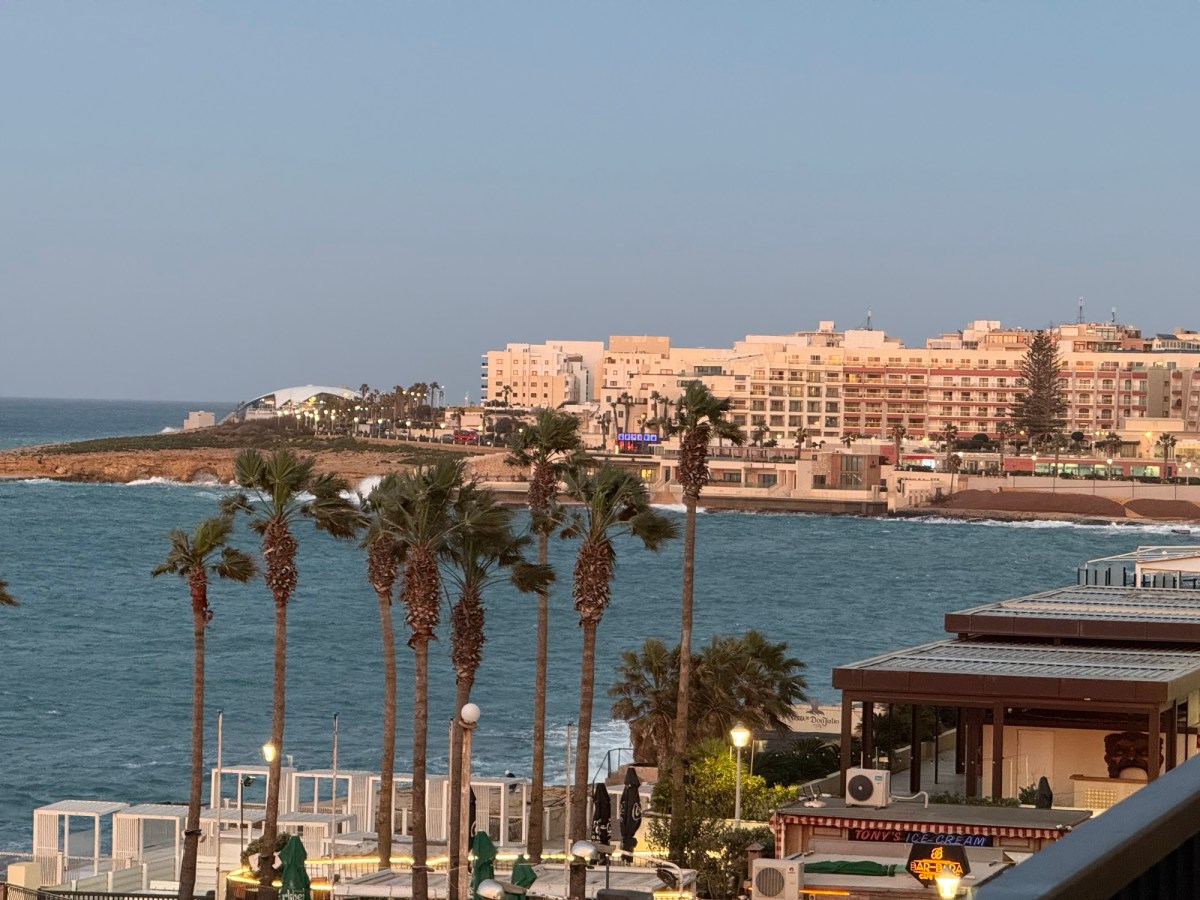
There was a storm approaching the day I arrived, and my host warned me ahead of time. They wanted to be sure I didn’t leave the furniture on the balcony, and once the wind started I understood why. We had gale force 6 winds, and at night it howled around the building. I had an apartment on the fifth floor of a building directly across from the Mediterranean sea and right in the path of those winds. I spent three days watching the waves crash along the shore and looking out at the mostly deserted esplanade.
The weather during the month (mid-February through mid-March) was in the 60s Fahrenheit and usually windy. I understand it gets quite hot there in the summer, but I was happy to have the cooler weather. I’m not a fan of hot weather; see my posts about Thailand, Singapore, and Malaysia. Most days would find me walking along the esplanade if I wasn’t doing one of my many excursions around the island.
Transportation
Because the island is small and roads are narrow, I decided to forgo renting a car. There are plenty of alternatives. I did some guided excursions, I rode the Hop-On Hop-Off bus three times, and used Bolt (a local alternative to Uber, and very reasonable.) There is also a bus service that works very well on Malta, but I’m told it’s not so efficient on Gozo. The Bolt service was inexpensive and efficient. When leaving Malta I scheduled a Bolt pickup ahead of time. The driver arrived right on the dot and got me to the airport with time to spare. I’d recommend it for both arriving and leaving Malta, as well as trips around the island. It’s also a great way to have a conversation with a local!
The Food
I like to explore grocery stores in other countries. It helps me get familiar with different foods and learn what the locals eat. There have been some occasions when I’ve taken a plunge and bought something labeled in another language, not having any idea what it was until opened. There was a nice little grocery a few blocks from my apartment and I shopped there often. I did find that there were a lot English foods-the area is full of tourists and expats, mostly English.
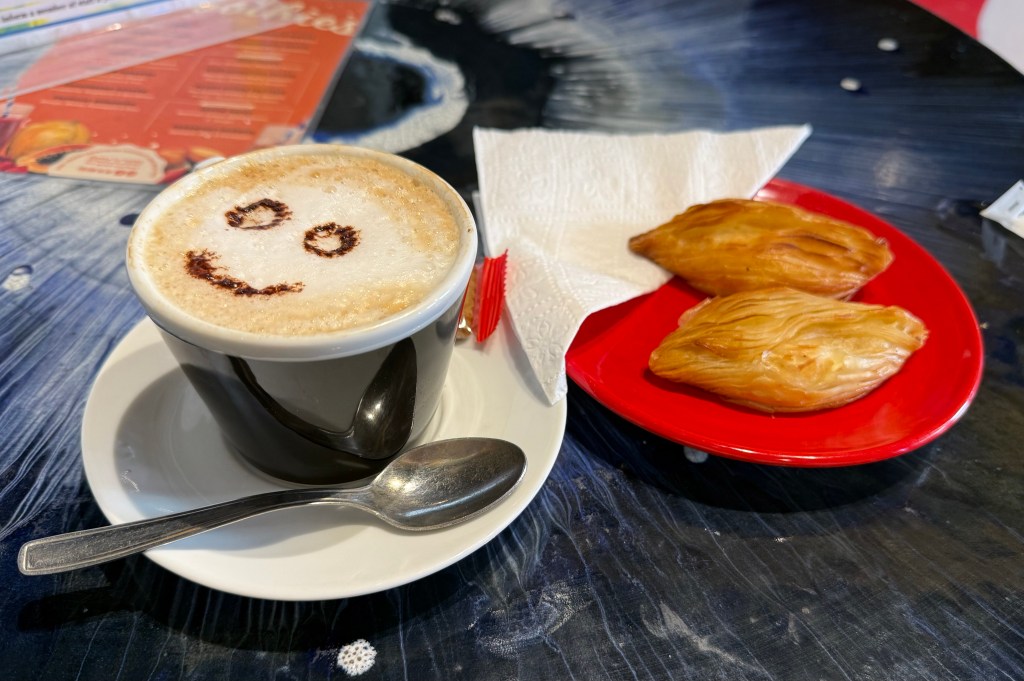
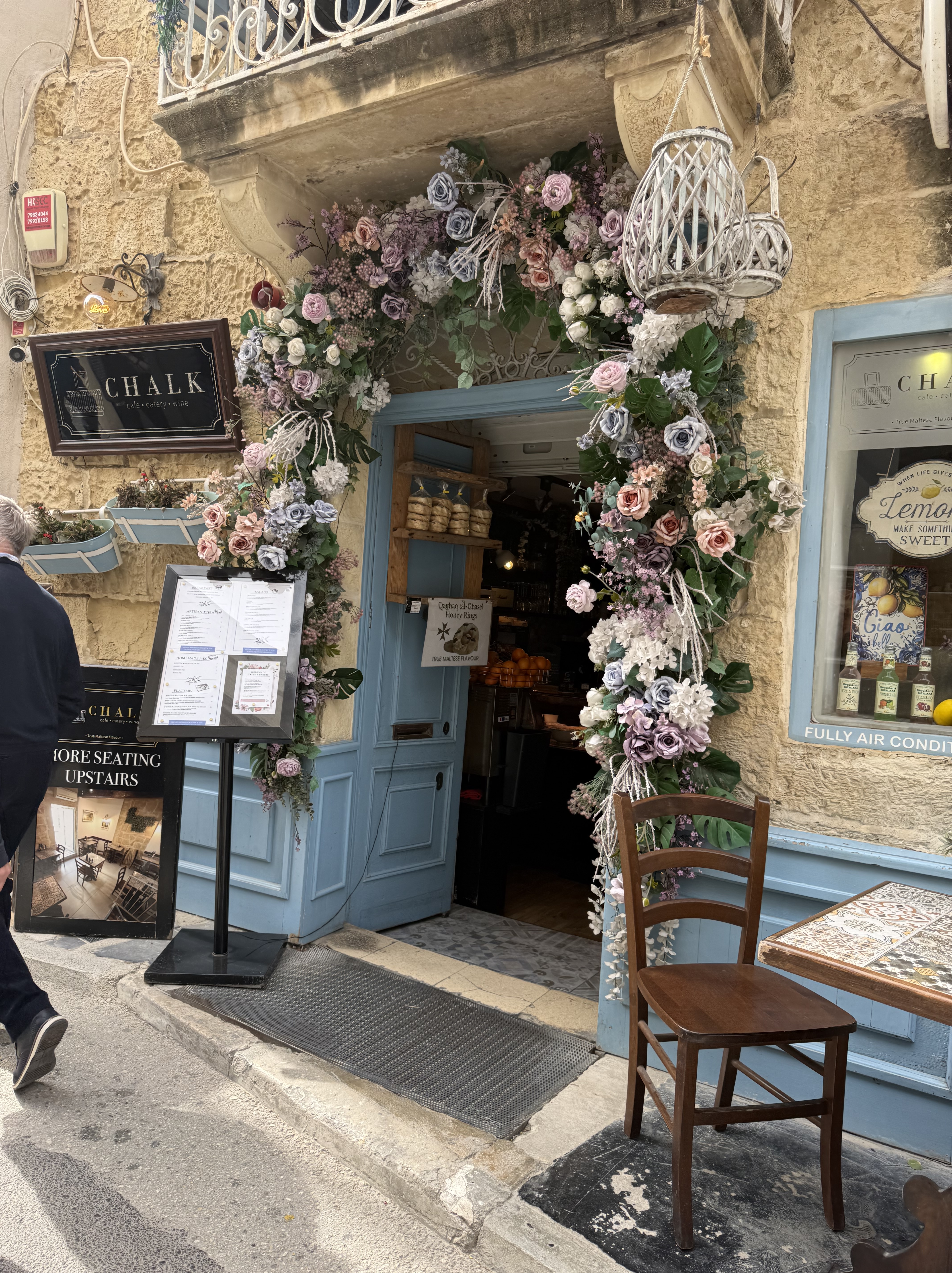
I got into the habit of walking down the street to a small coffee shop for Elevenses (note reference to Frodo) that also served baked goods and light meals. The first day I went there I asked for coffee with milk or cream. They patiently explained that would be a cappuccino. That became my drink of choice for the rest of my stay, with the barista starting my drink as soon as he saw me walk in. They had wonderful pastries, most of which were Italian and Eastern European. Oh, the cannolis!!! By the end of my stay they greeted me like an old friend, and I got farewell hugs from the staff. By the way, to get to the cafe I walked past a Starbucks that was only two doors away. Why would I want to go to an American coffee shop in Malta?
My barista took great care of me.
My first dinner in Malta was in the restaurant in the building where I was staying. Thanks to the inclement weather, I had the place almost to myself and didn’t have to venture or into the storm. The host and the chef came to my table and made a fuss over me, and ended up making a special dish just for me. I went back several times, and each time I was treated to special attention and great food I didn’t order. I tried the traditional Maltese dish of stewed rabbit, and we joked that yes, it tasted like chicken.
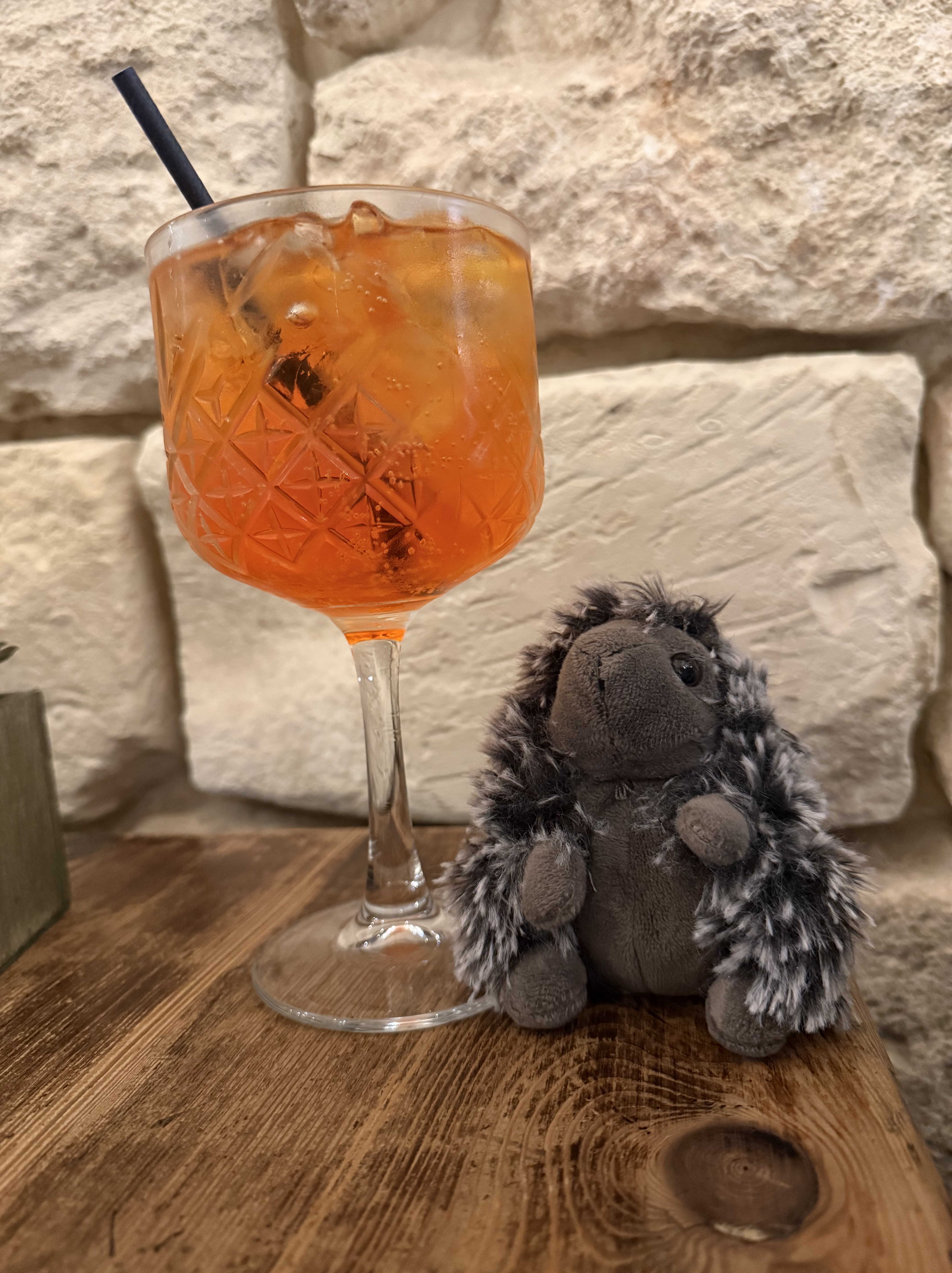
Another favorite was the Indian restaurant around the corner, where I was again treated like a favored guest. There were also pizza places and Italian restaurants in abundance. A popular drink is a spritz, and there are as many variations as there are restaurants. The first time I ordered a glass of wine, I thought it seemed a bit expensive: 14 Euros. I didn’t realize that was the price for the entire bottle! It’s quite common to have the waiter recork the bottle so you can take the rest home.
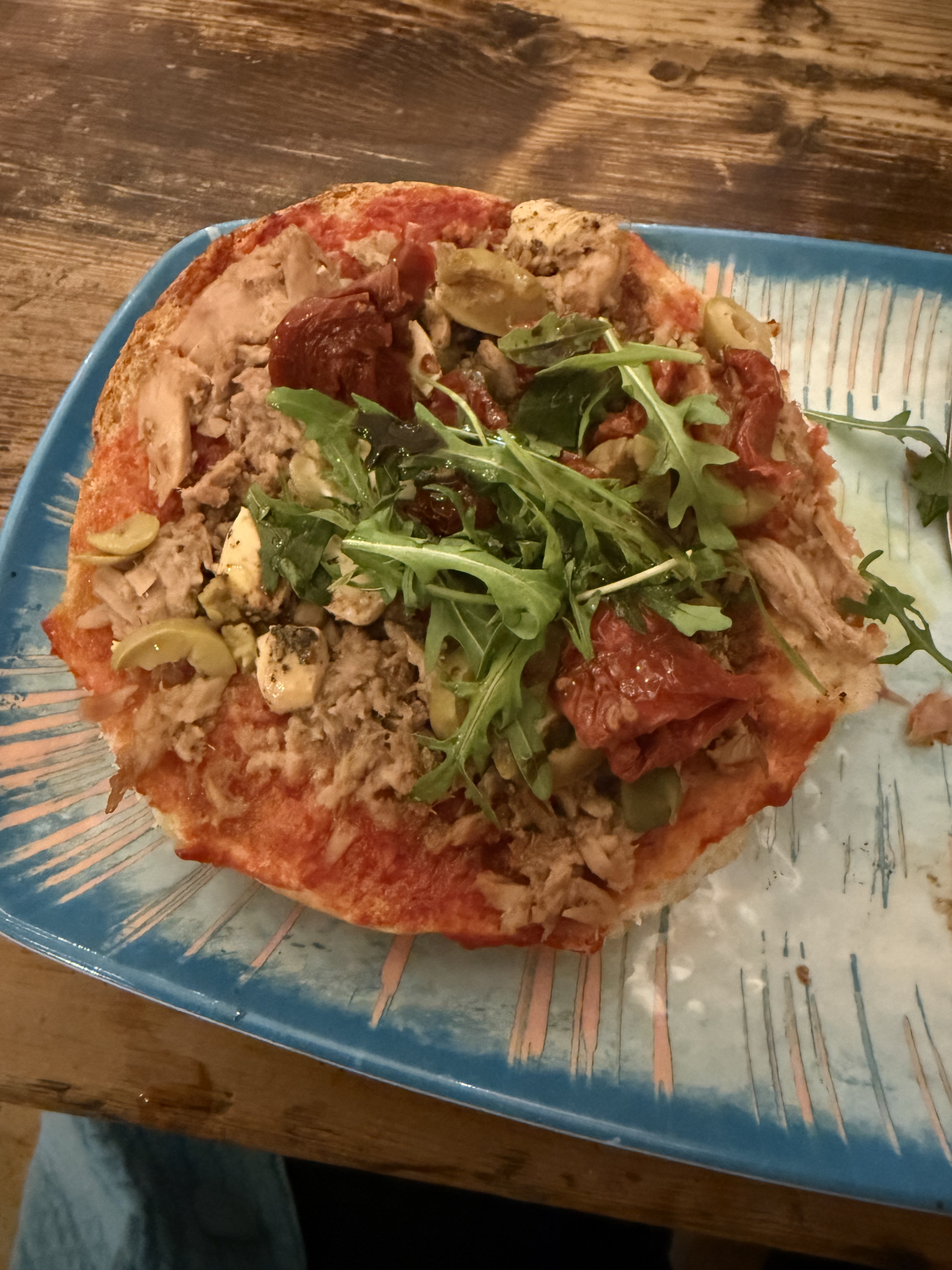
Polly liked the SpritzesA traditional Maltese Ftira with tuna and feta cheese
Getting My Bearings on a Hop-On, Hop-Off Bus
Sometimes I like to start a visit to a new area with this tour bus. They’re available all over the world and it’s a great way to get an overall view of what you might like to visit. I’ll often do the entire circuit first, and then go back to stops that interest me. There are two routes on Malta: the Southern route includes the Three Cities, the Blue Grotto, the fishing village of Marsaxlokk, and some ancient temples. The Northern route (my favorite) includes Mdina and Rabat, the Ta’ Qali crafts village, Mosta, and the Malta Aviation Museum. There are more stops, but the ones I listed were the ones that interested me the most. There’s also a route on Gozo, but I took a guided tour on that island.
Guided Day Tours for In-depth Exploring
While I usually prefer to explore on my own, there are times when a guided tour is a great choice. Only a local guide can tell the stories that make the history come alive. OK, as a Tour Director I’m probably biased, but I did find that the several tours I did in Malta were well worth the time and money. They also did a great job of allowing just enough time to explore on your own. What follows is an overview of each of the areas I visited thanks to guided tours, as well as a couple of excursions on my own.
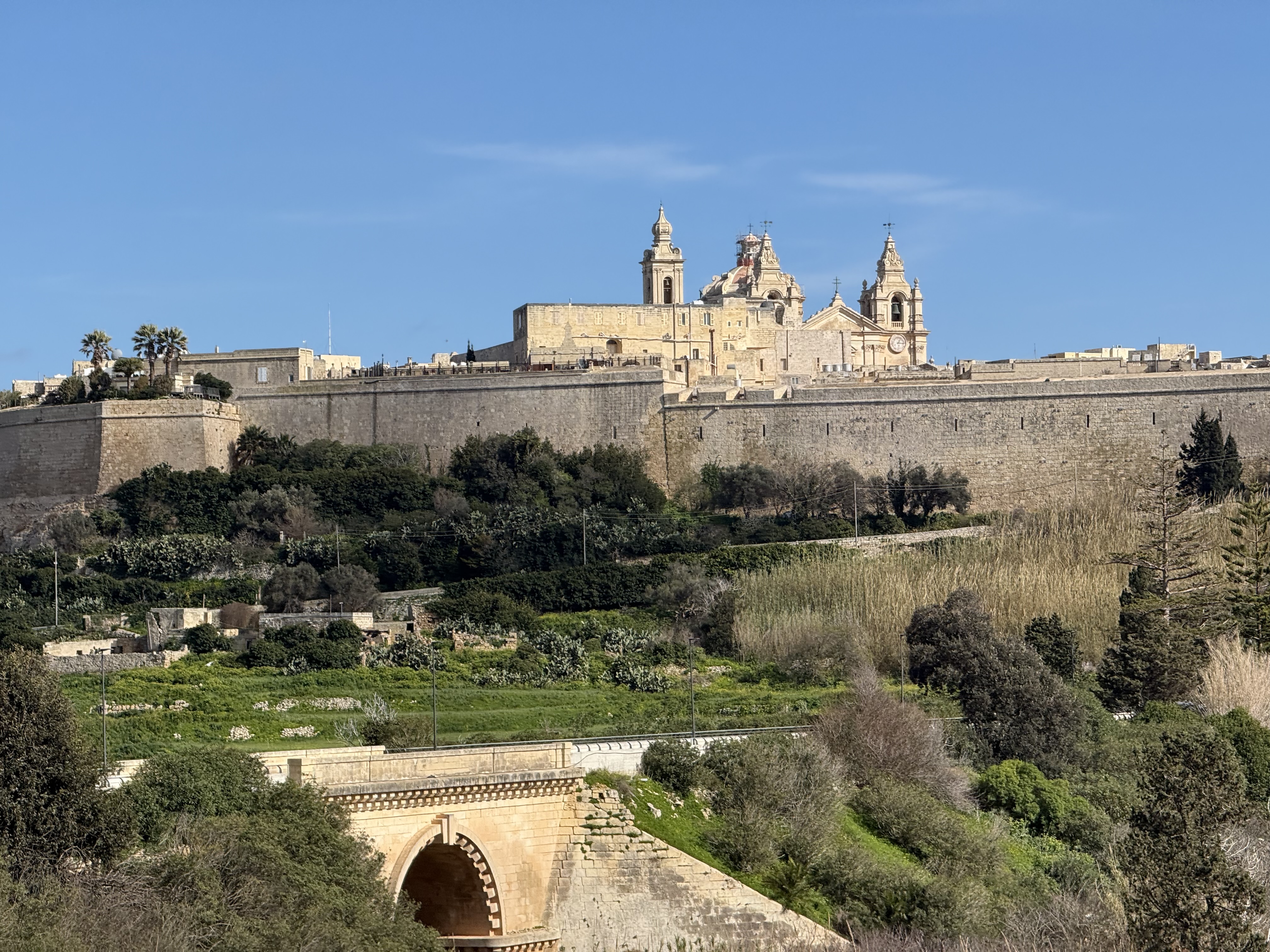
Mdina, The Walled City
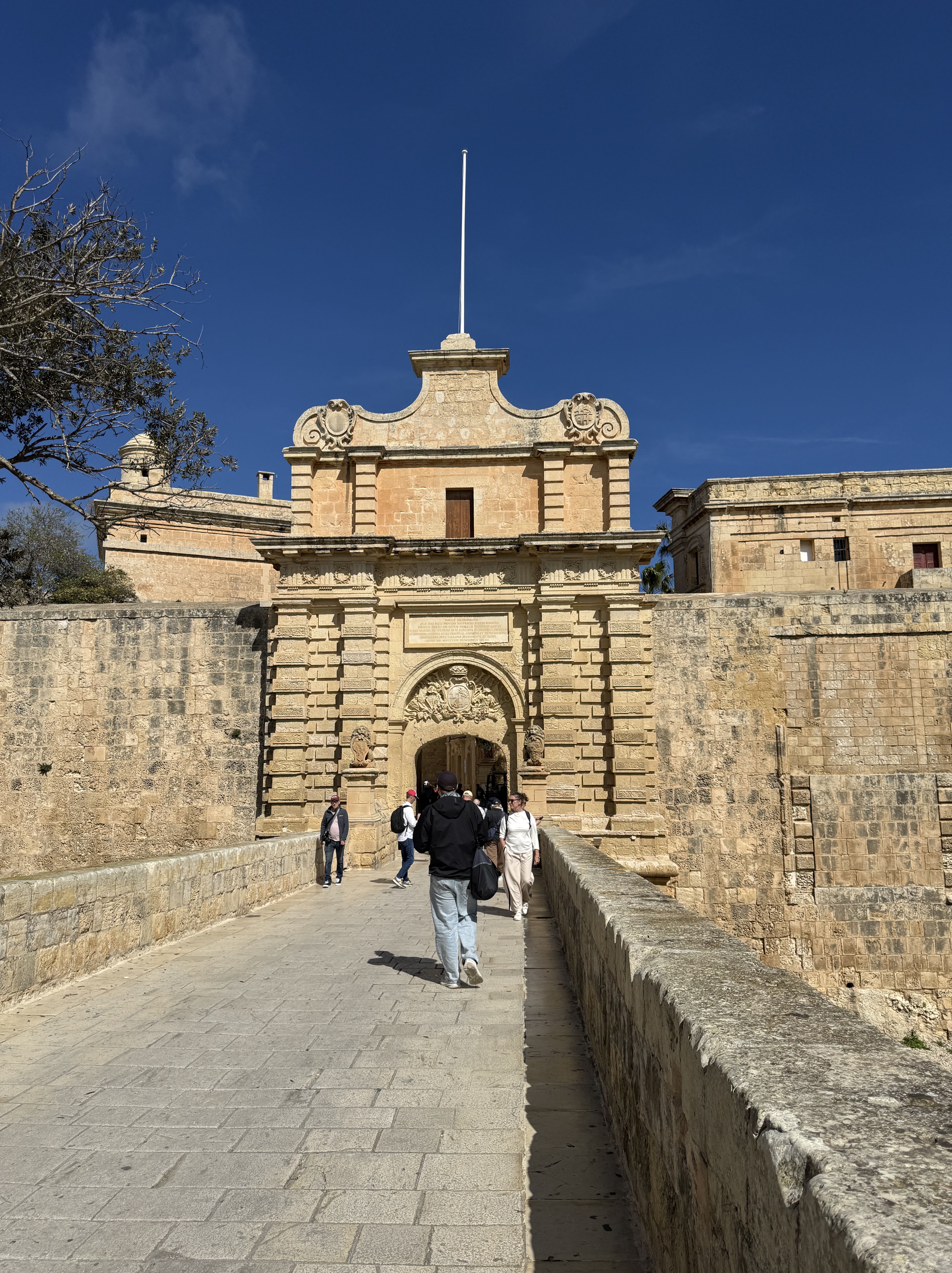
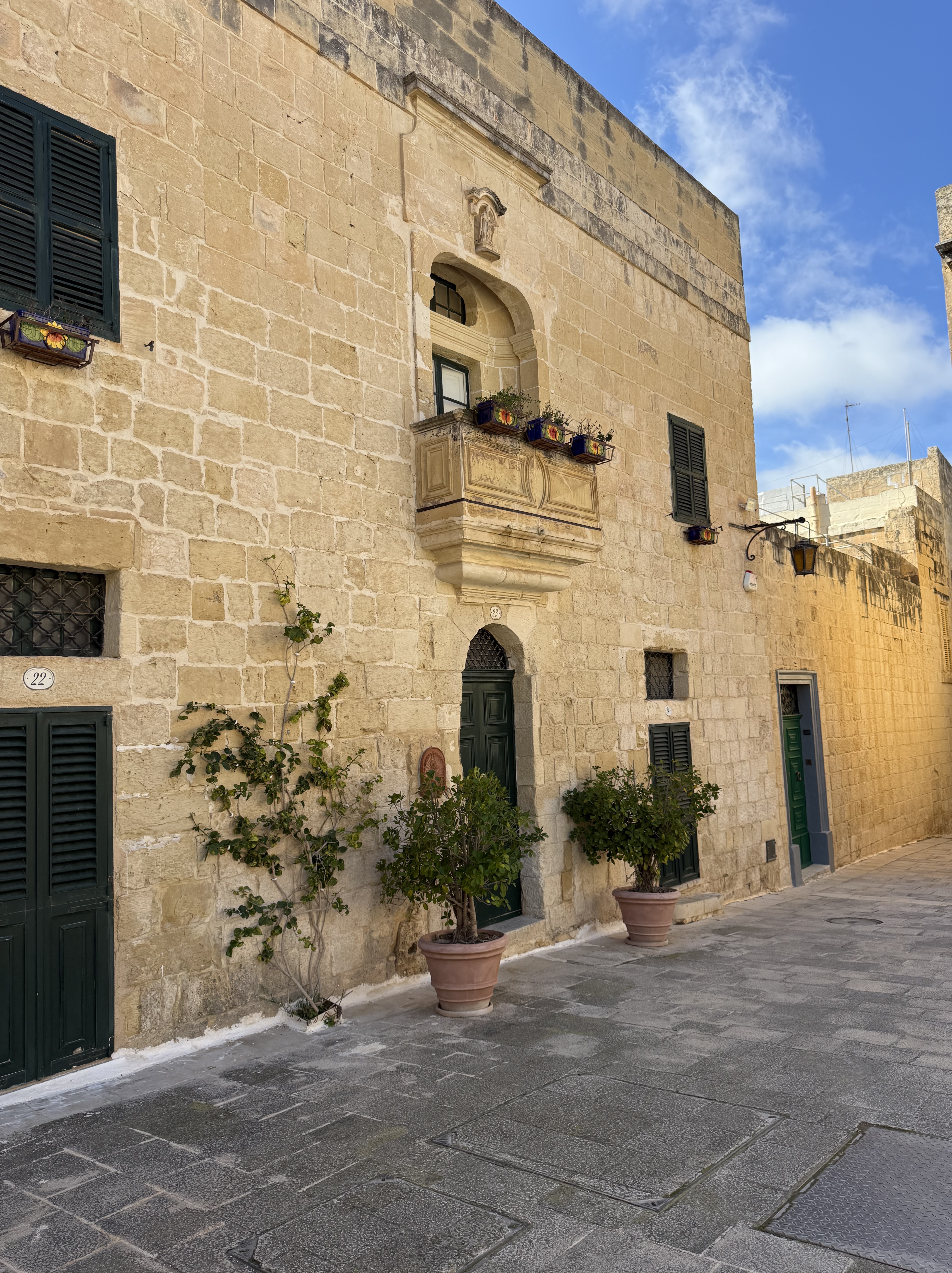
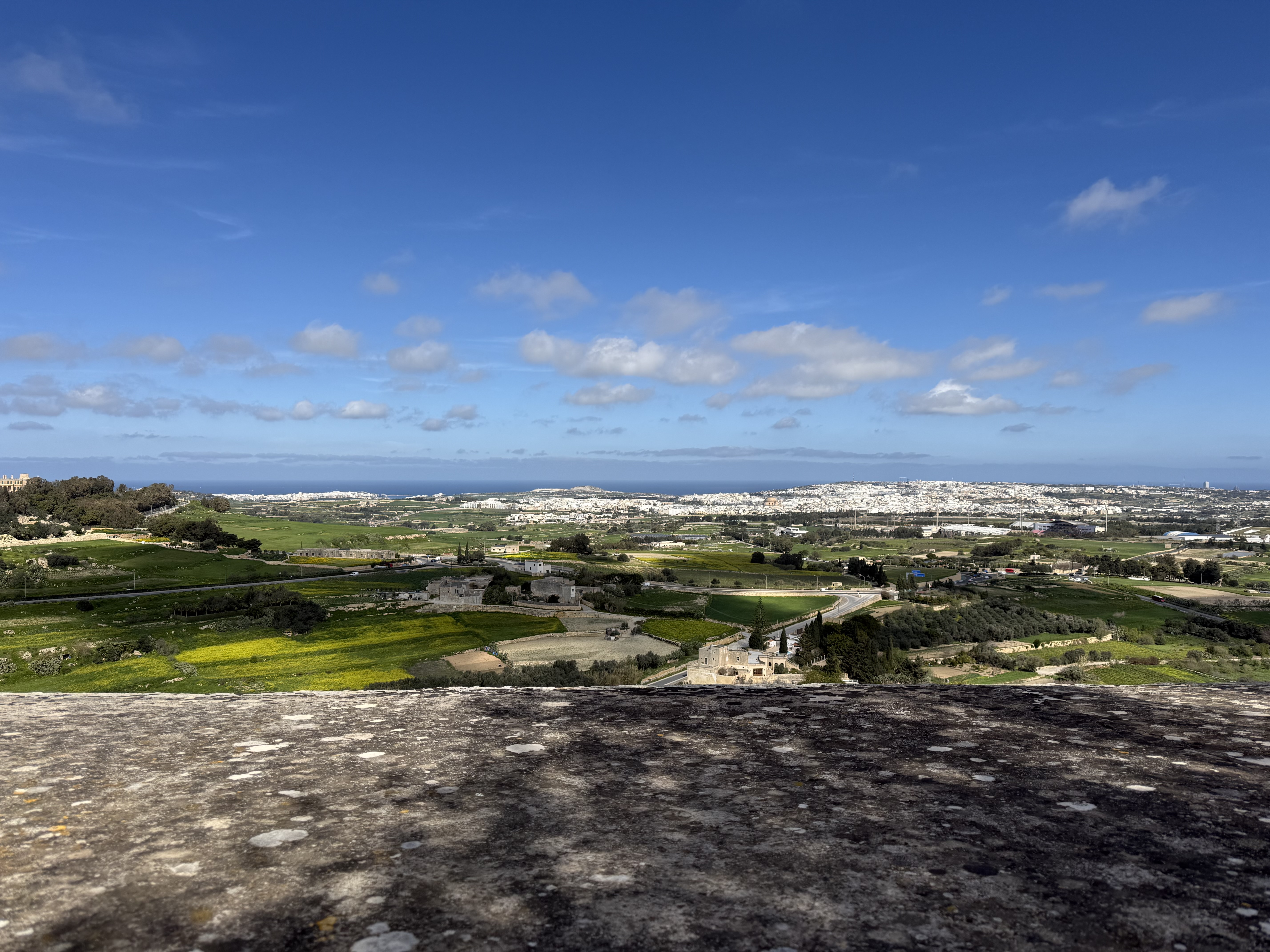
I admit to a weakness for ancient castles and walled cities. On my first trip to Europe I went to the Chateau de Chillon near Montreux, Switzerland. I touched the walls that had been there for a millennia and I’ve been hooked ever since. So of course I fell in love with Mdina. Located in the center of the island, it’s built on a hill that affords a view all the way to the sea. Because Malta was vulnerable to raiders and pirates, Mdina was a bastion of protection. Only when the soldiers of the Knights of Malta arrived in the 15th century did the island have the protection needed to build cities along the coast.
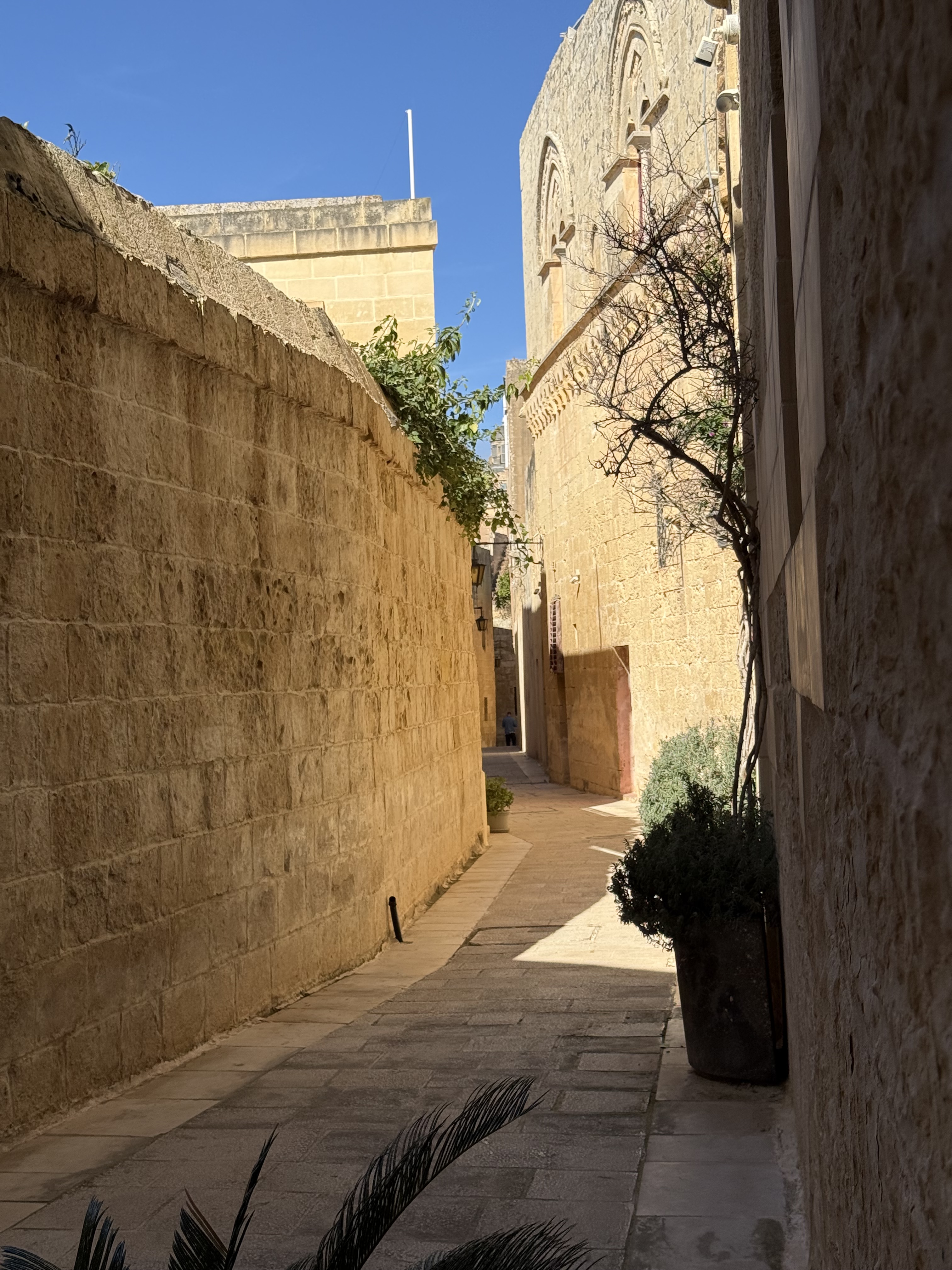
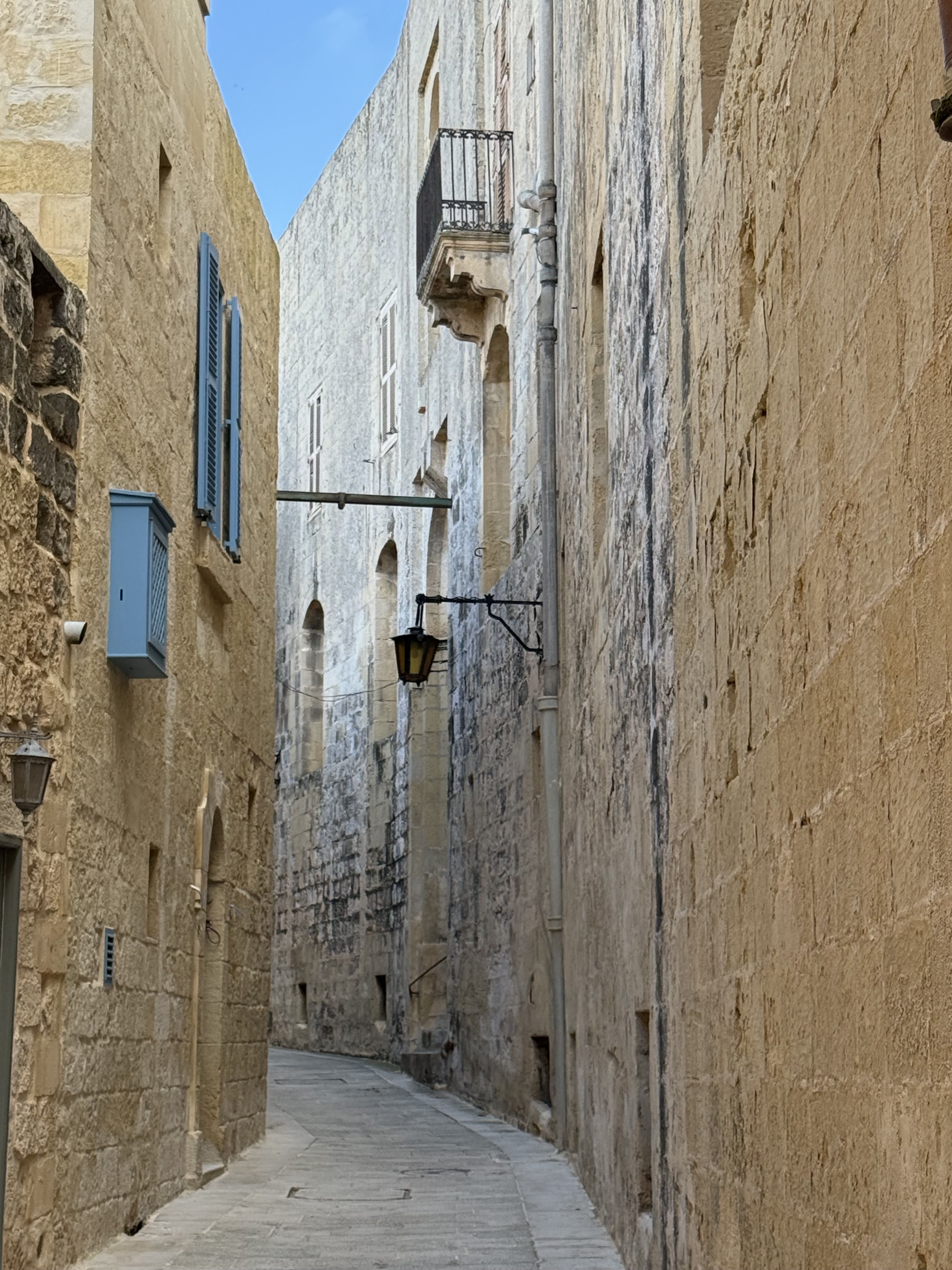
While the photos I took show a historic city visited by hundreds of tourists daily, it is still home to many Maltese. Walking through the maze of pathways within the city, you can feel both the history of hundreds of years, and also a vibrant city of today. There is a Michelin starred hotel within the walls, along with many restaurants and shops. I indulged in both.
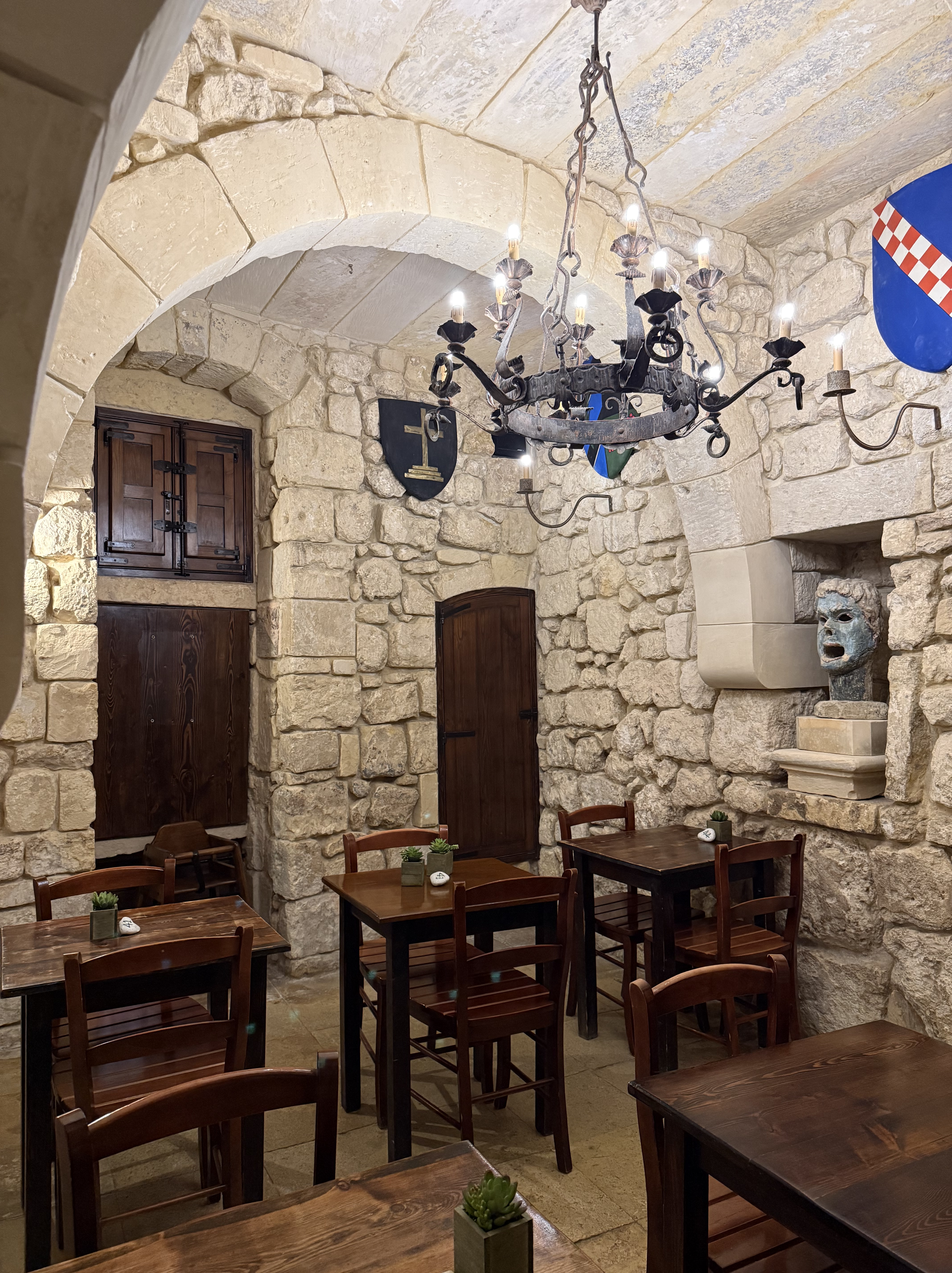
The entrance across the moat.Yes, someone lives here.View from the city walls to the sea.Lunch in a 500 year old restaurant.The city from below.
Rabat
Rabat is next to Mdina, literally across the road. Home to a Roman villa (which was closed when I visited) and St. Paul’s Catacombs, it’s also a city that attracts many visitors.
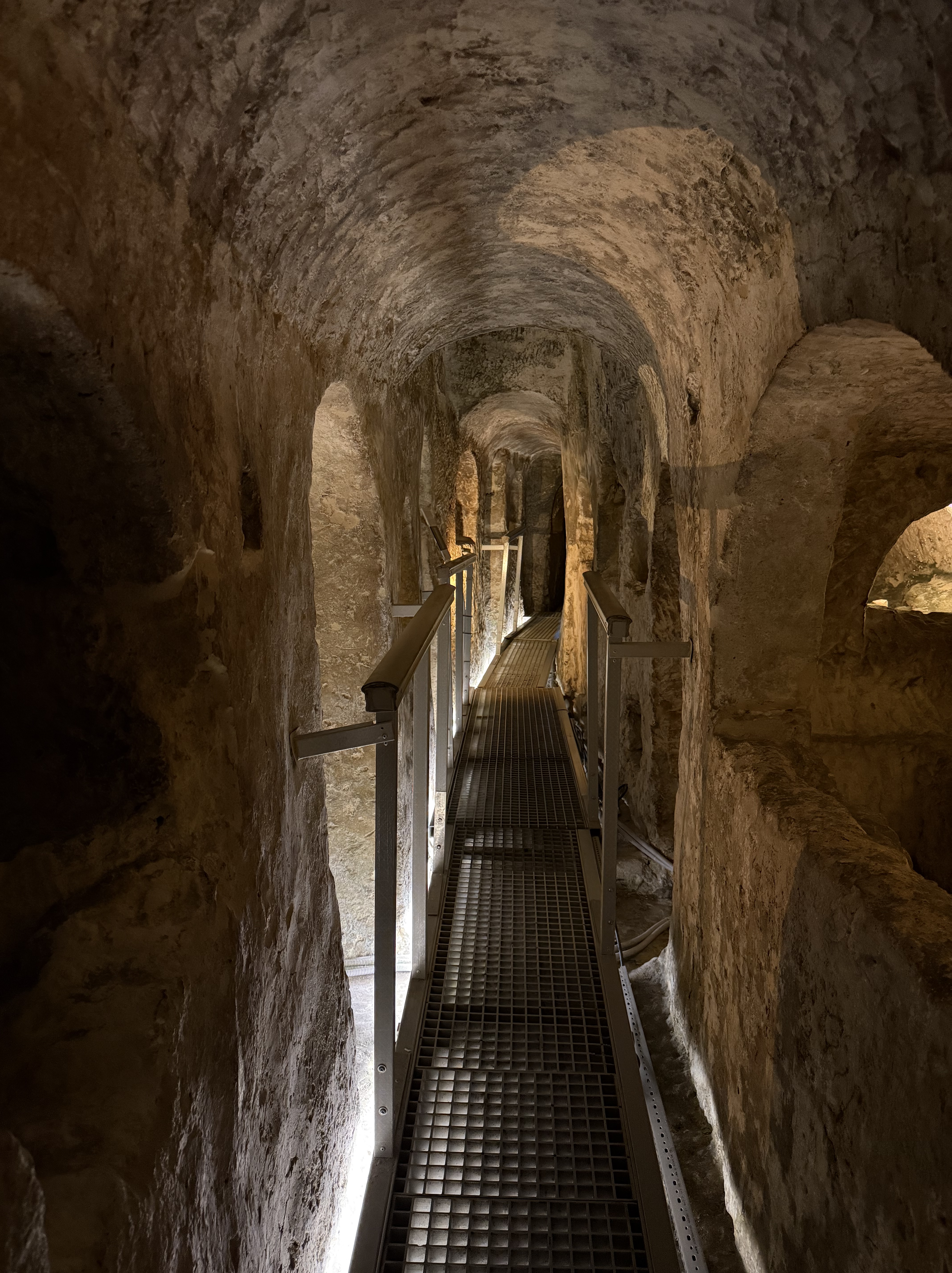
I did visit the catacombs, which incidentally are named St. Paul’s not because he was there, but because there is a church on the site named after the saint. There are lots of places that carry the name of St. Paul, including the town I stayed in. The catacombs have been used over many centuries, and are a labyrinth of tunnels and caves underground. Because they are so extensive, there are panic buttons placed throughout in case you lose your bearings. I limited both my time and my distance into the caves-I have to admit it creeped me out to see all those pathways going off in many directions. I’m not claustrophobic, but it still felt a bit tight to me.
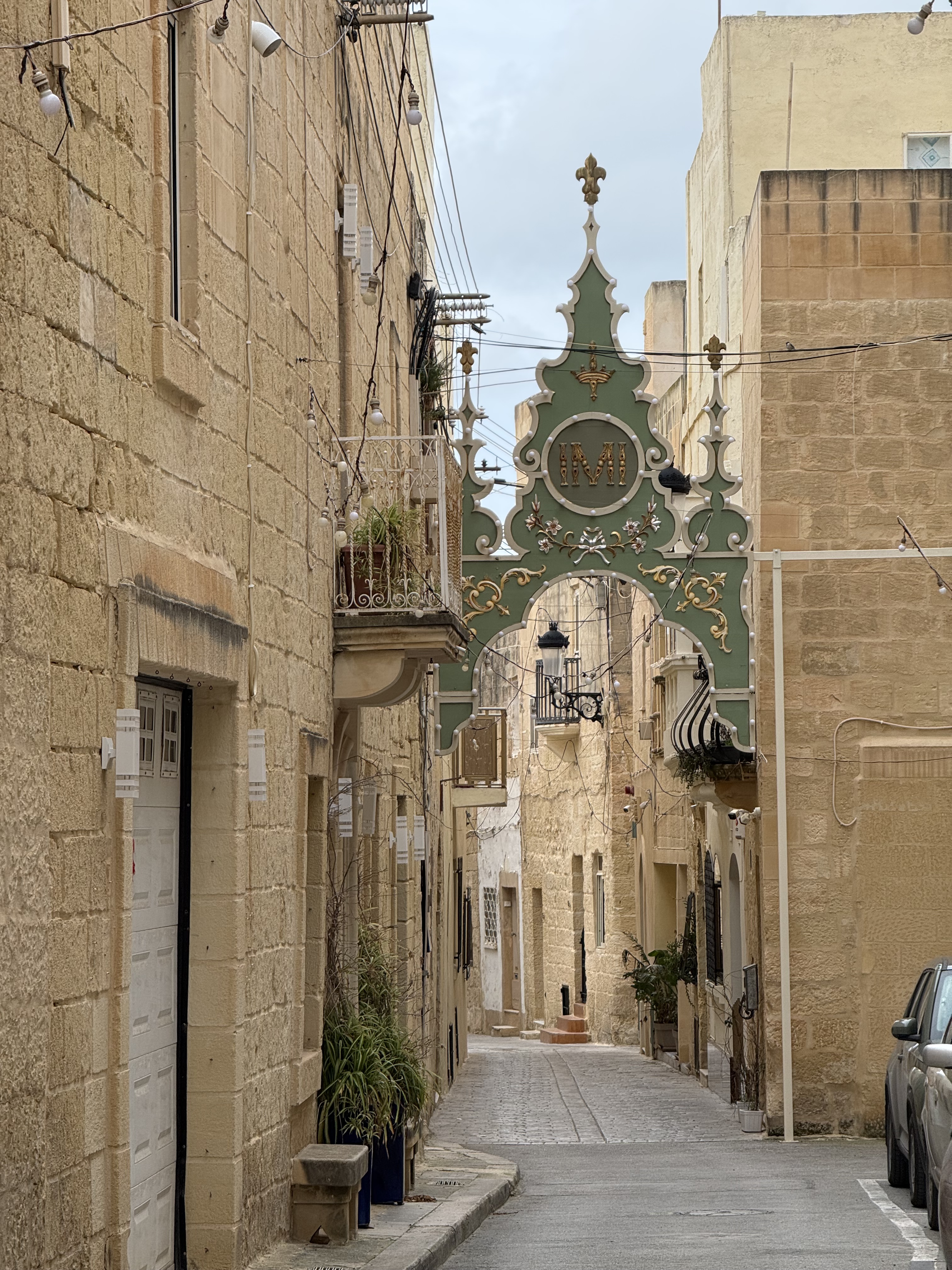
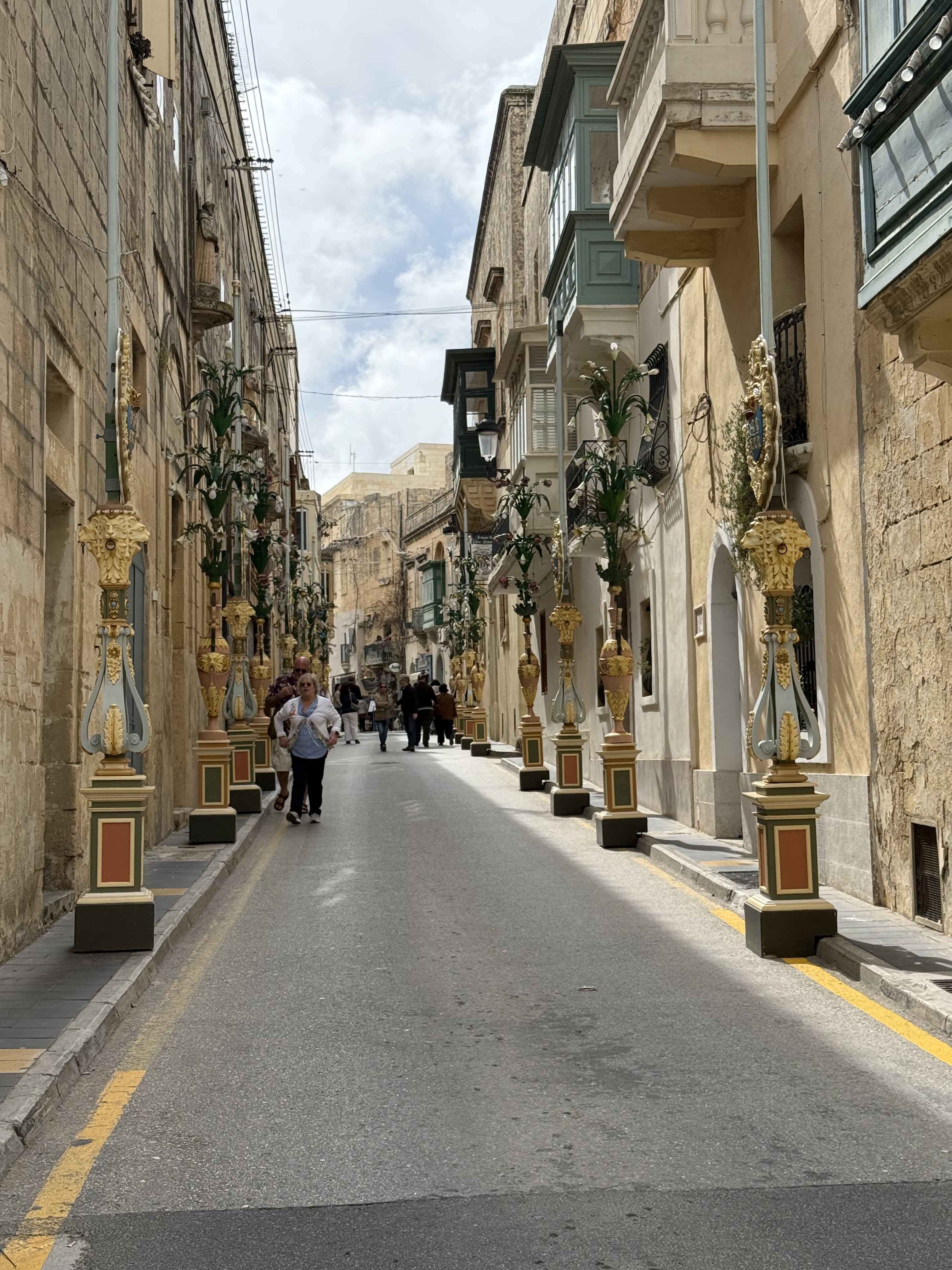
As with all of Malta, the streets were decorated for the Lenten season. Malta is about 70% Catholic (down from over 90% a couple of decades ago) and Lent and Easter celebrations take center stage.
The catacombsDecorated for LentAs I walked this street I had to step aside for cars several times.An enticing restaurant.
Marsaxlokk and the Southern Coast
The fishing village of Marsaxlokk has an open market every Sunday. Originally a fish market, it now includes produce and other foods along with a craft market. There are several restaurants along the waterfront, all very busy on a Sunday afternoon but serving very enticing lunches.
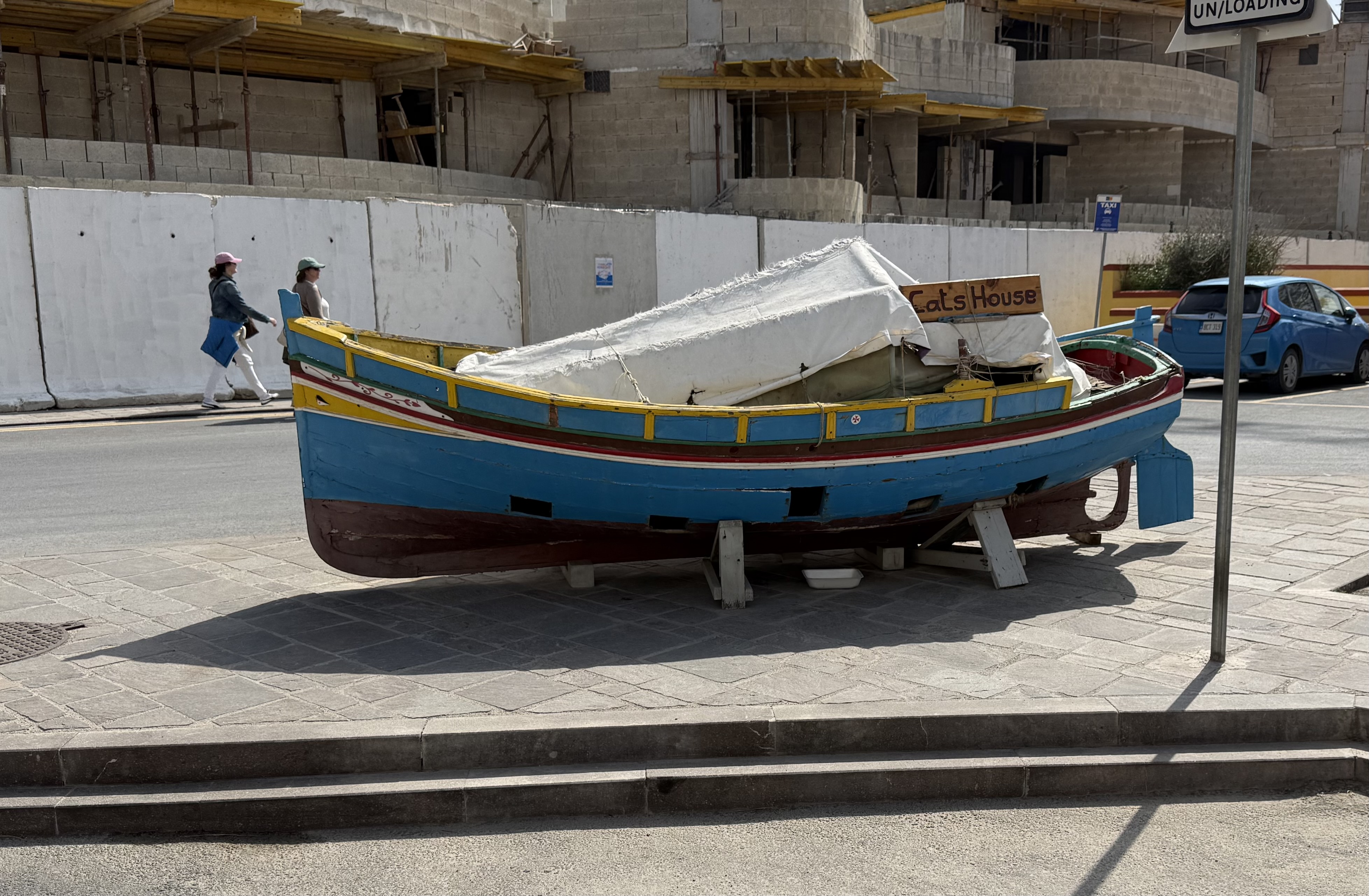
While the market and the lunch was great, I was most interested in the fact that the village has provided a home for cats by the sea. Look closely and you’ll see that the boat has a sign designating it as a kitty abode.
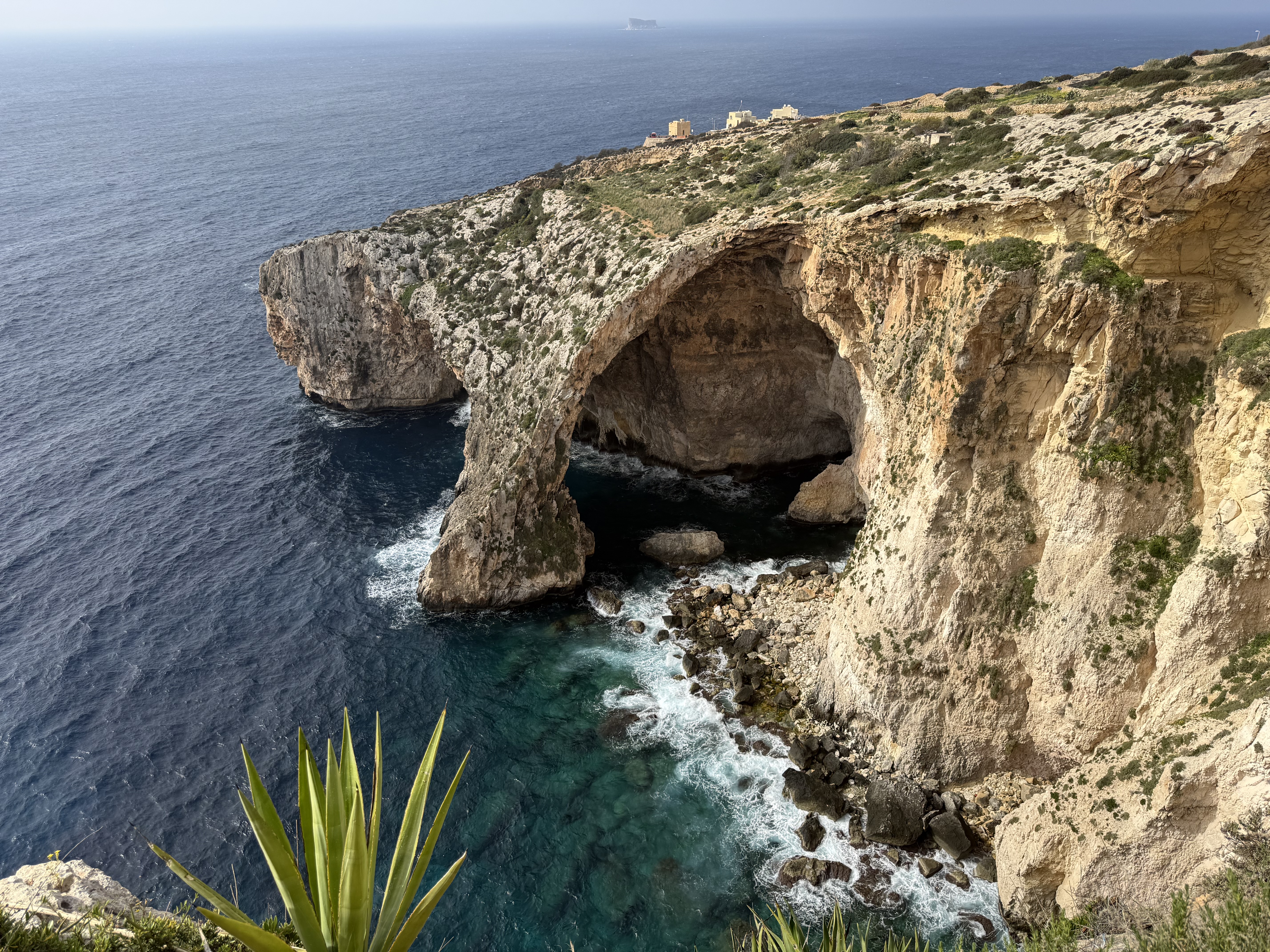
Also along the Southern coast is the Blue Grotto; there is more than one in Malta, created by the erosion of the limestone cliffs and the sun playing on the blue waters. You can take a boat ride that will take you inside the grotto, but the sea was too rough most of the time. If that’s something you dream of doing, I’d suggest going in the summer when the weather is more cooperative.
The Three Cities
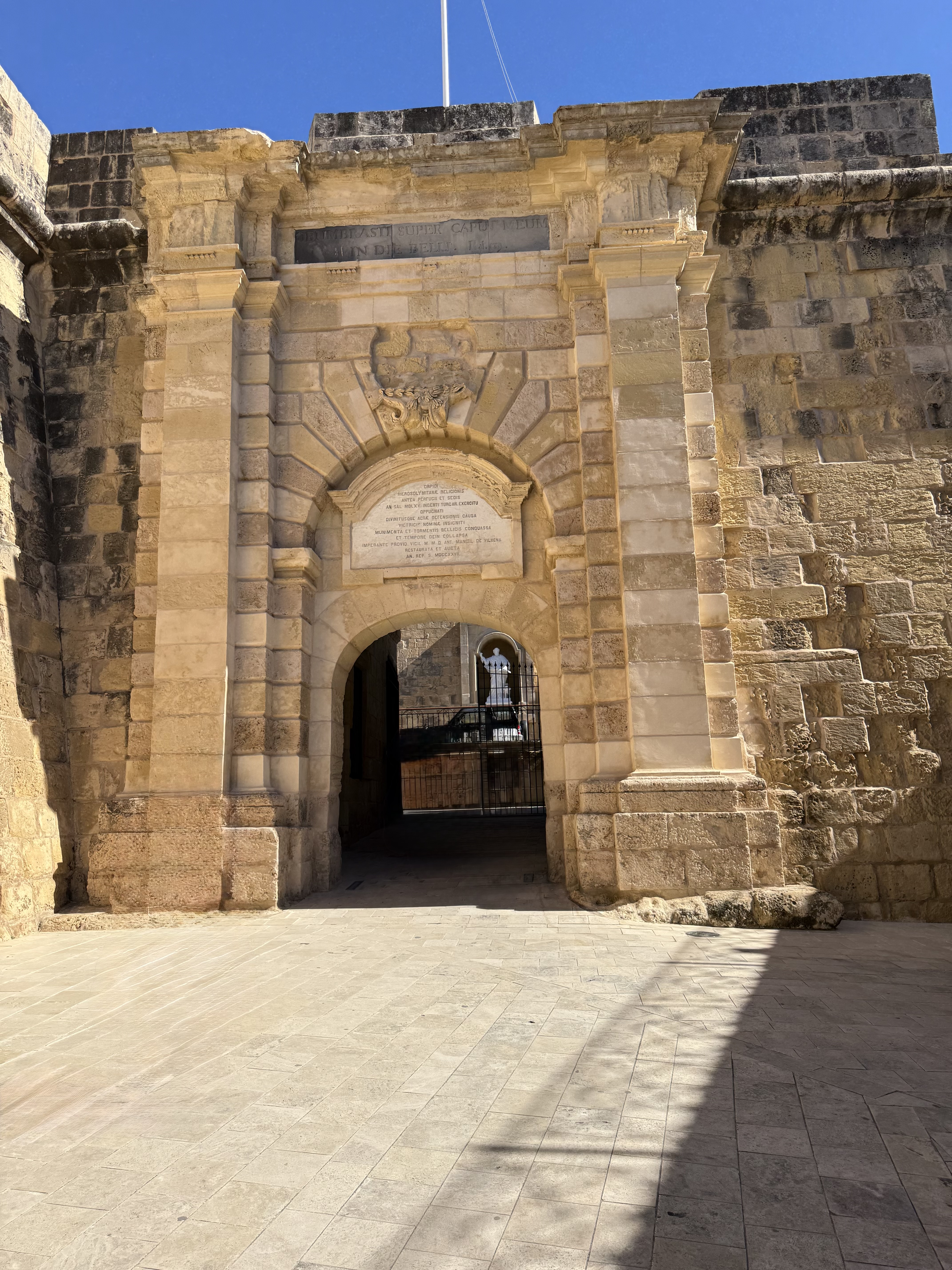
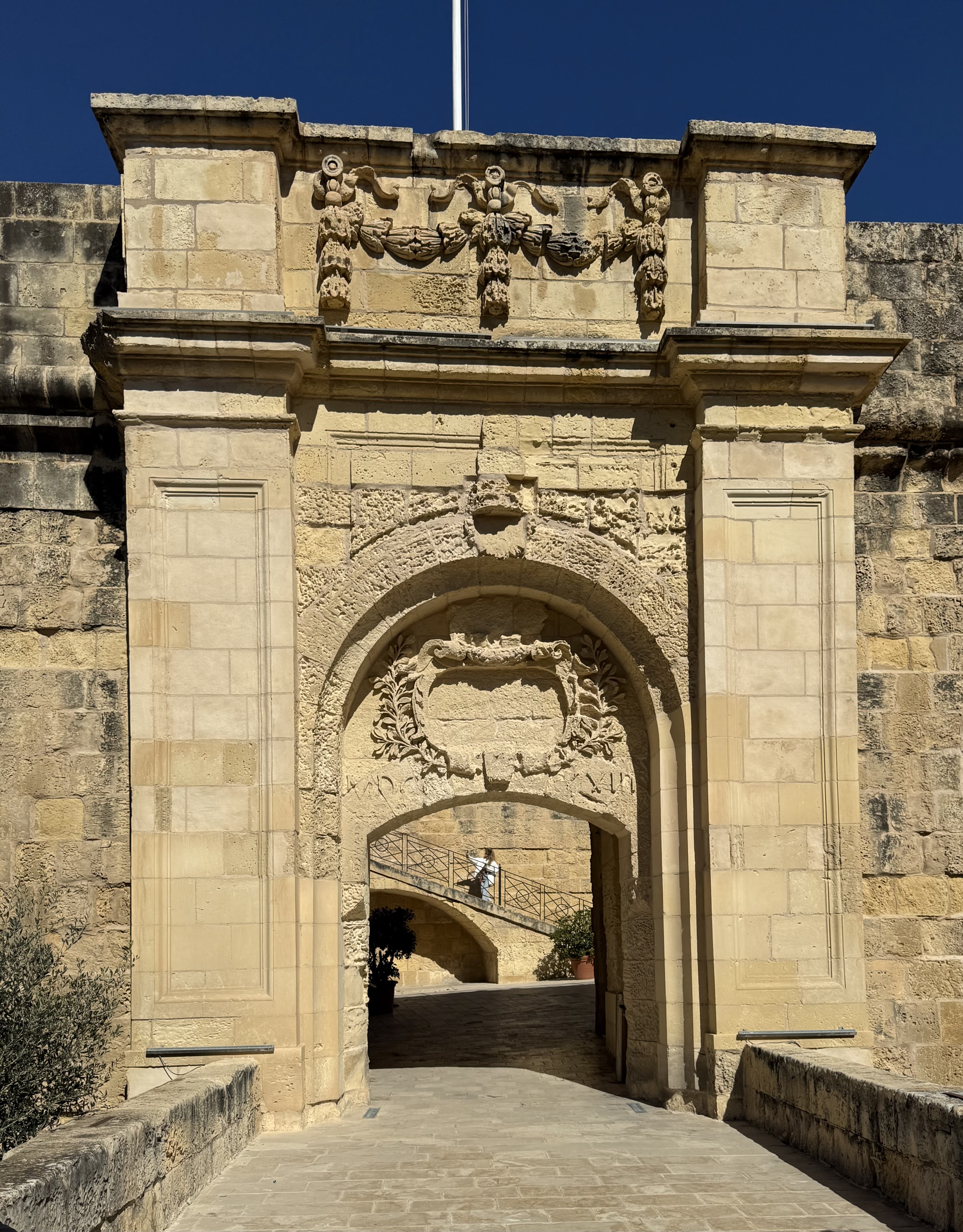
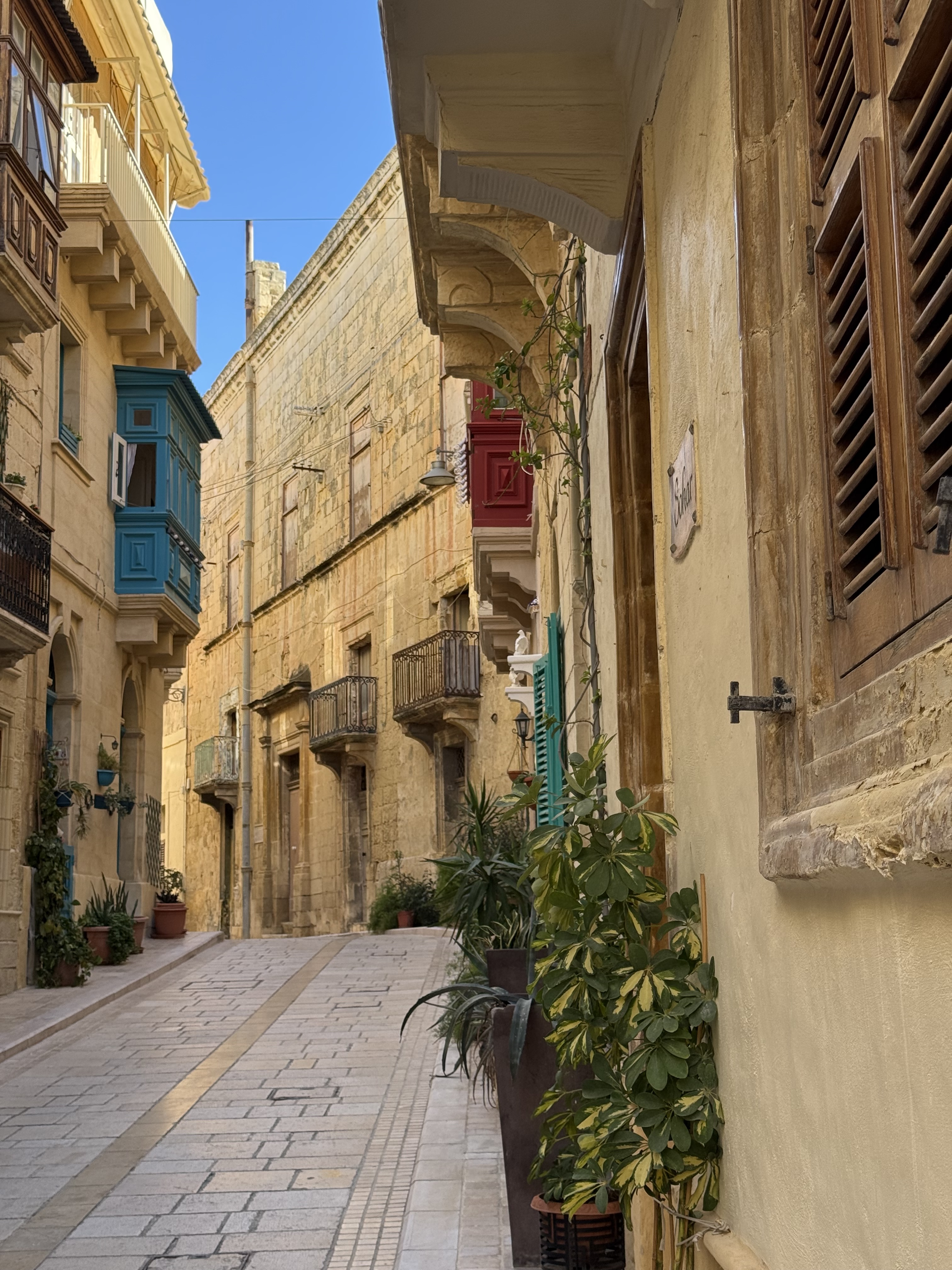
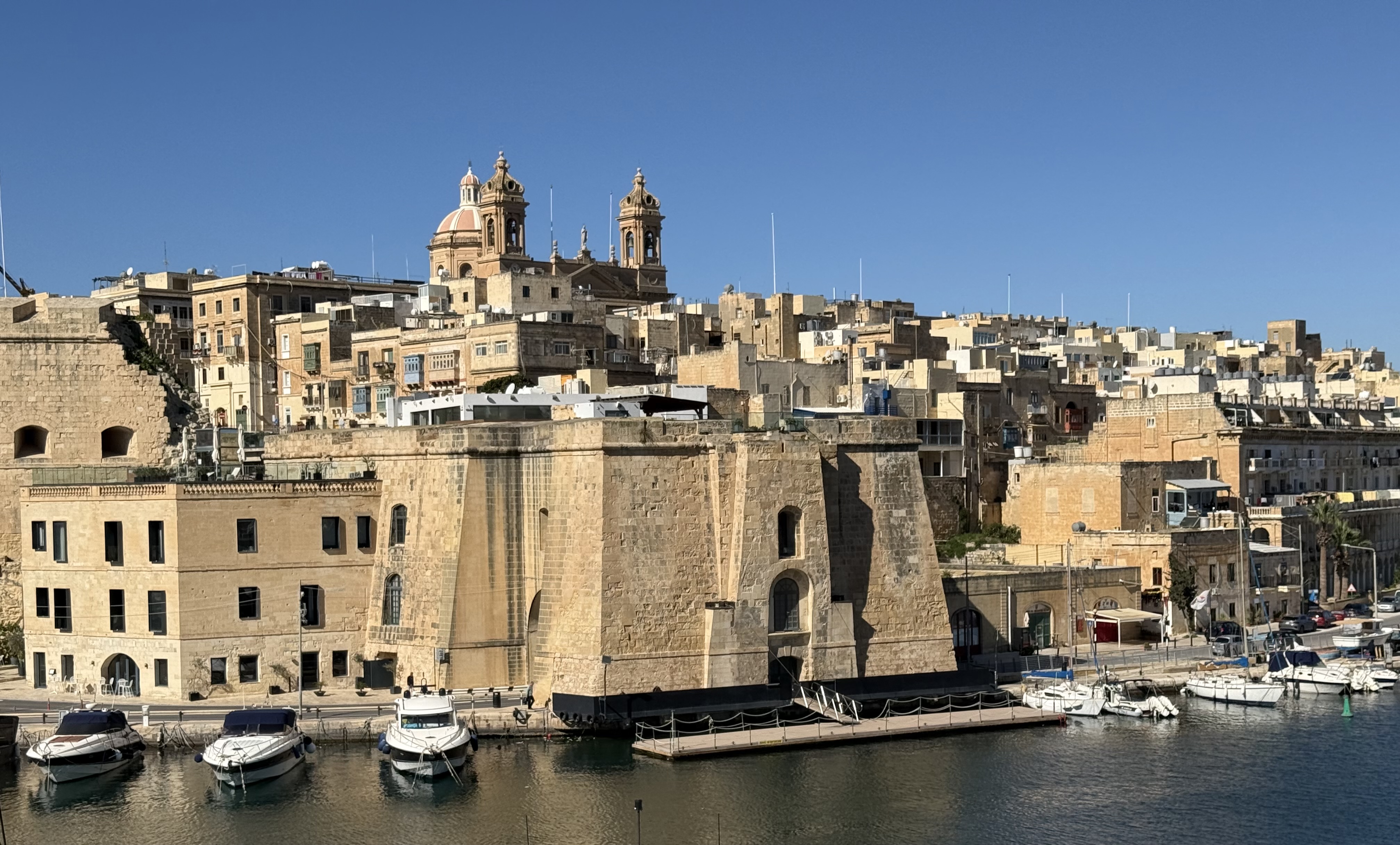
Across the bay from Valletta, the capital of Malta, are the Three Cities: Vittoriosa (Birgu), Senglea (Isla), and Cospicua (Bormla). All three have two names, as they were renamed by the Knights Of Malta at various times. Locals will refer to them by either name, so it can get confusing. All three are fortified cities that played a big part in defending Malta during the Great Siege of 1565. The historical entrance to Vittoriosa consisted of THREE gateways, all the better to keep the bad guys out.
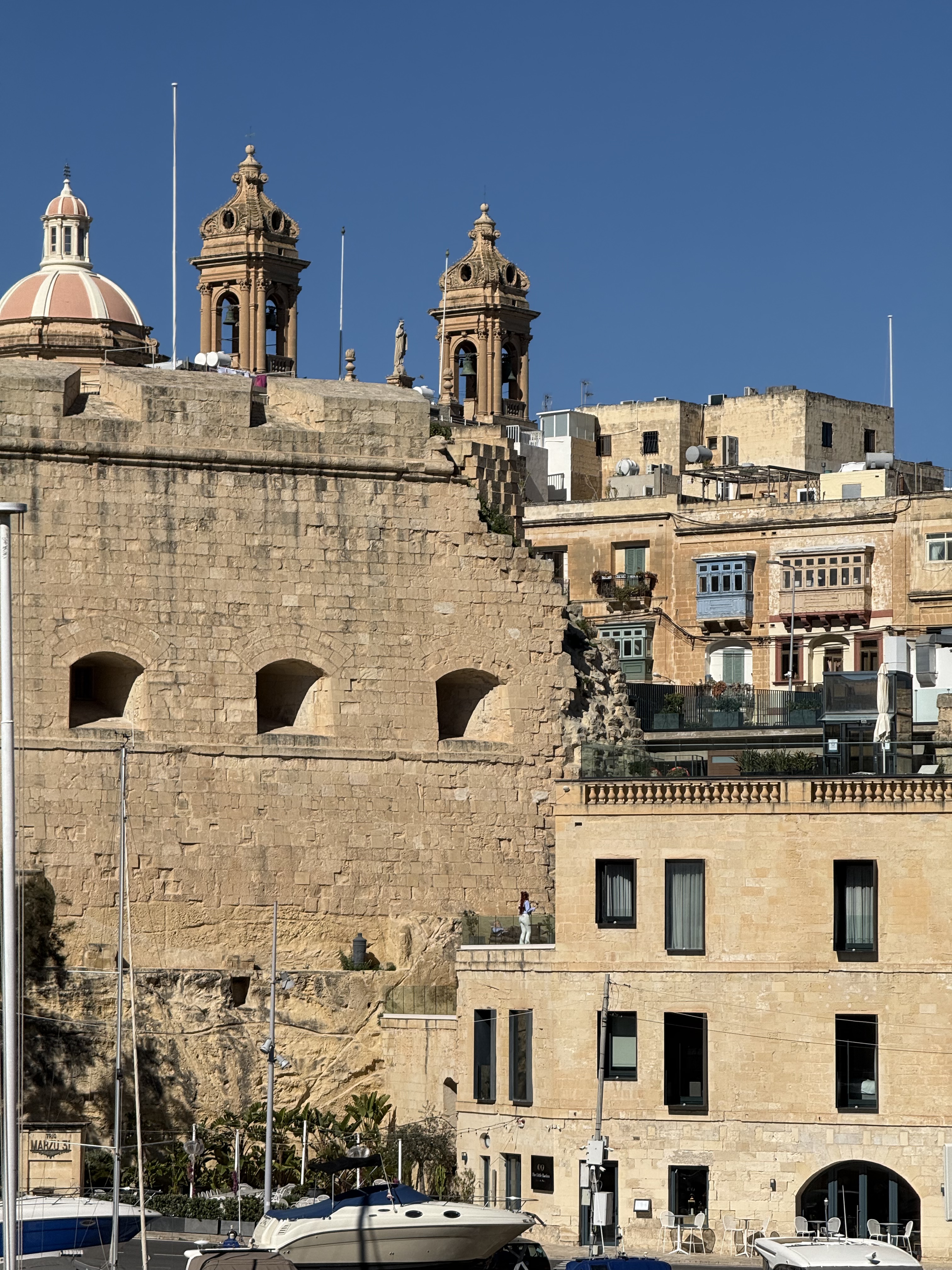
Two of the gateways are above; just imagine the Turks trying to scale those thick walls. The third photo shows some of the damage to the city walls from another siege. During WWII Malta was bombed heavily and all three cities were badly damaged. In fact, more bombs were dropped on Malta than on London.
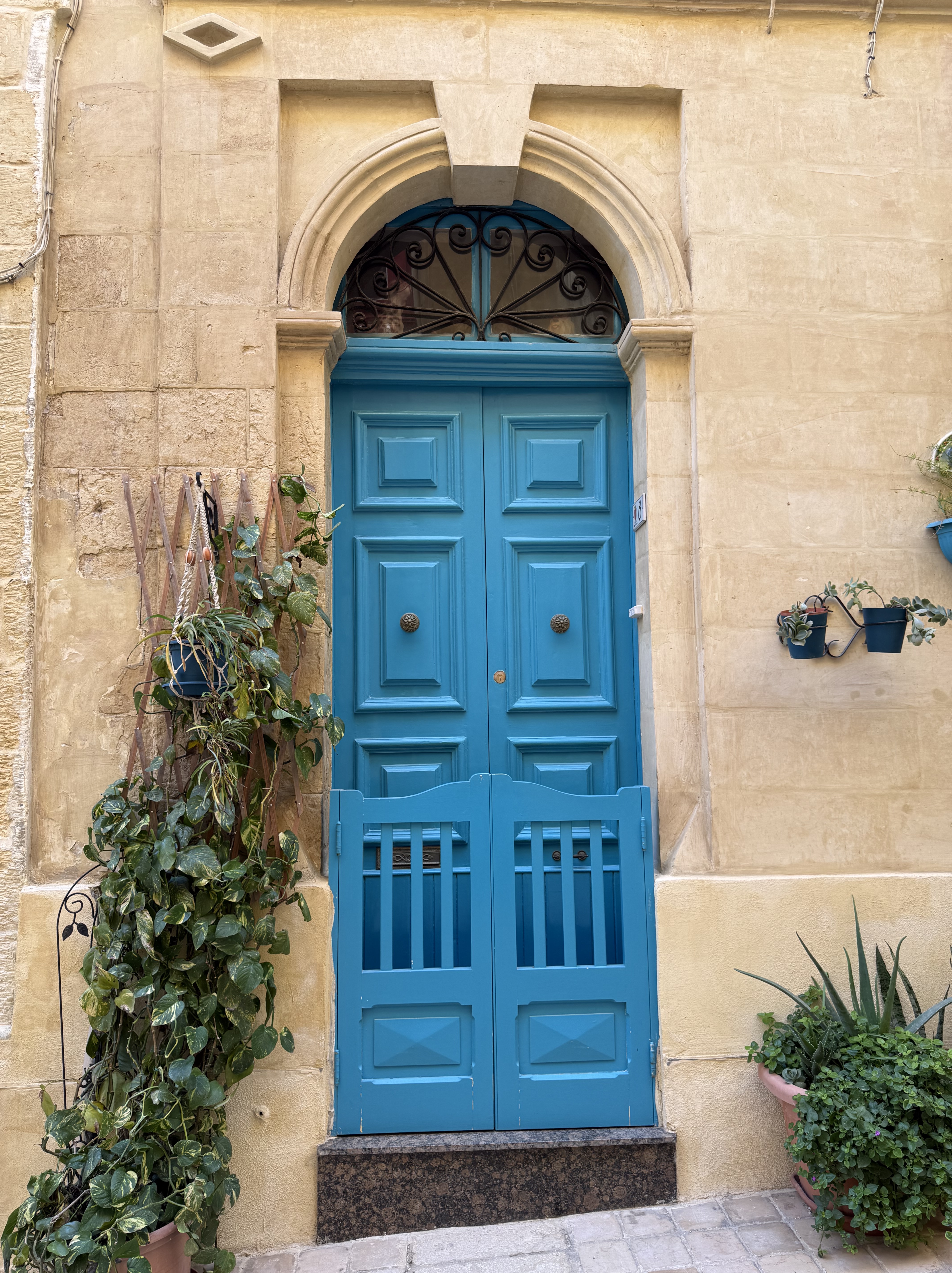
I can’t resist photos of doors.A street in Vittoriosa
As our guide led us through the streets and alleys of Vittoriosa, he explained that while this area of Malta is a highly desirable place to live, most younger Maltese are moving away to the interior of the island. Why? Well, look at the street above and think about trying to get your groceries from your car to your home. I did see a few garages, but I can only imagine that the drivers had to teleport their cars through the streets and into the garage.
We saw the home of the Grand Knight of Malta, and also the home of the Inquisitor. I took a moment to place my hand on the wall of the Inquisitor’s Palace, thinking of the fear and pain that took place within.
The Mosta Dome
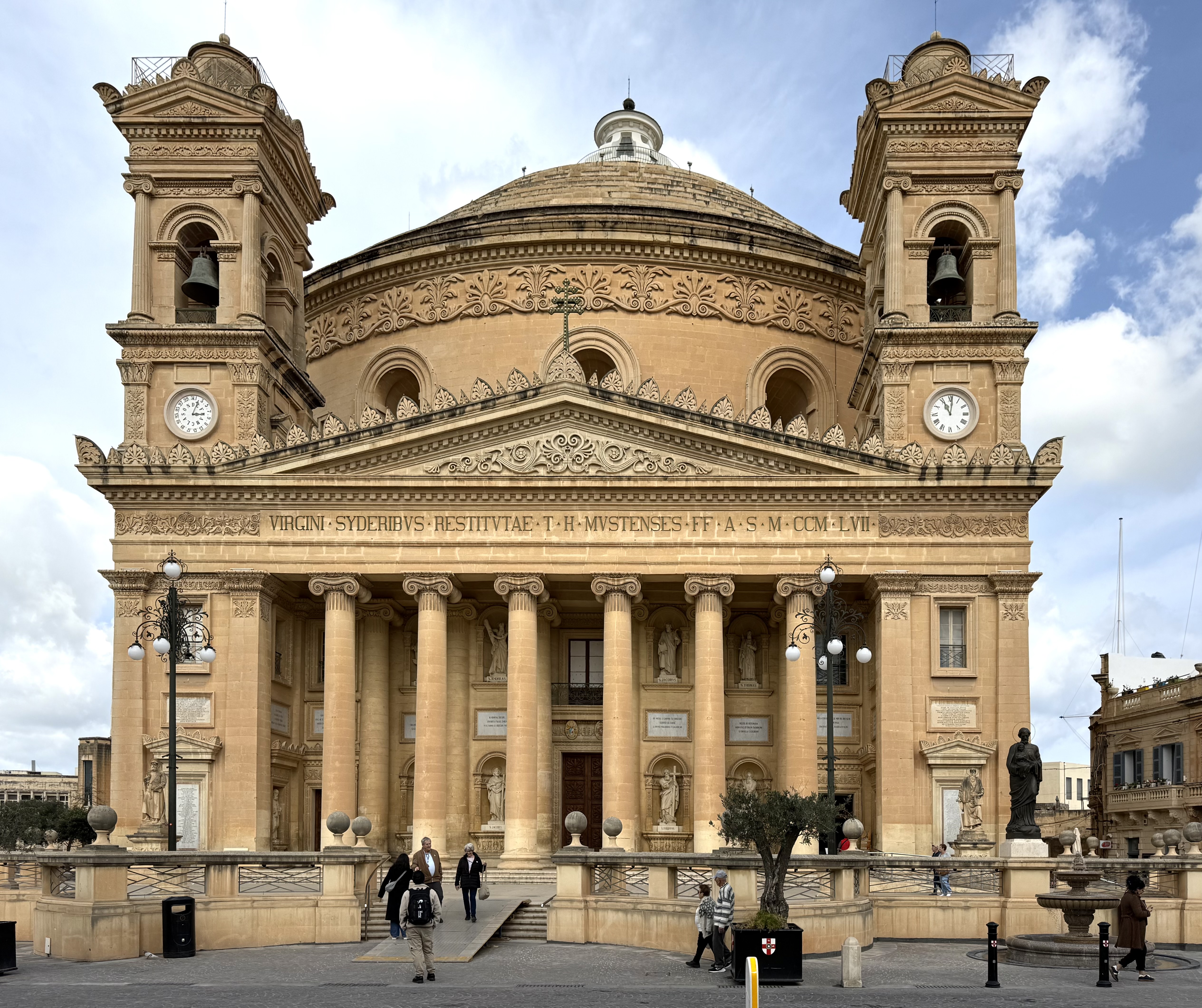
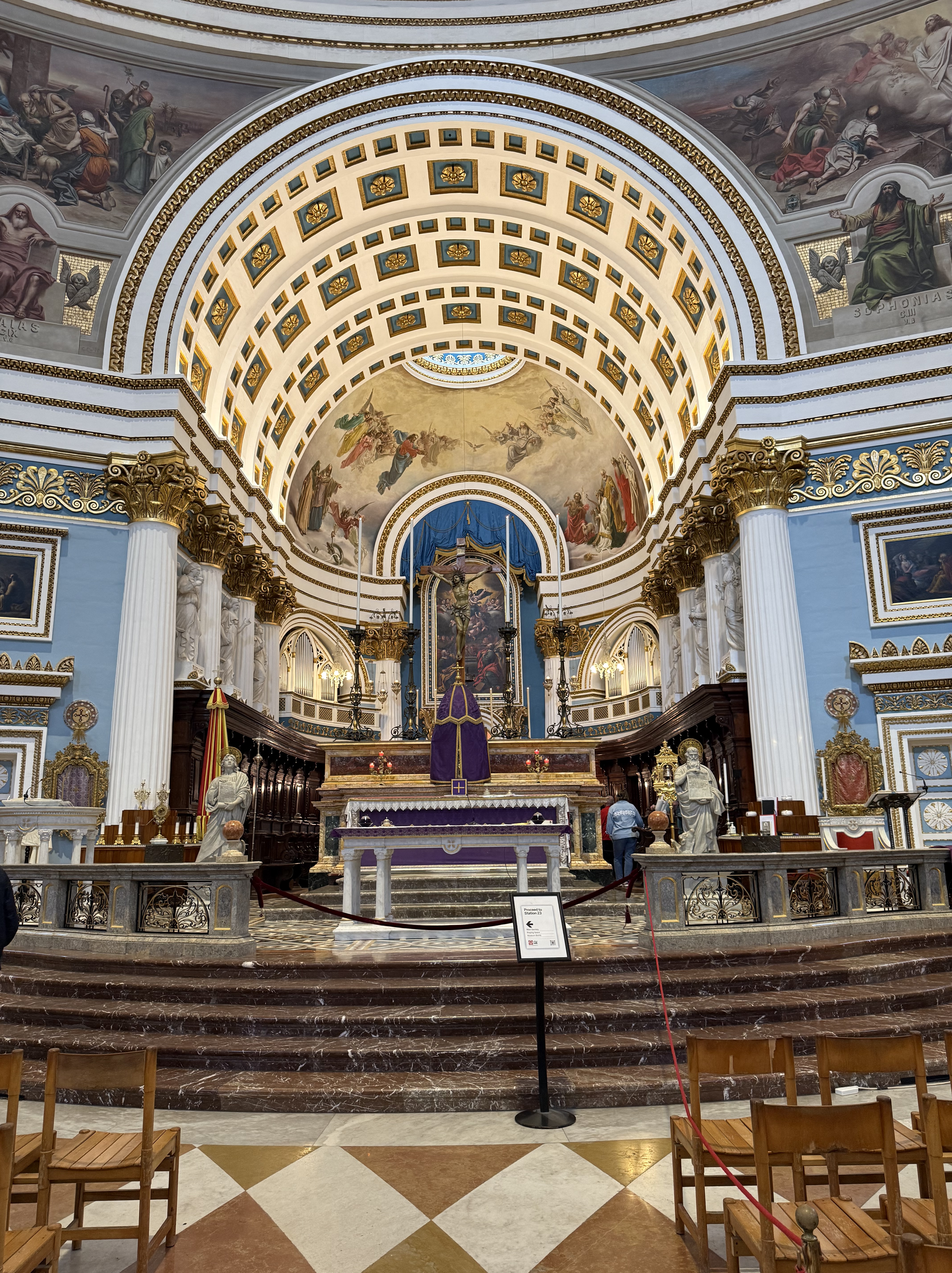
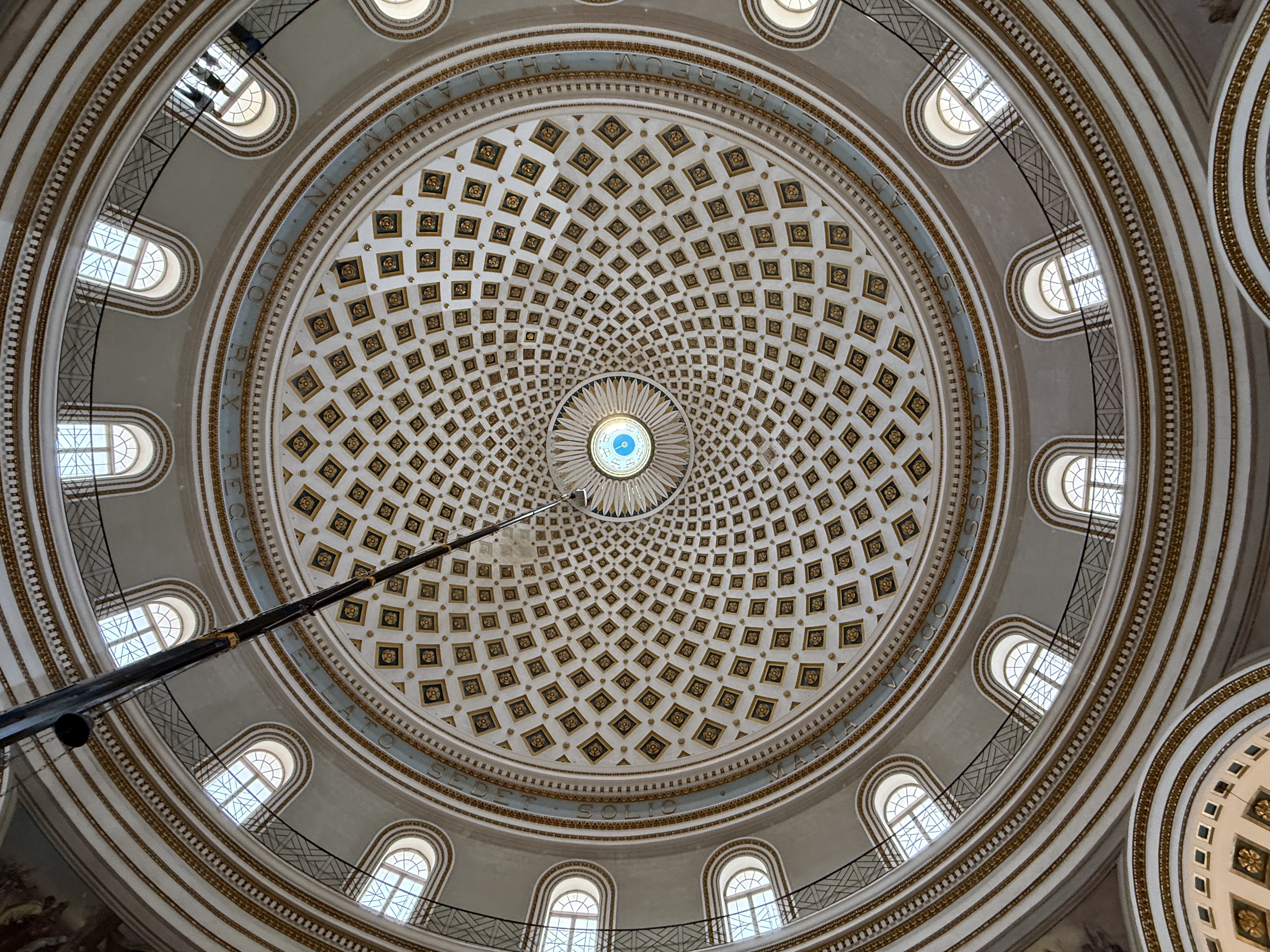
Mosta is home to a church referred to as the Mosta Dome, the largest church in Malta and the the third largest unsupported dome in the world. The design was based on the Pantheon in Rome, with an opening in the top of the dome.
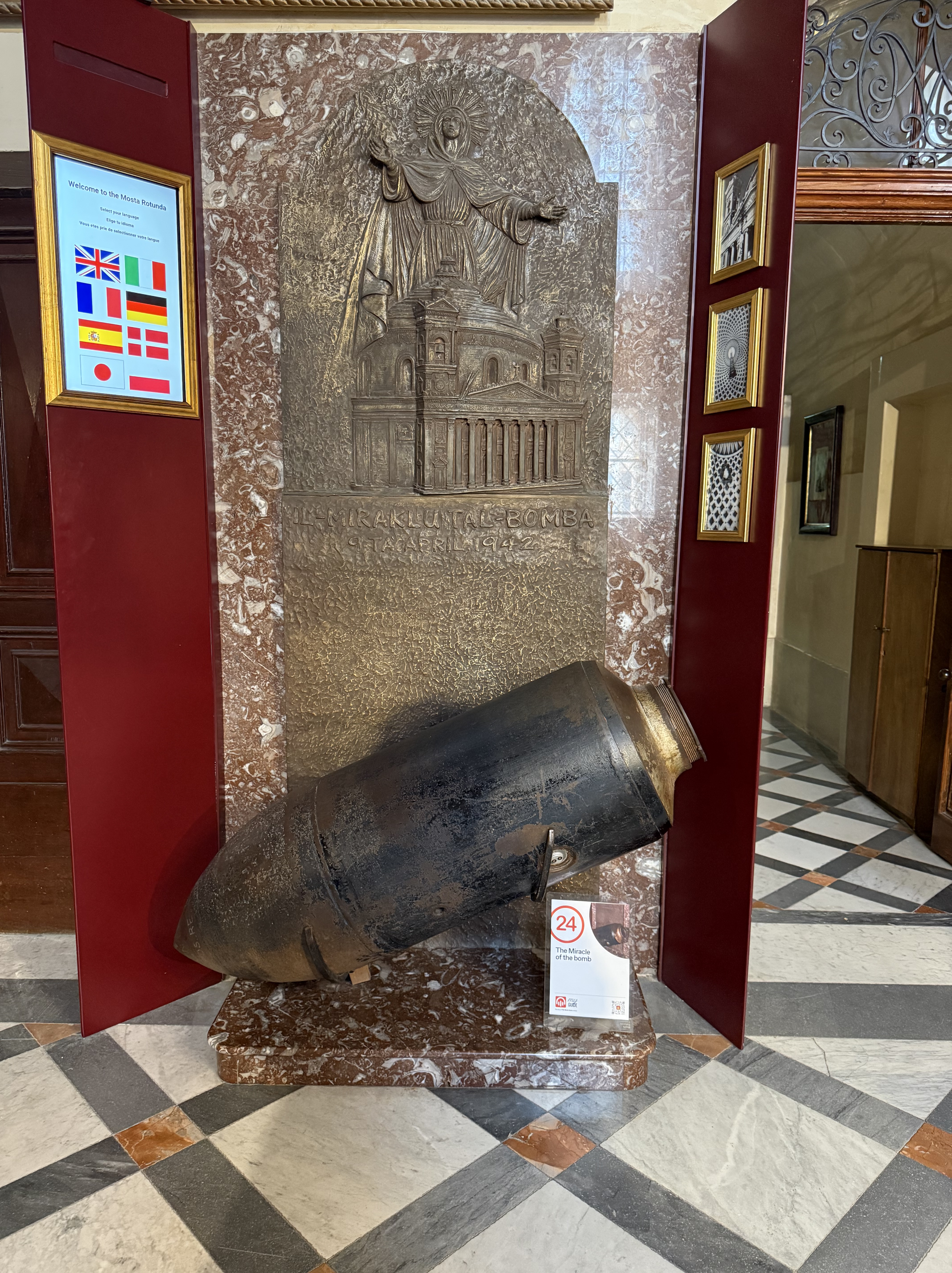
Most Maltese honor the church as the site of a miracle in WWII. Mass was being held during a bombing raid, and many parishioners stayed in the church rather than heading to the air raid shelter below. A bomb crashed through the dome and dropped near the altar, but didn’t explode.
A replica of the WWII bomb
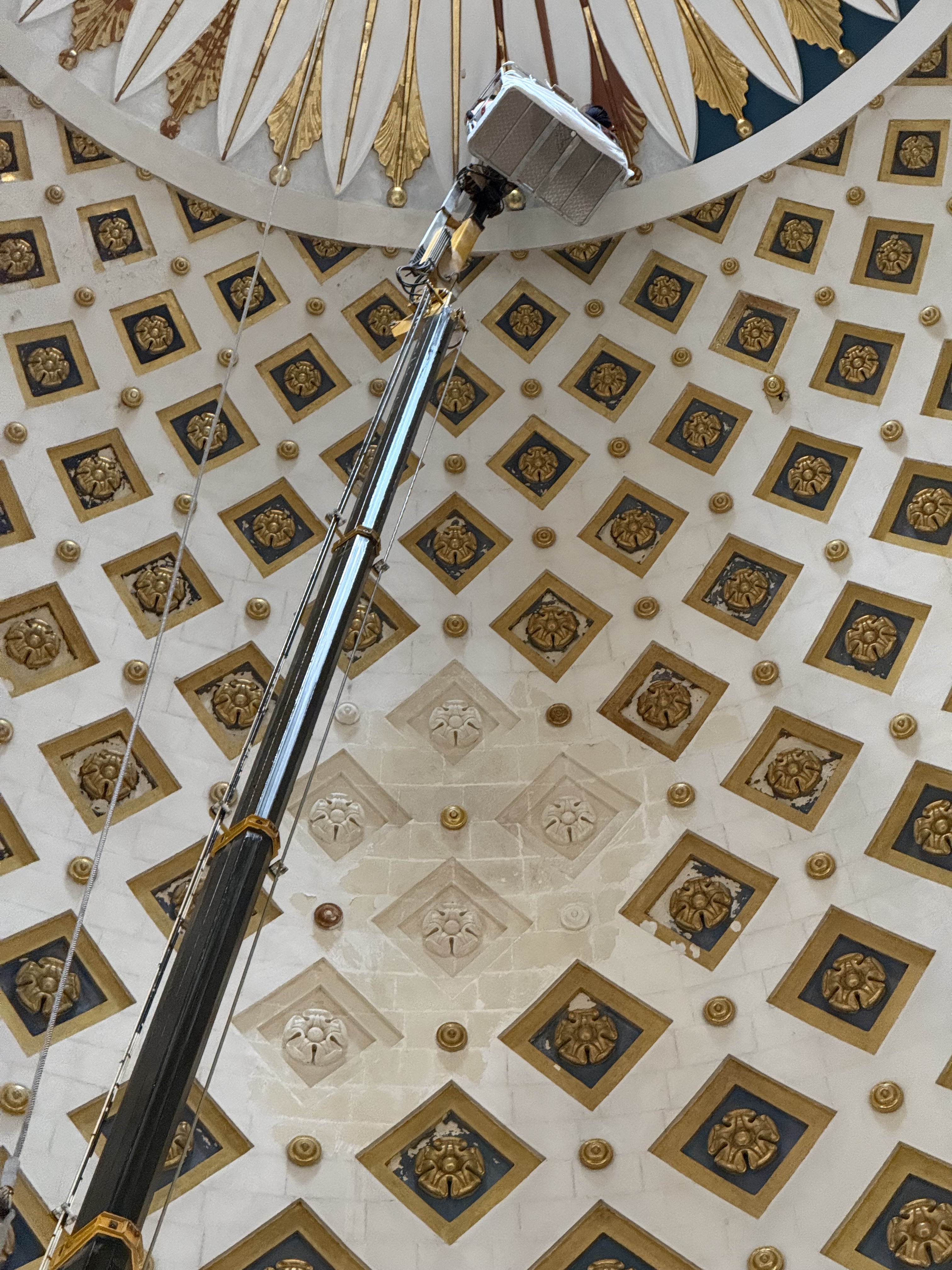
The church was being refurbished when I visited. Watching the worker painting the ceiling, I couldn’t help but think how much easier that platform would have made Michaelangelo’s job in the Sistine Chapel.
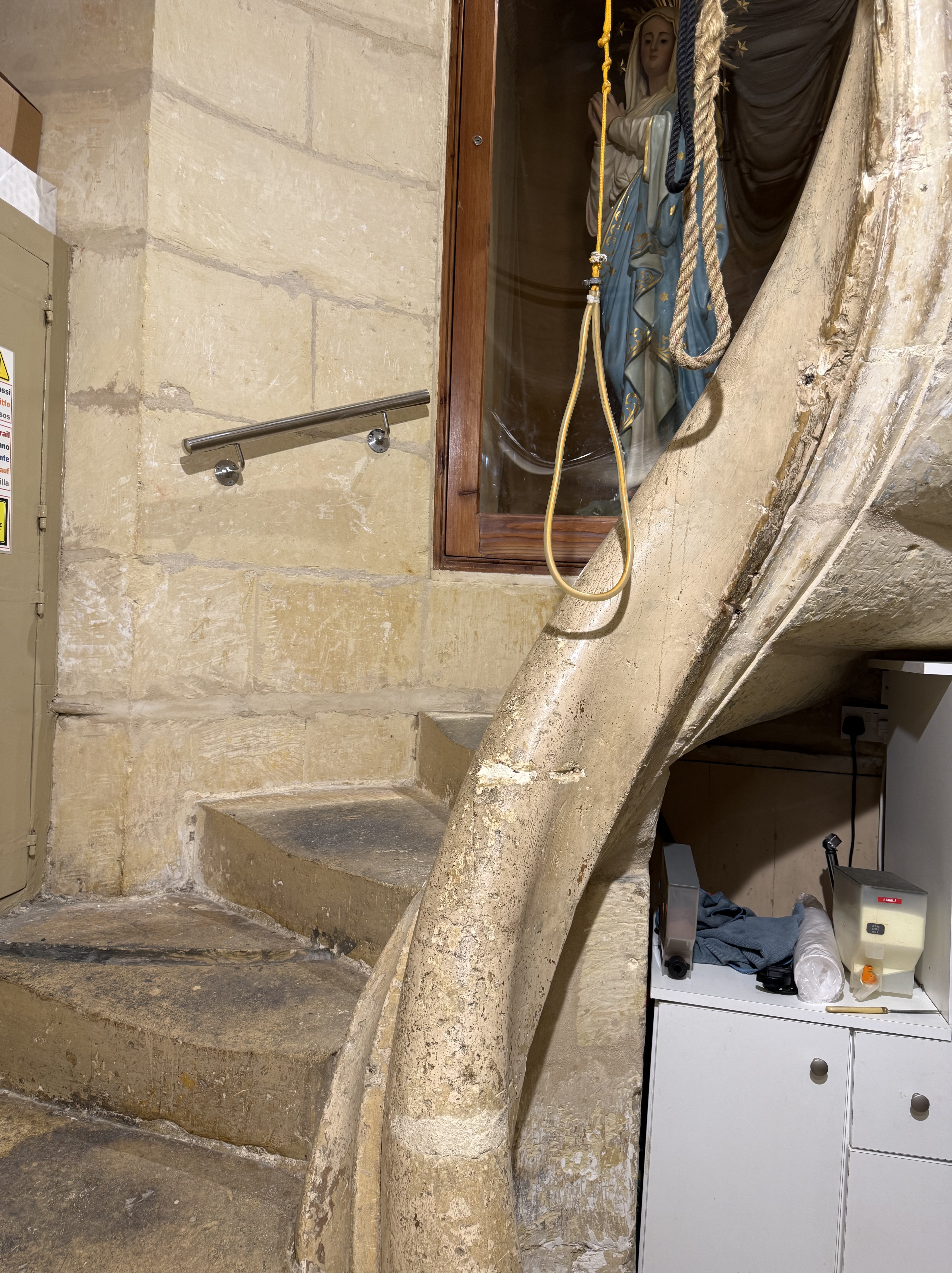
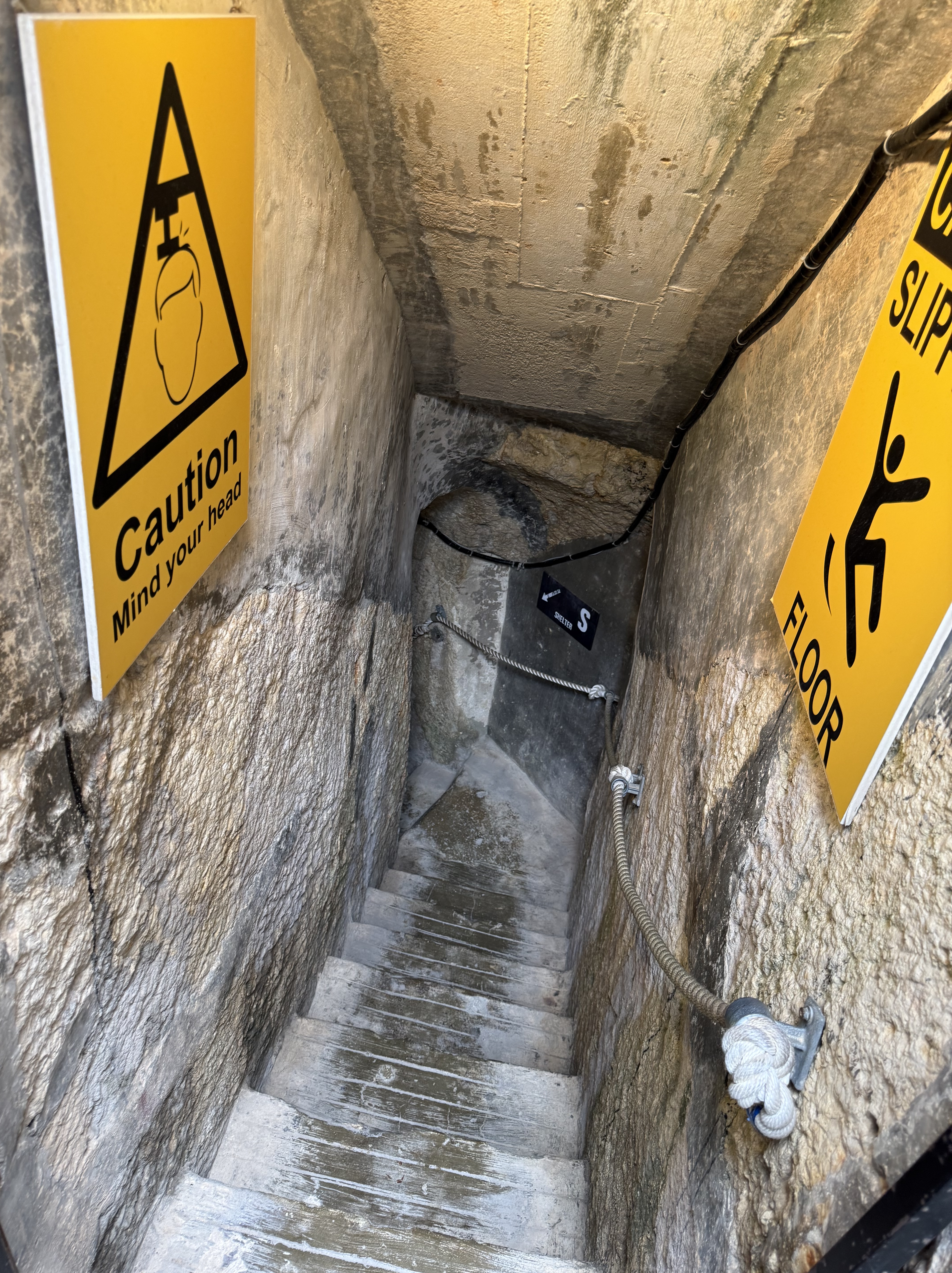
Stairs going upStairs going down
When you visit the church, you start your tour by climbing 78 stairs to the roof and a walkway around the inside of the dome. Then you take 78 steps down. After touring the inside of the church, you can visit the air raid shelter below. And guess what? More steps! I admit it was a challenge for this “lady of a certain age,” but I got it done. The air raid shelter was fascinating, and I now understand why some people were reluctant to use them. They are narrow and bleak, and during a raid were likely crowded. Sitting in that cave listening to the impact of the bombs had to have been terrifying.
Gozo
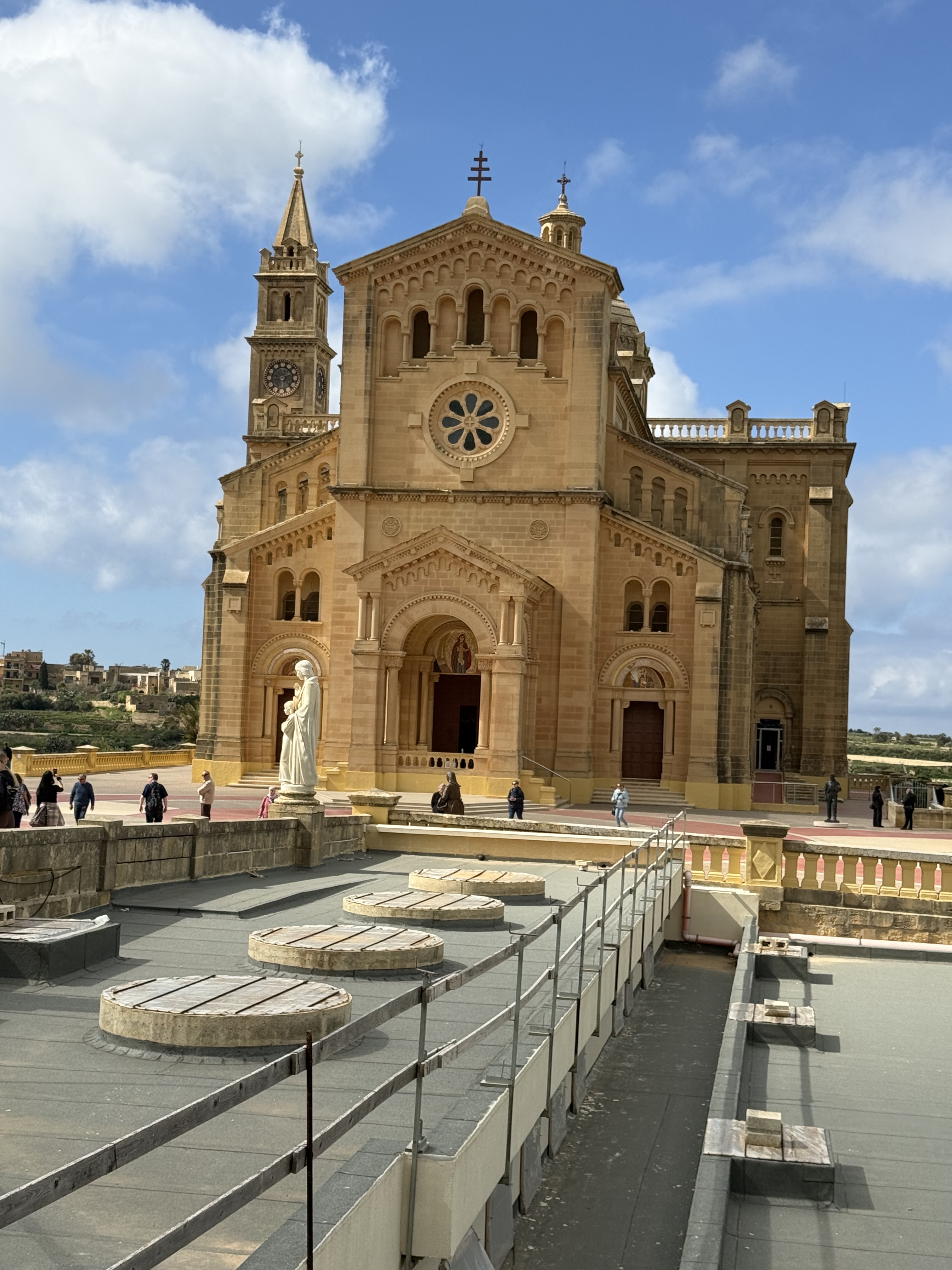
The island of Gozo is part of the country of Malta, reached by frequent ferries from the main island. It tends to be somewhat more rural and more relaxed than the main island. I took a guided tour that gave a great overview of the island.
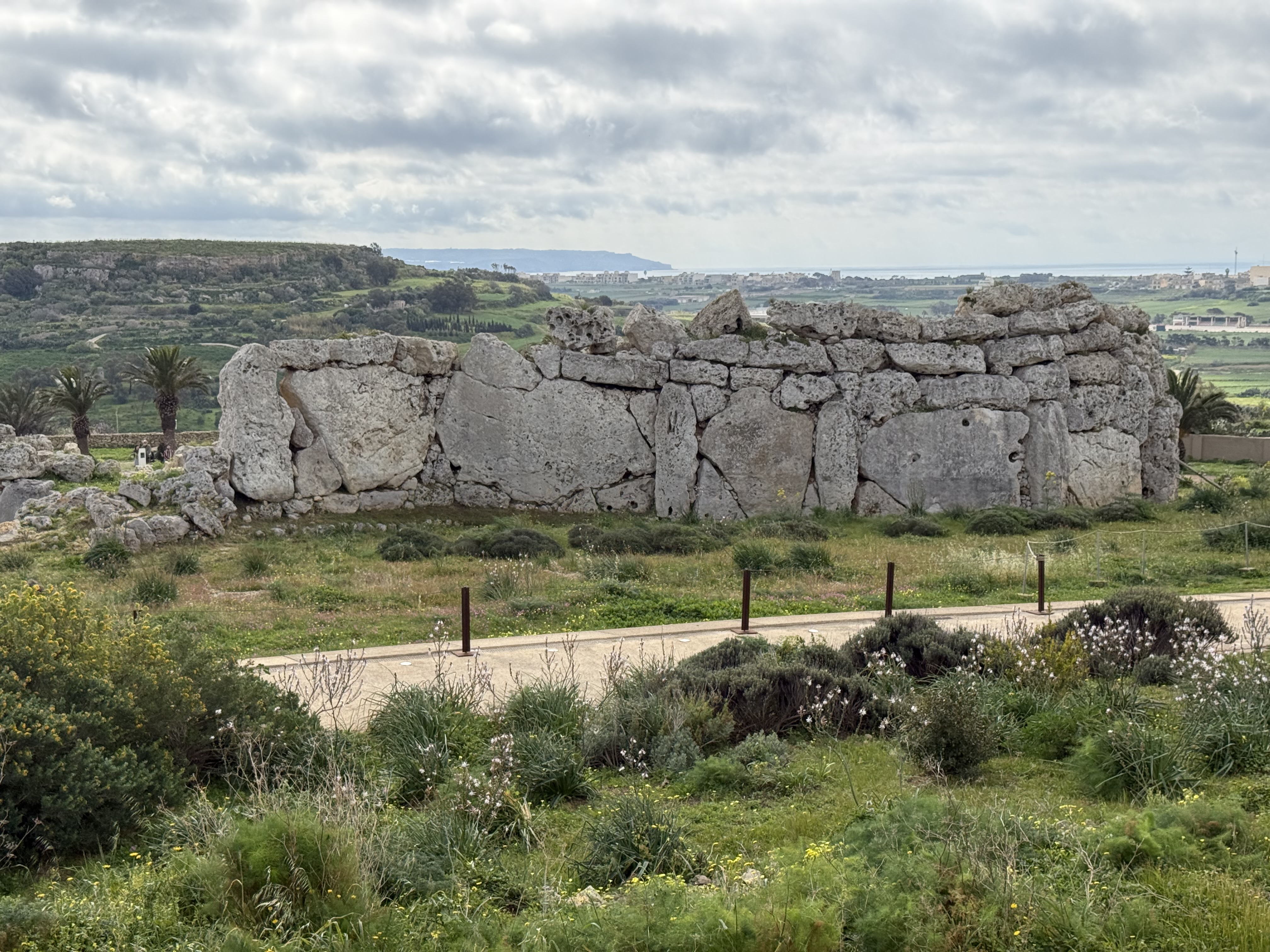
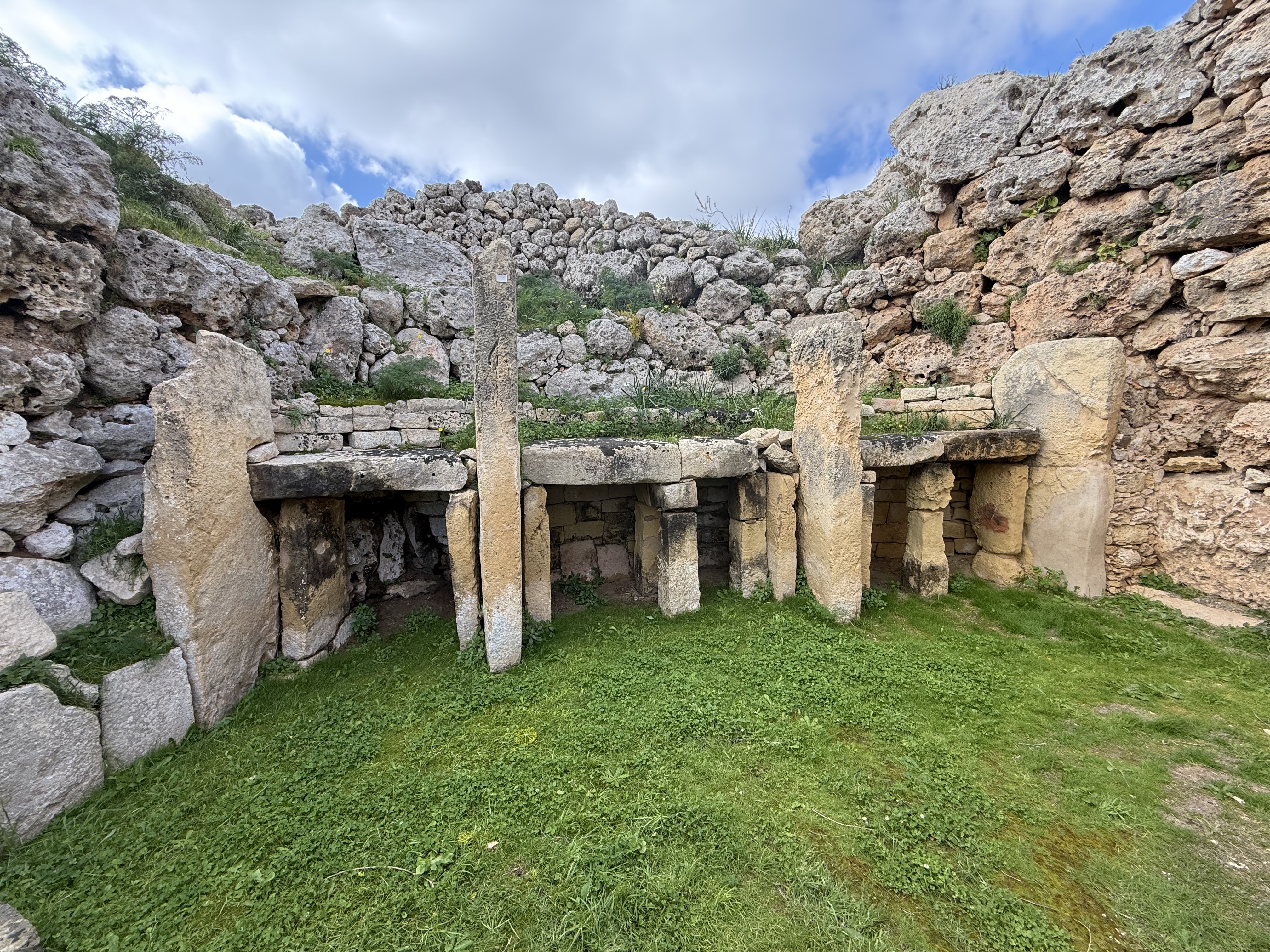
The focal point of the day was a visit to an ancient temple that has been dated to 5600 years ago. A visit to this world heritage site starts with a museum that explains the history of the site. Then you are able to walk to the stones and even enter the interior. The temples (there are two side by side) have survived millennia of weather, earthquakes, and raiders. In a couple of places you can see the remnants of the altars (above right.) I felt awed at standing in a place and taking in the idea that here, thousands of years ago, people came to this place to worship. And to appease those gods that kept causing earthquakes to topple the stones.
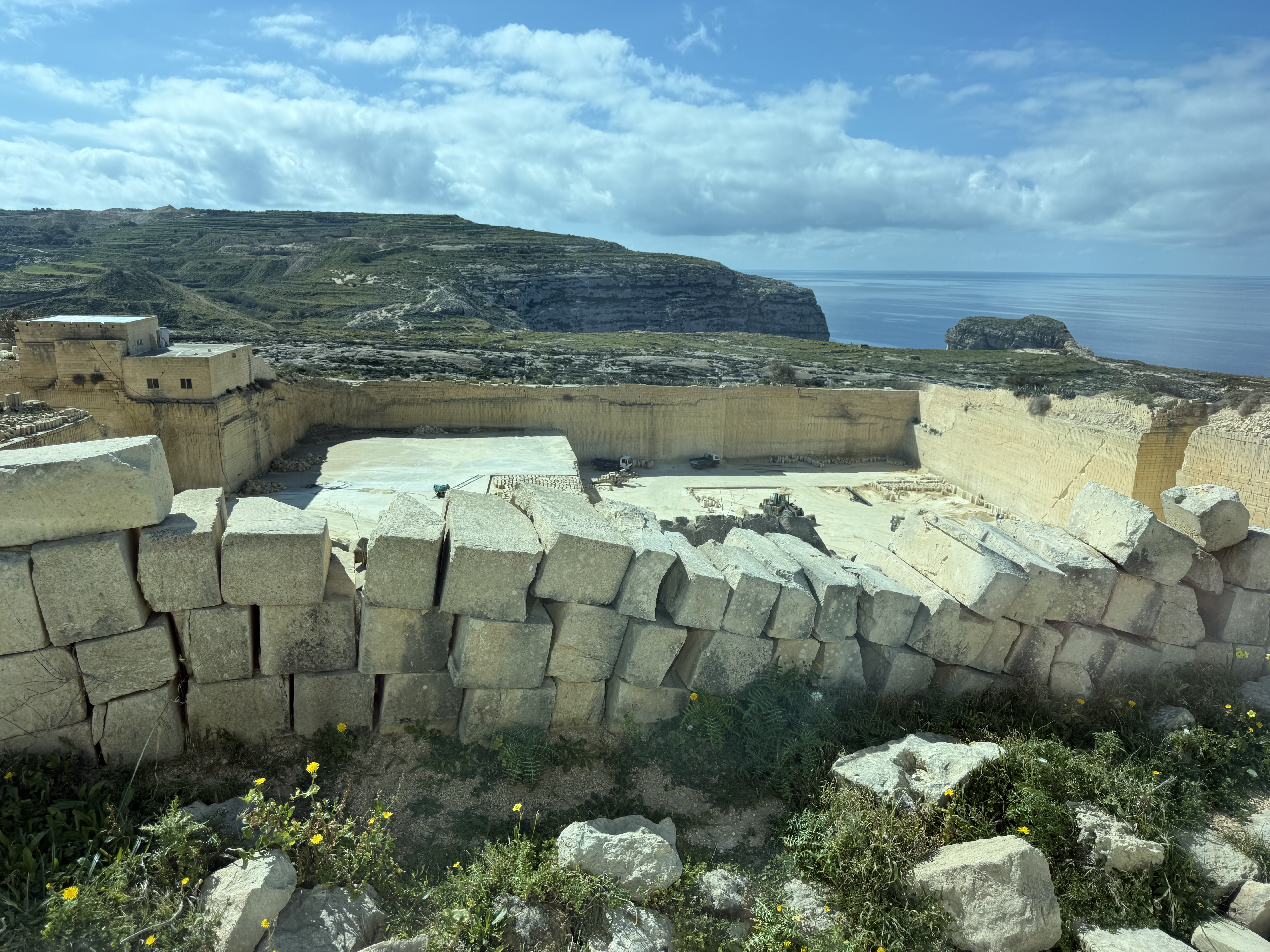
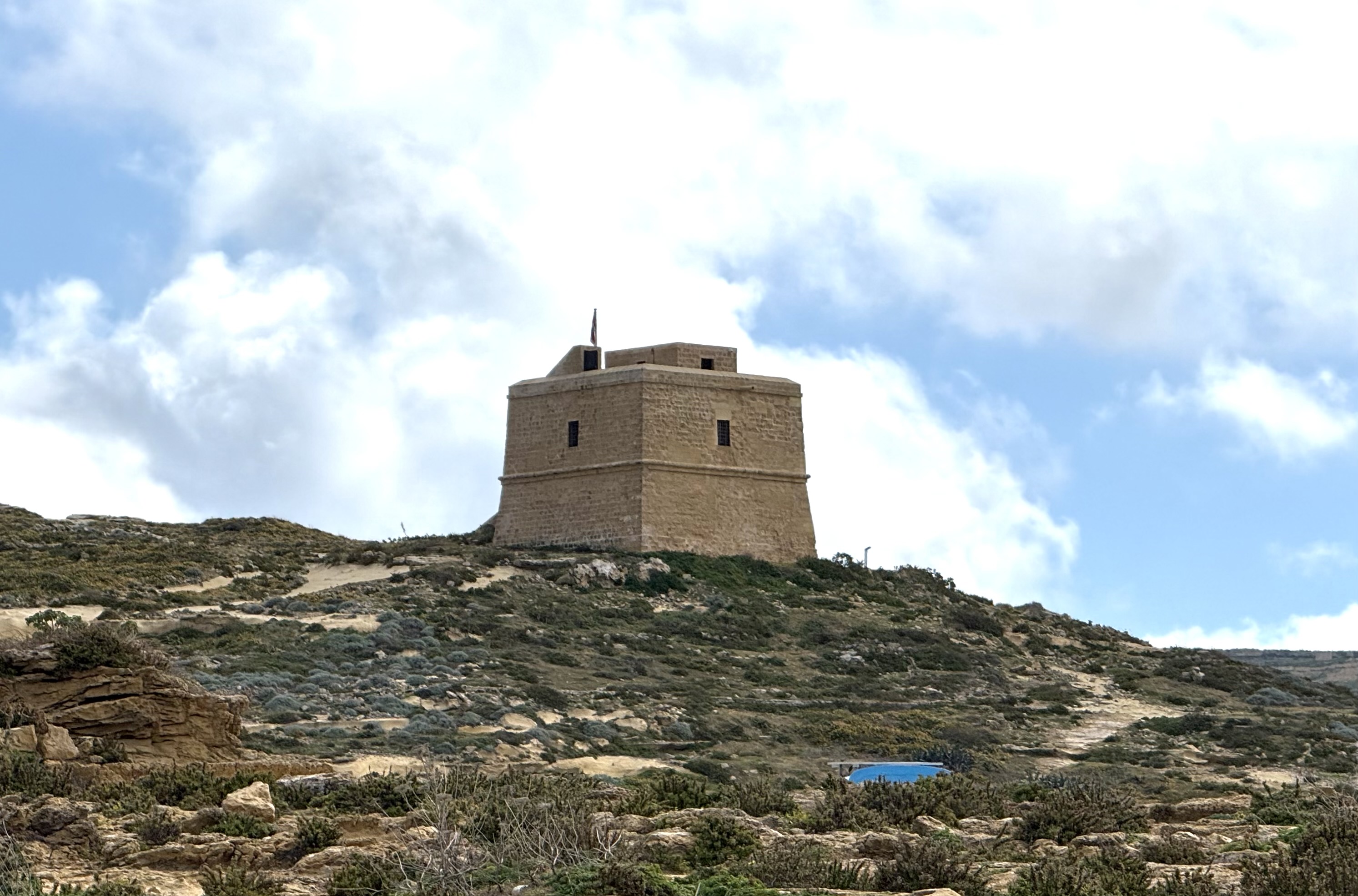
Limestone QuarryWatchtower
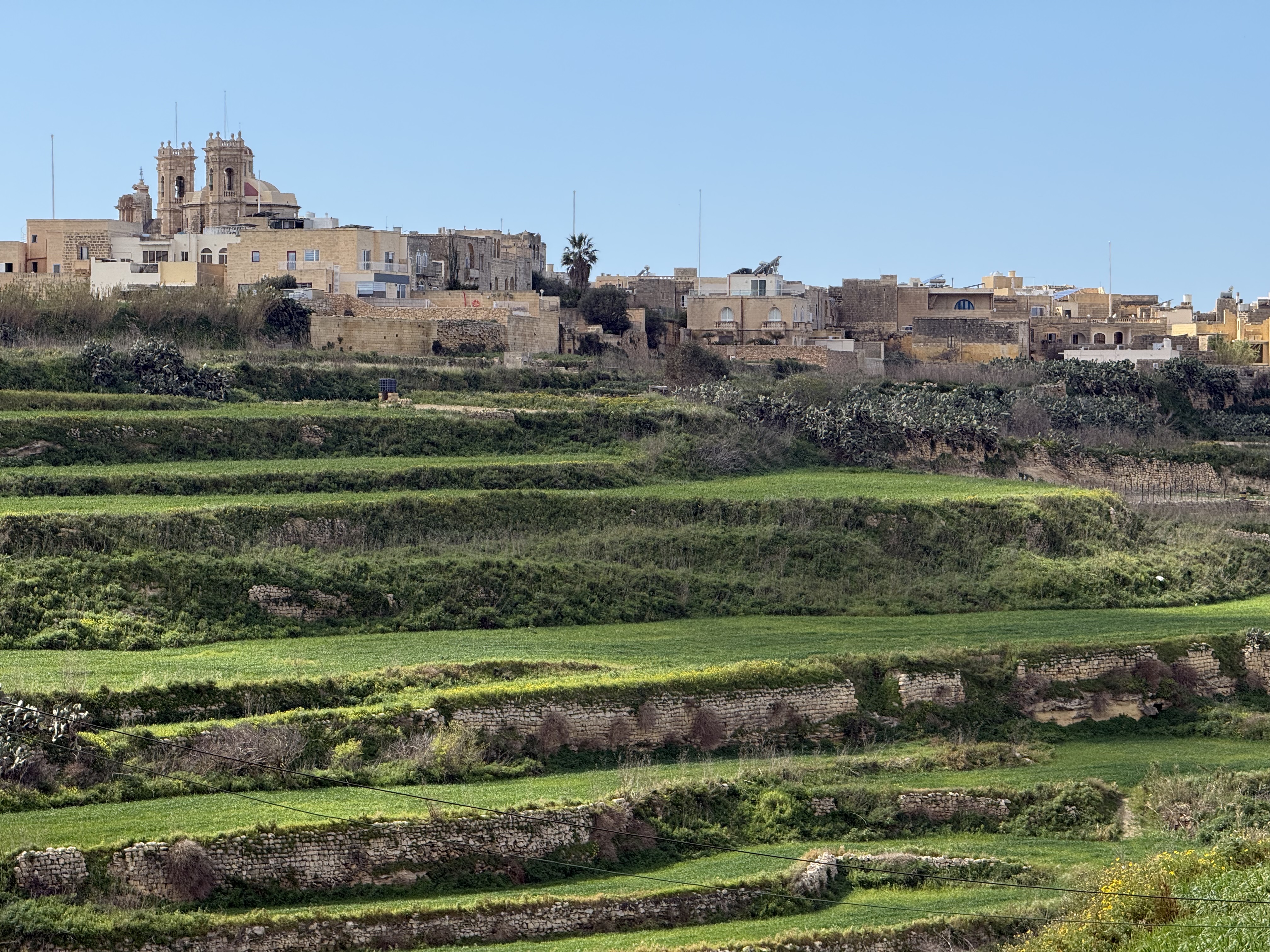
While exploring Gozo there were opportunities to see how the Maltese live. A limestone quarry was busy creating building blocks of the limestone used for building in Malta. Once the quarry is done producing, the quarry is filled with detritus, and then with soil, to make it arable land. Soil is at a premium on the islands, so farm fields are surrounded by rock walls to keep the soil from washing to the sea during storms. Those rock walls have no mortar; they are painstakingly fitted together so they will stand. That allows water to drain away while keeping the soil intact.
The photo of the watchtower above is only one of many I took. When the Knights of Malta arrived, they built a series of towers around the islands. All are within sight of another tower. In that way, those standing guard could light a fire to warn the rest of the island if potential raiders were sighted.
My tour of Gozo ended with time in the city of Victoria. There’s a lovely square with restaurants and shops where I had a great time purchasing gifts for friends and relatives and having conversations with local ladies who helped me decide on the perfect presents. While the cafes in the plaza were all very busy, I found a quiet rooftop restaurant (thank you, Apple Maps) that allowed me to sit above the fray and enjoy a spritzer while enjoying the view of the city. It meant climbing stairs up four flights, but well worth it.
Around Malta
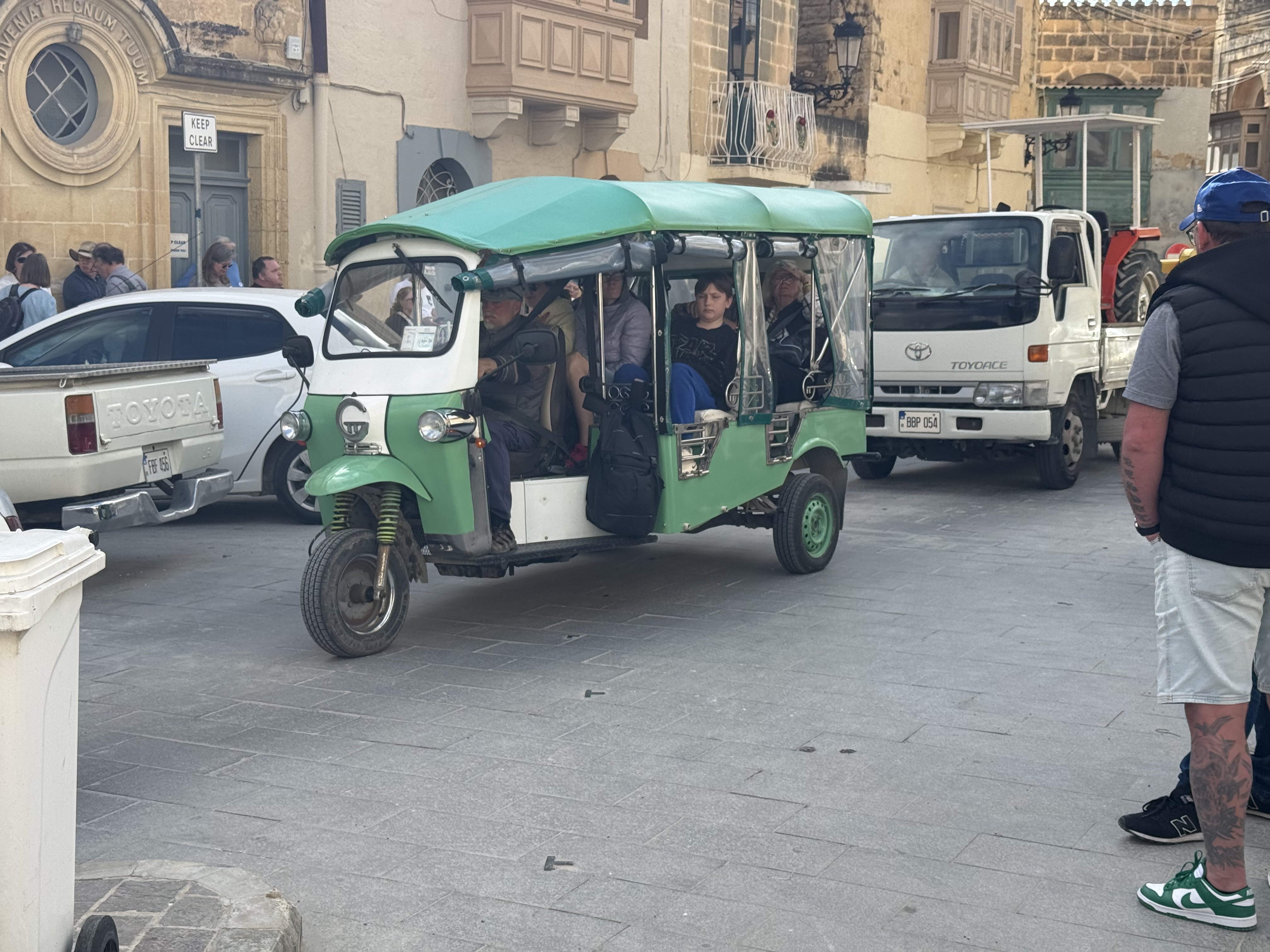
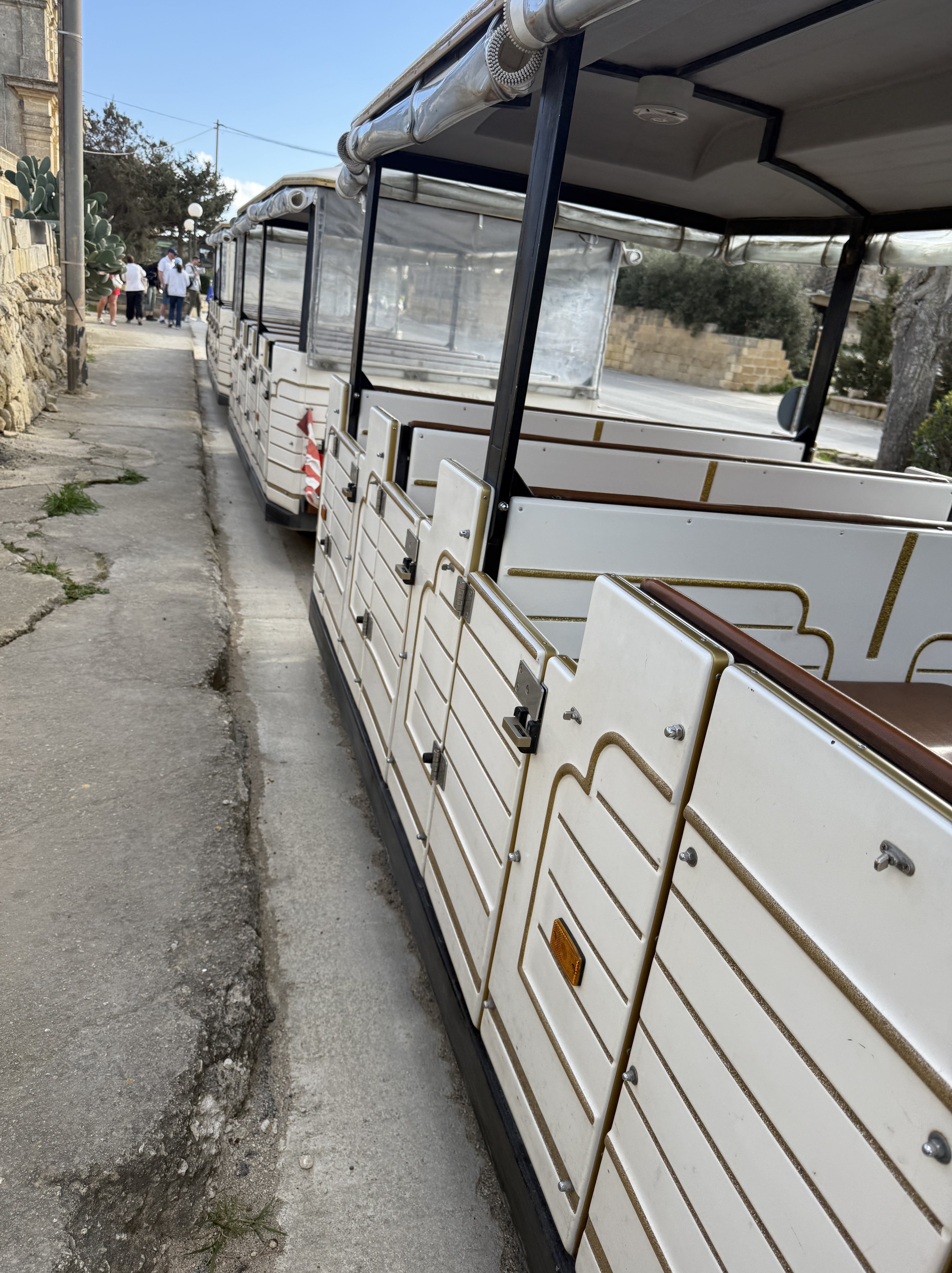
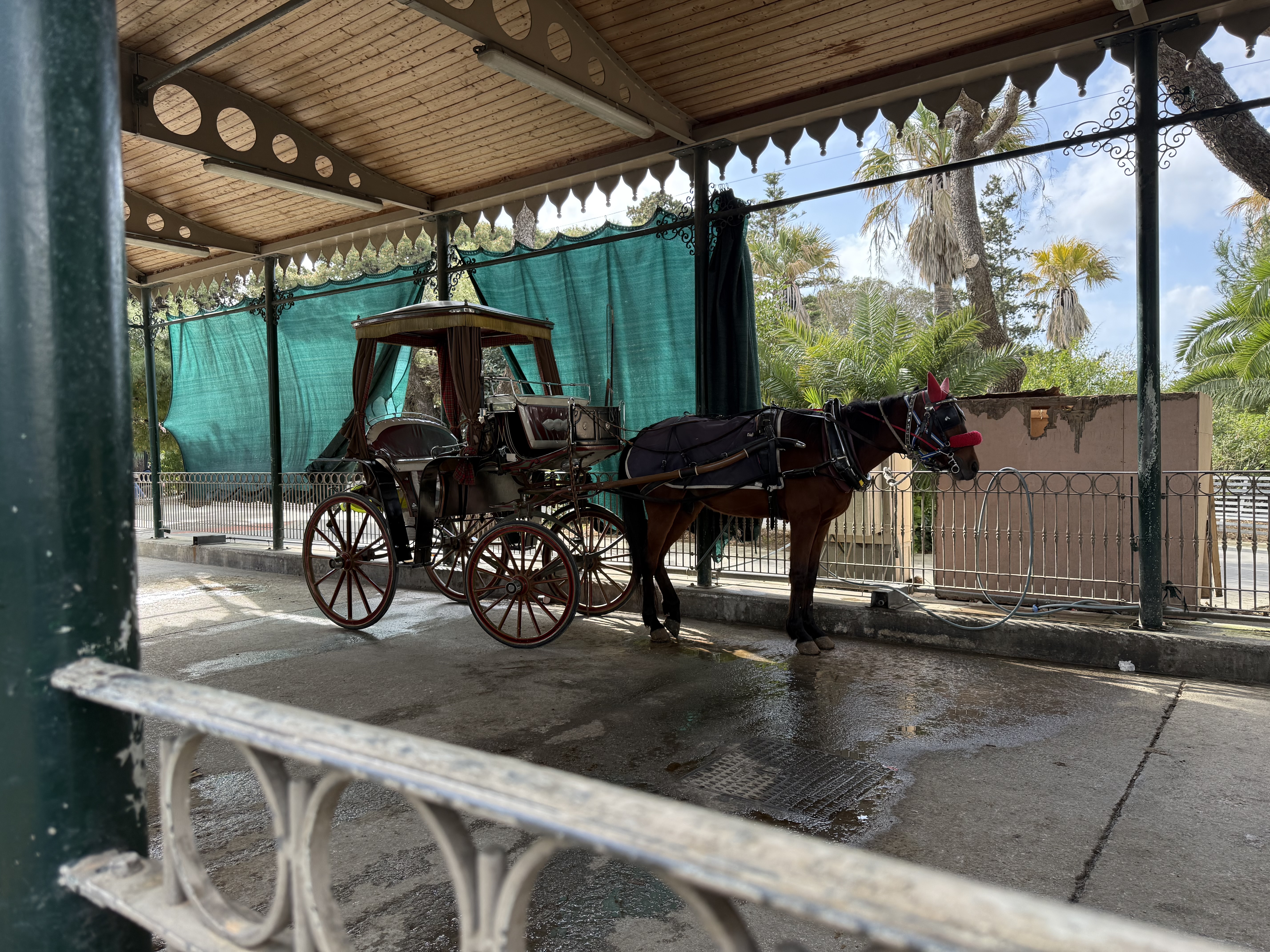
In previous posts I showed some interesting modes of transportation, and Malta is no different. Someone is always coming up with a way to entertain tourists and make a living at it. The open train above is a way of seeing some parts of Gozo unaccessible by car. Incidentally, I found myself admiring our bus driver in Gozo-he was navigating streets so narrow and winding I couldn’t imagine a full-size bus could ever fit. But it did. The horse and carriage are offered by drivers in Mdina, with the drivers giving commentary on the ride.
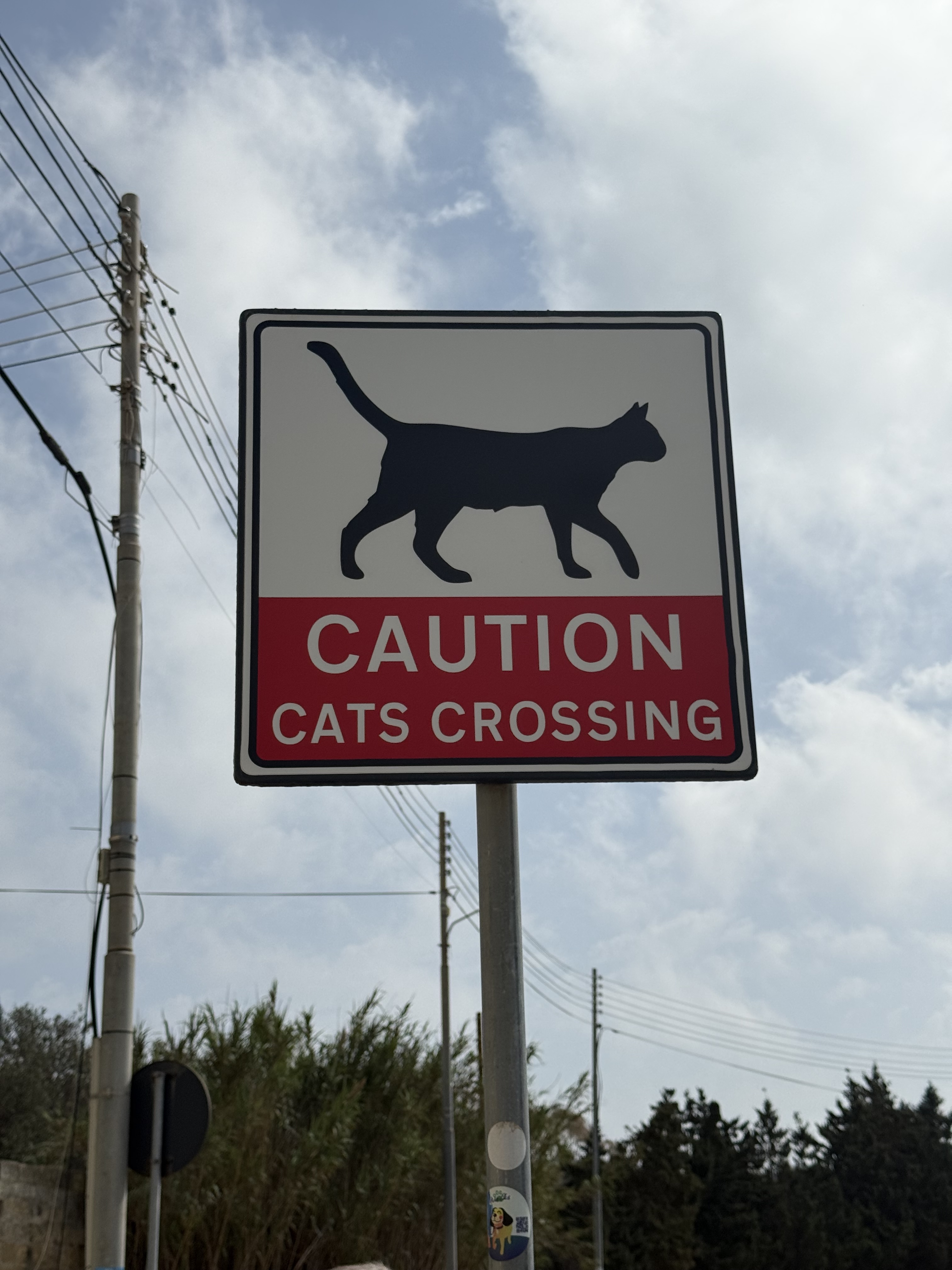
One sign I wanted to get a photos of, and was never able to find one at the right time, was a “Hedgehog Crossing” sign – and I saw several. In lieu of the sign, I give you the following:
As I traveled through the countryside, I saw many small farms and a good many vineyards. The Maltese produce some excellent wines, but not enough to export. So if you want to try them, you’ll just have to make the trip.
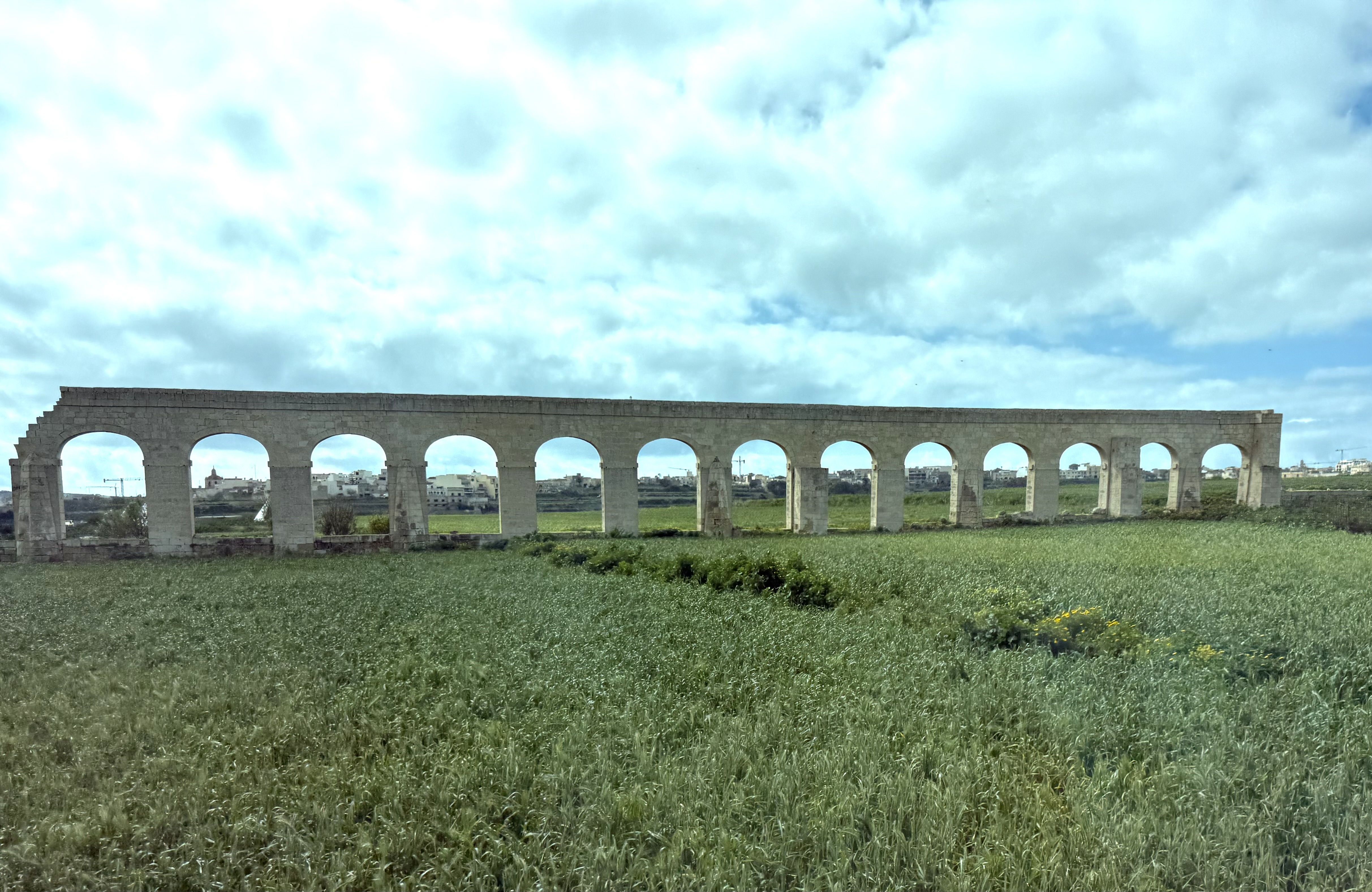
There was also evidence of many civilizations that have come to Malta. Aside from the ancient temples and the walled cities built by the Knights, the Romans left behind villas and aqueducts, and the British contributed wartime barracks and facilities. By the way, the British used that Roman aqueduct to carry vital water supplies during WWII.
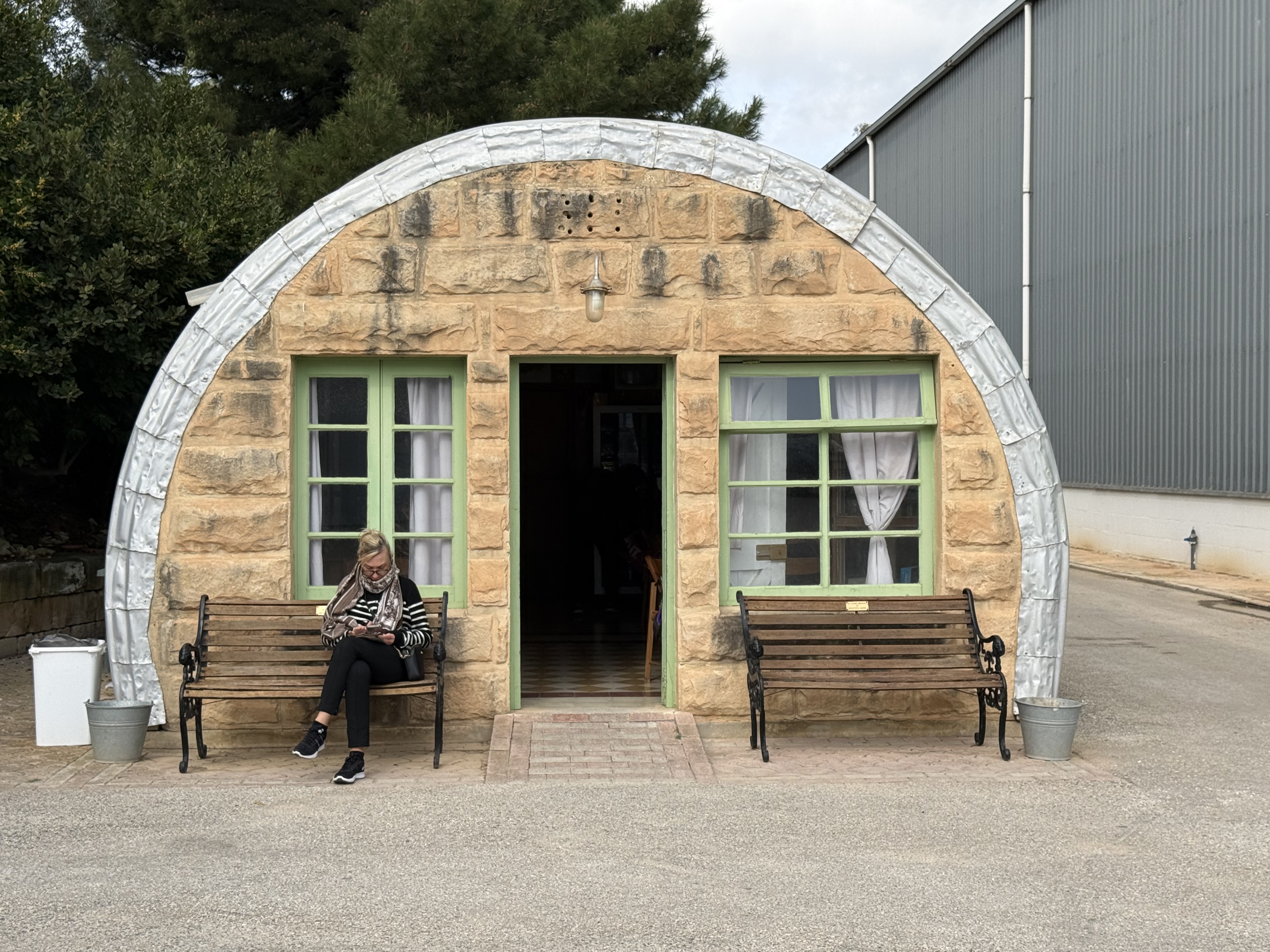
The quonset hut above is on the site of the Malta Aviation Museum. If you are interested in planes or in WWII, this is a great stop. Volunteers have been restoring planes and equipment, and their current project is restoring a Malta Sea Gladiator. Many of the planes in the museum were vital to the defense of Malta during the siege of WWII.
The View From My Window
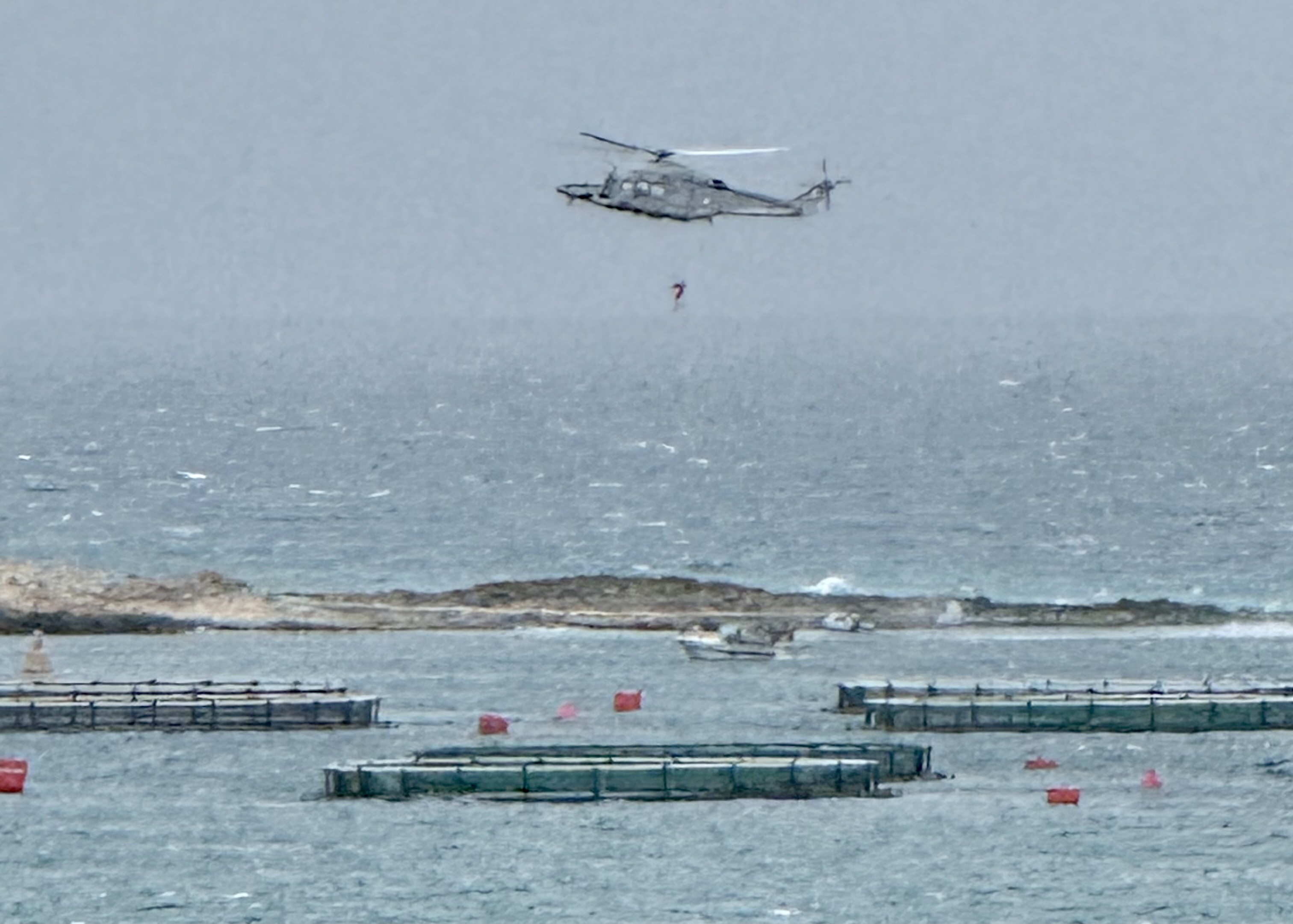
While I did a lot of exploring on Malta, there was plenty of time to simply relax and enjoy the view from my apartment. With the storm the first few days, I watched the waves crash on the rocks below and planned my excursions. At one point I watched what I think was a sea rescue, with a helicopter lifting someone out of danger.
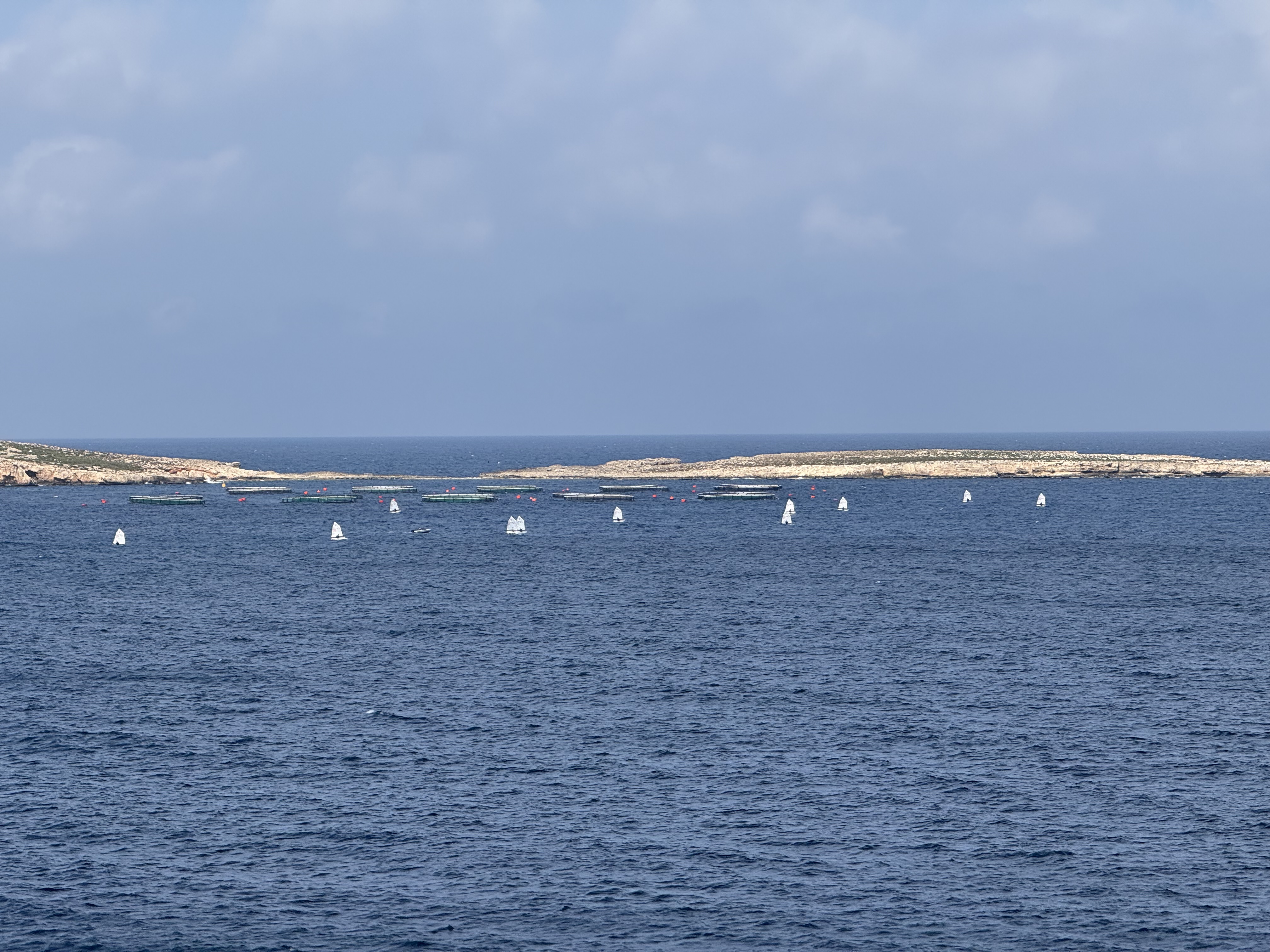
The strip of land in the photo is where legend says St. Paul was shipwrecked. After seeing the way the waves were crashing, I can understand why. The structures in the bottom of the photo are fish farms.
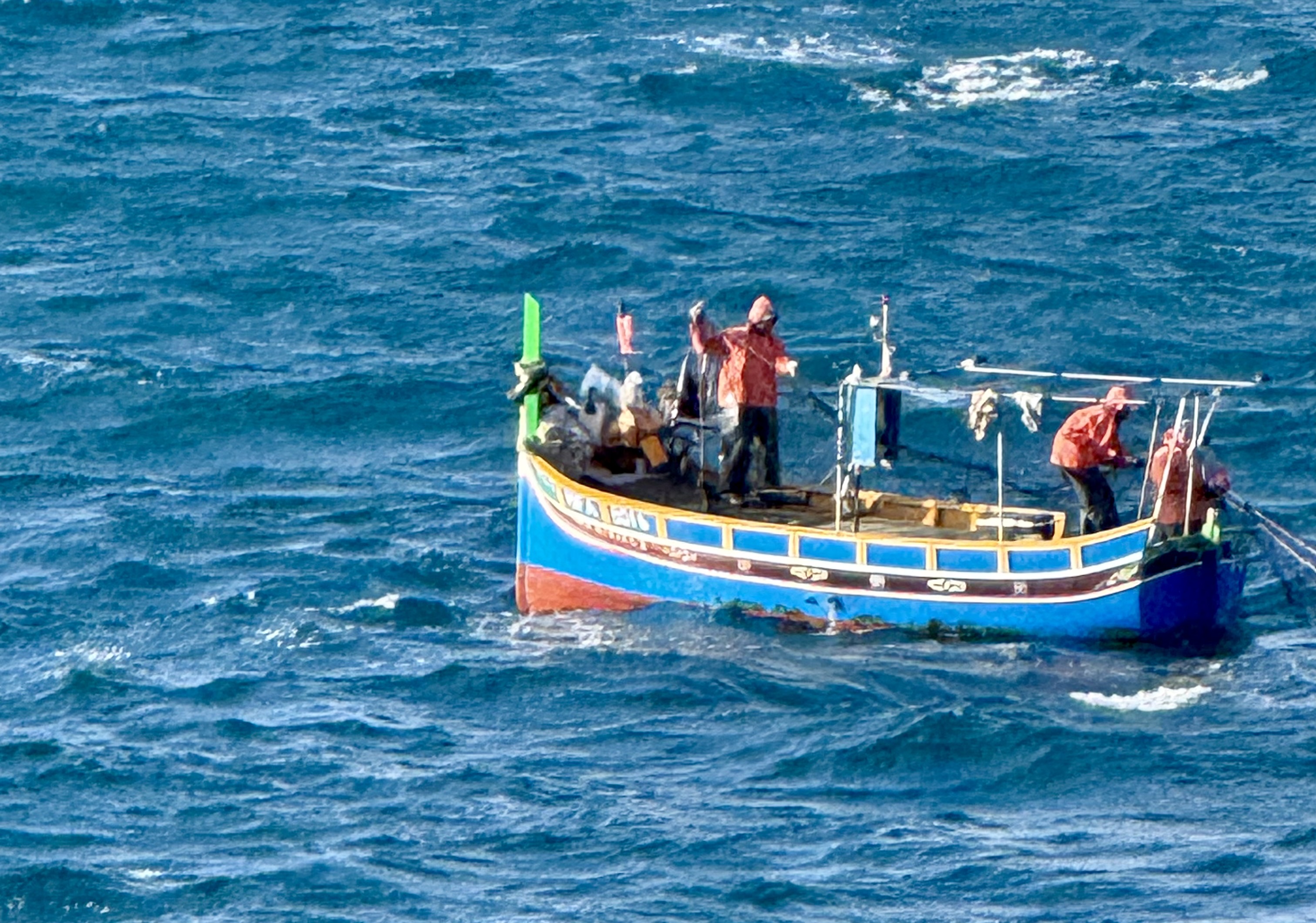
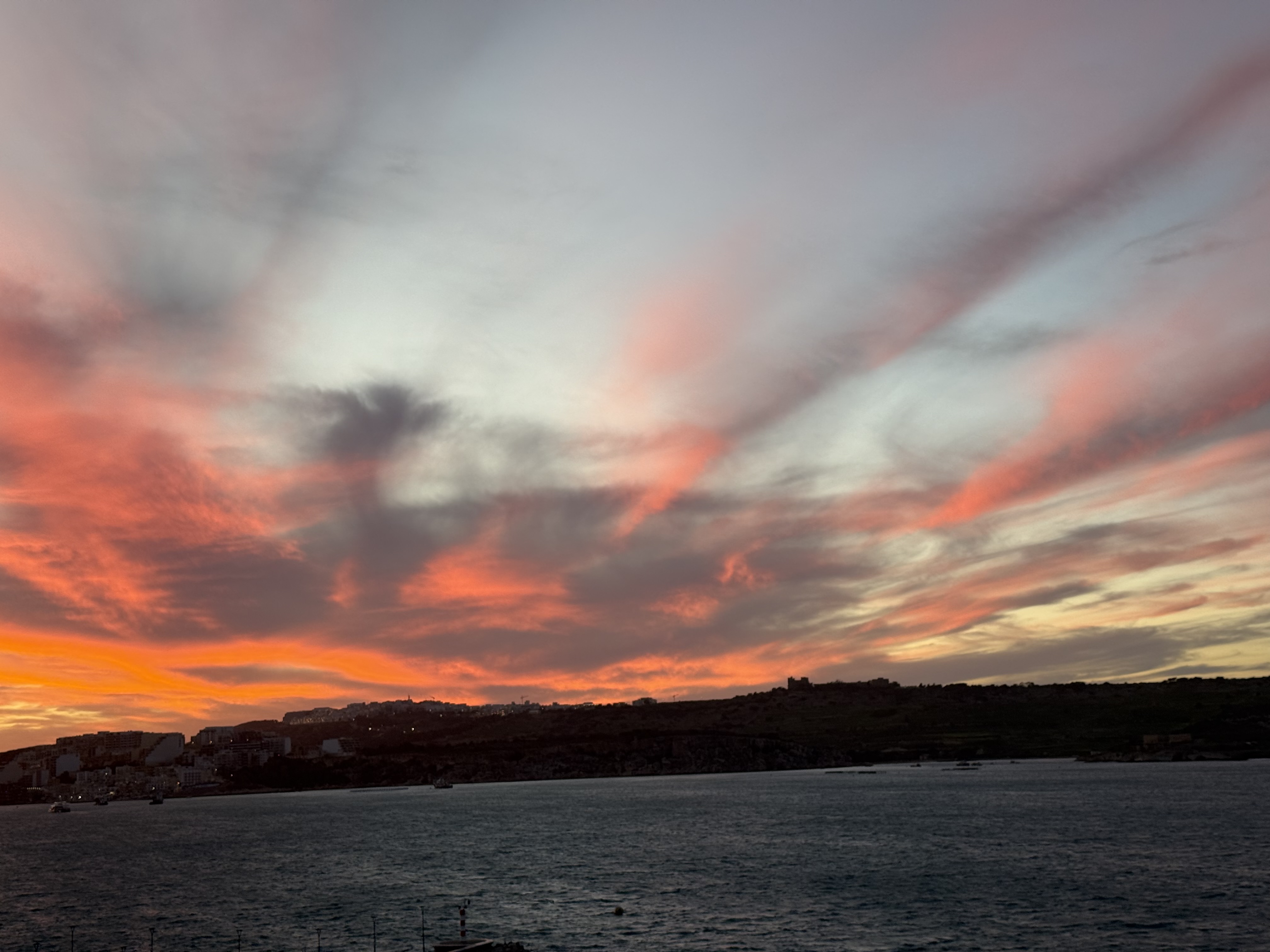
Each day brought something interesting to watch from my balcony. In calmer seas there were usually fishing boats putting out their nets, or sailboats in the bay. The sunsets were always lovely and didn’t last long enough. I often just sat and watched the birds fishing. They would fly back and forth, and suddenly rise up and dive straight down to grab the fish they saw under the water.
I loved my time in Malta, and I found the month I spent there to be a perfect mix of activity, learning, and relaxing. The people I met were all welcoming. Communication was easy, since the country has two official languages: Maltese and English. Prices, at least in the spring season, were reasonable. Malta has a major airport (my flight in came from Dubai and my flight out was to London) and it’s also easy to get there by ferry from Italy. Would I go back? Absolutely!
One of my favorite travel hacks is to spend time in a destination. Not just to collect photos of the iconic tourist sites, but to allow time to get to know the locals and their way of life. When you spend a day or two in one place, all you get is a snapshot (literally) of what it’s really like. Spend several days and you begin to get a feel for what life is really like there. The second or third time you walk into the local coffee shop they begin to recognize you, and you start to feel like part of the community. On this trip, I found two restaurants and a coffee shop that began to treat me like an old friend. How I love being greeted with the European kiss on both cheeks!
I decided to stay a month in Malta when I realized prices in the off season were very reasonable, and by booking a full month they were even better. I found a wonderful apartment with a balcony overlooking the Mediterranean Sea. That meant I could sample the local restaurants, or stay in and make use of the kitchen. And the apartment was less costly than renting an apartment in my home town. Since I currently don’t have an actual address, this was cheaper than staying home!
First Impressions
I’ve never been to Malta before, and while I did some research ahead of time, you can never really know what it’s like until you’re there in person. As my flight approached the airport, I caught a glimpse of Valletta and Fort St. Elmo, both of which I knew played an important part in the siege of Malta in the 16th century. There are fortified walls and a jumble of buildings, nearly all the color of the limestone that makes up the very foundation of the island.
Malta and the neighboring island of Gozo are both made of limestone. Unlike many islands around the world that were built by volcanic activity, these islands originated under the sea. It makes me think of the legend of the great earthquake that caused the city of Atlantis. While that one sank, these islands rose. Malta has been inhabited for millennia-there are temples that date back to 4000 years BC. While it was once covered with trees, the Phoenecians cleared most of them for use in shipbuilding. That left only the limestone for building material. As a result, it gives the entire island a decidedly beige hue.
This view of Valletta shows the limestone colors.
Because the island has limited space and has been inhabited for so long (something like 8000 years!), the cities and towns are a jumble of roads and buildings, most of which have been there for hundreds of years. It’s not unusual to be walking along a narrow street that was built in the 1500s, barely wide enough for a car, only to find yourself stepping to the side to allow a car to pass! It’s a real demonstration of history and modern life coming together.
I immediately learned that walking through the streets of my neighborhood could be a challenge. Nothing is in a straight line, and the sidewalks are only wide enough for one person. And calling them a sidewalk is generous. They are bricks that have been patched and broken and raised and lowered over the decades. I found the local grocery store only by using the map app on my phone. Because of the growing influx of tourists and expats, there is a lot of construction going on. Slowly, slowly, the uneven and broken pathways are being replaced with new brickwork, and the infrastructure is being modernized. Oh, and hotels. There are new hotels and apartments going up everywhere.
This is a small island, only about 7 miles wide and 28 miles long. Because of that, resources are limited. Electricity and water are expensive, and in the cities buildings are close and becoming taller. I noticed that while many people have dogs, just like in the USA, those dogs are smaller. It makes me smile to see big burly fellows walking along with a dog about the size of a small teddy bear.
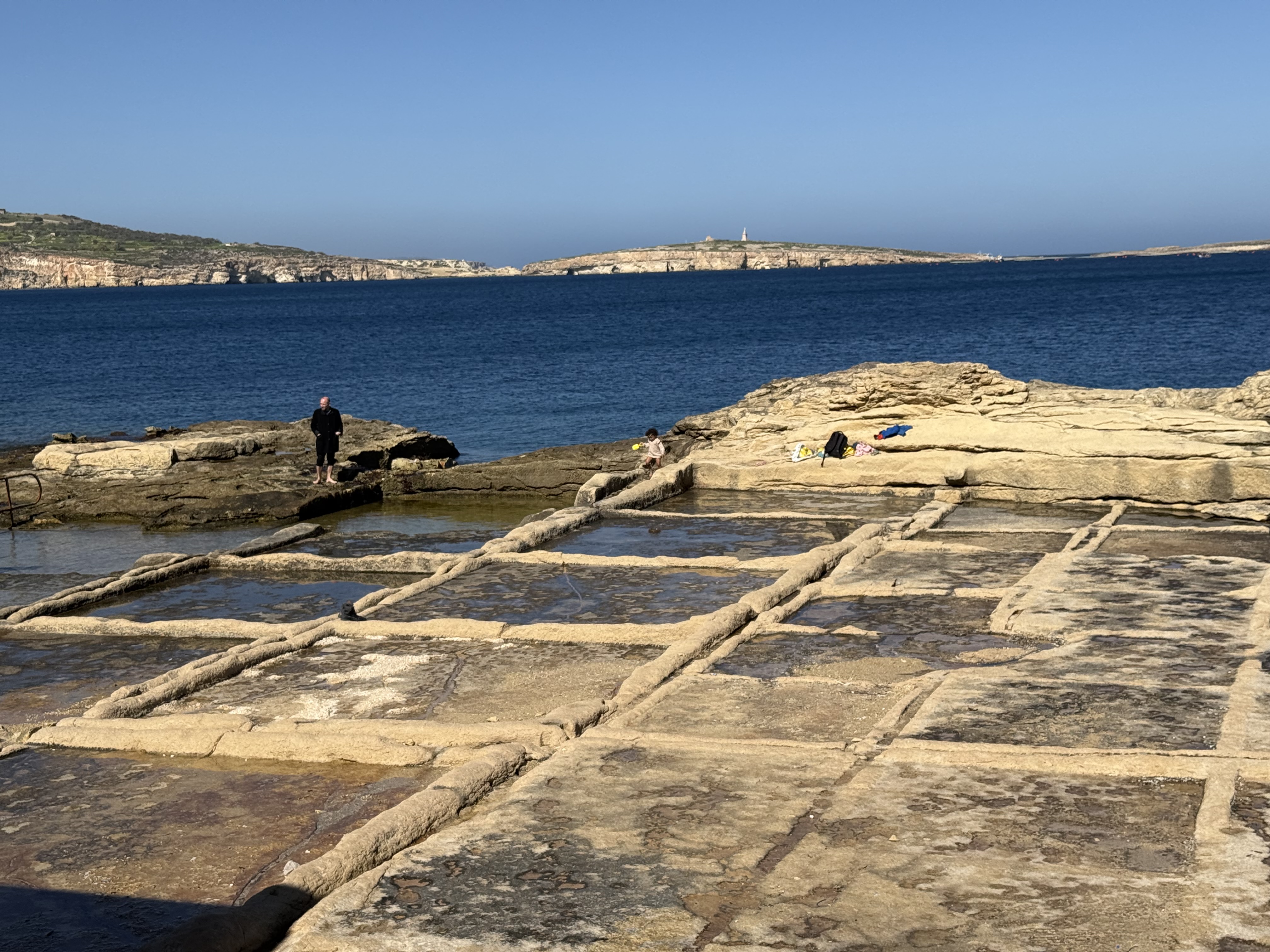
I learned right away to get rid of my assumptions. What I thought was an abandoned construction site across the street and next to the sea – there were clearly squares in the rock – turned out to be ancient salt pans, where the sea was used to collect and dry salt for use. What I thought was another unused lot was actually a bocce field, complete with Italian restaurant and spectator seating.
A view of the salt pans from my balcony. And the island beyond is where St. Paul was shipwrecked 2000 years ago.
These are just my first impressions. During my stay I’ve done several excursions around the islands of Malta and Gozo, and every one was an exceptional adventure. In coming posts I’ll share photos and information on all the places I was able to visit. There are churches and ancient temples, museums and walled cities, catacombs and air raid shelters. I’ll share them all with you, dear reader!
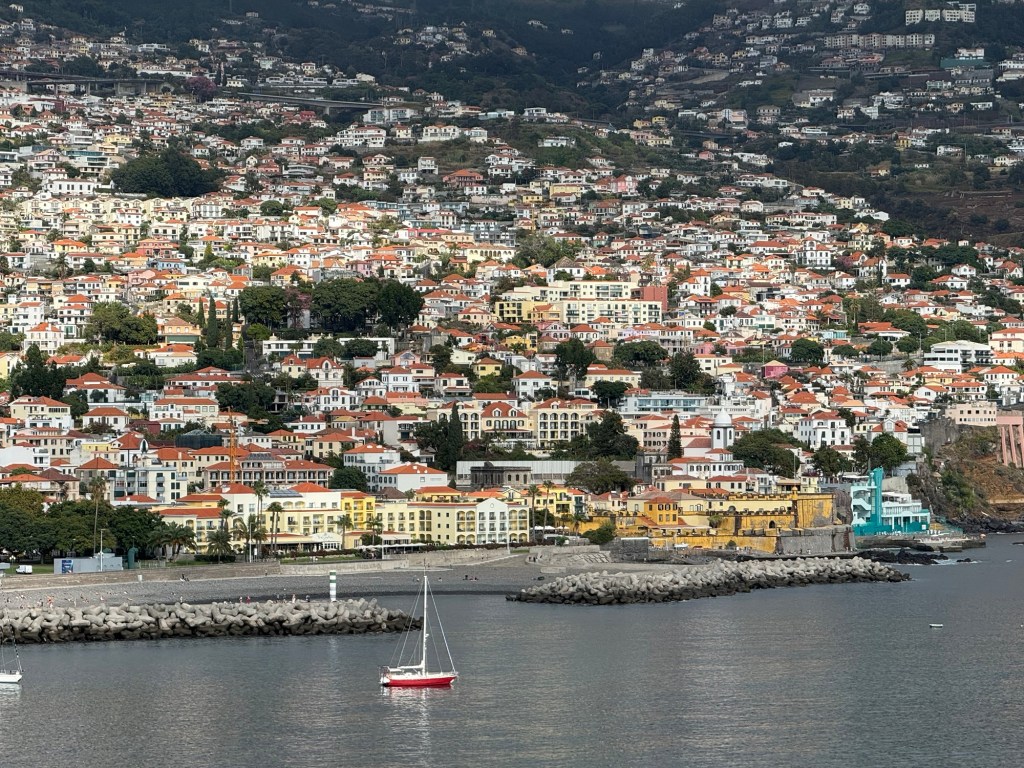
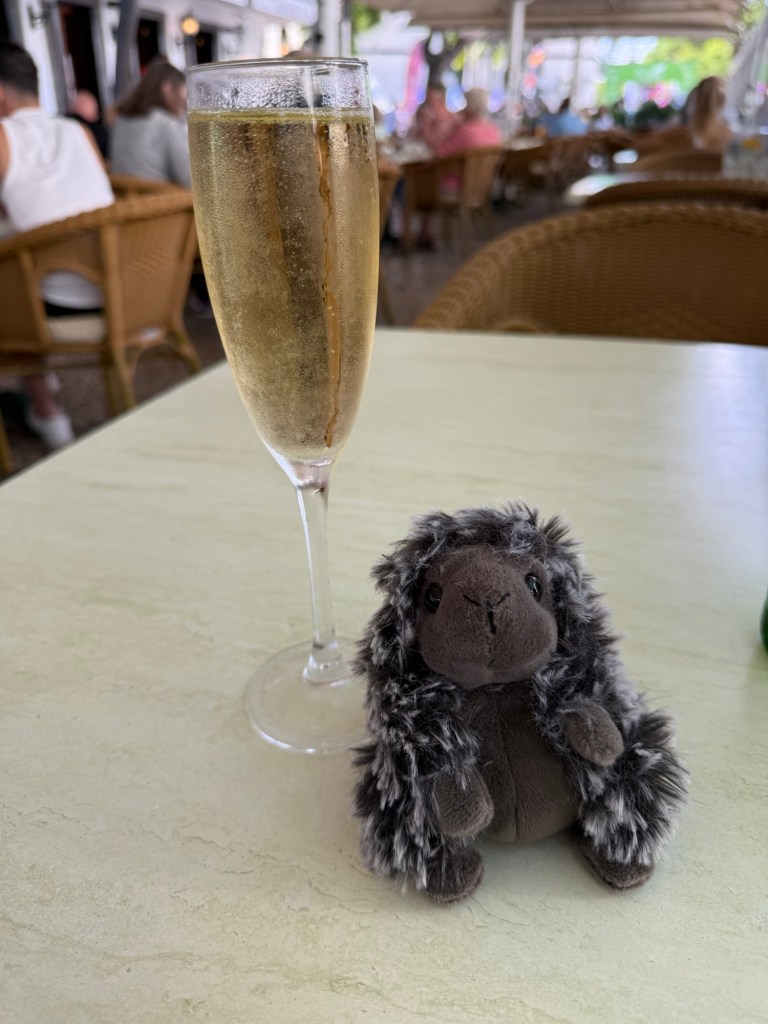
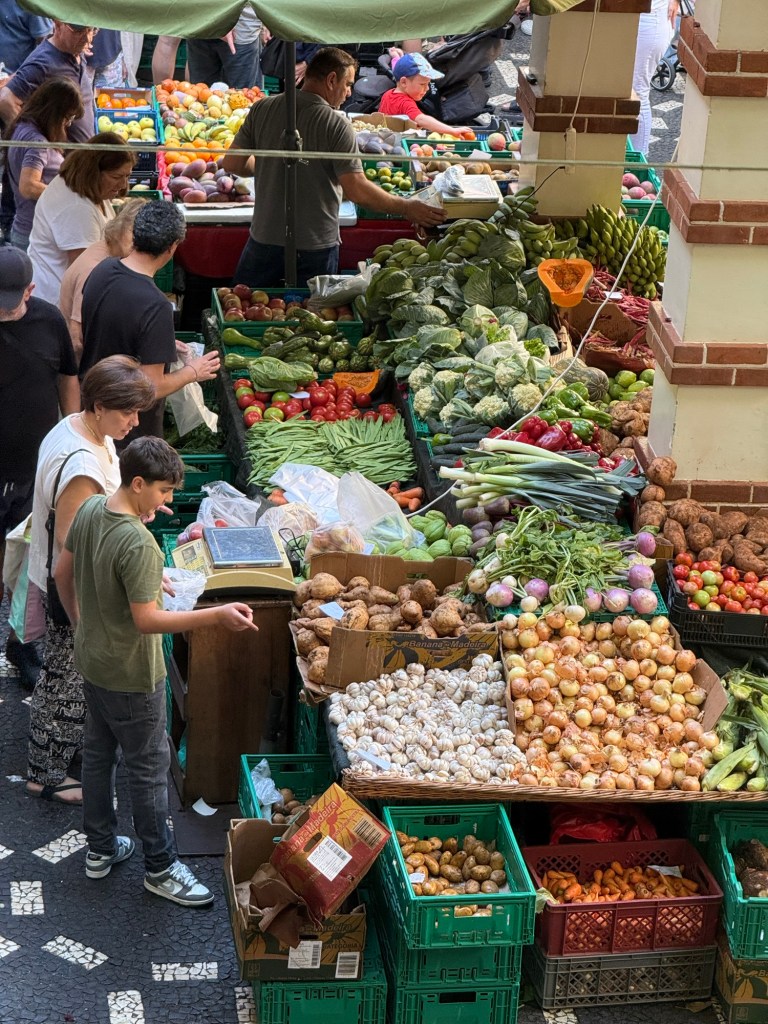
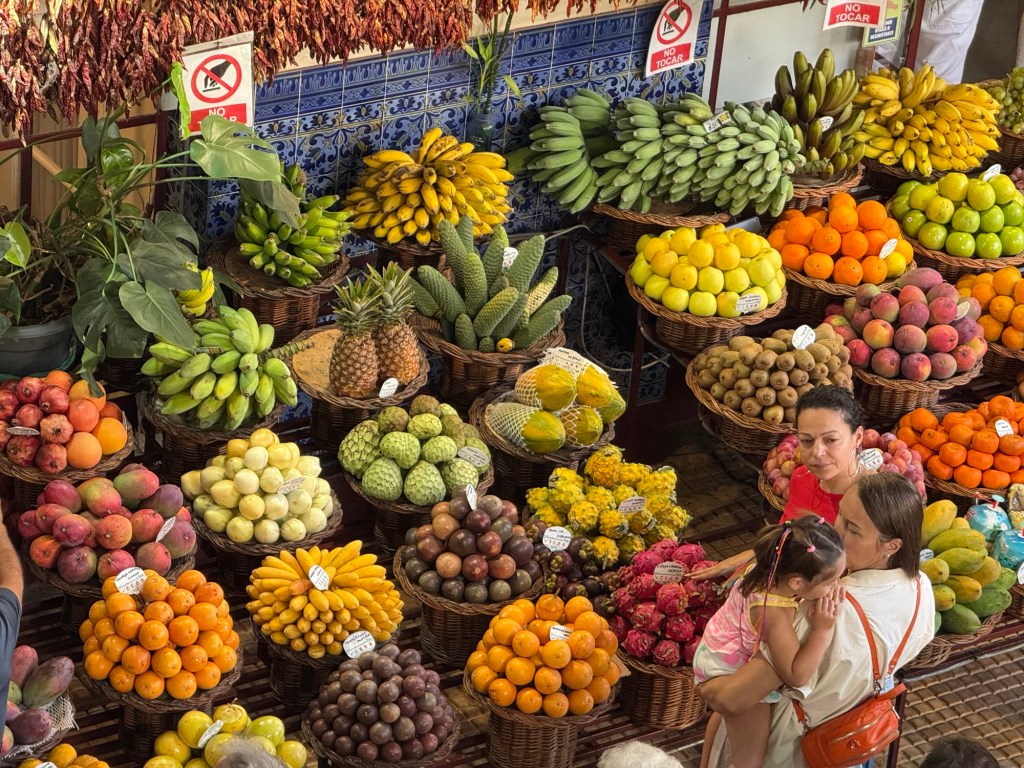
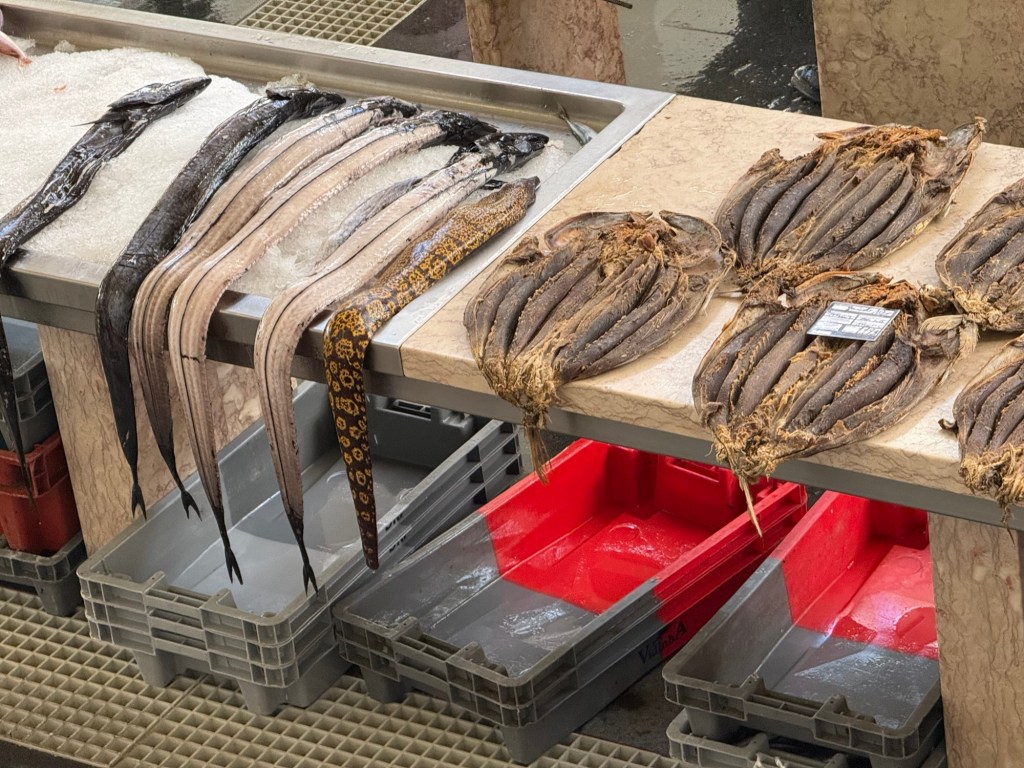
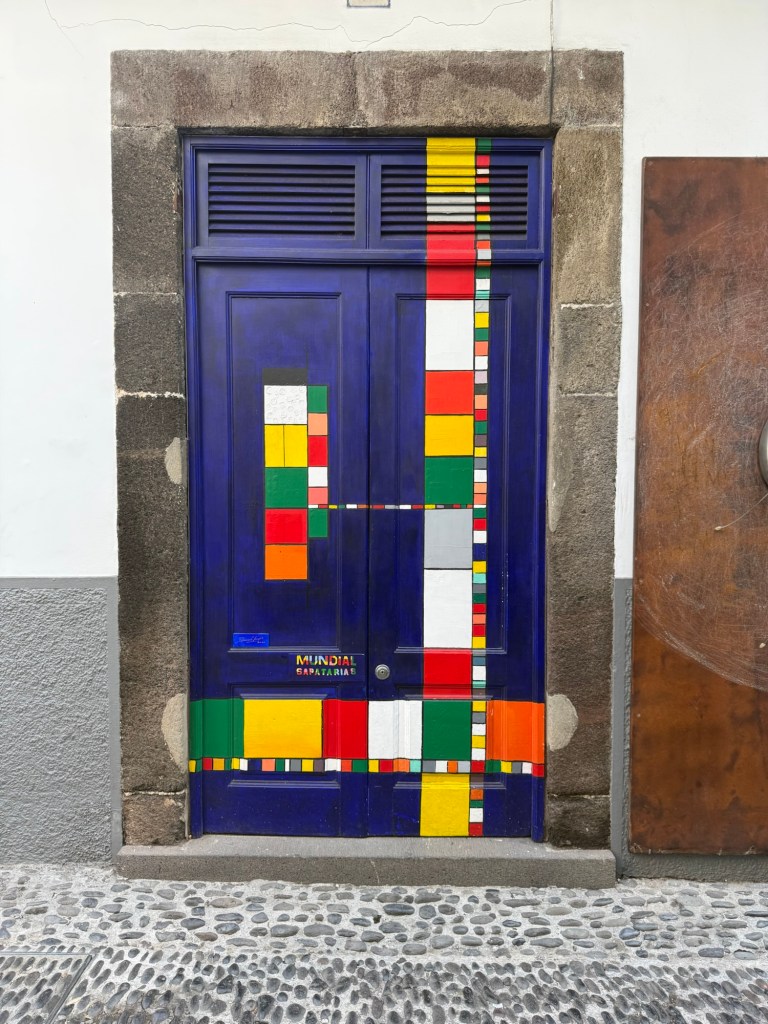
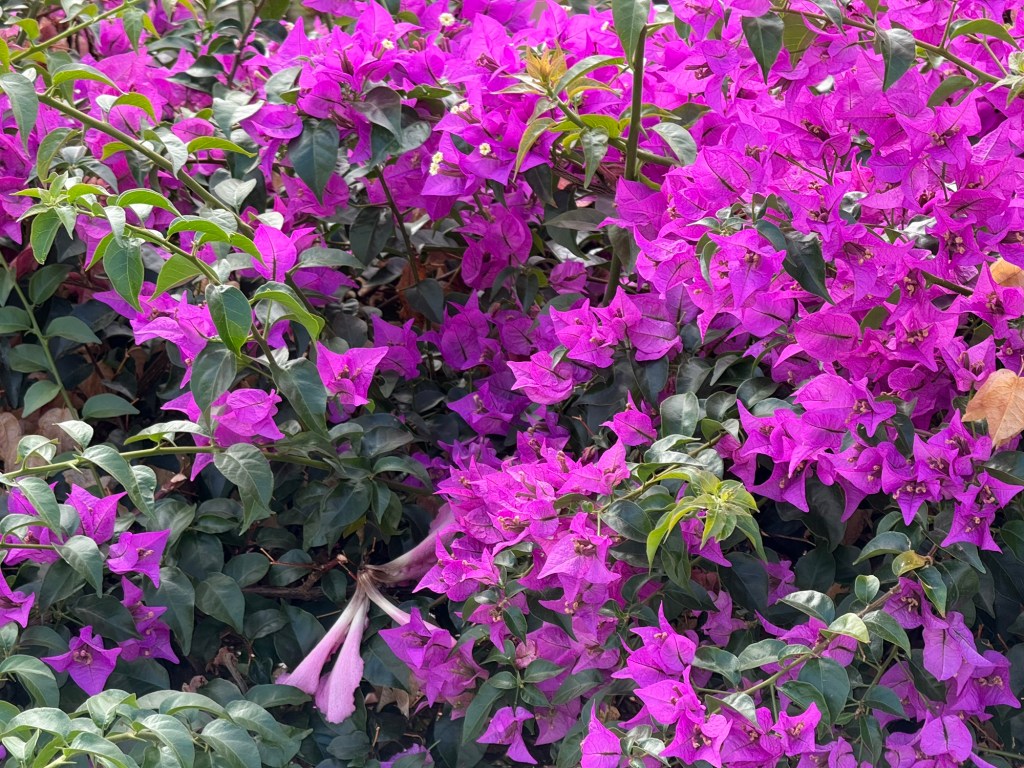
Funchal, Madeira Polly and Prosecco. The market is fascinating. A work of art. They tell me fish are tasty, but after seeing them: no. I love how they decorate their doors.
This was my third time in Funchal, on one of the Islands of Madeira. It was a little bittersweet for me, since this was one of the ports my husband and I loved.
I again took a hop-on-hop-off bus tour, and then returned to the city center to go to their wonderful market and have lunch. I love visiting markets around the world. They have such interesting foods and products, and they are a photographers playground.
The one thing I wanted to do was have lunch at the sidewalk restaurant Richard and I visited when we were there. I tramped up and down several streets, realizing that it had been ten years since my last visit and the area had changed a lot. But I found it! I recreated the photo I took back then with my glass of Prosecco, but adding in my travel companion Polly the porcupine. She liked the Prosecco too.
I just thought this was pretty. Pretty fancy home for pigeons!OMG, the sweets were incredible. Remnants of the fort overlooking the city.
I’m a bit late in posting, but I was busy helping row across the Atlantic Ocean. Not really, but doesn’t that bring up visions of Vikings heading to the New World?
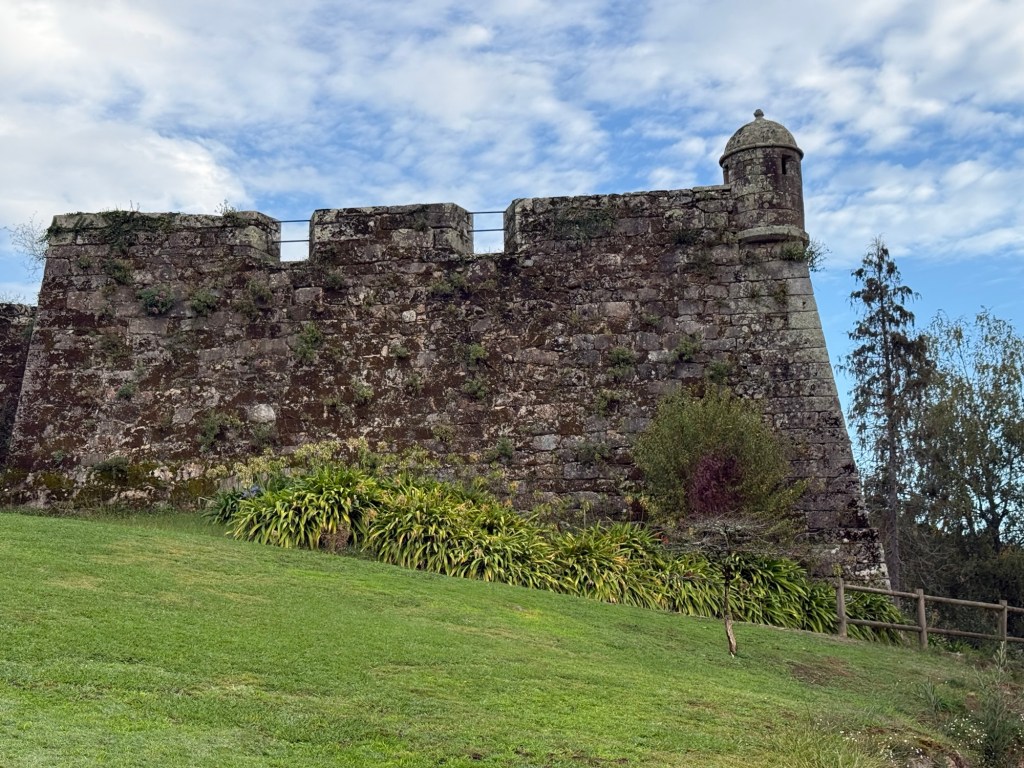
Anyway, I took a ship tour of Vigo and got to check out the city. It was a nice overview with stops at an old fort and some gardens. We stopped at a 5-star hotel for lunch before returning to the dock, and I got to try some local wine.
What I didn’t realize when I booked the tour was that the Old Town section was just a stroll from the ship. Of course I had to take advantage of that! I learned that their Old Town is quite modern, with lots of shops. As you can see by my photos, my favorite was the bakery! I ended up with the yummiest raspberry tea cake, and I enjoyed every guilty bite.
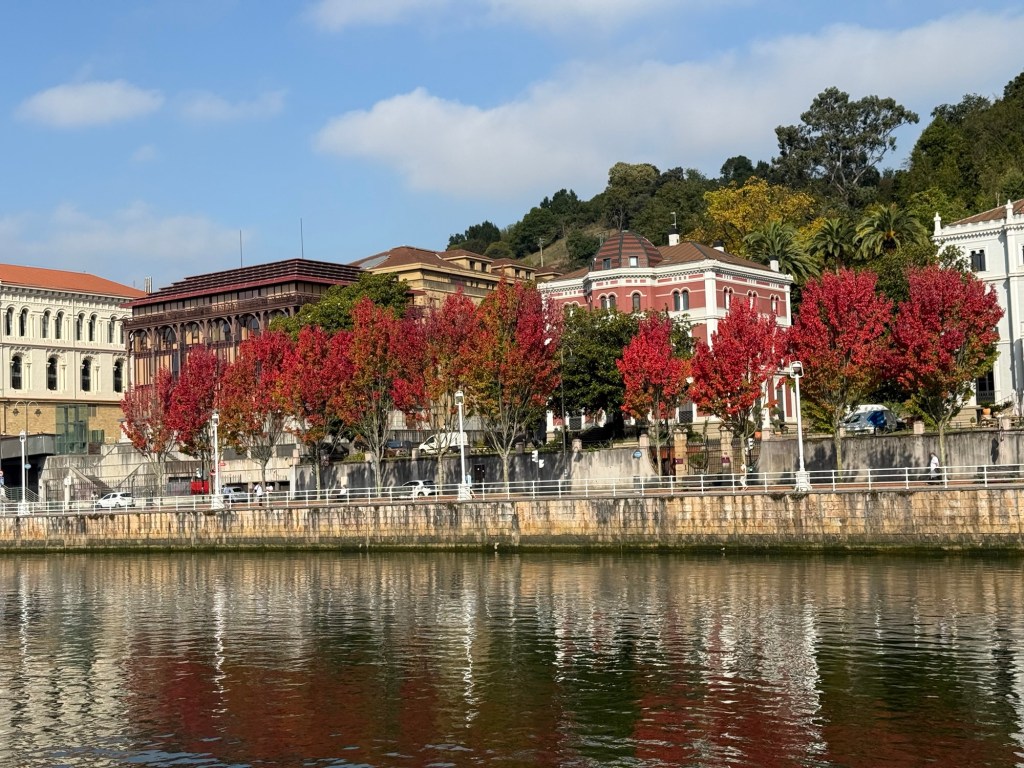
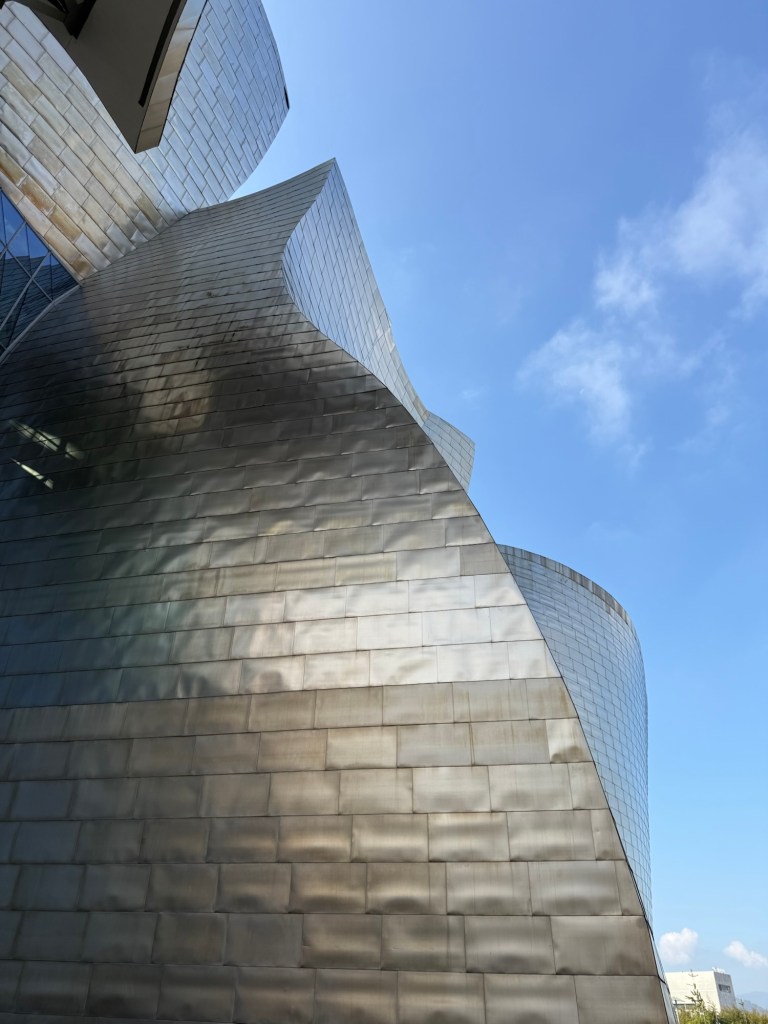
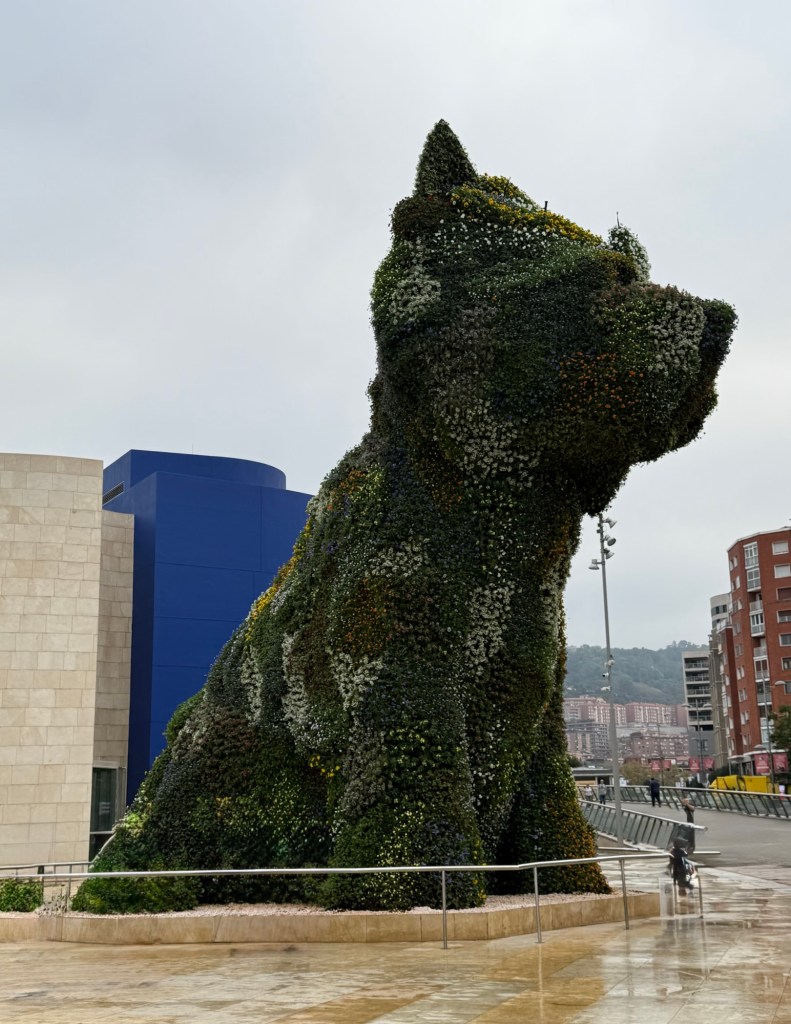
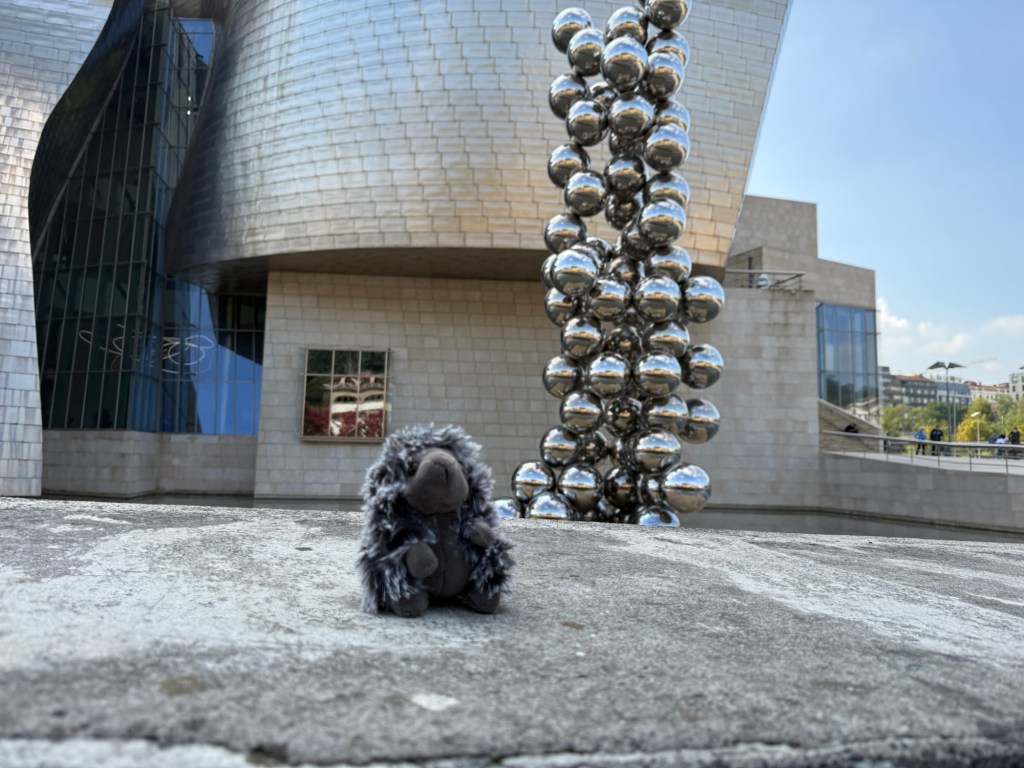
Today was a rather warm port day in Bilbao. I did a Hop On Hop Off bus tour and got off at the Guggenheim Museum. I decided to walk back to the place where the ship shuttle dropped us off. I think that was a mistake-I ended up with sweat in my eyes. I guess I need to remember we’re no longer above the Arctic Circle.
The museum was interesting; there were some installations that gave an idea of how the rest of the world sees us. It’s not flattering.
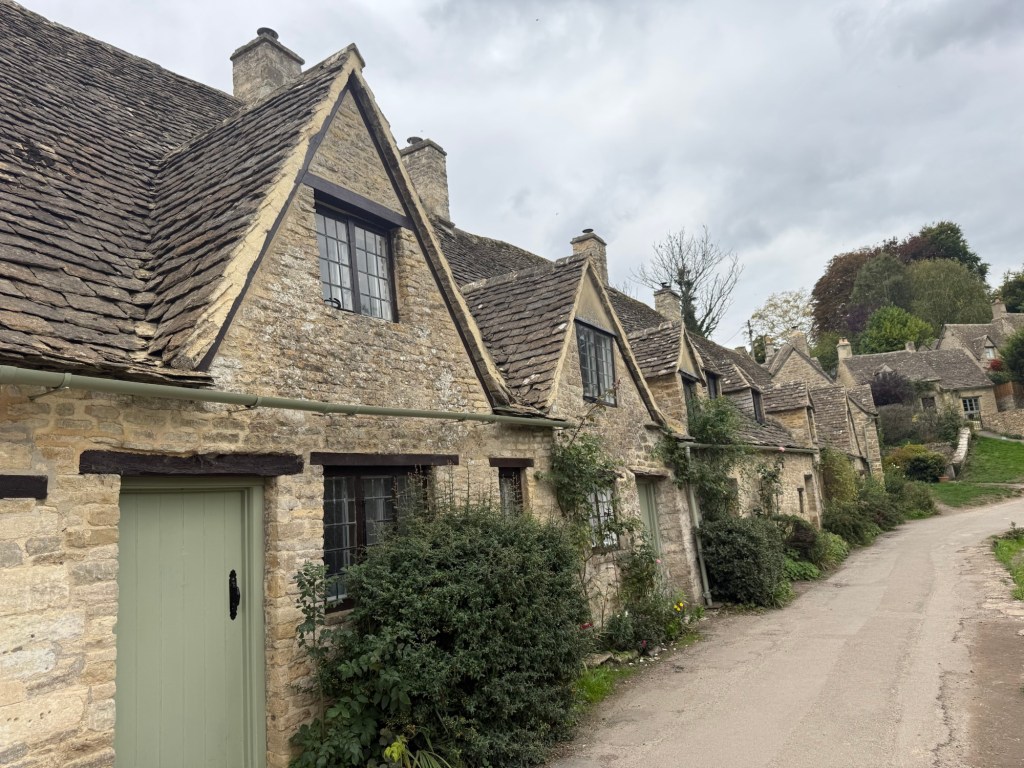
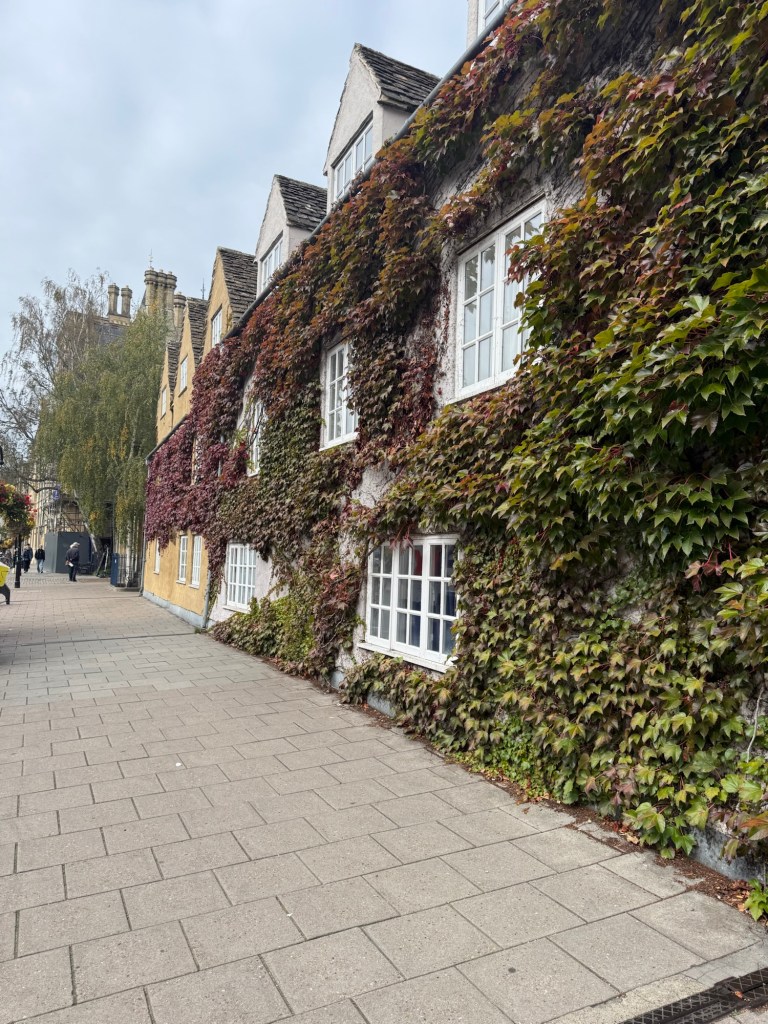
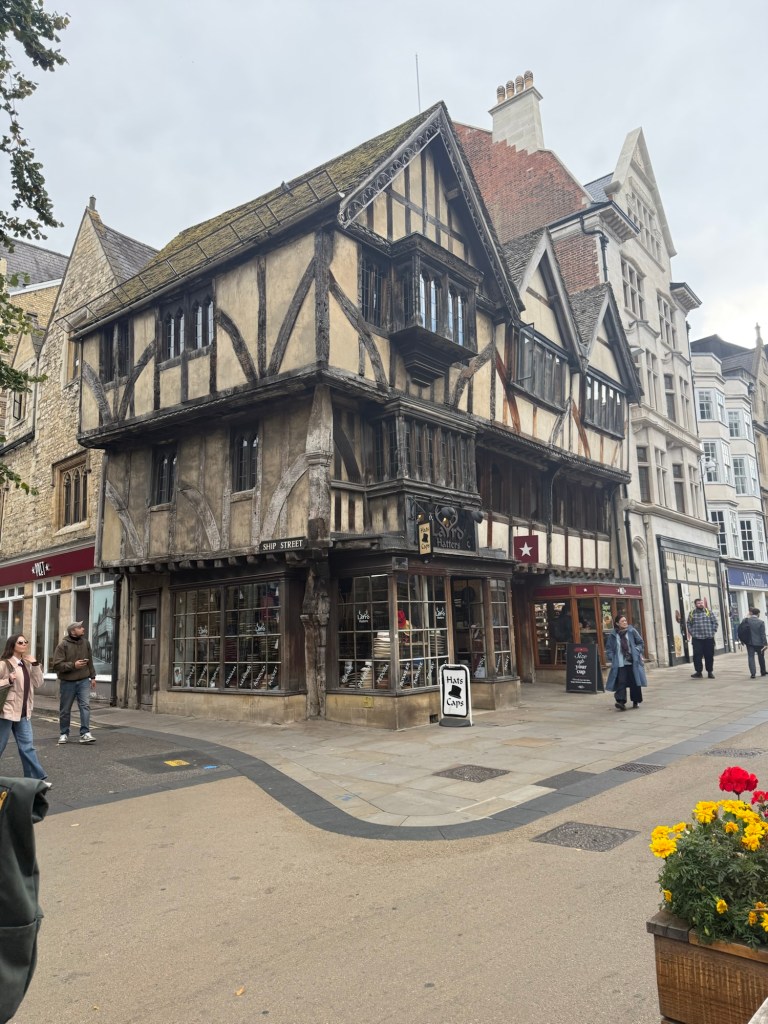
I took another tour to a place I’ve long wanted to visit: The Cotswolds. This was a smaller tour, limited to 14. If you’re wondering, it was a Rabbies tour and I highly recommend them. Oxford wasn’t my real destination, but I enjoyed it a lot. It happened to be graduation day for some of the colleges (I think there are 39) so the streets were filled with family members with flowers and graduates in their colorful robes. What an exciting day for a young person starting out with an Oxford degree!
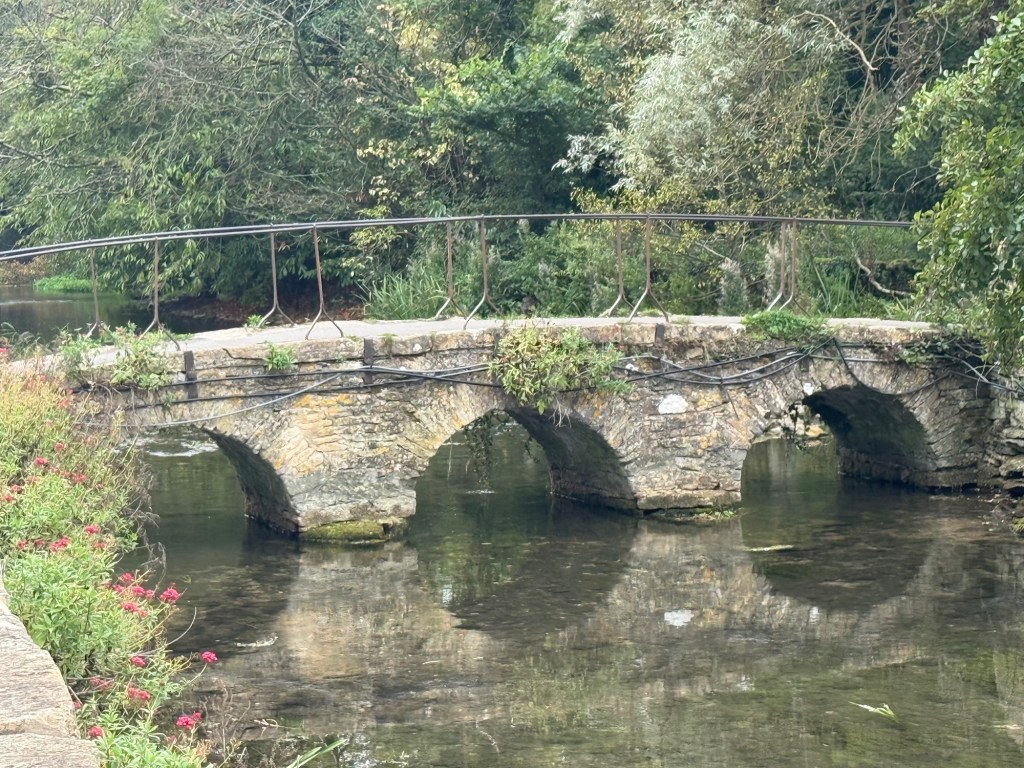
Then on to the Cotswolds, which has beautiful countryside. All the houses are made of Cotswold limestone, giving even the new buildings a timeless feel. In Burford I learned that the are two ways to have your scones: Devon, with the clotted cream on the bottom and then the jam, or Cornwall, which is just the opposite. Apparently it’s quite a rivalry. I’ll leave it to you, dear reader, to decide which you prefer.
I also learned that even a small quaint village in the English countryside can have a traffic problem. The cars were backed up as far as you could see in both directions.


 Travels with Billie