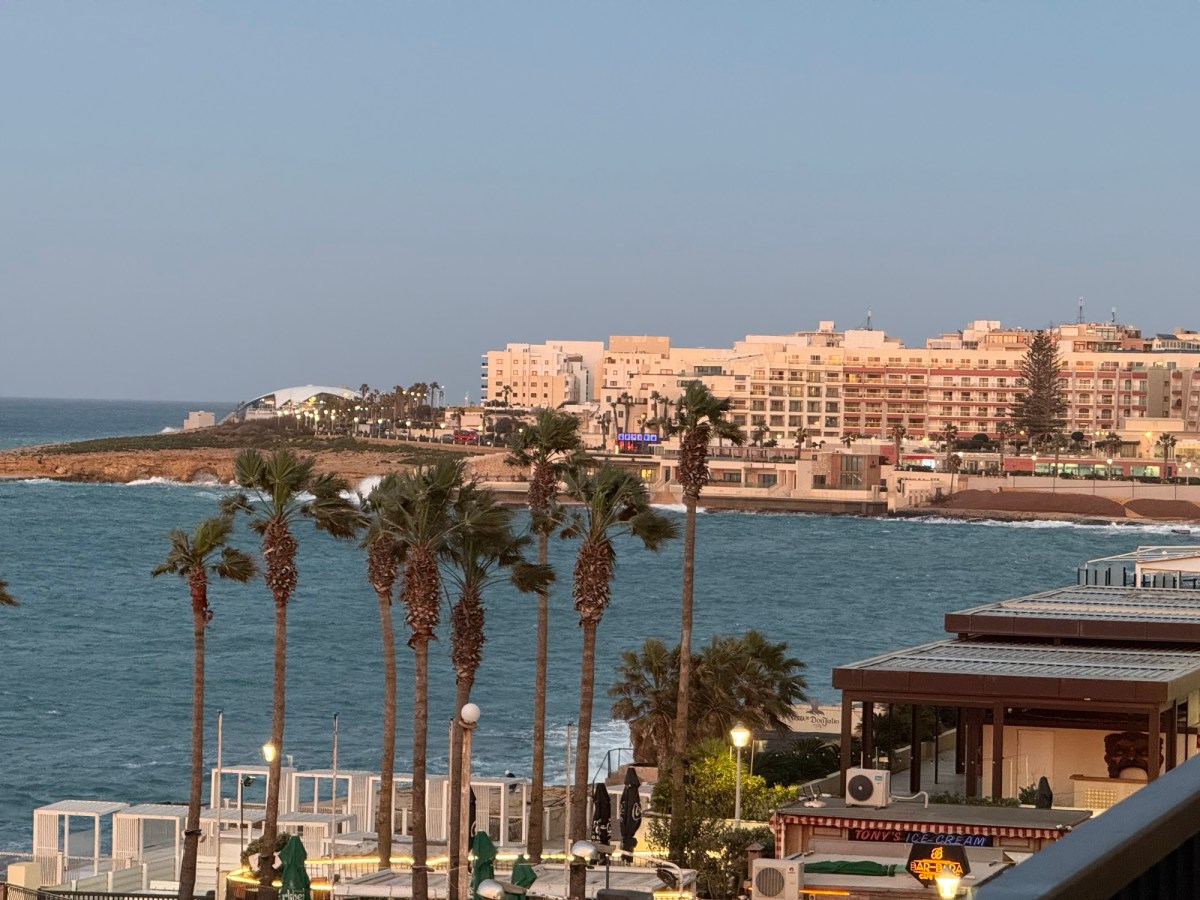
In the month I spent in Malta, there was a lot to experience. Since my return I’ve been mulling over how to cover it all, and I decided to go for it and do one long post. Feel free to pick and choose what you want to learn about. Get yourself a cuppa and join me in Malta, Dear Reader.
The Weather
There was a storm approaching the day I arrived, and my host warned me ahead of time. They wanted to be sure I didn’t leave the furniture on the balcony, and once the wind started I understood why. We had gale force 6 winds, and at night it howled around the building. I had an apartment on the fifth floor of a building directly across from the Mediterranean sea and right in the path of those winds. I spent three days watching the waves crash along the shore and looking out at the mostly deserted esplanade.
The weather during the month (mid-February through mid-March) was in the 60s Fahrenheit and usually windy. I understand it gets quite hot there in the summer, but I was happy to have the cooler weather. I’m not a fan of hot weather; see my posts about Thailand, Singapore, and Malaysia. Most days would find me walking along the esplanade if I wasn’t doing one of my many excursions around the island.
Transportation
Because the island is small and roads are narrow, I decided to forgo renting a car. There are plenty of alternatives. I did some guided excursions, I rode the Hop-On Hop-Off bus three times, and used Bolt (a local alternative to Uber, and very reasonable.) There is also a bus service that works very well on Malta, but I’m told it’s not so efficient on Gozo. The Bolt service was inexpensive and efficient. When leaving Malta I scheduled a Bolt pickup ahead of time. The driver arrived right on the dot and got me to the airport with time to spare. I’d recommend it for both arriving and leaving Malta, as well as trips around the island. It’s also a great way to have a conversation with a local!
The Food
I like to explore grocery stores in other countries. It helps me get familiar with different foods and learn what the locals eat. There have been some occasions when I’ve taken a plunge and bought something labeled in another language, not having any idea what it was until opened. There was a nice little grocery a few blocks from my apartment and I shopped there often. I did find that there were a lot English foods-the area is full of tourists and expats, mostly English.
I got into the habit of walking down the street to a small coffee shop for Elevenses (note reference to Frodo) that also served baked goods and light meals. The first day I went there I asked for coffee with milk or cream. They patiently explained that would be a cappuccino. That became my drink of choice for the rest of my stay, with the barista starting my drink as soon as he saw me walk in. They had wonderful pastries, most of which were Italian and Eastern European. Oh, the cannolis!!! By the end of my stay they greeted me like an old friend, and I got farewell hugs from the staff. By the way, to get to the cafe I walked past a Starbucks that was only two doors away. Why would I want to go to an American coffee shop in Malta?
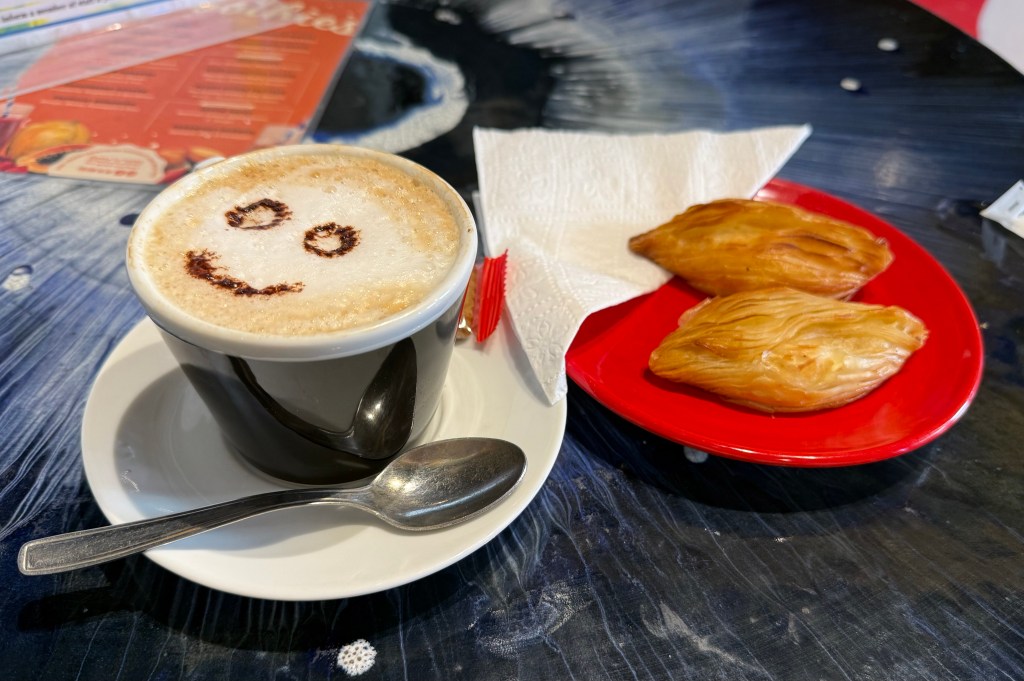
My barista took great care of me.
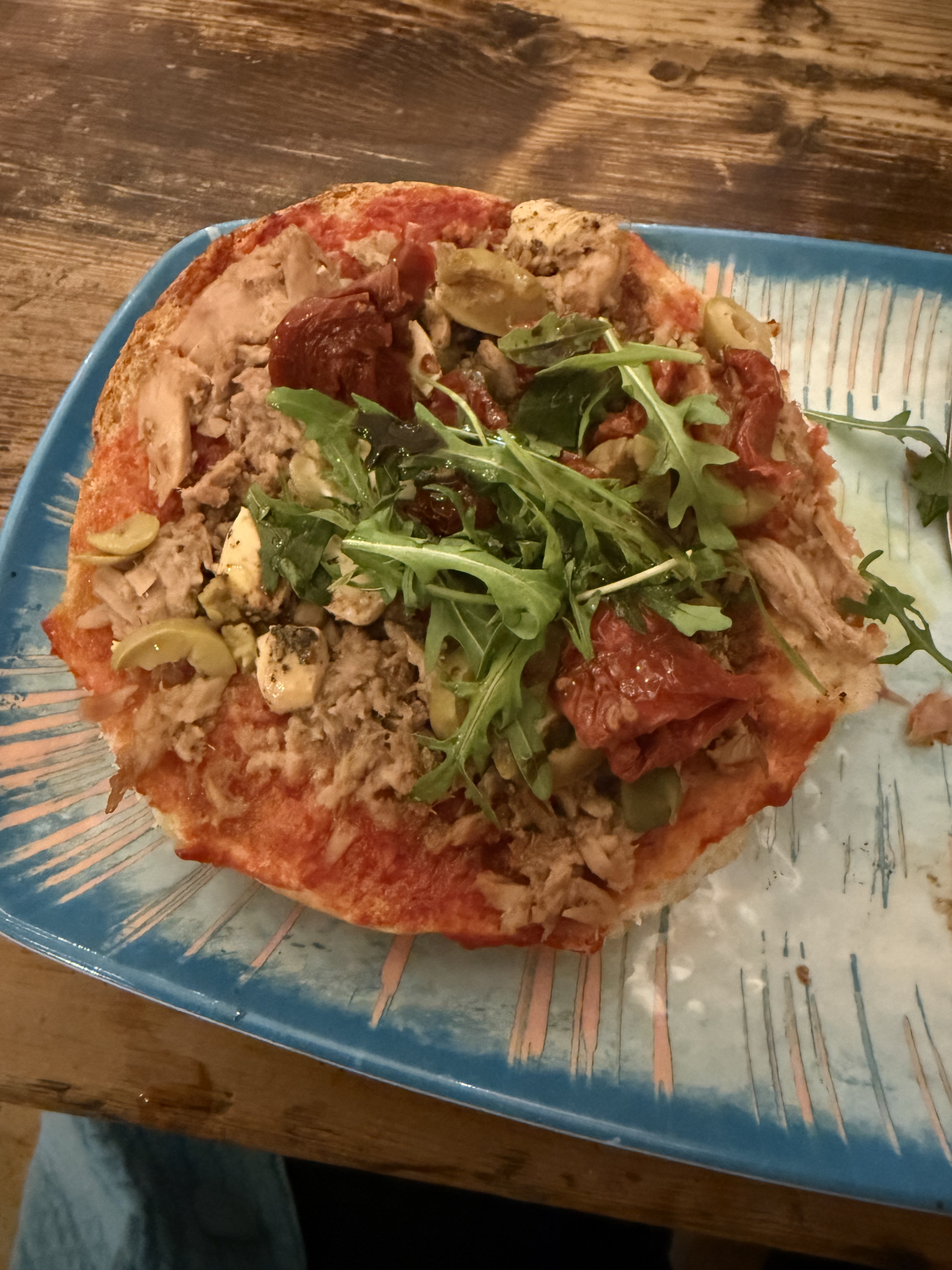
My first dinner in Malta was in the restaurant in the building where I was staying. Thanks to the inclement weather, I had the place almost to myself and didn’t have to venture or into the storm. The host and the chef came to my table and made a fuss over me, and ended up making a special dish just for me. I went back several times, and each time I was treated to special attention and great food I didn’t order. I tried the traditional Maltese dish of stewed rabbit, and we joked that yes, it tasted like chicken.
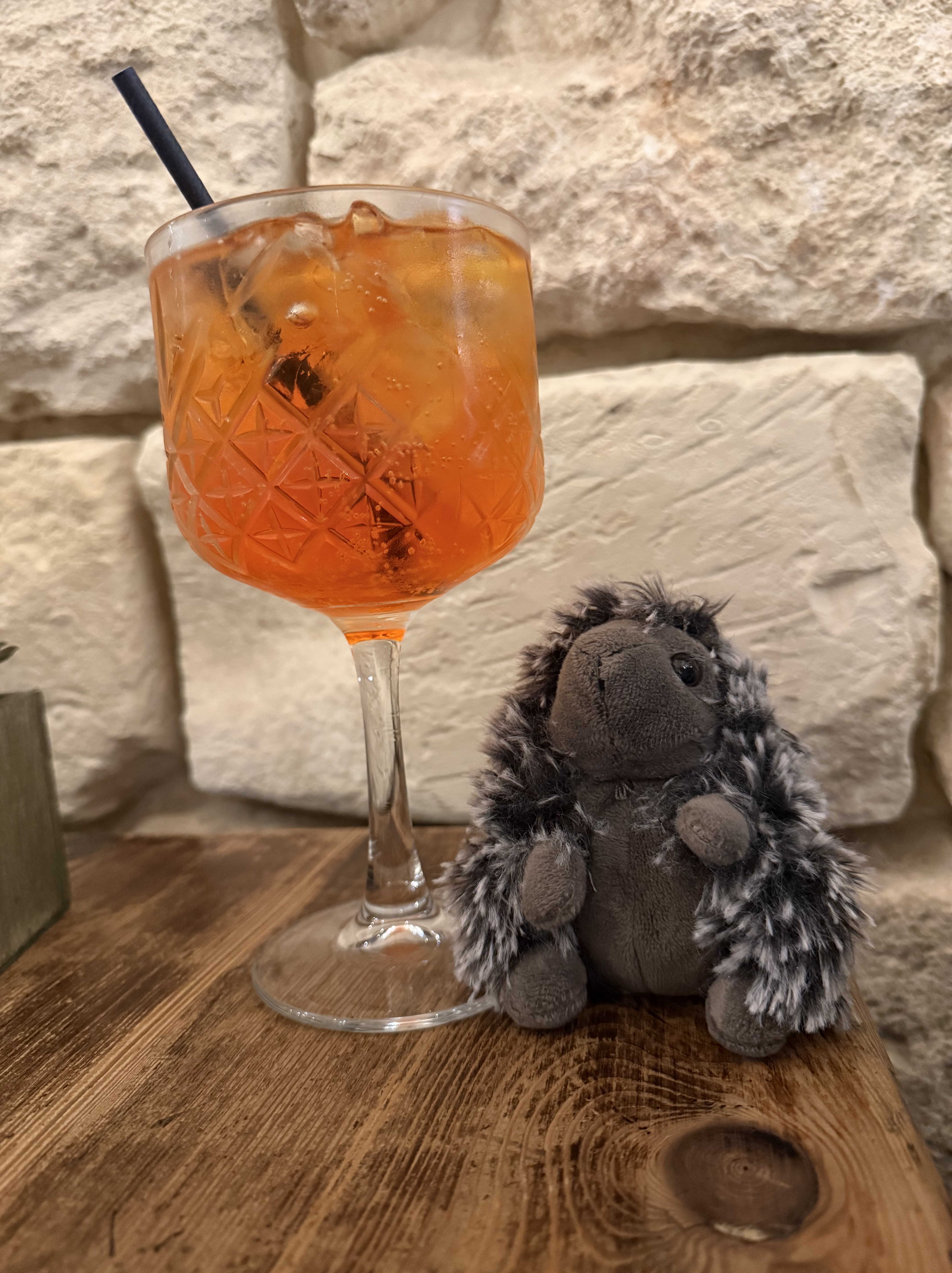
Another favorite was the Indian restaurant around the corner, where I was again treated like a favored guest. There were also pizza places and Italian restaurants in abundance. A popular drink is a spritz, and there are as many variations as there are restaurants. The first time I ordered a glass of wine, I thought it seemed a bit expensive: 14 Euros. I didn’t realize that was the price for the entire bottle! It’s quite common to have the waiter recork the bottle so you can take the rest home.
Getting My Bearings on a Hop-On, Hop-Off Bus
Sometimes I like to start a visit to a new area with this tour bus. They’re available all over the world and it’s a great way to get an overall view of what you might like to visit. I’ll often do the entire circuit first, and then go back to stops that interest me. There are two routes on Malta: the Southern route includes the Three Cities, the Blue Grotto, the fishing village of Marsaxlokk, and some ancient temples. The Northern route (my favorite) includes Mdina and Rabat, the Ta’ Qali crafts village, Mosta, and the Malta Aviation Museum. There are more stops, but the ones I listed were the ones that interested me the most. There’s also a route on Gozo, but I took a guided tour on that island.
Guided Day Tours for In-depth Exploring
While I usually prefer to explore on my own, there are times when a guided tour is a great choice. Only a local guide can tell the stories that make the history come alive. OK, as a Tour Director I’m probably biased, but I did find that the several tours I did in Malta were well worth the time and money. They also did a great job of allowing just enough time to explore on your own. What follows is an overview of each of the areas I visited thanks to guided tours, as well as a couple of excursions on my own.
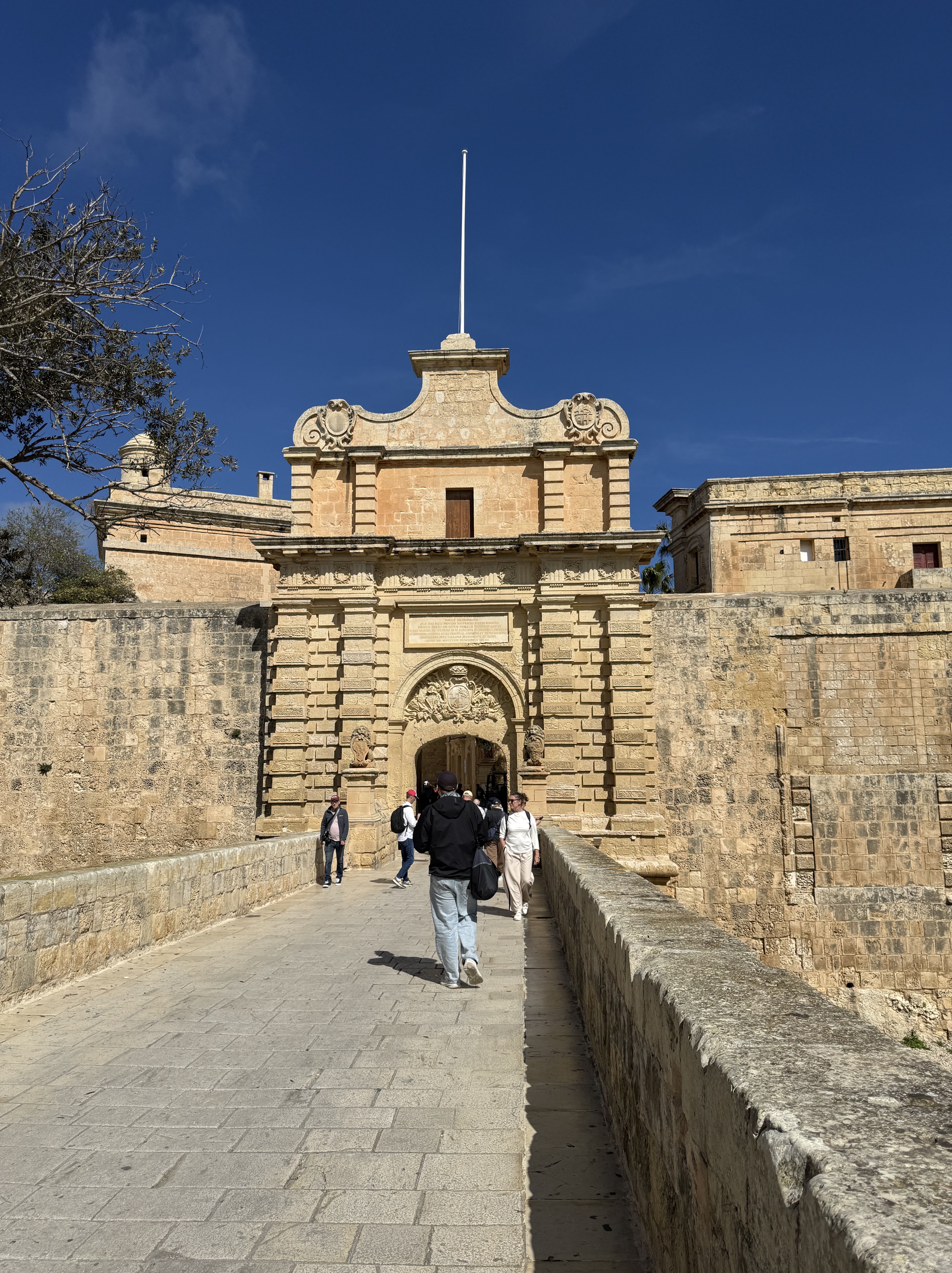
Mdina, The Walled City
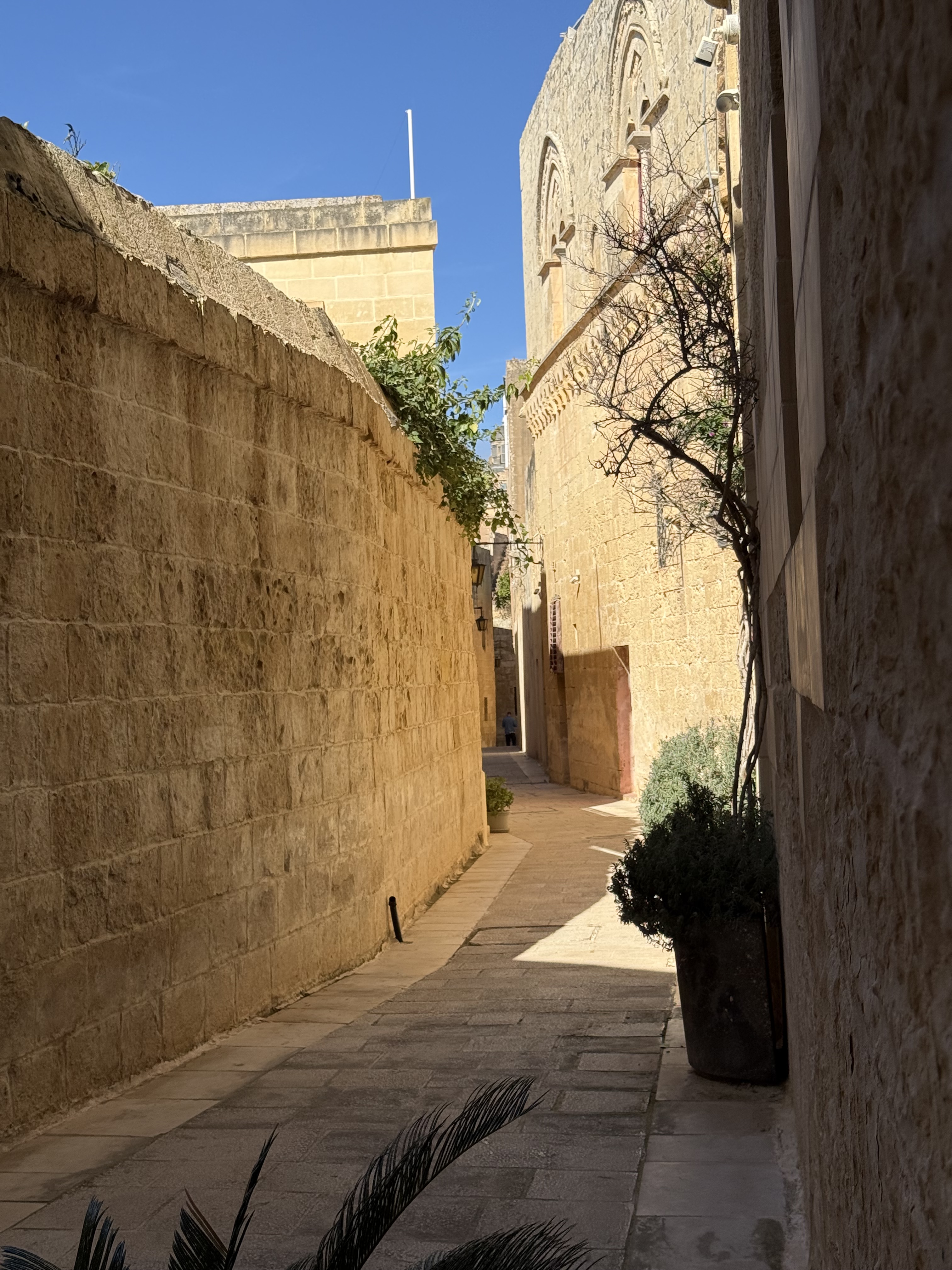
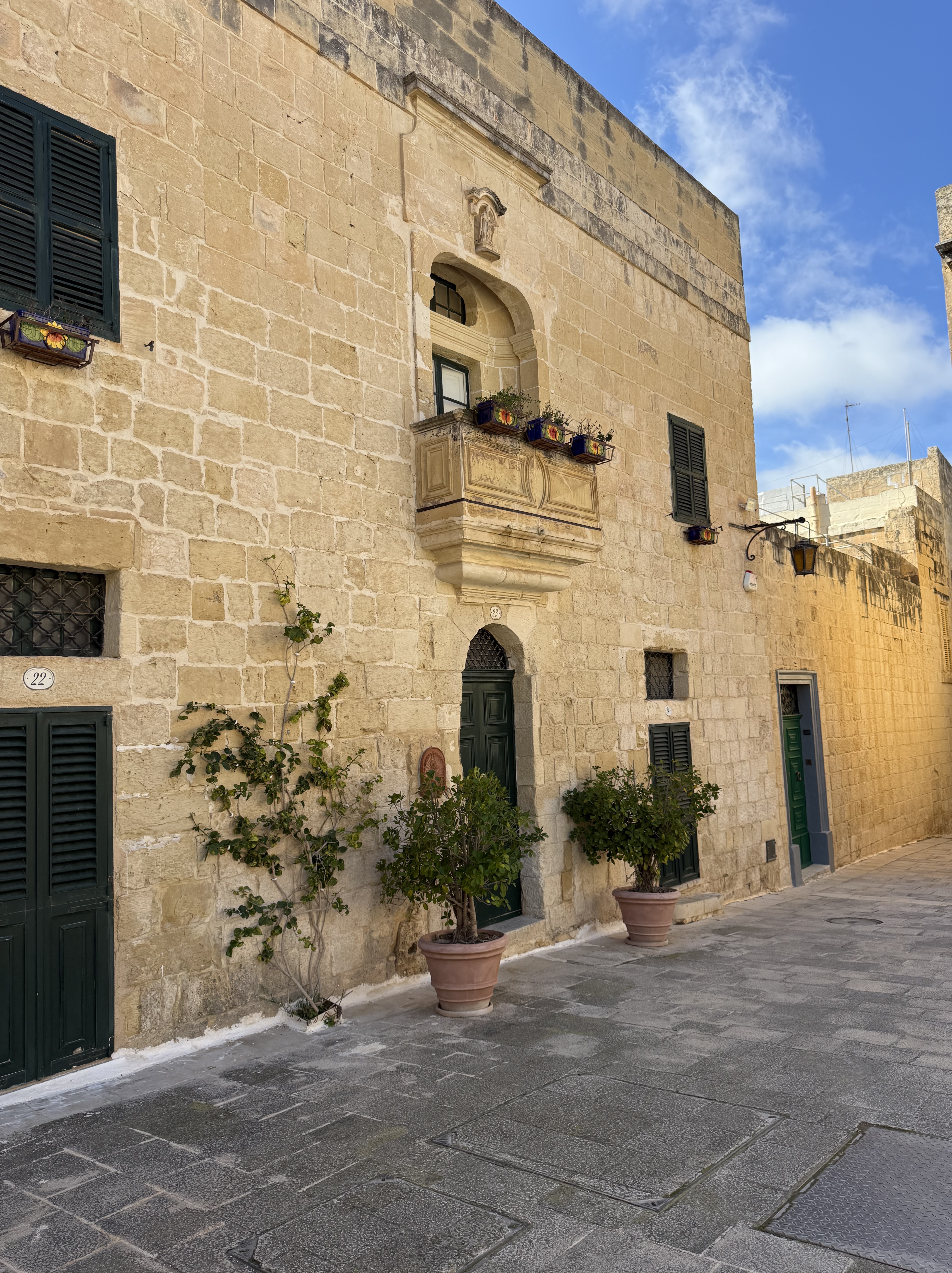
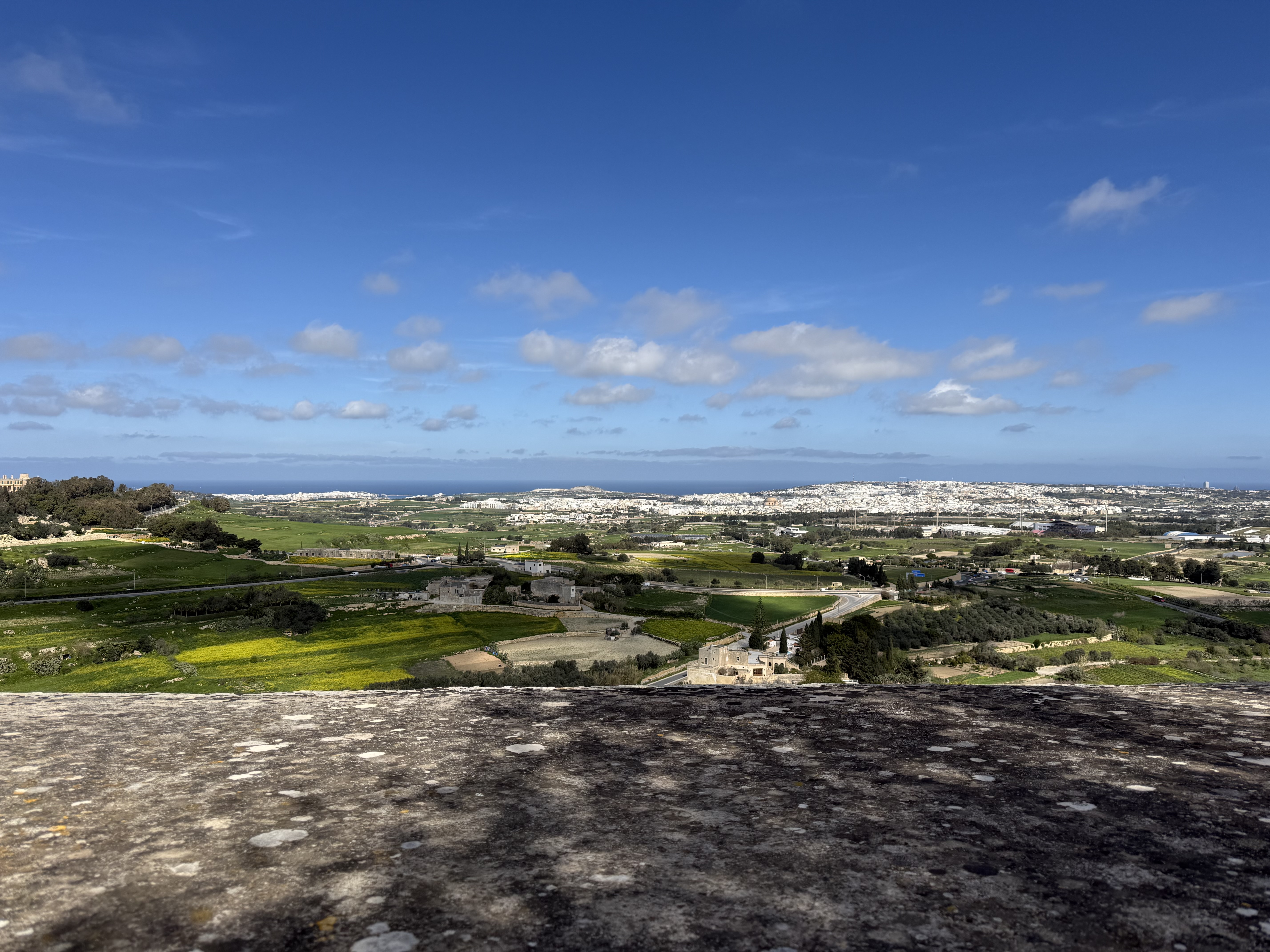
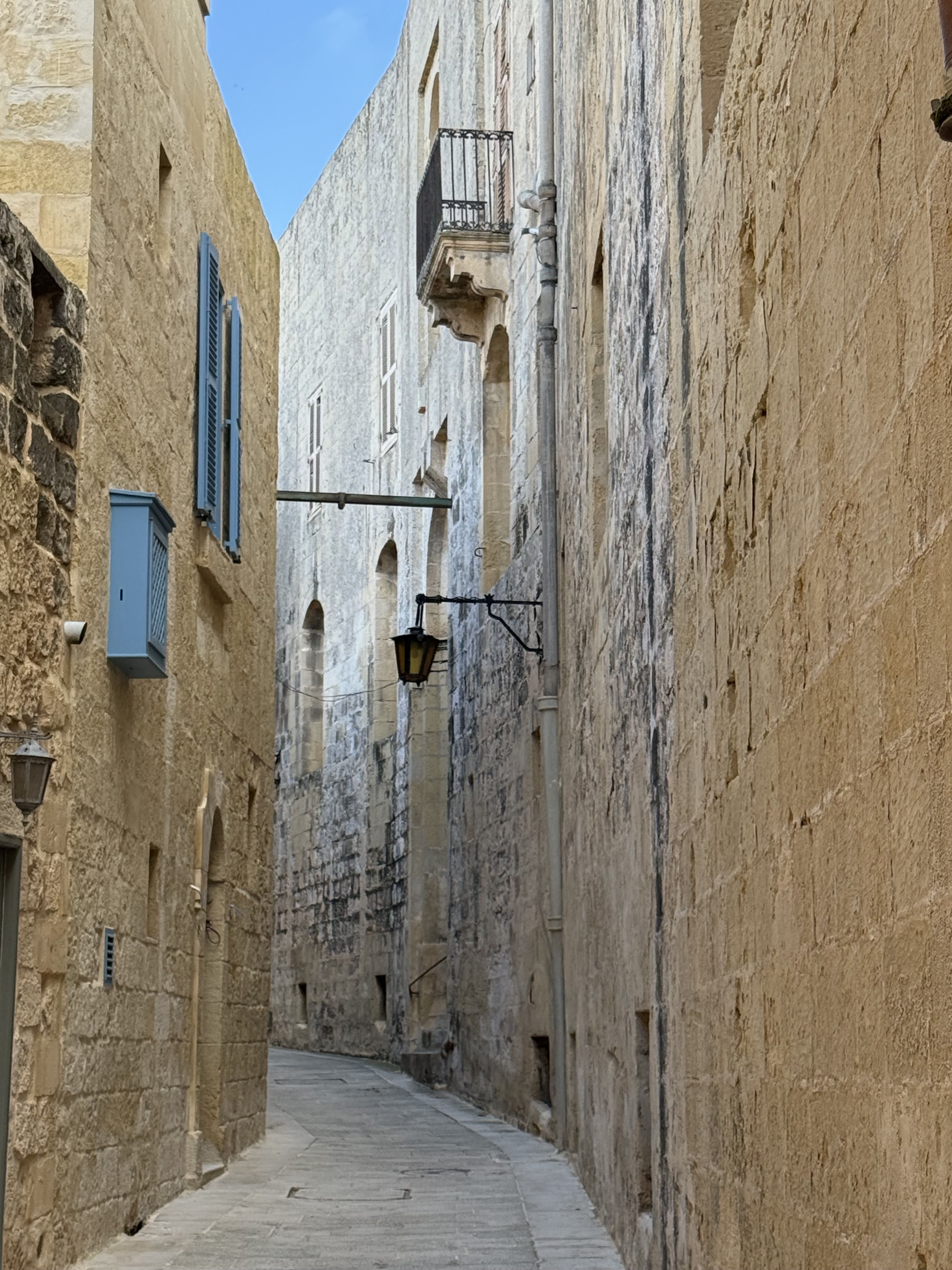
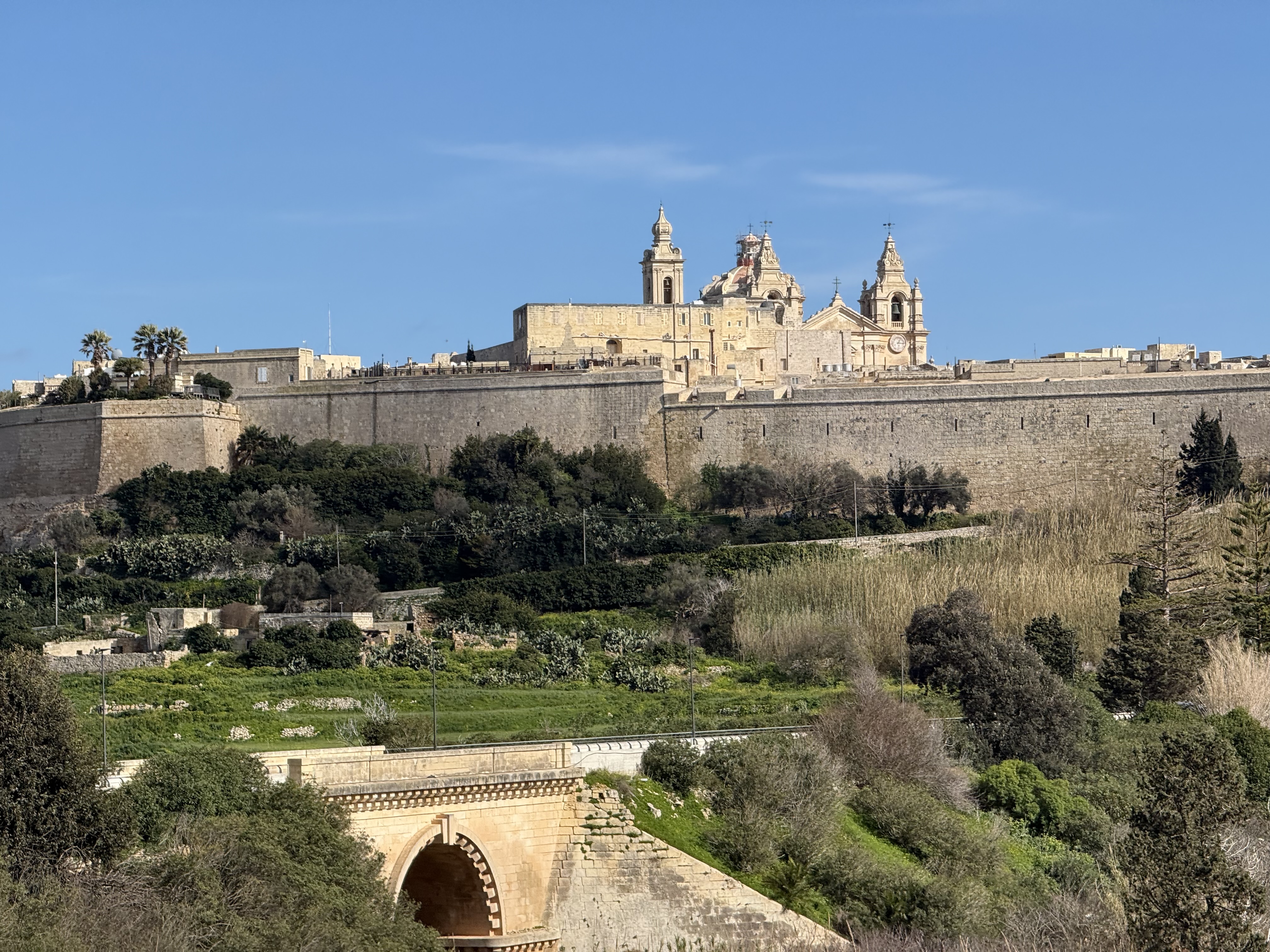
I admit to a weakness for ancient castles and walled cities. On my first trip to Europe I went to the Chateau de Chillon near Montreux, Switzerland. I touched the walls that had been there for a millennia and I’ve been hooked ever since. So of course I fell in love with Mdina. Located in the center of the island, it’s built on a hill that affords a view all the way to the sea. Because Malta was vulnerable to raiders and pirates, Mdina was a bastion of protection. Only when the soldiers of the Knights of Malta arrived in the 15th century did the island have the protection needed to build cities along the coast.
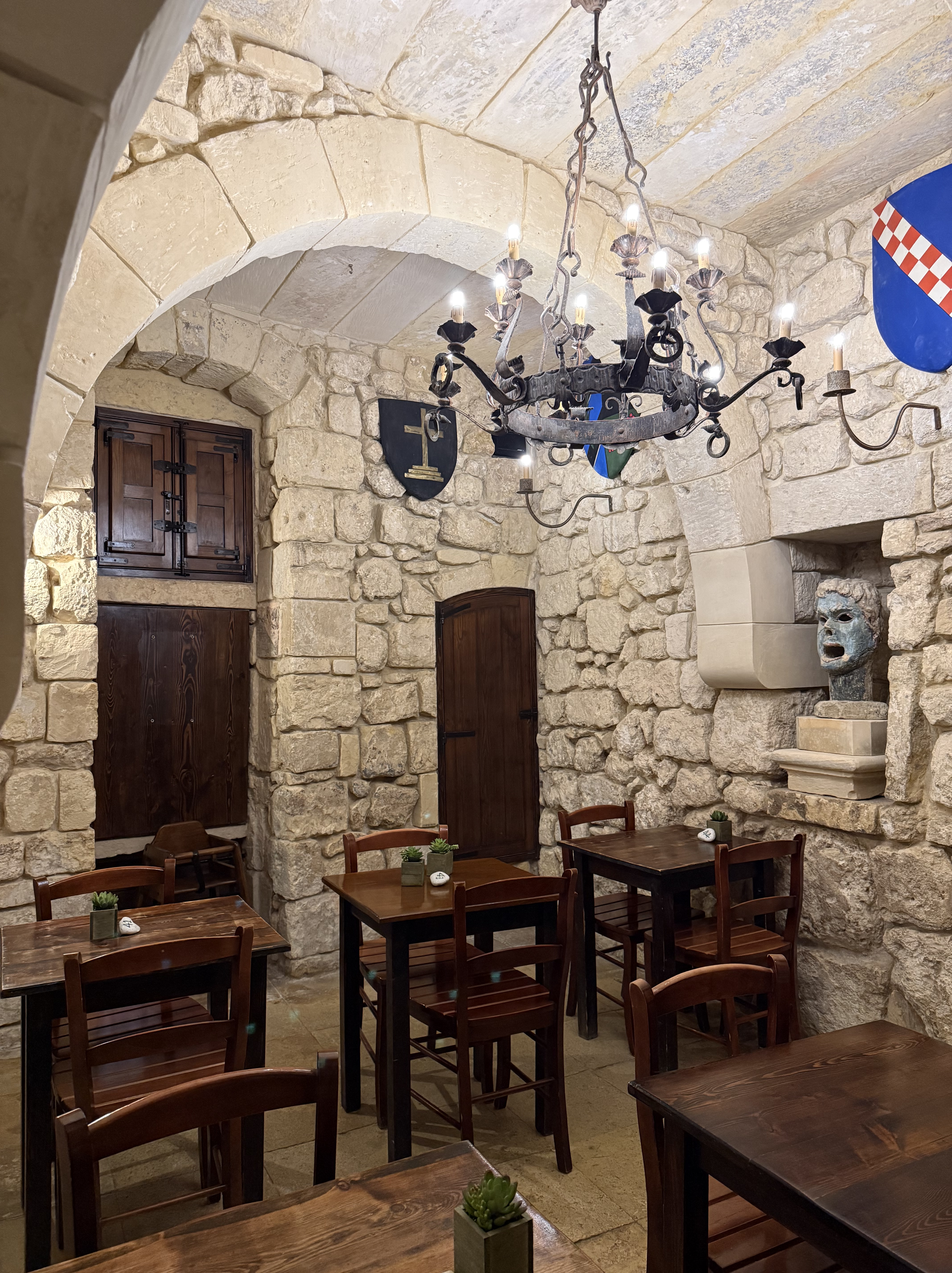
While the photos I took show a historic city visited by hundreds of tourists daily, it is still home to many Maltese. Walking through the maze of pathways within the city, you can feel both the history of hundreds of years, and also a vibrant city of today. There is a Michelin starred hotel within the walls, along with many restaurants and shops. I indulged in both.
Rabat
Rabat is next to Mdina, literally across the road. Home to a Roman villa (which was closed when I visited) and St. Paul’s Catacombs, it’s also a city that attracts many visitors.
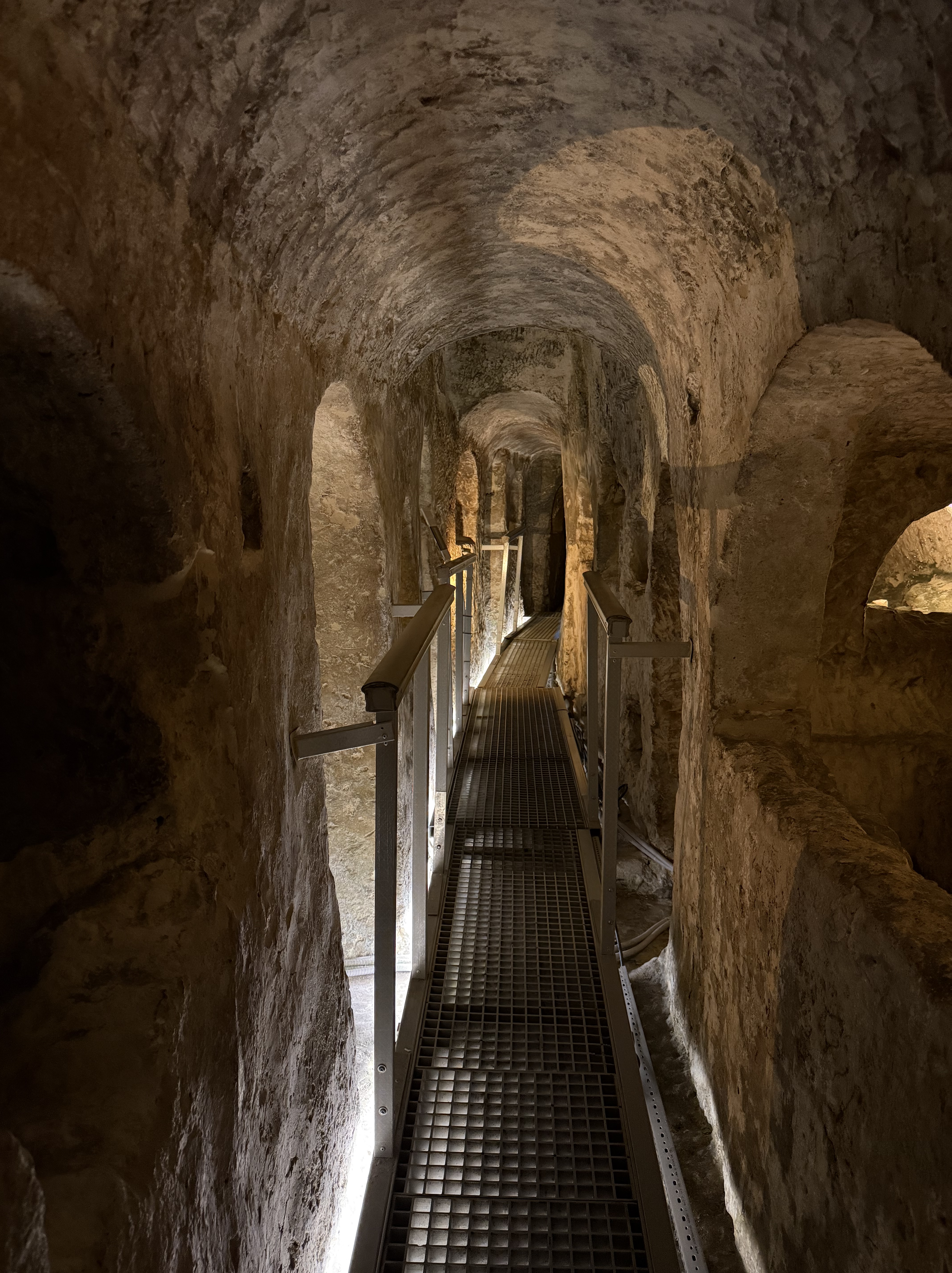
I did visit the catacombs, which incidentally are named St. Paul’s not because he was there, but because there is a church on the site named after the saint. There are lots of places that carry the name of St. Paul, including the town I stayed in. The catacombs have been used over many centuries, and are a labyrinth of tunnels and caves underground. Because they are so extensive, there are panic buttons placed throughout in case you lose your bearings. I limited both my time and my distance into the caves-I have to admit it creeped me out to see all those pathways going off in many directions. I’m not claustrophobic, but it still felt a bit tight to me.
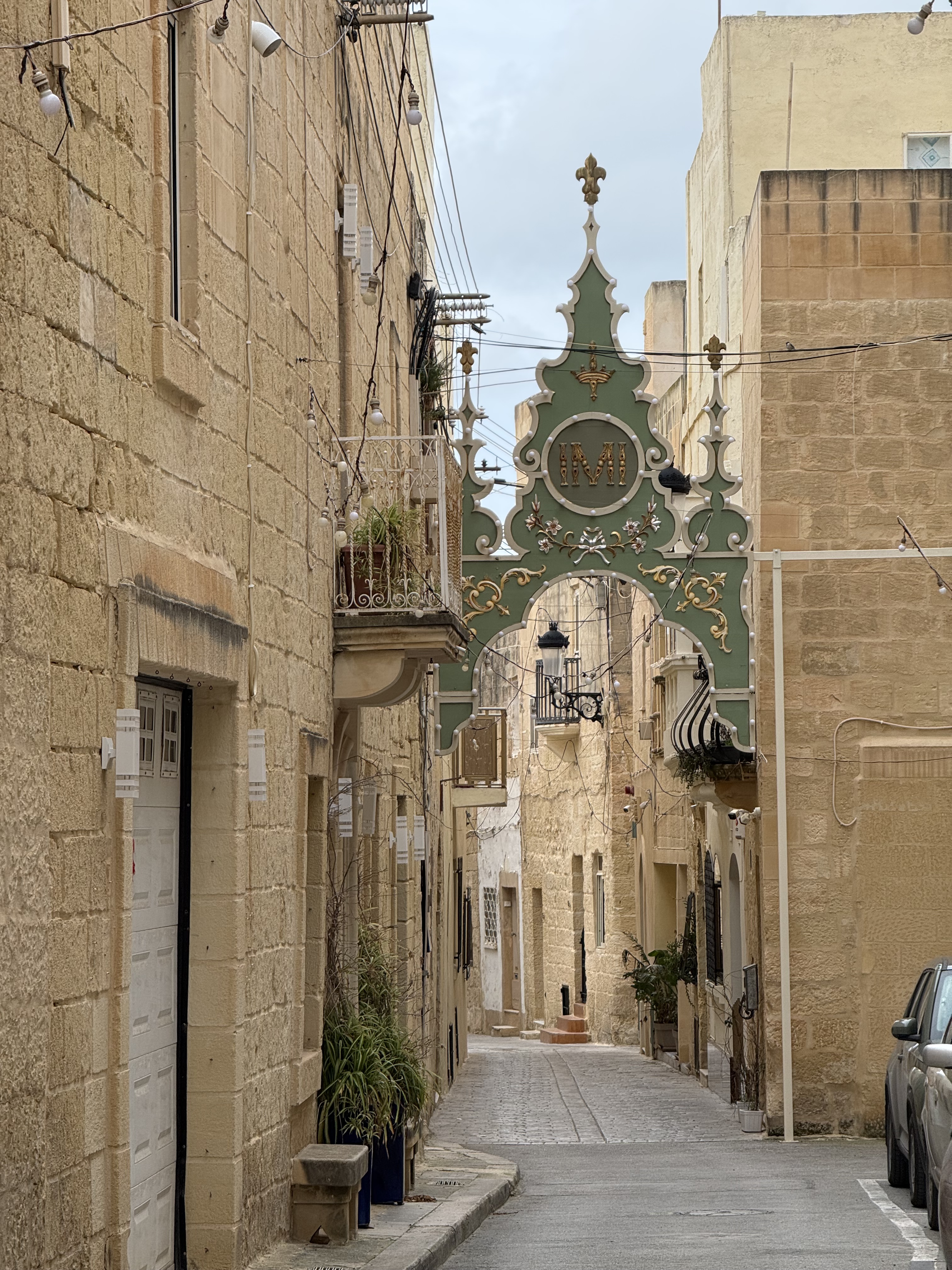
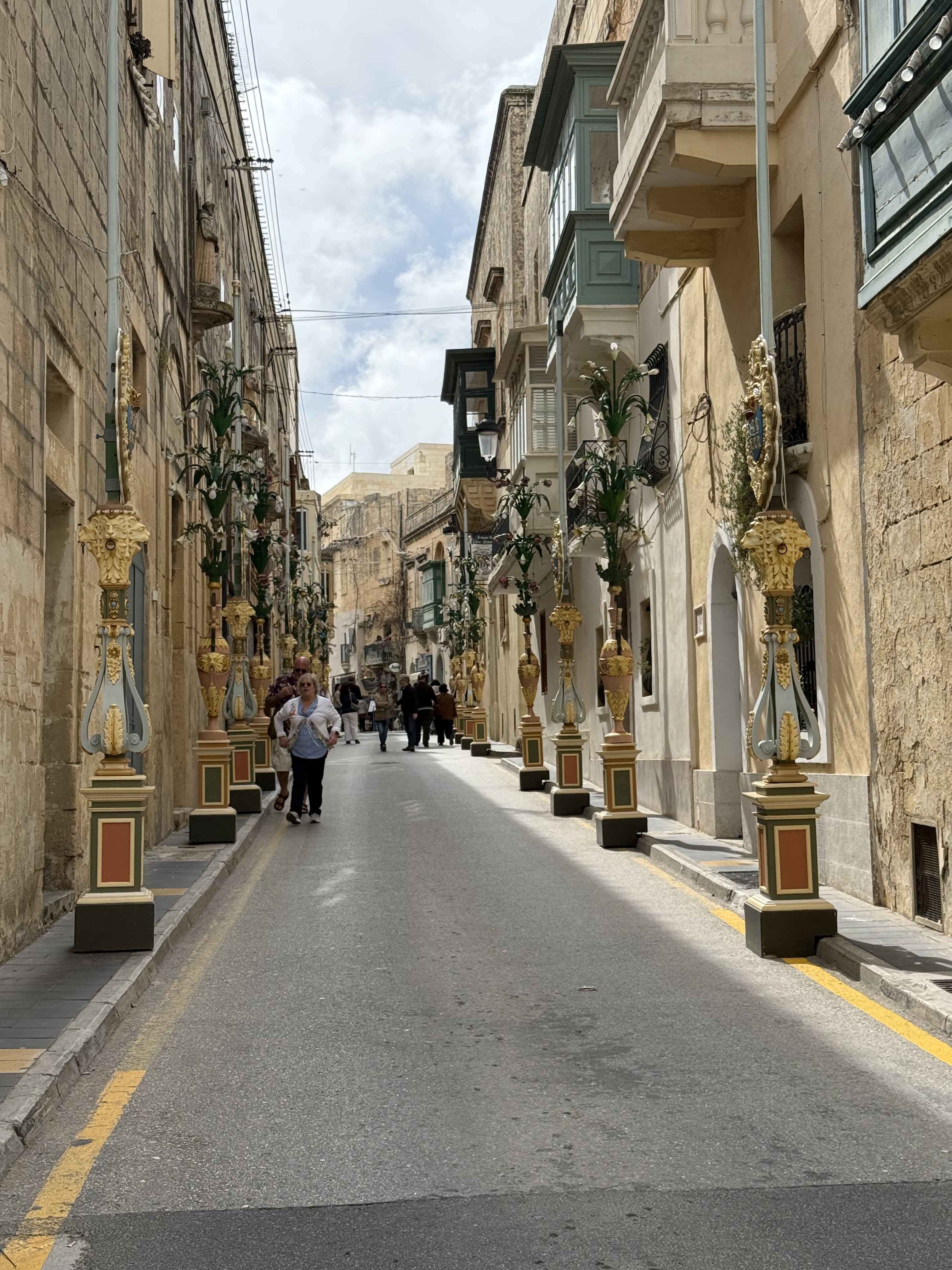
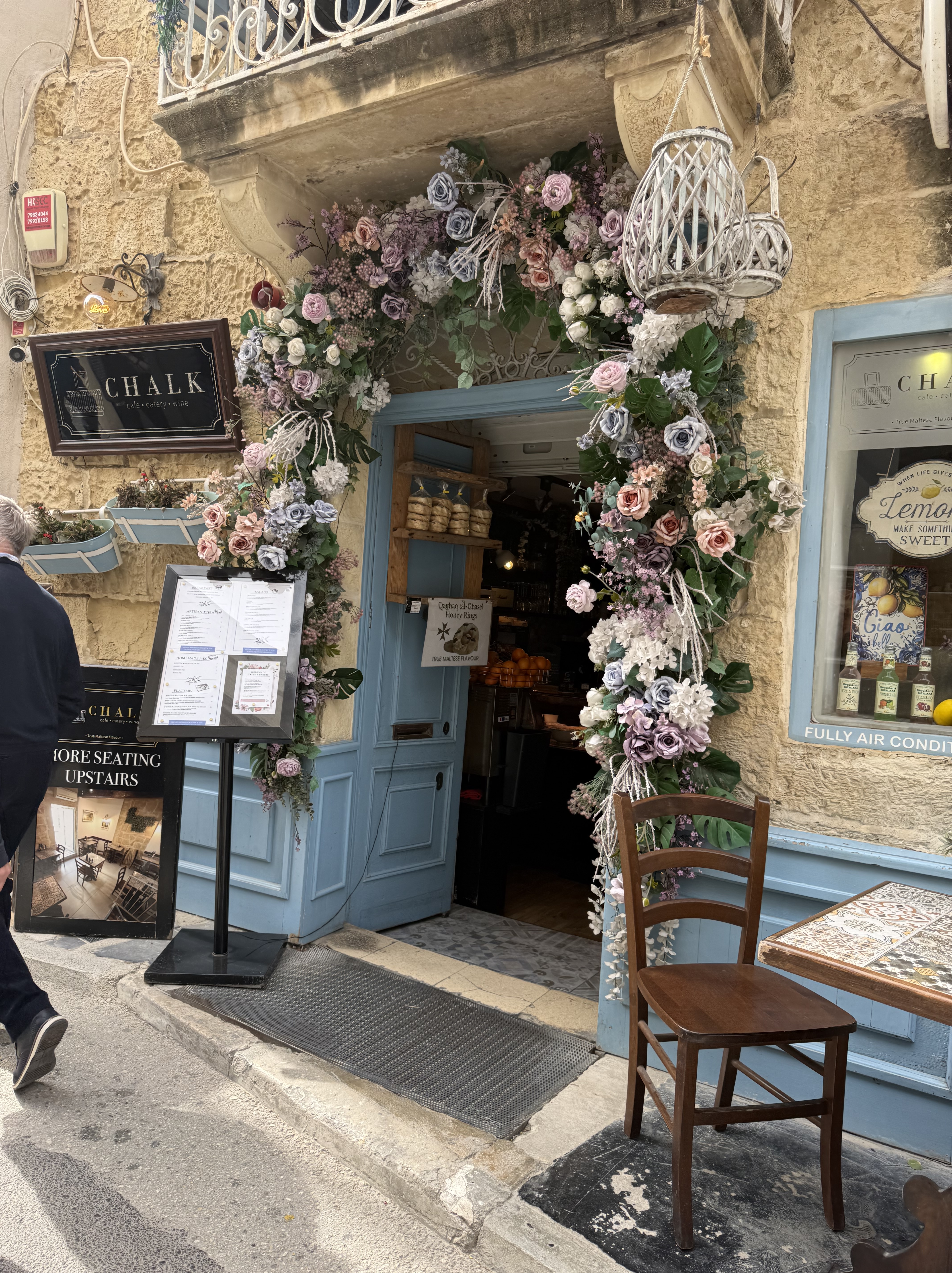
As with all of Malta, the streets were decorated for the Lenten season. Malta is about 70% Catholic (down from over 90% a couple of decades ago) and Lent and Easter celebrations take center stage.
Marsaxlokk and the Southern Coast
The fishing village of Marsaxlokk has an open market every Sunday. Originally a fish market, it now includes produce and other foods along with a craft market. There are several restaurants along the waterfront, all very busy on a Sunday afternoon but serving very enticing lunches.
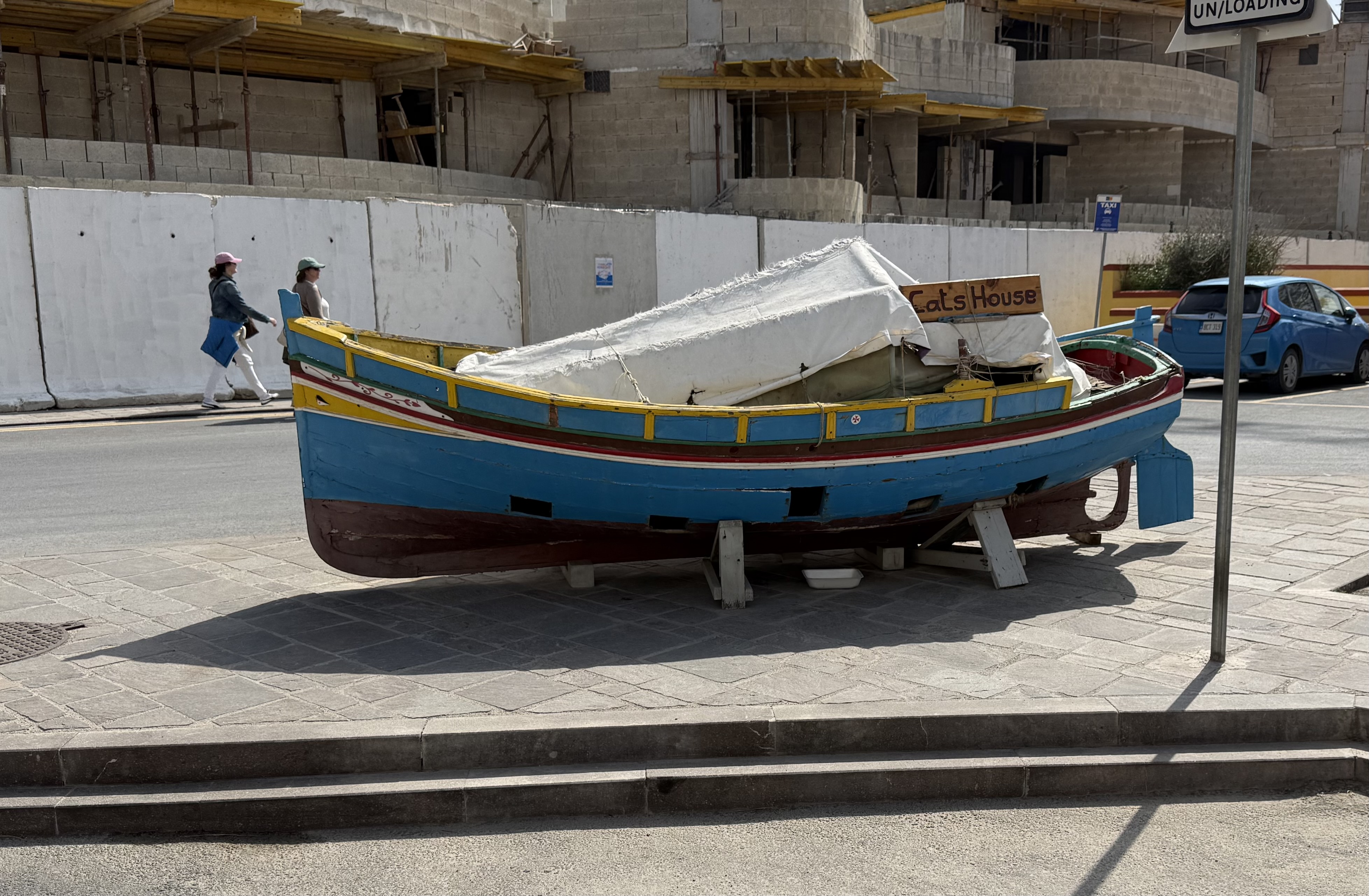
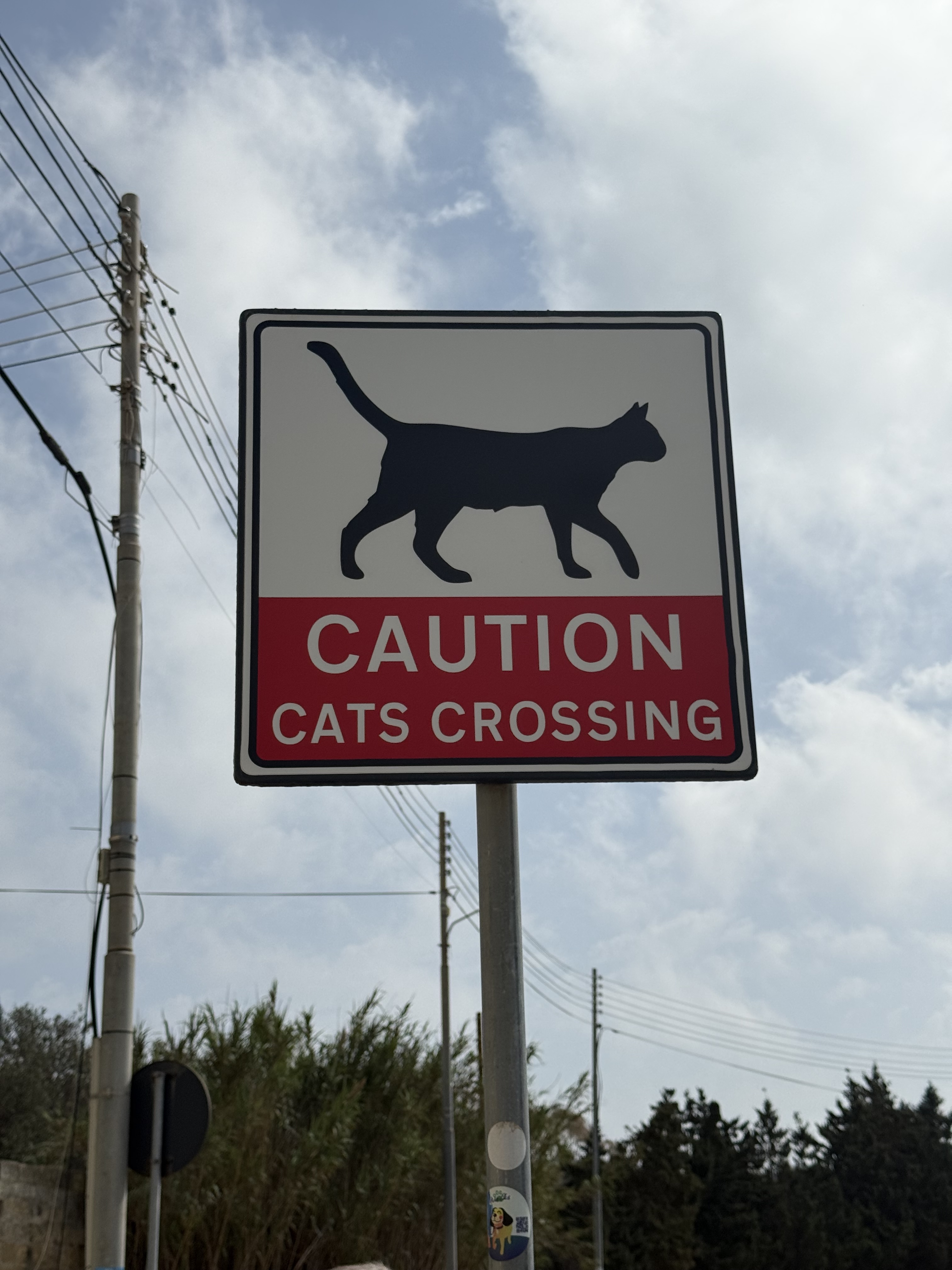
While the market and the lunch was great, I was most interested in the fact that the village has provided a home for cats by the sea. Look closely and you’ll see that the boat has a sign designating it as a kitty abode.
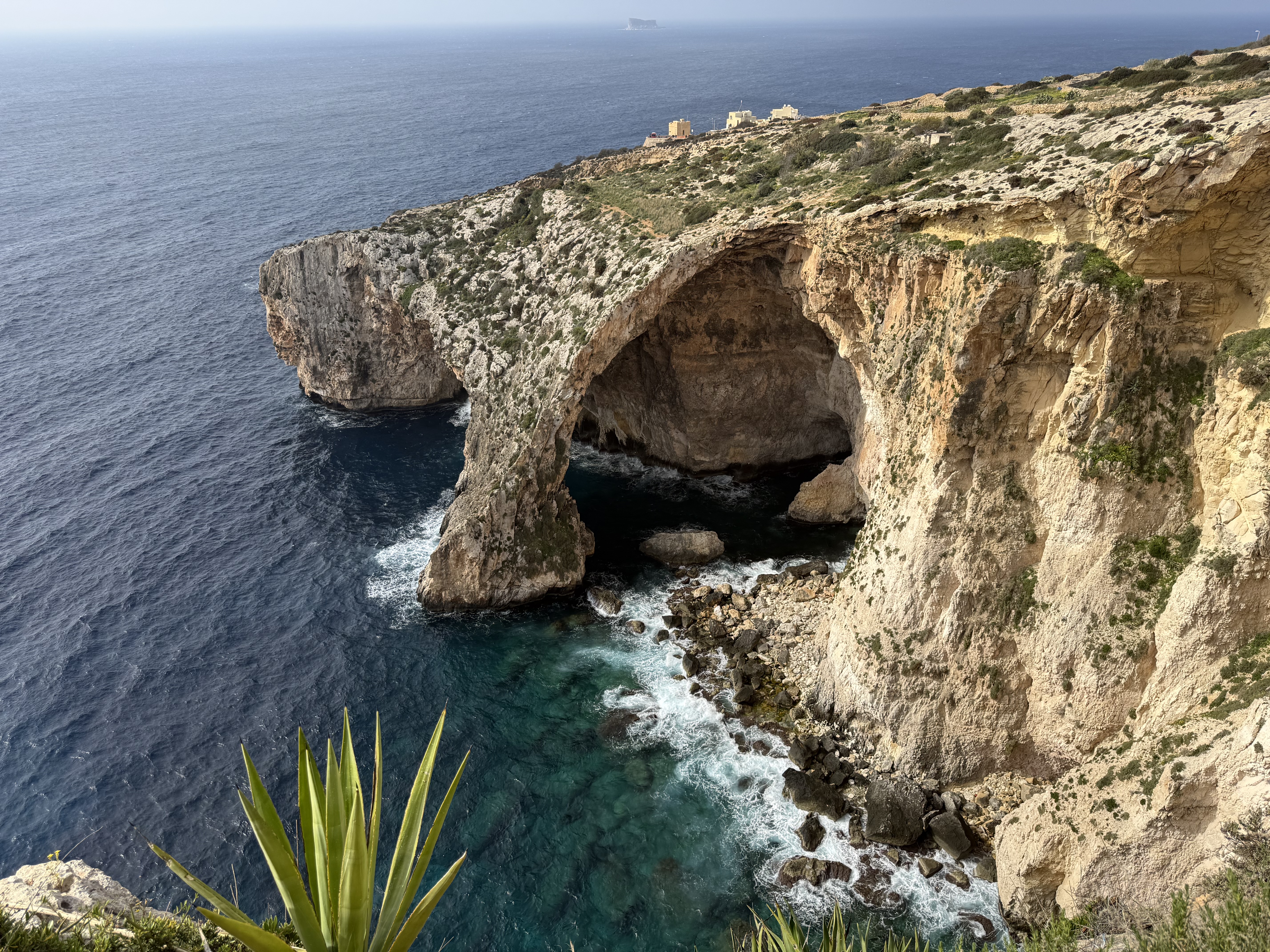
Also along the Southern coast is the Blue Grotto; there is more than one in Malta, created by the erosion of the limestone cliffs and the sun playing on the blue waters. You can take a boat ride that will take you inside the grotto, but the sea was too rough most of the time. If that’s something you dream of doing, I’d suggest going in the summer when the weather is more cooperative.
The Three Cities
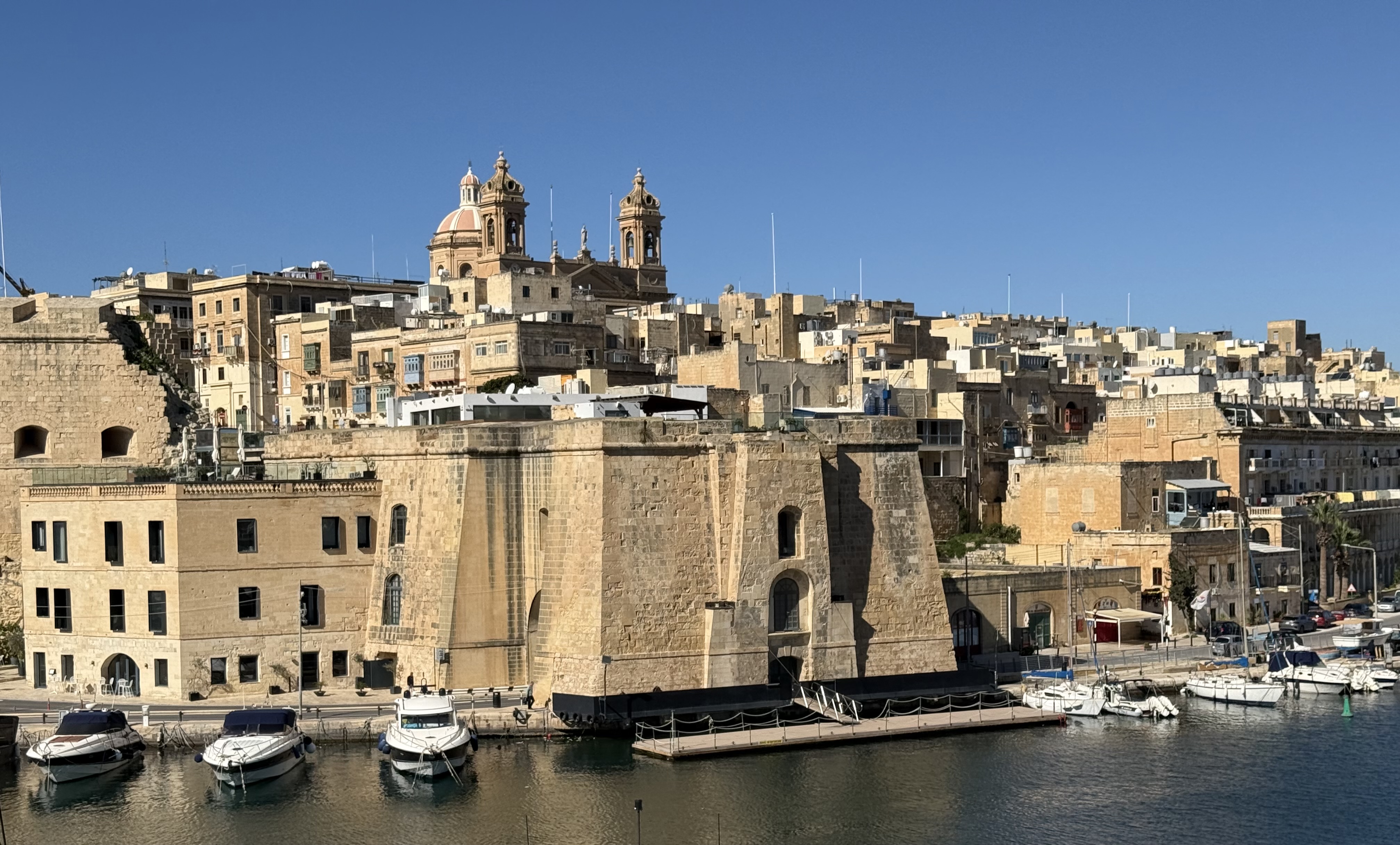
Across the bay from Valletta, the capital of Malta, are the Three Cities: Vittoriosa (Birgu), Senglea (Isla), and Cospicua (Bormla). All three have two names, as they were renamed by the Knights Of Malta at various times. Locals will refer to them by either name, so it can get confusing. All three are fortified cities that played a big part in defending Malta during the Great Siege of 1565. The historical entrance to Vittoriosa consisted of THREE gateways, all the better to keep the bad guys out.
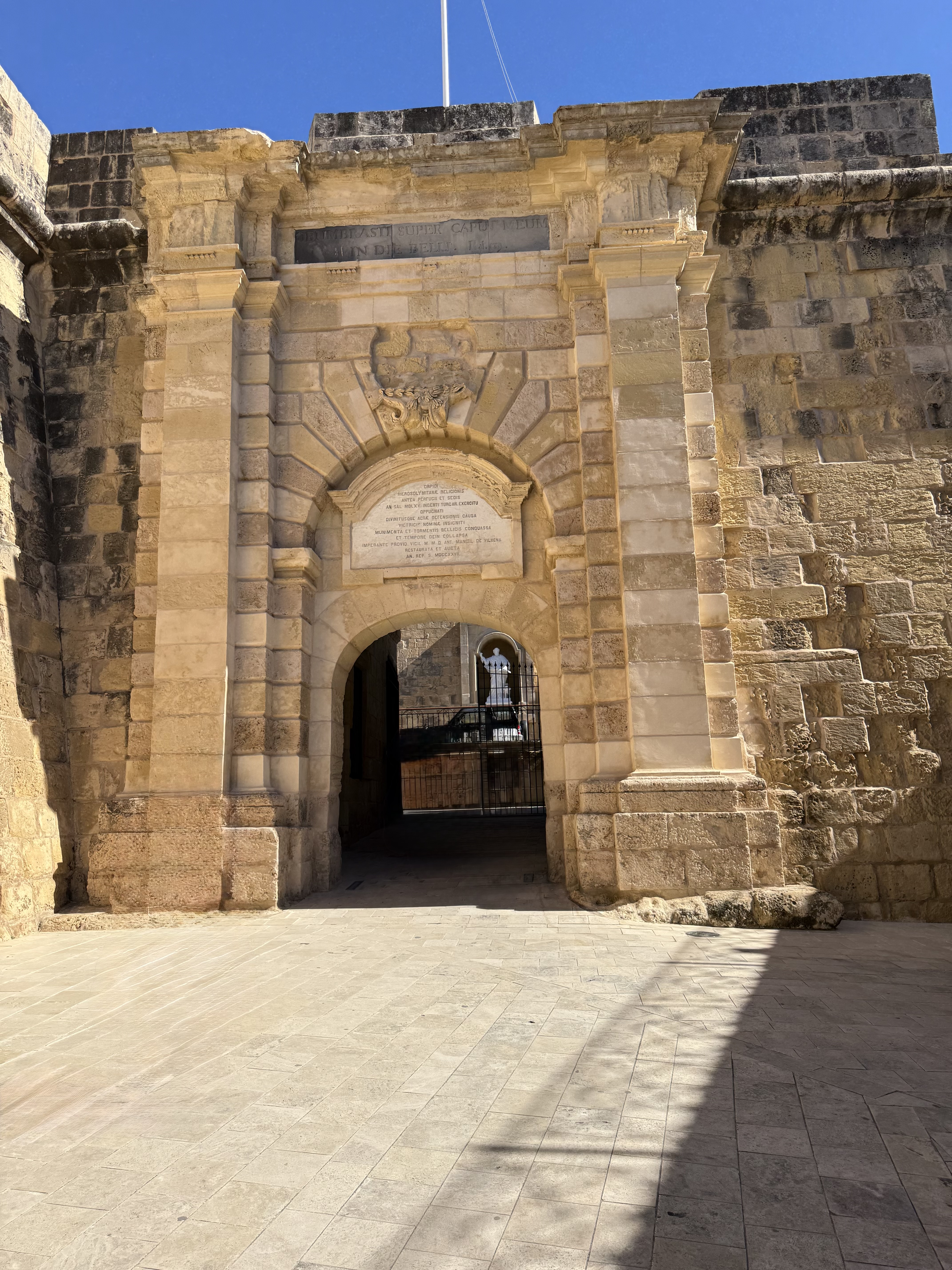
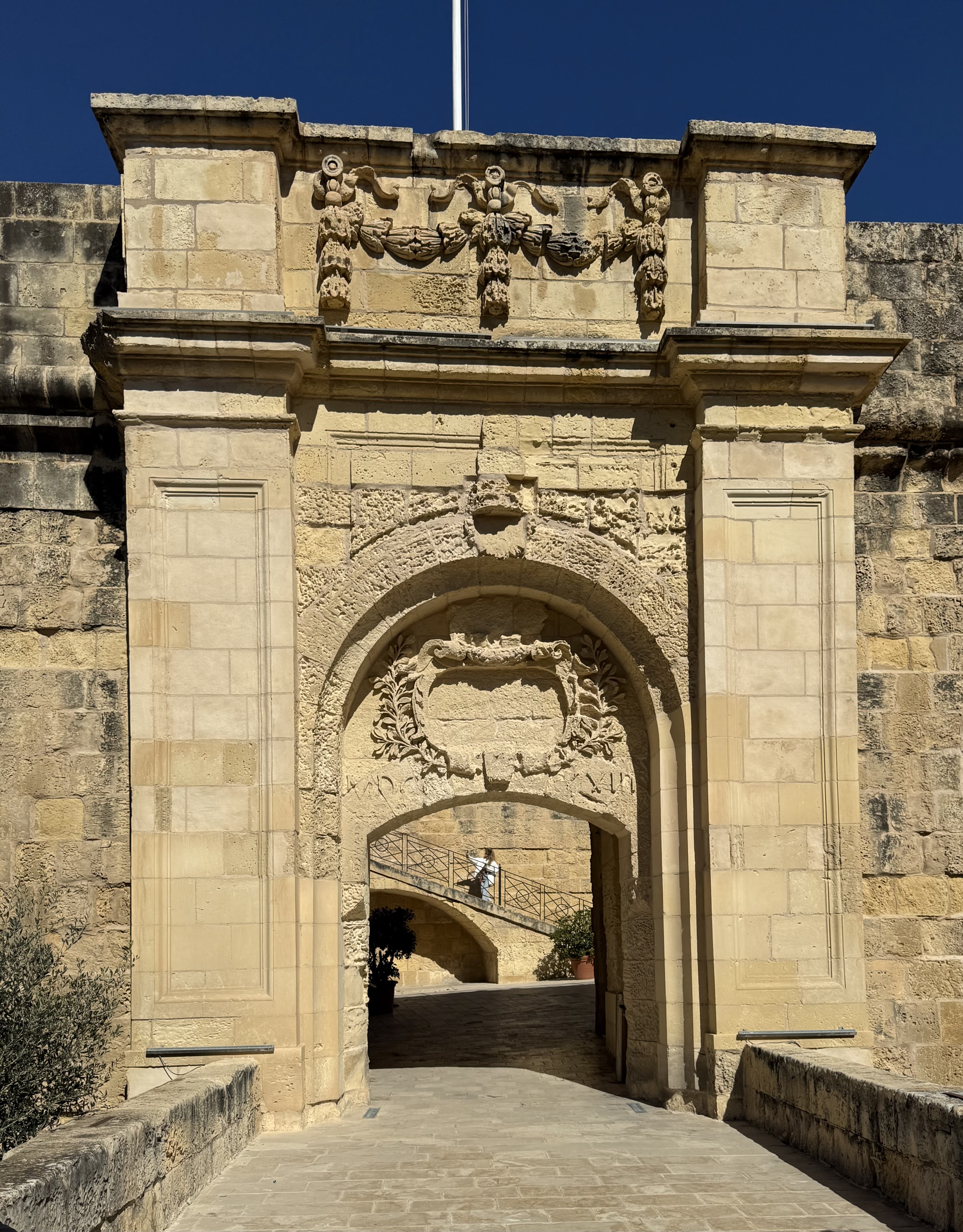
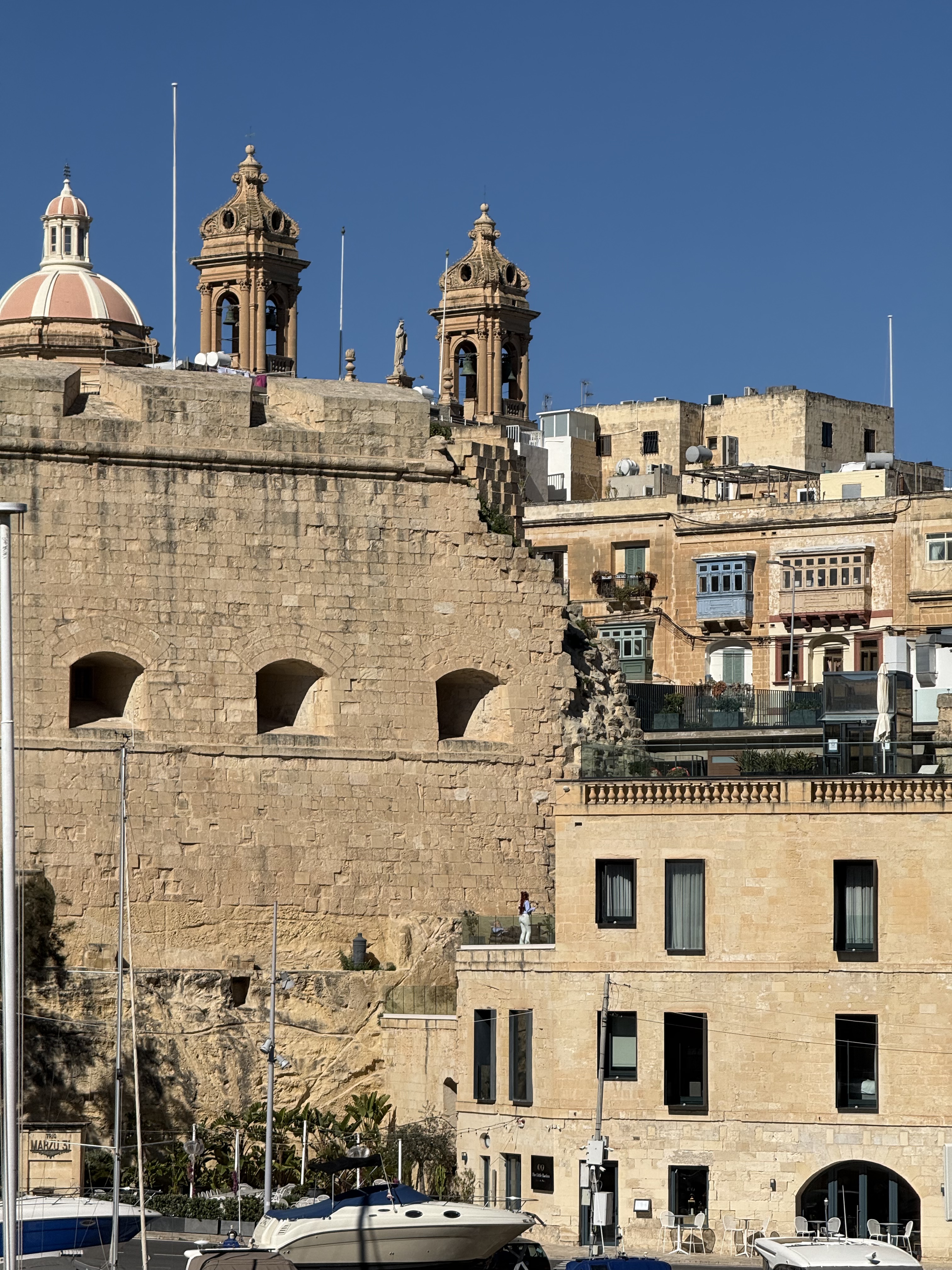
Two of the gateways are above; just imagine the Turks trying to scale those thick walls. The third photo shows some of the damage to the city walls from another siege. During WWII Malta was bombed heavily and all three cities were badly damaged. In fact, more bombs were dropped on Malta than on London.
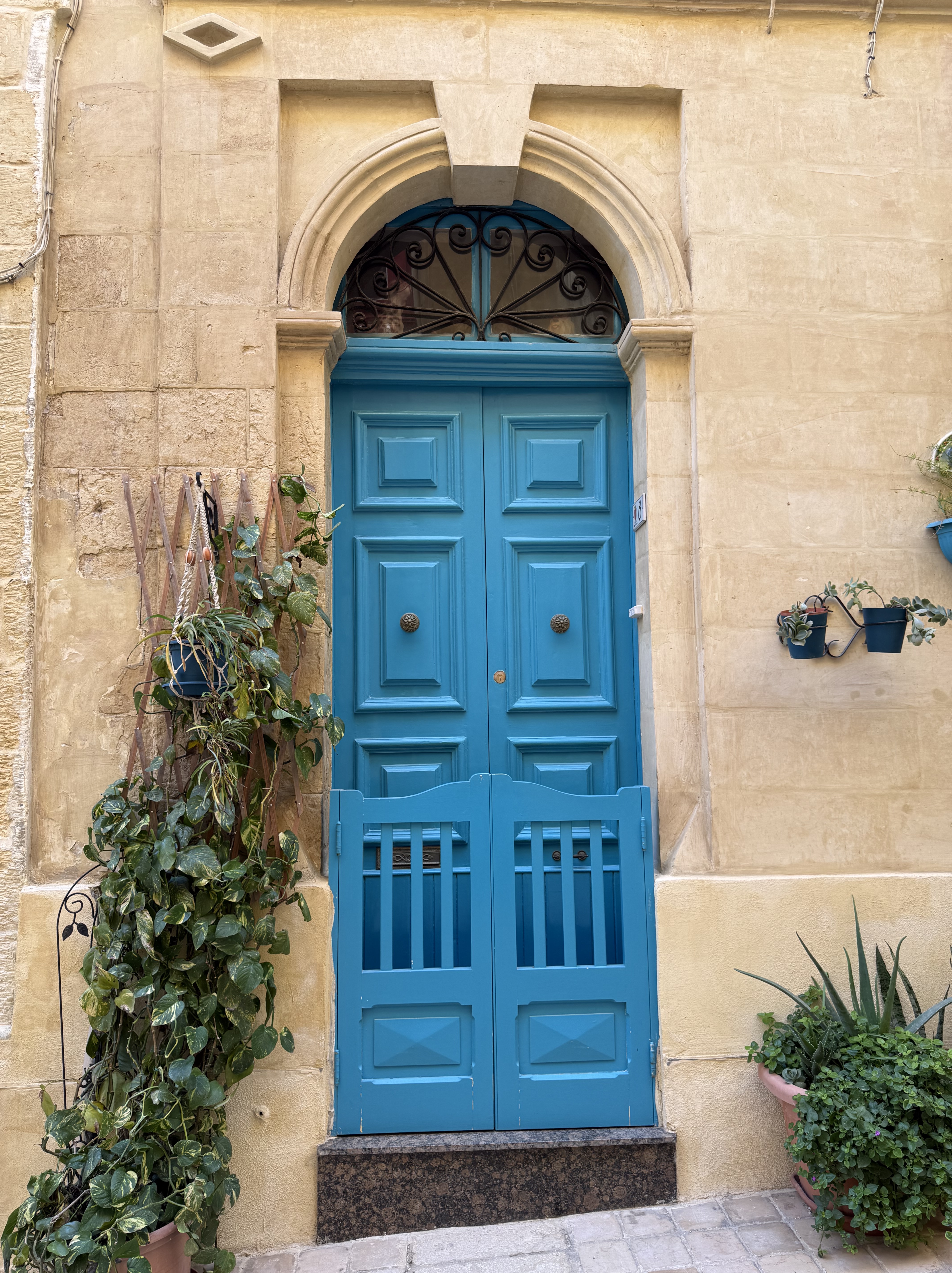
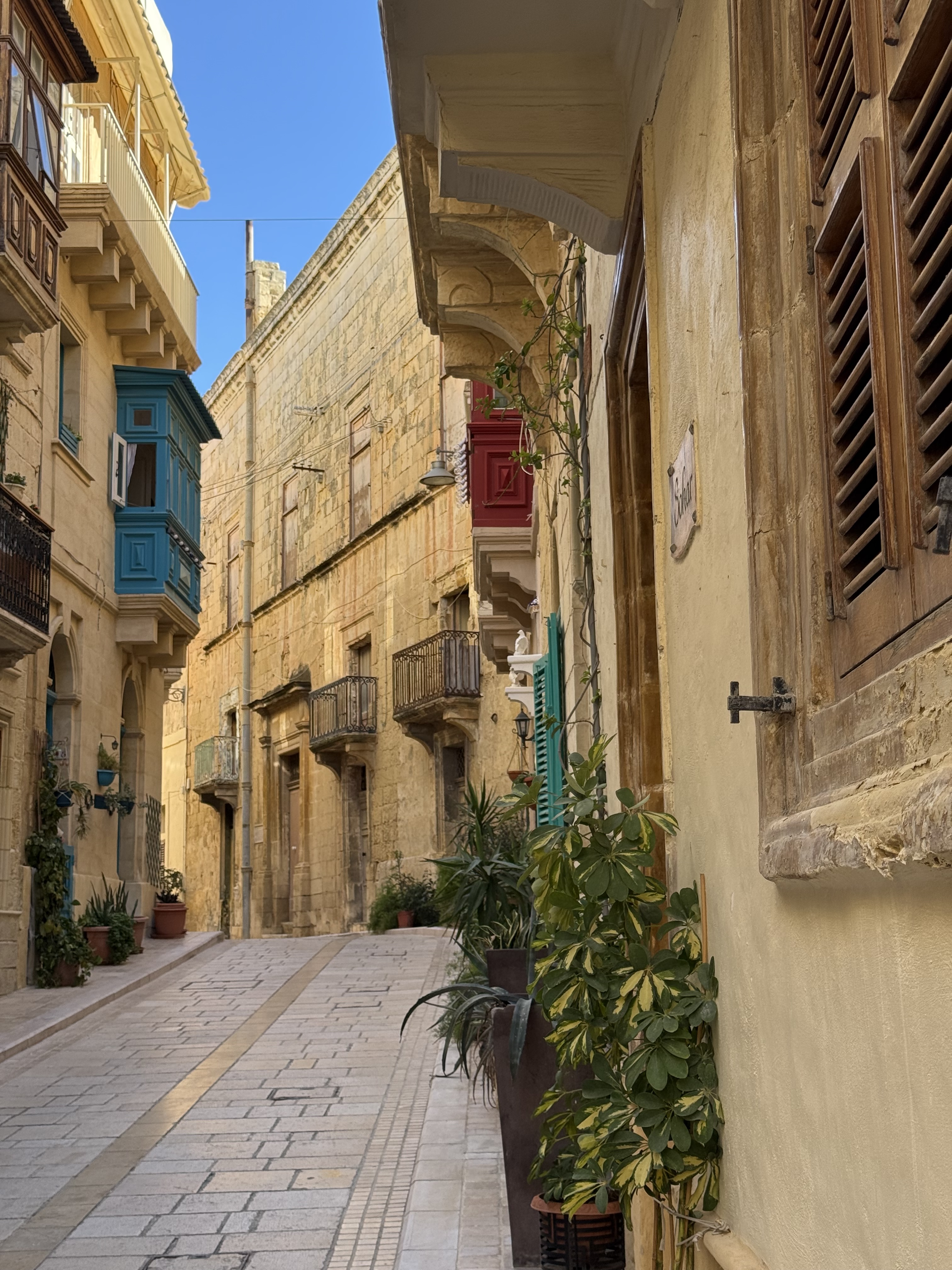
As our guide led us through the streets and alleys of Vittoriosa, he explained that while this area of Malta is a highly desirable place to live, most younger Maltese are moving away to the interior of the island. Why? Well, look at the street above and think about trying to get your groceries from your car to your home. I did see a few garages, but I can only imagine that the drivers had to teleport their cars through the streets and into the garage.
We saw the home of the Grand Knight of Malta, and also the home of the Inquisitor. I took a moment to place my hand on the wall of the Inquisitor’s Palace, thinking of the fear and pain that took place within.
The Mosta Dome
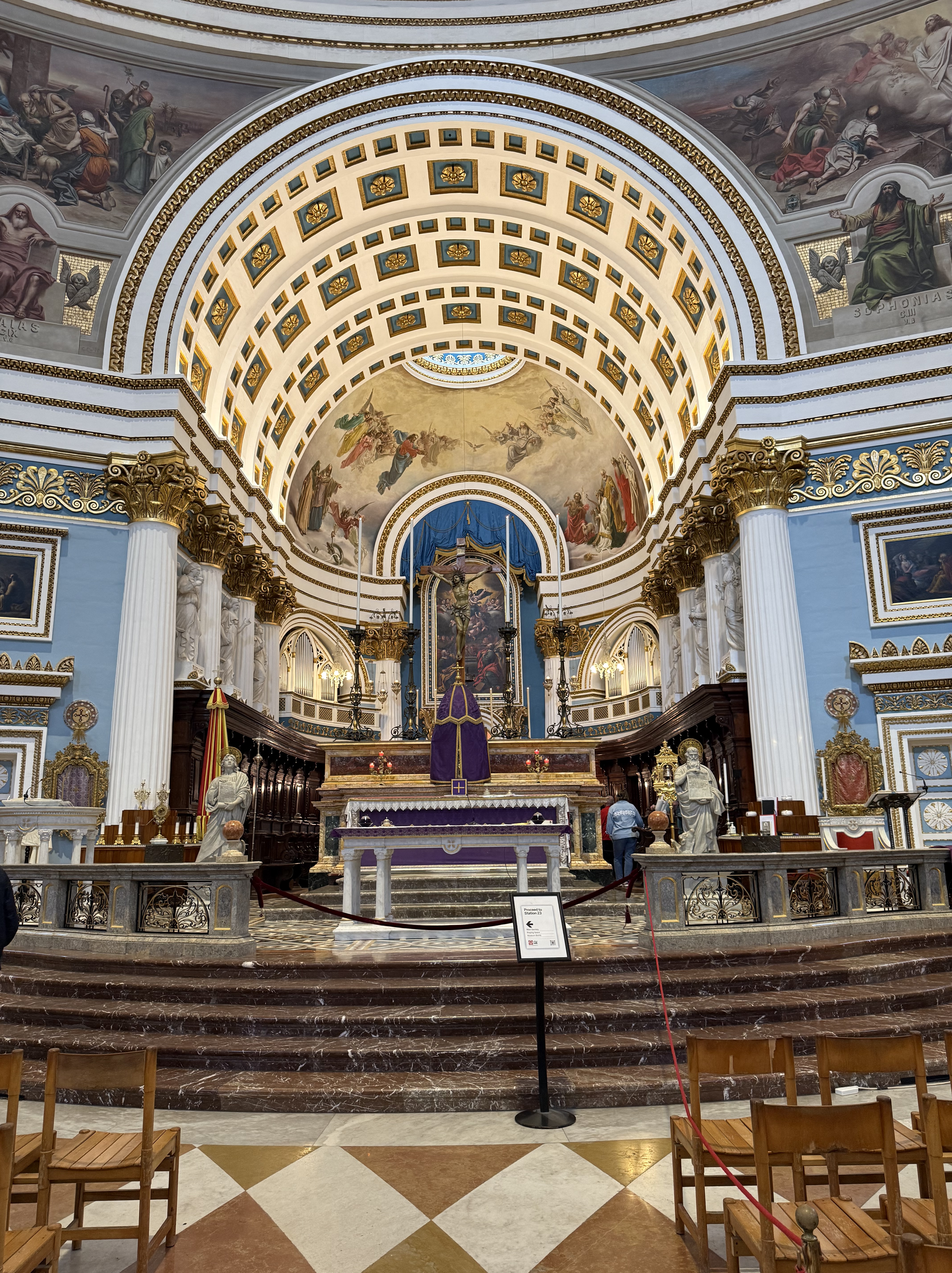
Mosta is home to a church referred to as the Mosta Dome, the largest church in Malta and the the third largest unsupported dome in the world. The design was based on the Pantheon in Rome, with an opening in the top of the dome.
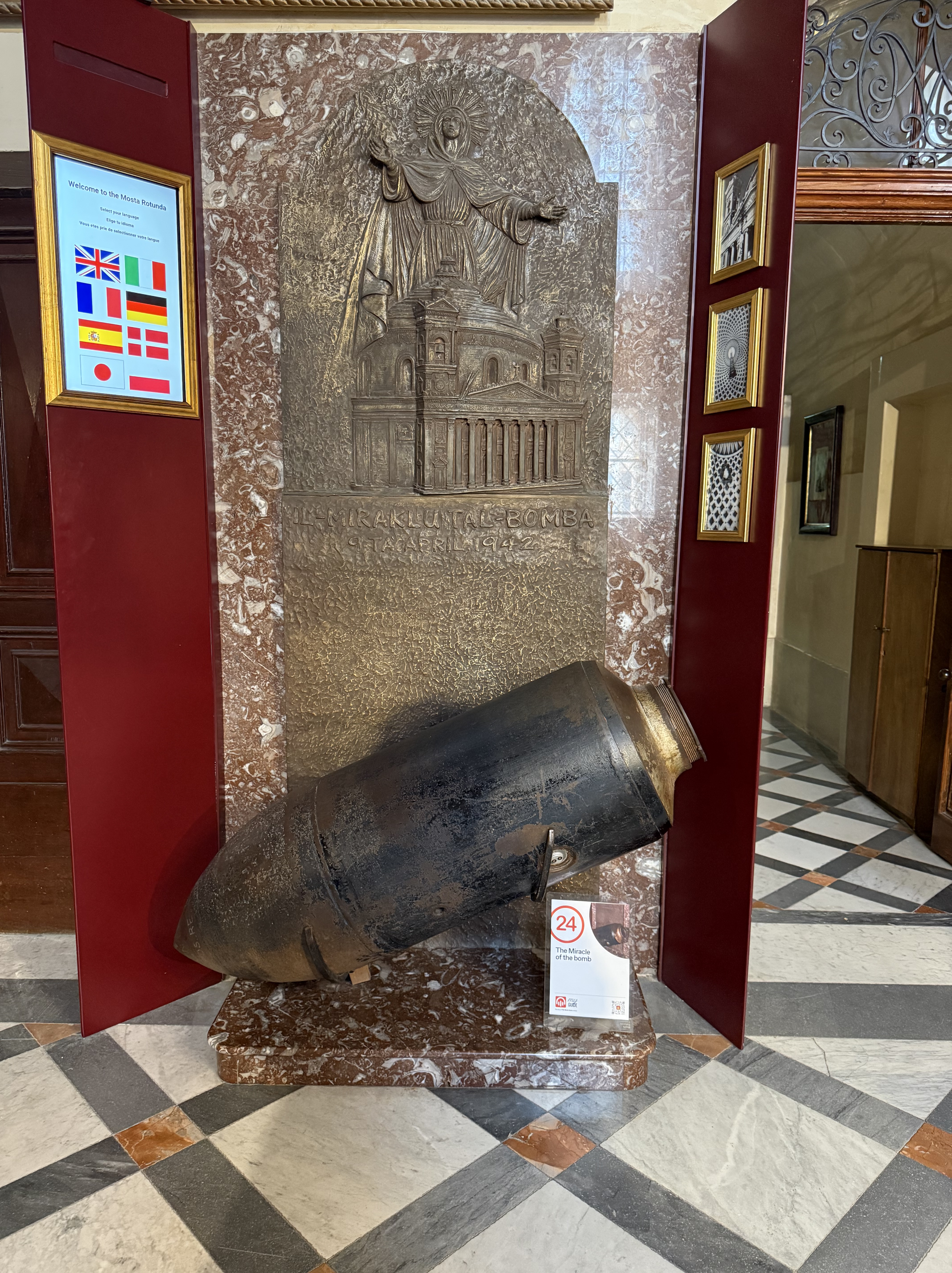
Most Maltese honor the church as the site of a miracle in WWII. Mass was being held during a bombing raid, and many parishioners stayed in the church rather than heading to the air raid shelter below. A bomb crashed through the dome and dropped near the altar, but didn’t explode.
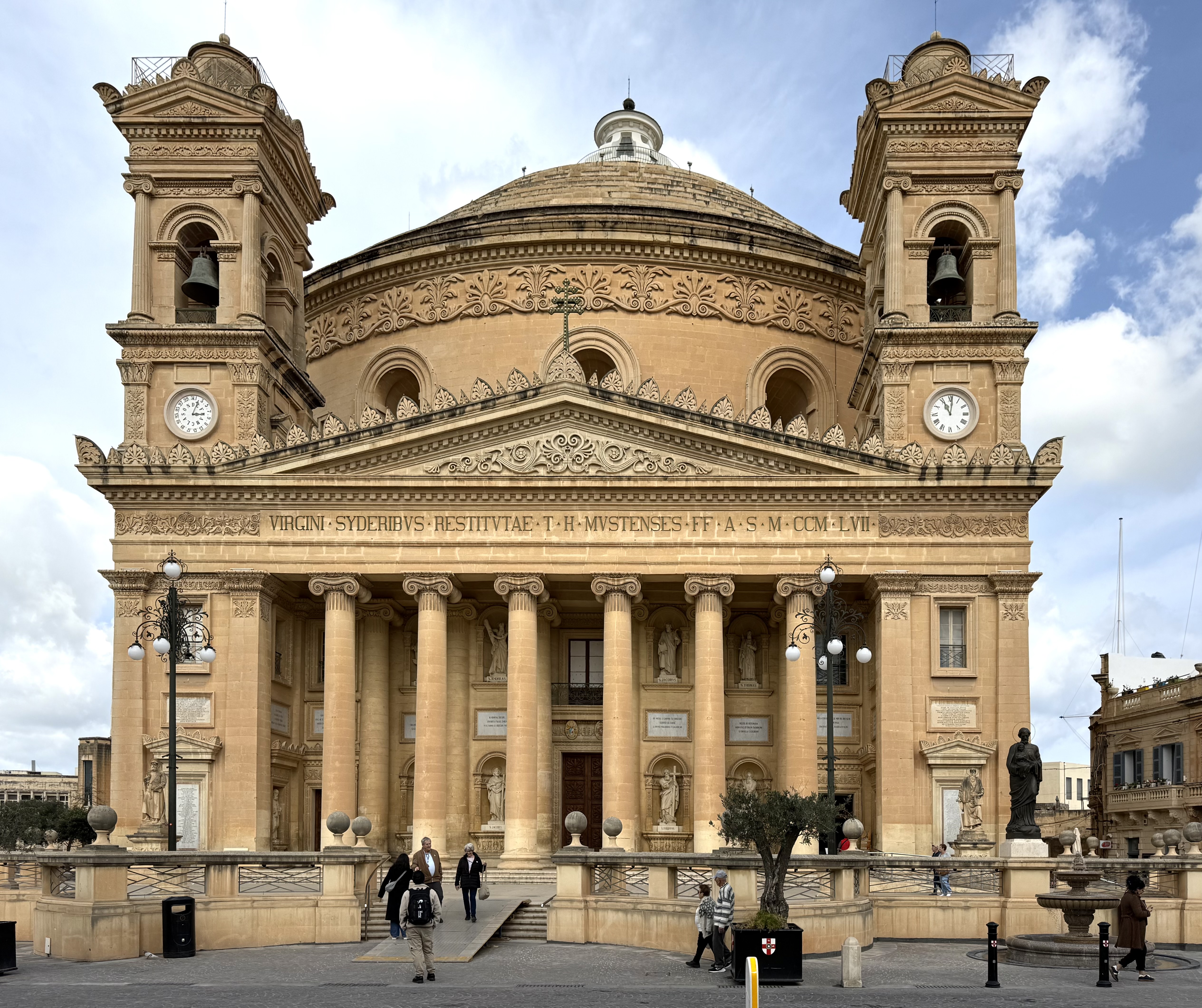
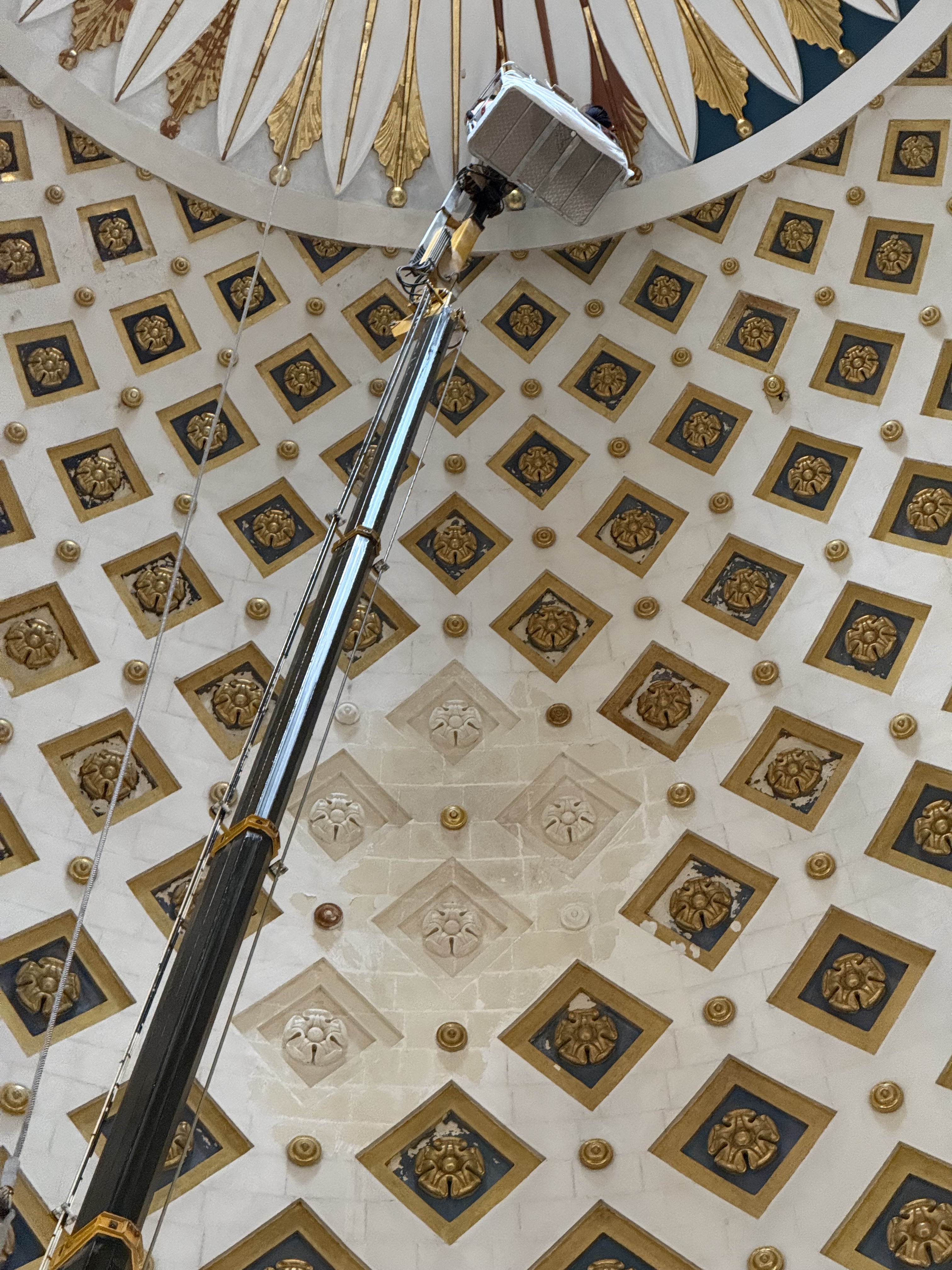
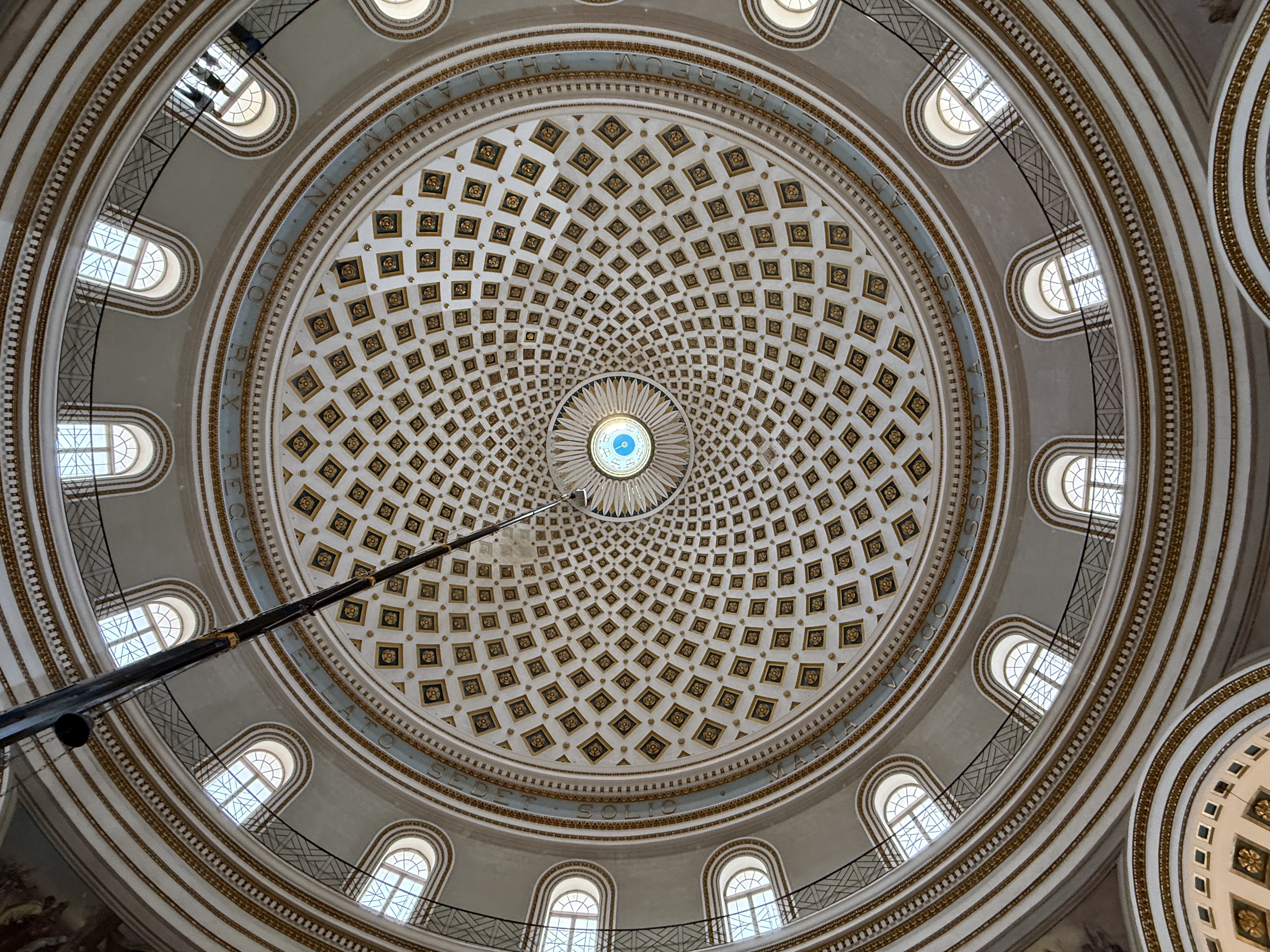
The church was being refurbished when I visited. Watching the worker painting the ceiling, I couldn’t help but think how much easier that platform would have made Michaelangelo’s job in the Sistine Chapel.
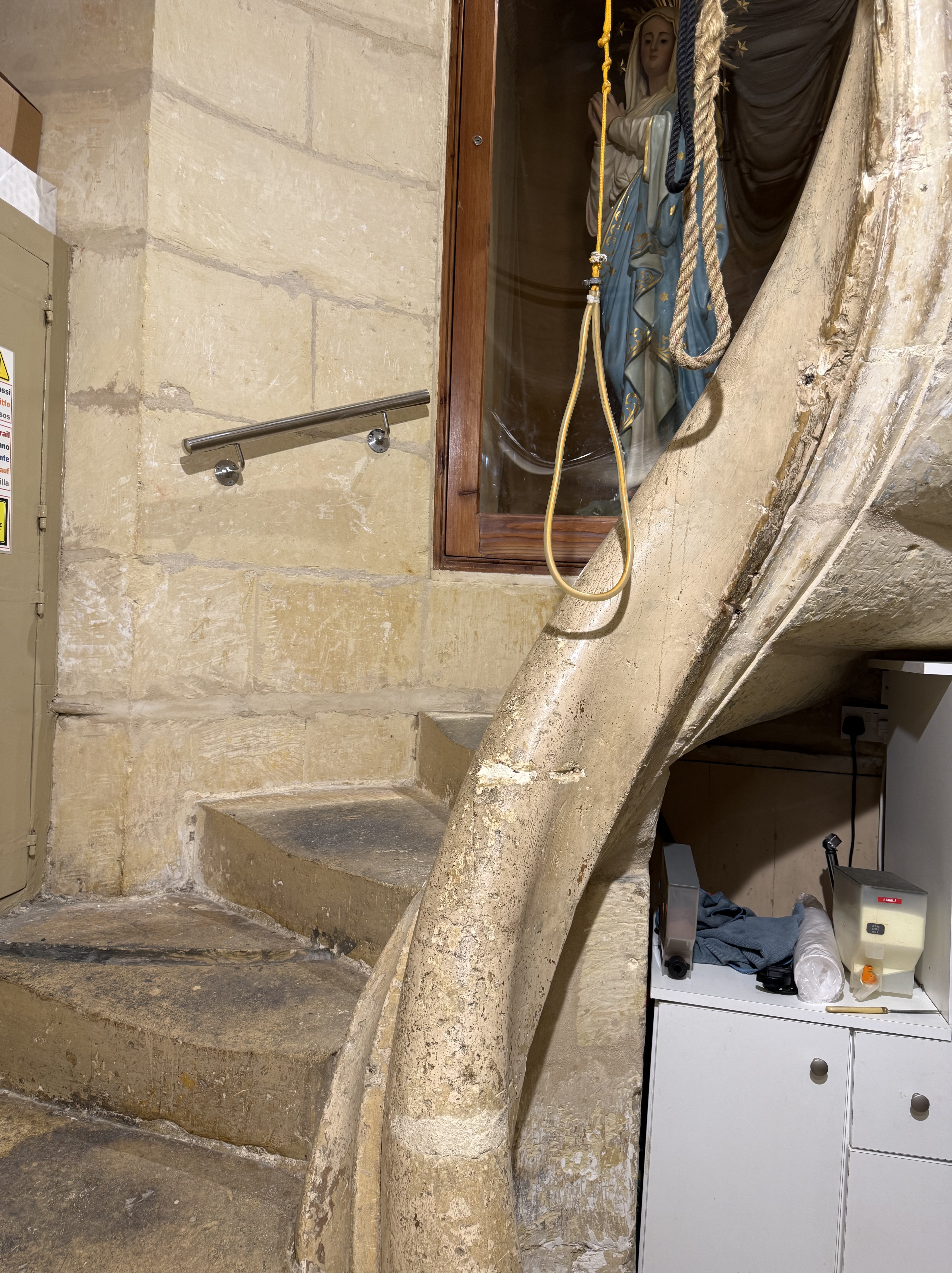
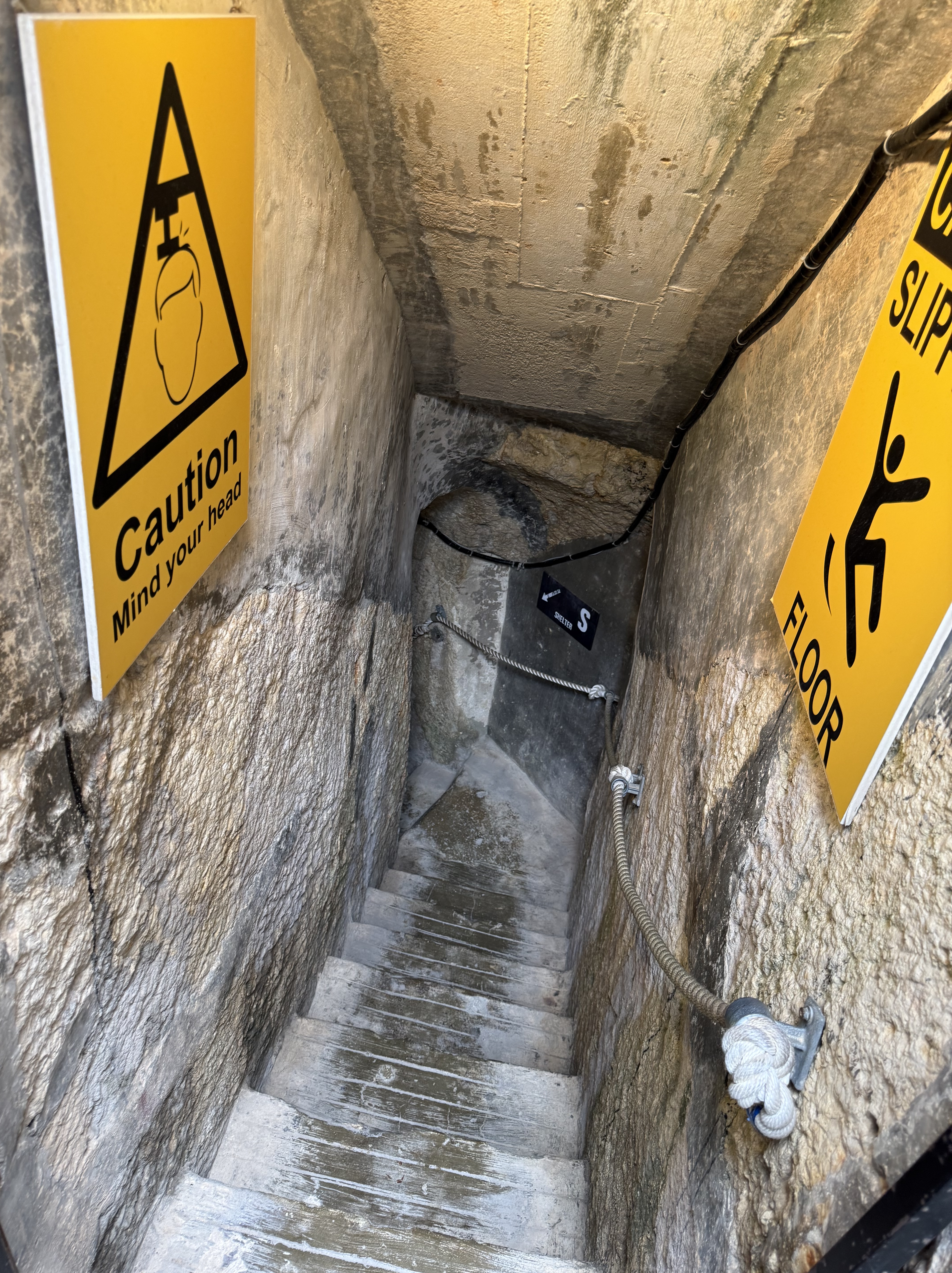
When you visit the church, you start your tour by climbing 78 stairs to the roof and a walkway around the inside of the dome. Then you take 78 steps down. After touring the inside of the church, you can visit the air raid shelter below. And guess what? More steps! I admit it was a challenge for this “lady of a certain age,” but I got it done. The air raid shelter was fascinating, and I now understand why some people were reluctant to use them. They are narrow and bleak, and during a raid were likely crowded. Sitting in that cave listening to the impact of the bombs had to have been terrifying.
Gozo
The island of Gozo is part of the country of Malta, reached by frequent ferries from the main island. It tends to be somewhat more rural and more relaxed than the main island. I took a guided tour that gave a great overview of the island.
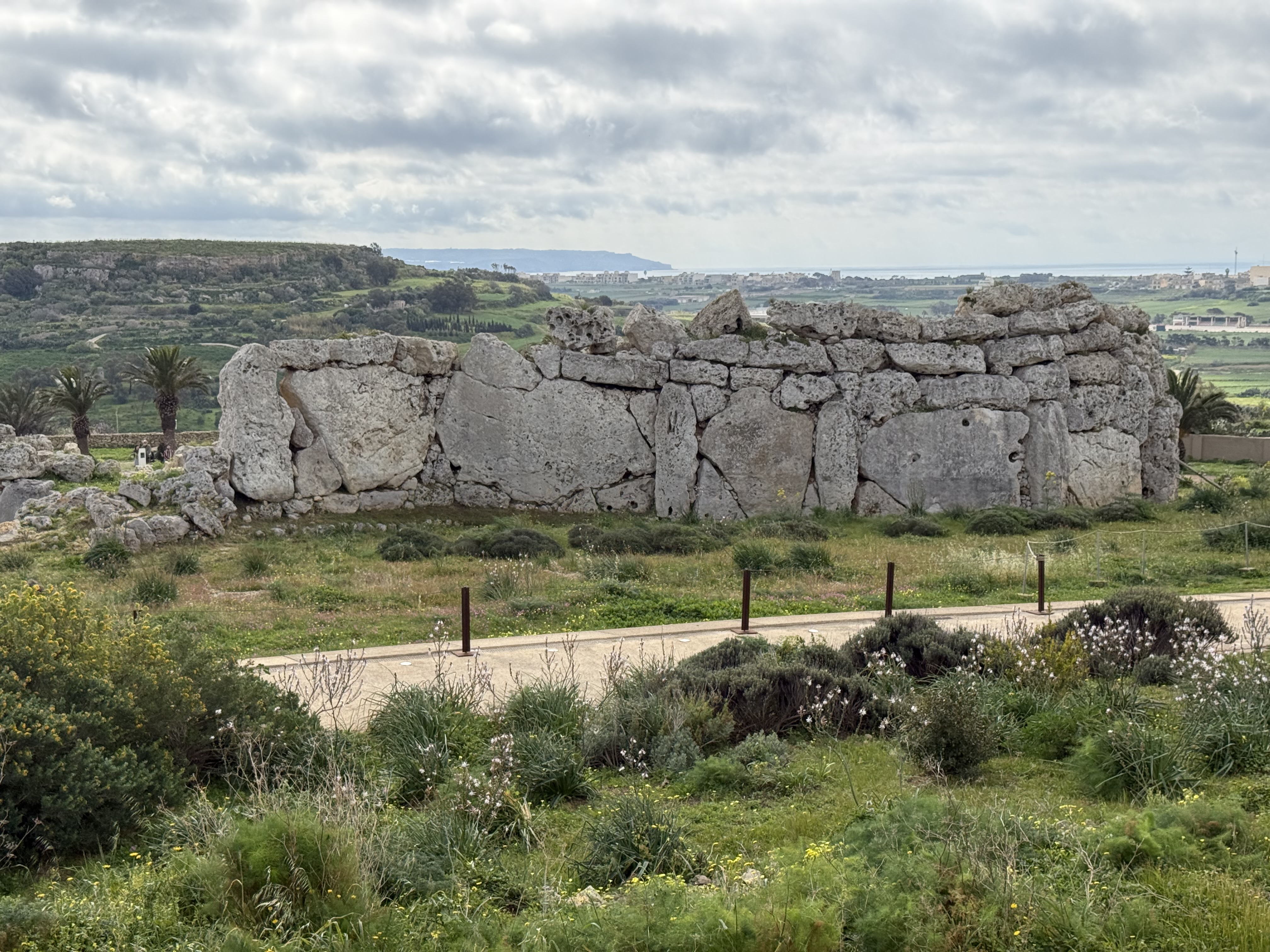
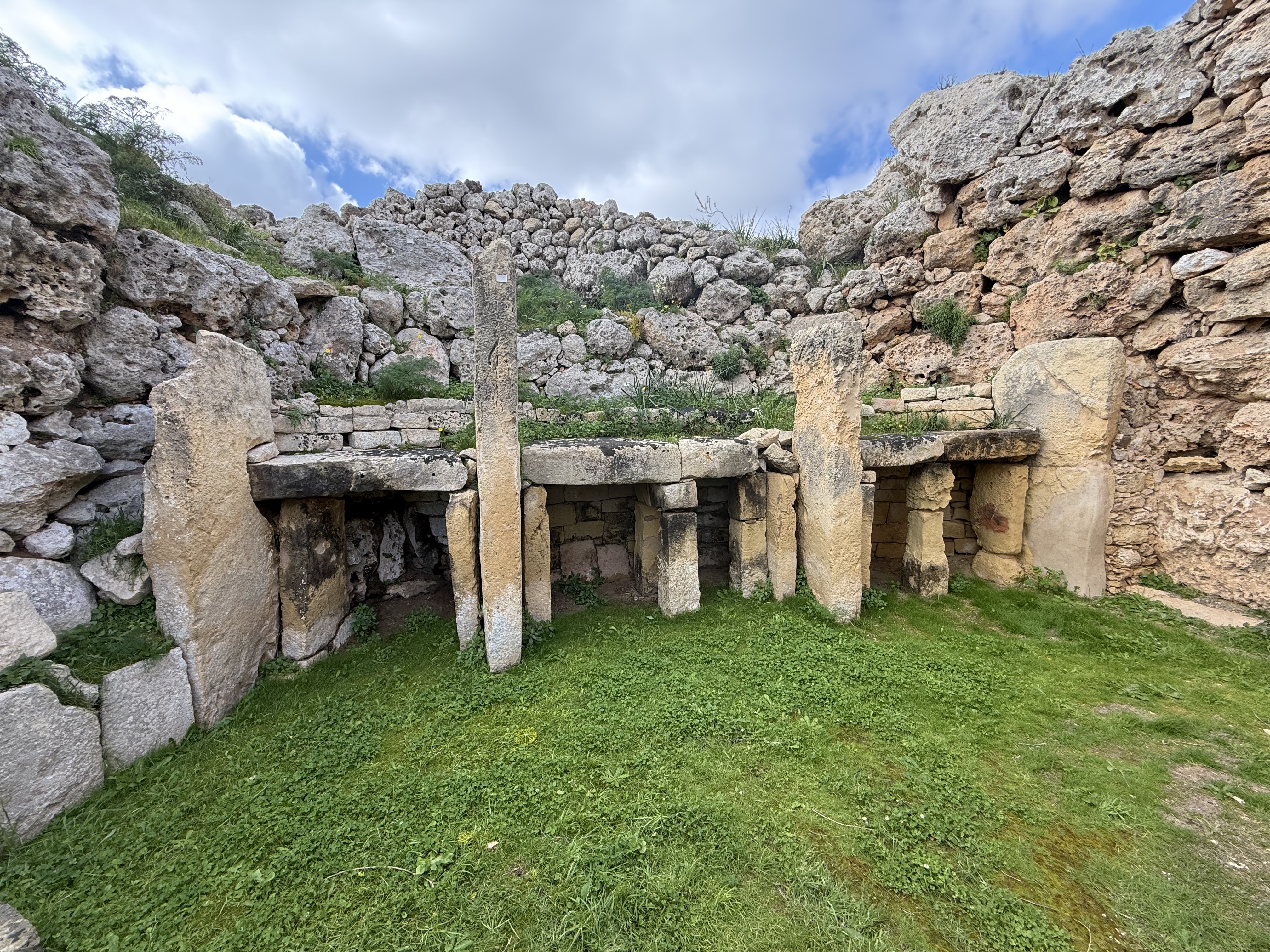
The focal point of the day was a visit to an ancient temple that has been dated to 5600 years ago. A visit to this world heritage site starts with a museum that explains the history of the site. Then you are able to walk to the stones and even enter the interior. The temples (there are two side by side) have survived millennia of weather, earthquakes, and raiders. In a couple of places you can see the remnants of the altars (above right.) I felt awed at standing in a place and taking in the idea that here, thousands of years ago, people came to this place to worship. And to appease those gods that kept causing earthquakes to topple the stones.
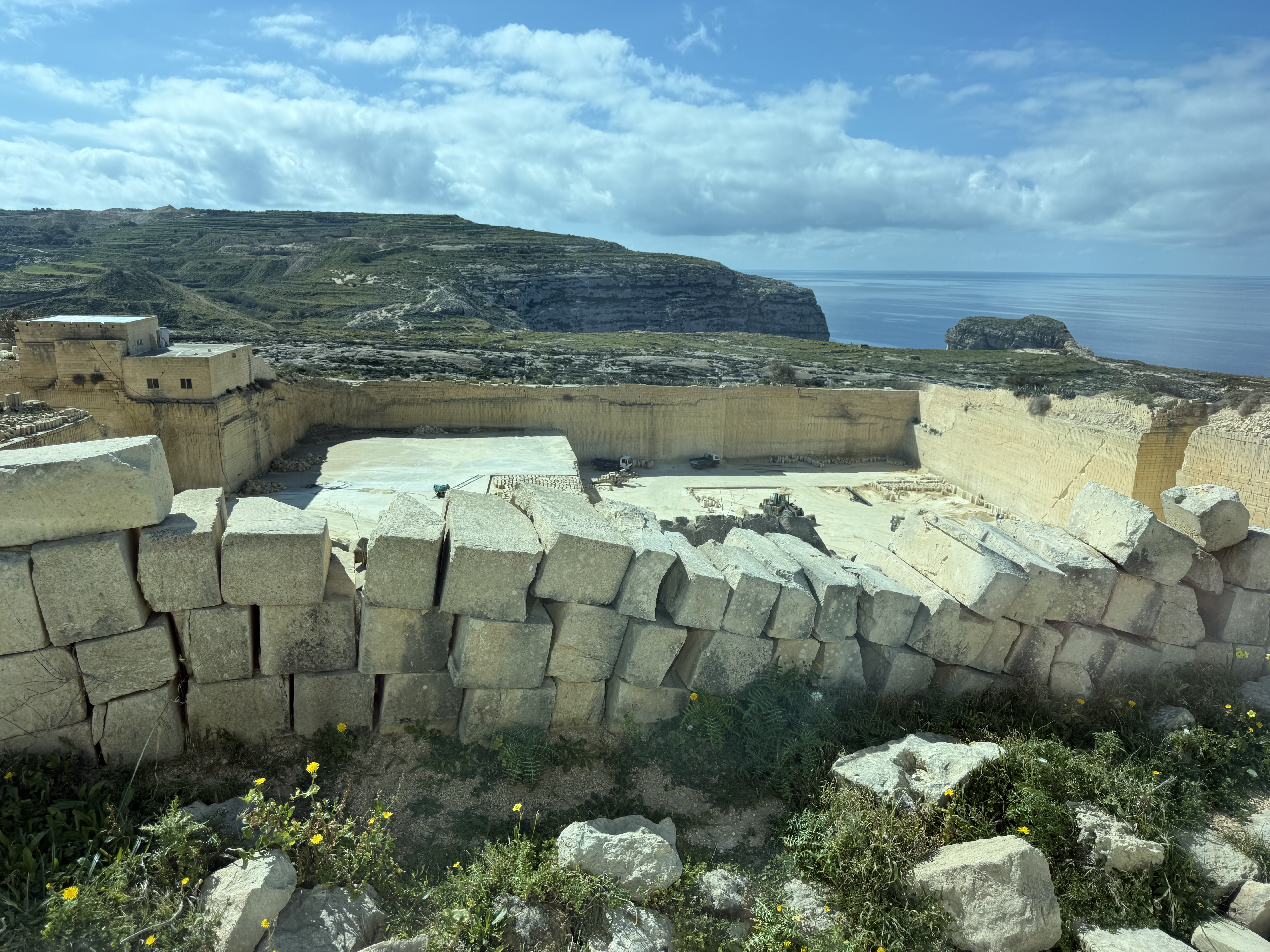
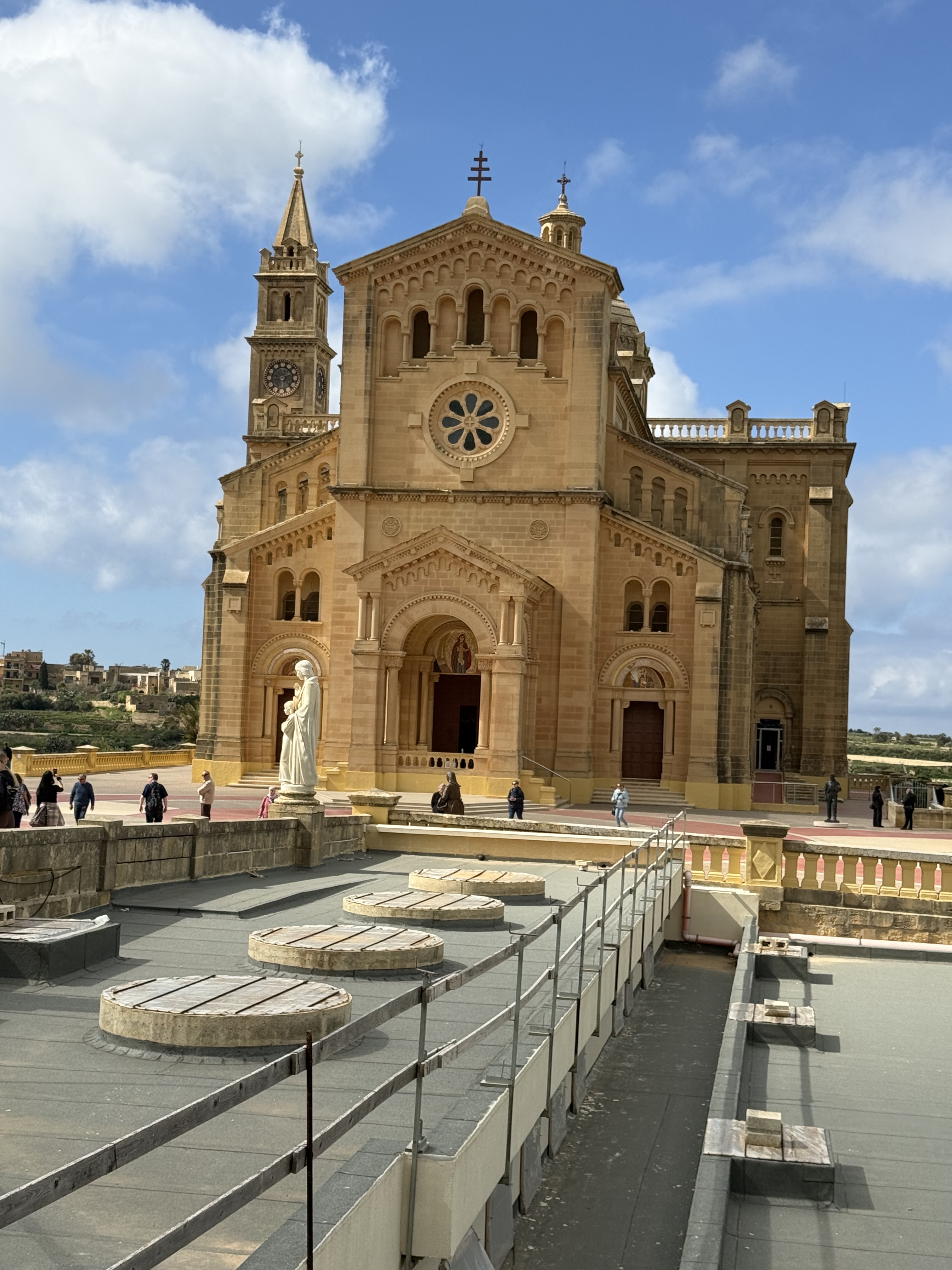
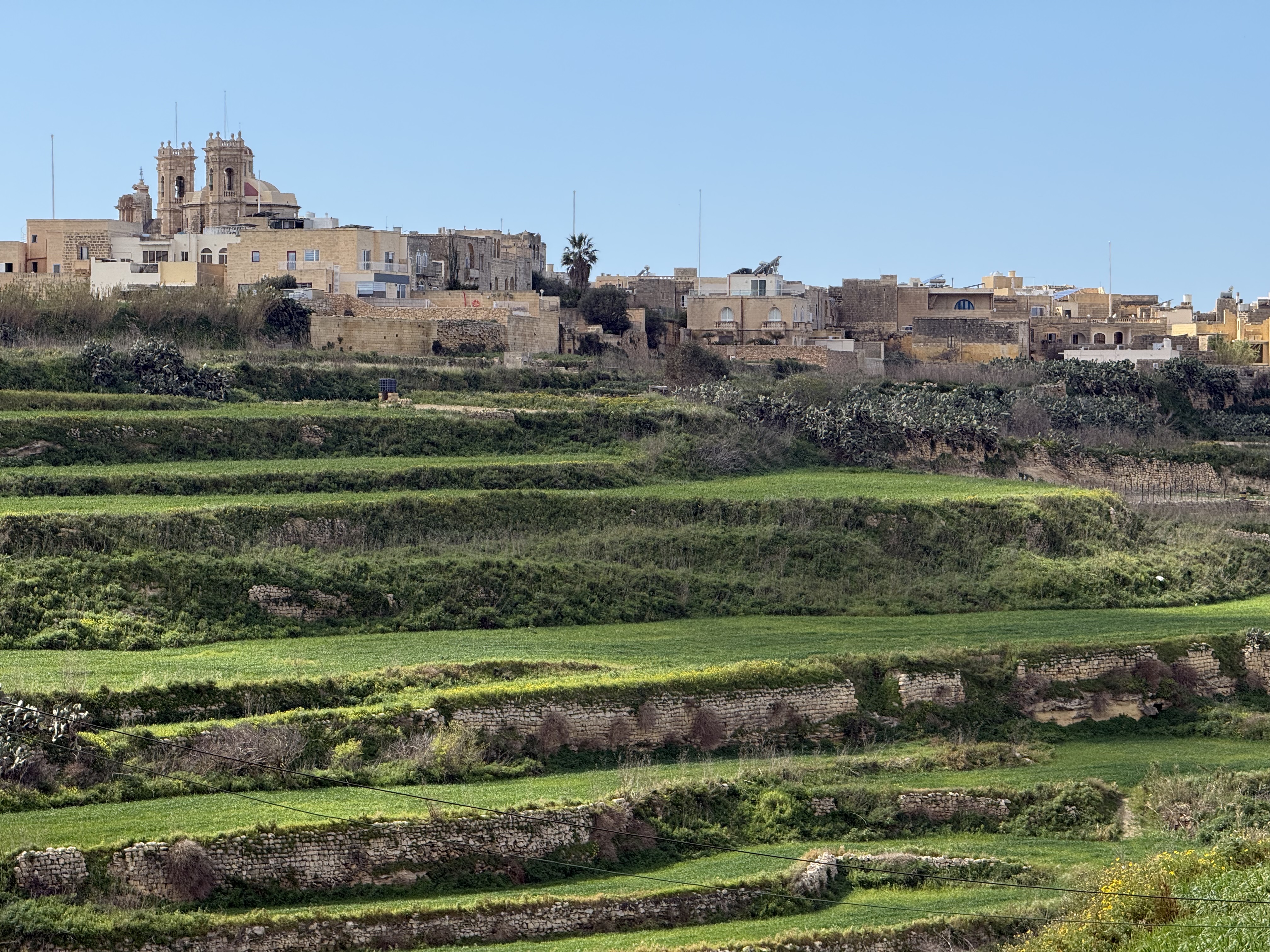
While exploring Gozo there were opportunities to see how the Maltese live. A limestone quarry was busy creating building blocks of the limestone used for building in Malta. Once the quarry is done producing, the quarry is filled with detritus, and then with soil, to make it arable land. Soil is at a premium on the islands, so farm fields are surrounded by rock walls to keep the soil from washing to the sea during storms. Those rock walls have no mortar; they are painstakingly fitted together so they will stand. That allows water to drain away while keeping the soil intact.
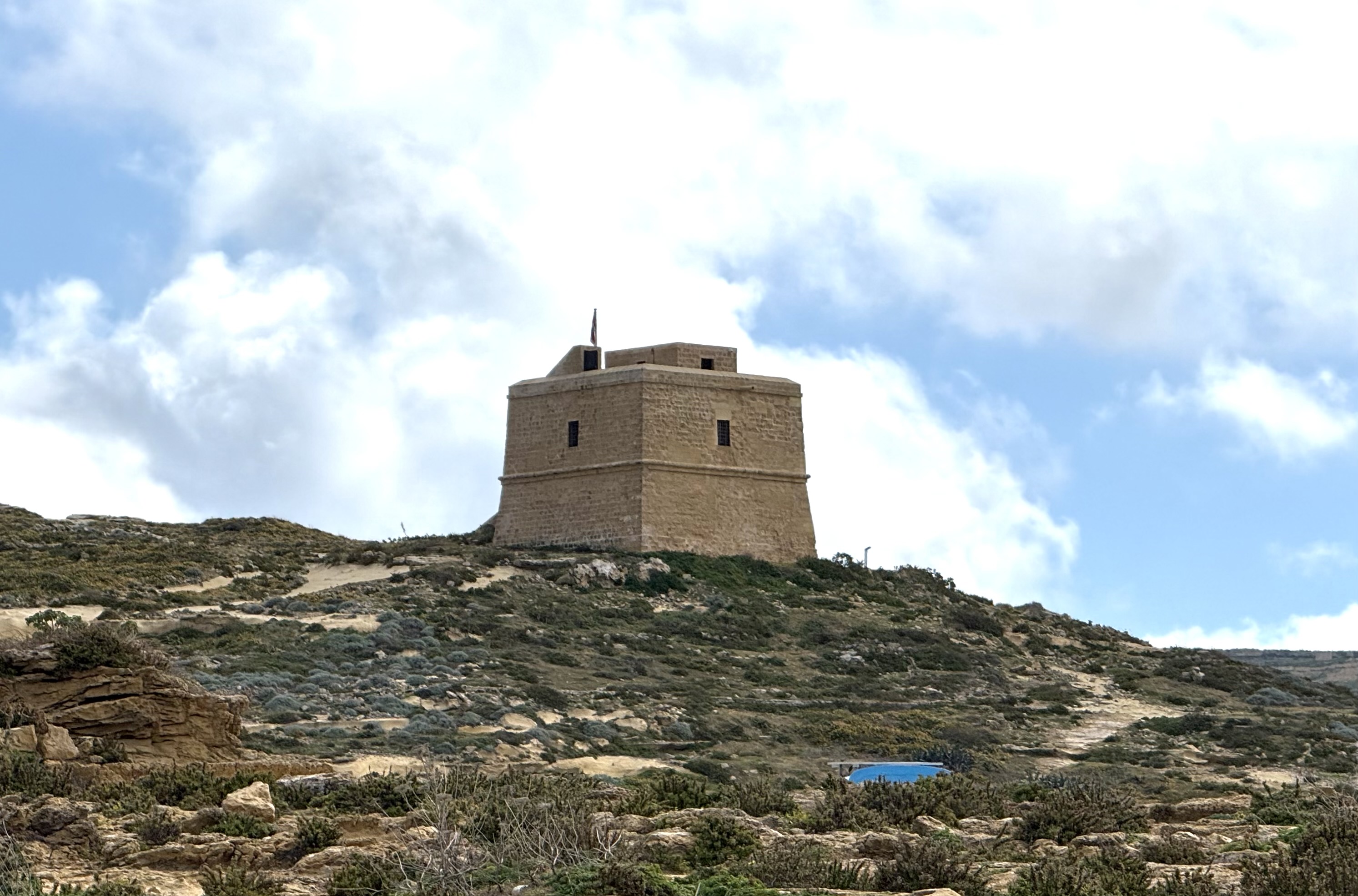
The photo of the watchtower above is only one of many I took. When the Knights of Malta arrived, they built a series of towers around the islands. All are within sight of another tower. In that way, those standing guard could light a fire to warn the rest of the island if potential raiders were sighted.
My tour of Gozo ended with time in the city of Victoria. There’s a lovely square with restaurants and shops where I had a great time purchasing gifts for friends and relatives and having conversations with local ladies who helped me decide on the perfect presents. While the cafes in the plaza were all very busy, I found a quiet rooftop restaurant (thank you, Apple Maps) that allowed me to sit above the fray and enjoy a spritzer while enjoying the view of the city. It meant climbing stairs up four flights, but well worth it.
Around Malta
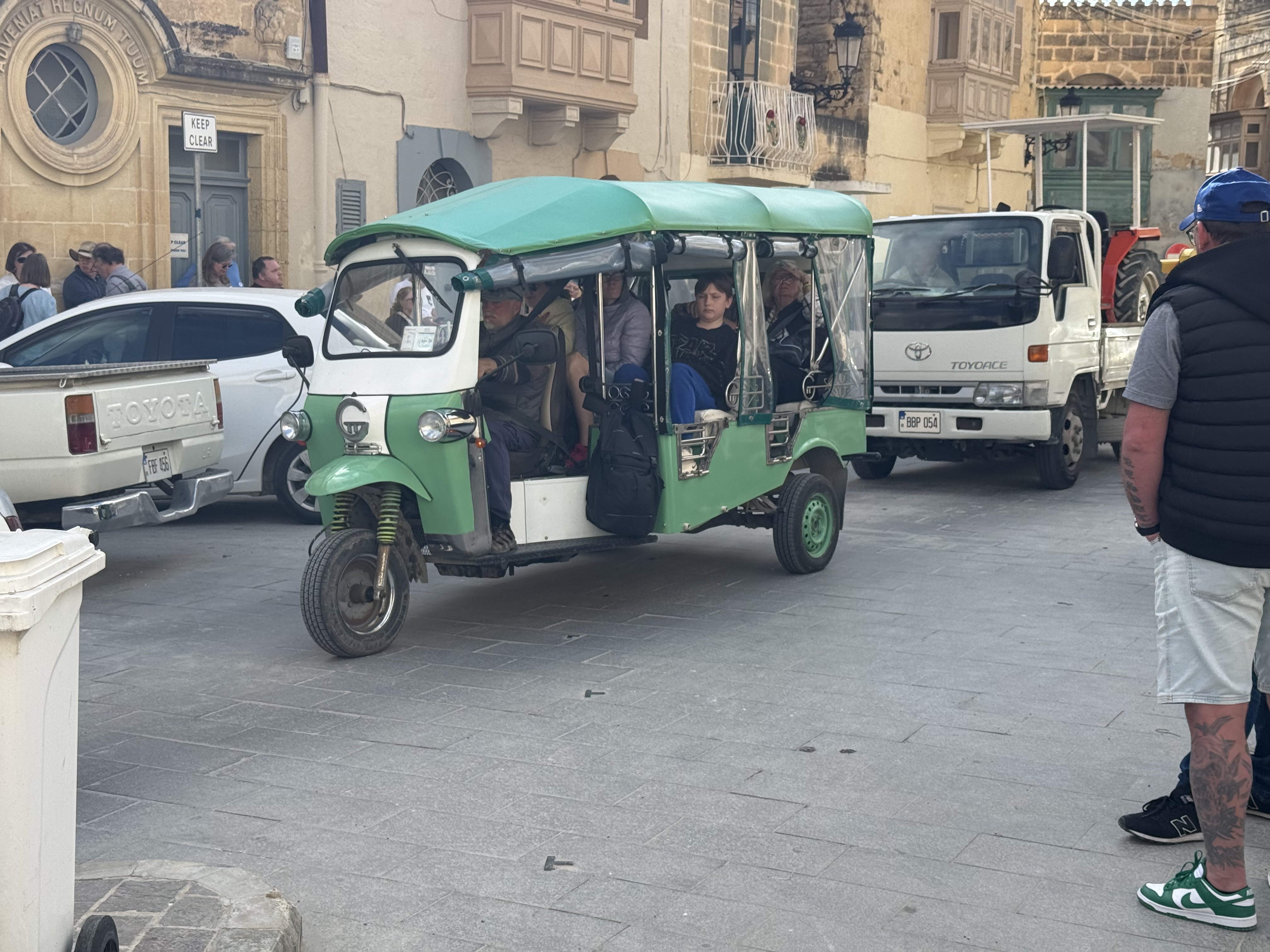
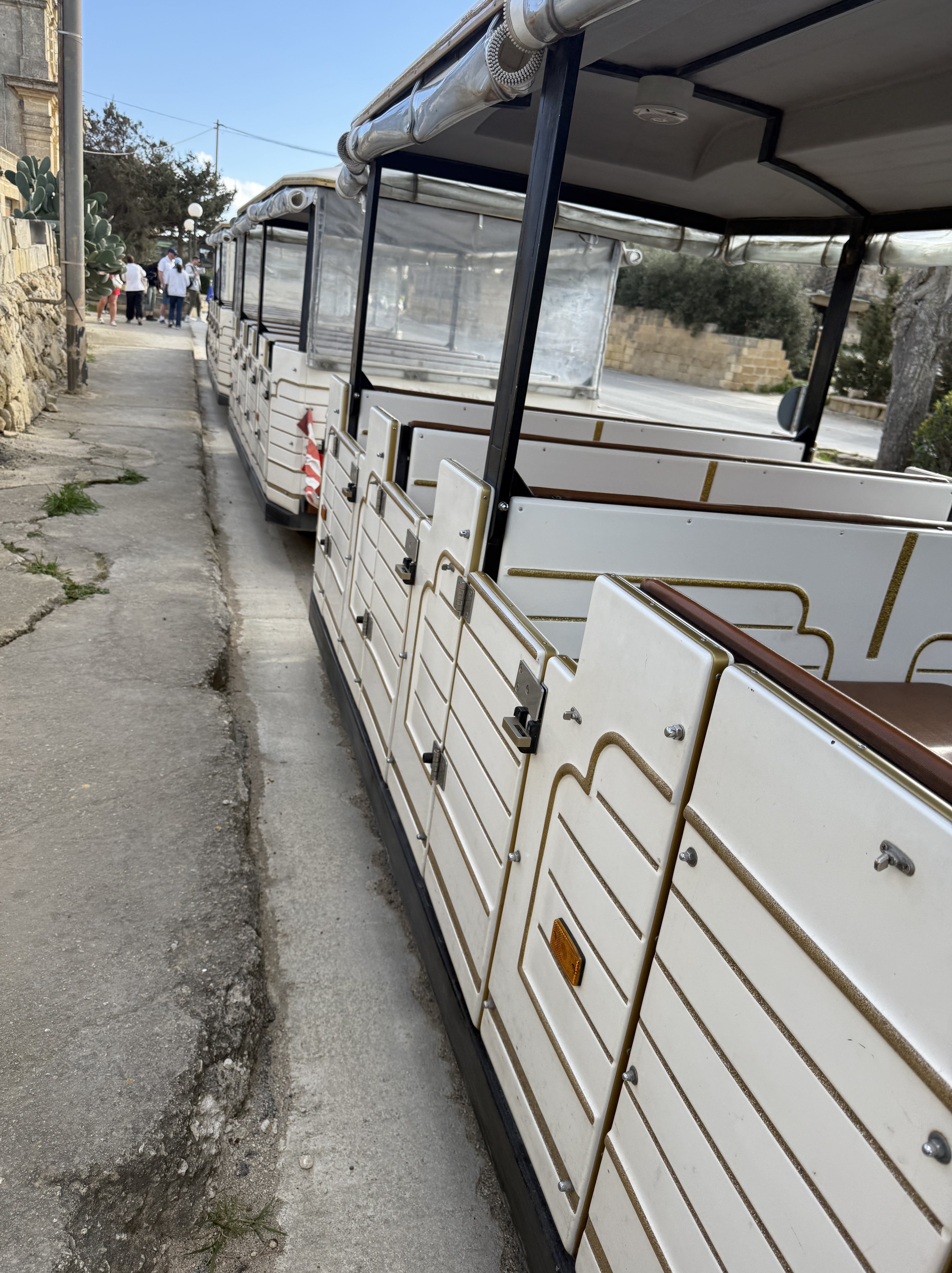
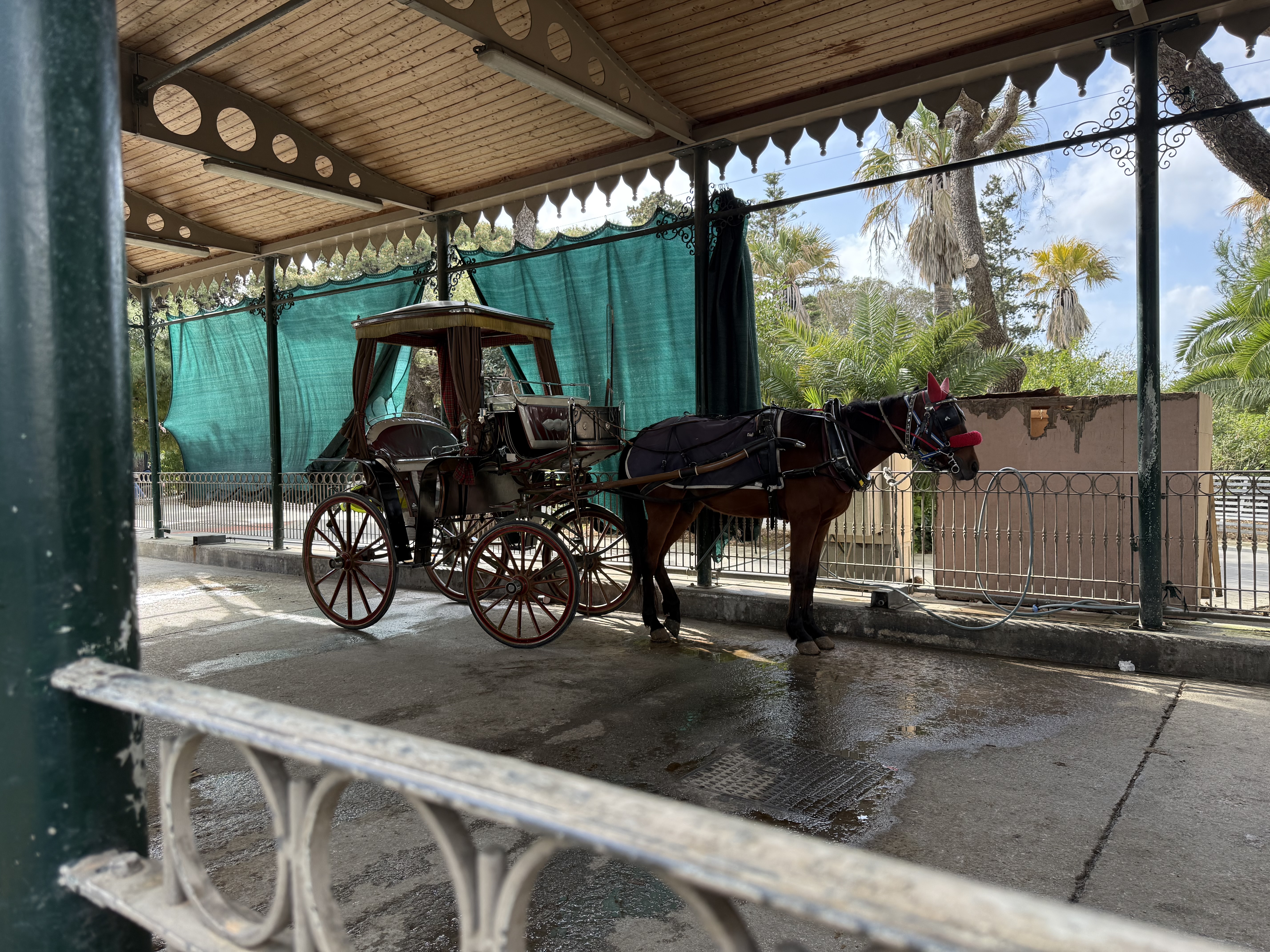
In previous posts I showed some interesting modes of transportation, and Malta is no different. Someone is always coming up with a way to entertain tourists and make a living at it. The open train above is a way of seeing some parts of Gozo unaccessible by car. Incidentally, I found myself admiring our bus driver in Gozo-he was navigating streets so narrow and winding I couldn’t imagine a full-size bus could ever fit. But it did. The horse and carriage are offered by drivers in Mdina, with the drivers giving commentary on the ride.
One sign I wanted to get a photos of, and was never able to find one at the right time, was a “Hedgehog Crossing” sign – and I saw several. In lieu of the sign, I give you the following:

As I traveled through the countryside, I saw many small farms and a good many vineyards. The Maltese produce some excellent wines, but not enough to export. So if you want to try them, you’ll just have to make the trip.
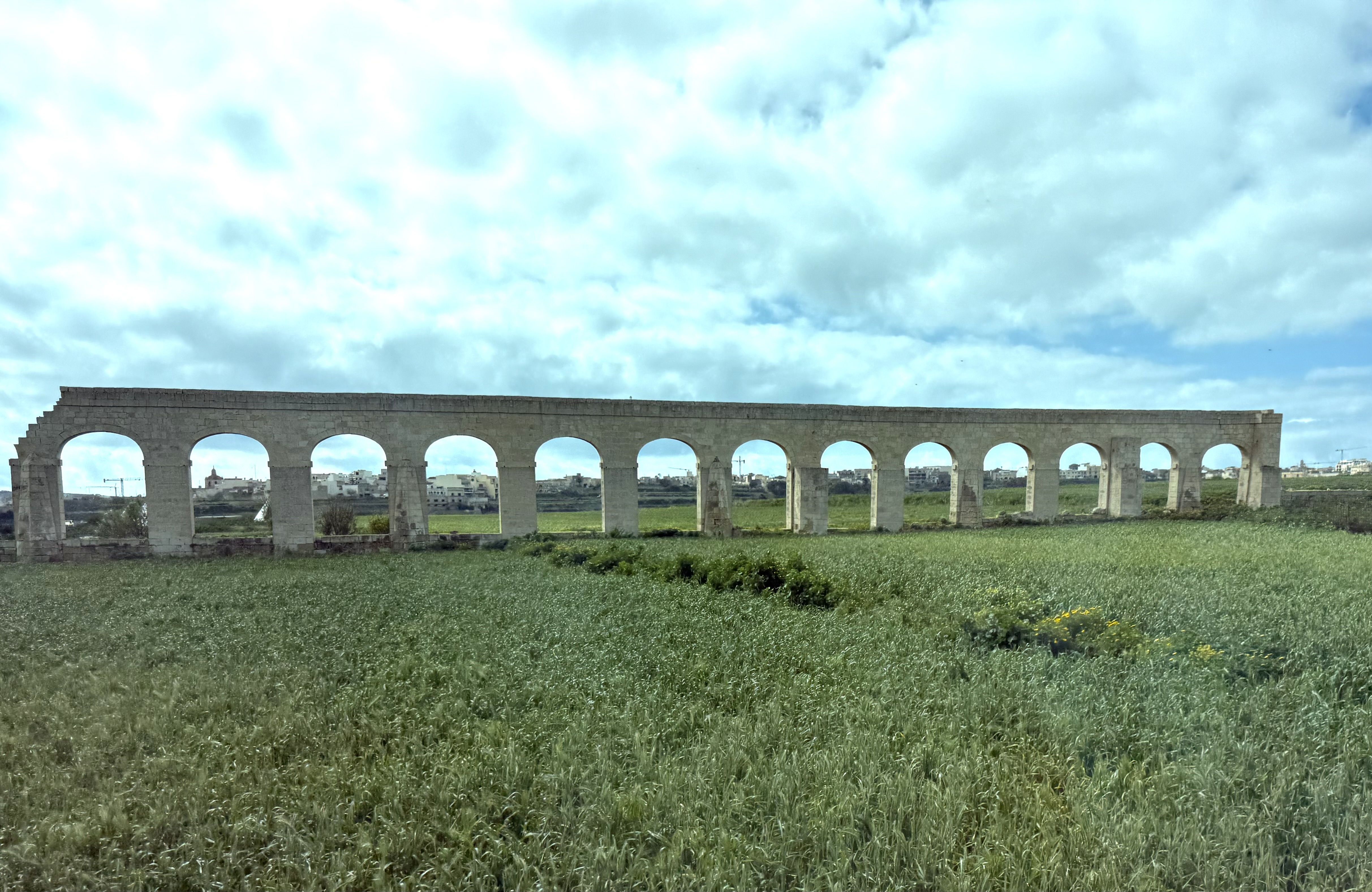
There was also evidence of many civilizations that have come to Malta. Aside from the ancient temples and the walled cities built by the Knights, the Romans left behind villas and aqueducts, and the British contributed wartime barracks and facilities. By the way, the British used that Roman aqueduct to carry vital water supplies during WWII.
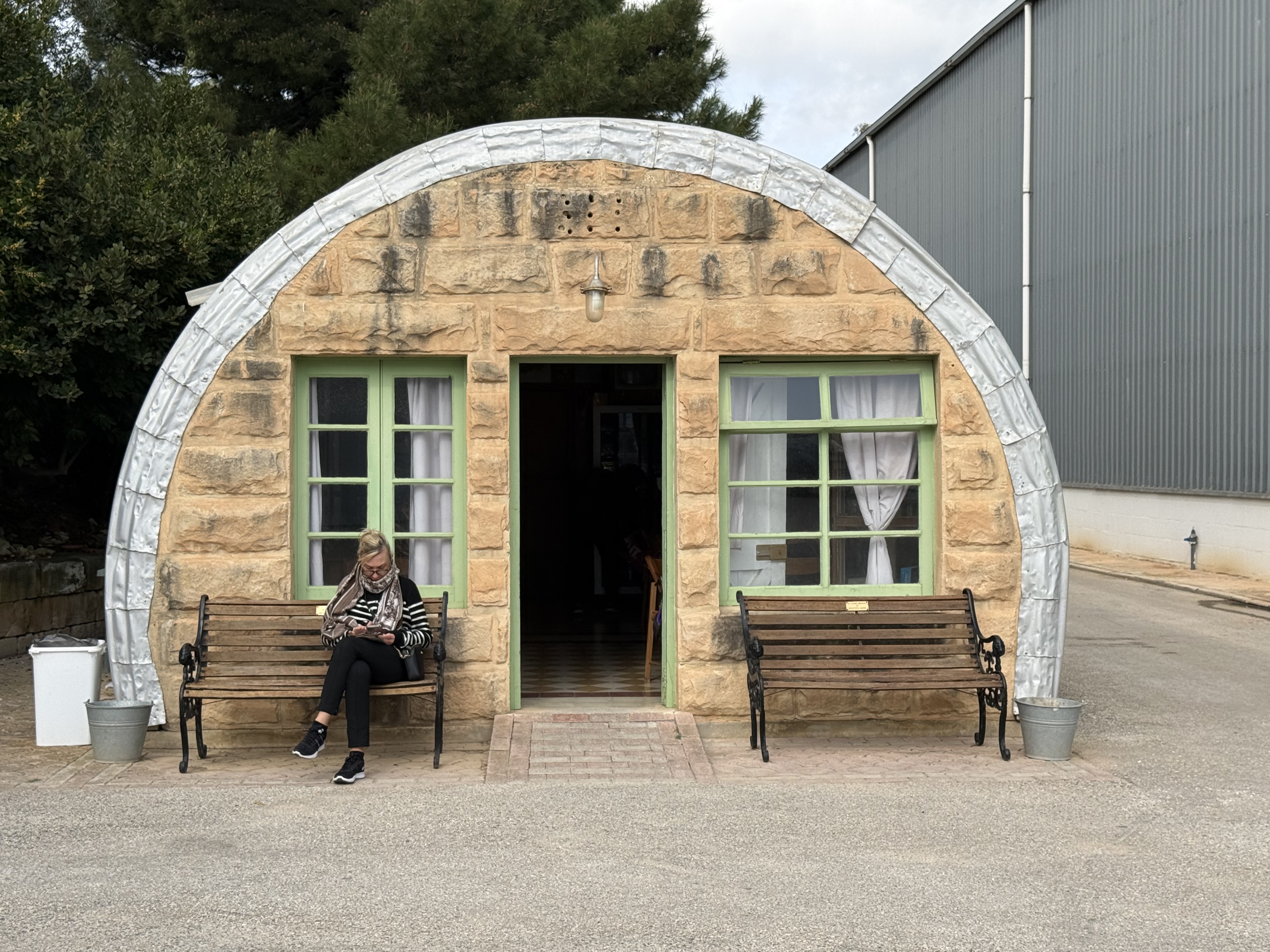
The quonset hut above is on the site of the Malta Aviation Museum. If you are interested in planes or in WWII, this is a great stop. Volunteers have been restoring planes and equipment, and their current project is restoring a Malta Sea Gladiator. Many of the planes in the museum were vital to the defense of Malta during the siege of WWII.
The View From My Window
While I did a lot of exploring on Malta, there was plenty of time to simply relax and enjoy the view from my apartment. With the storm the first few days, I watched the waves crash on the rocks below and planned my excursions. At one point I watched what I think was a sea rescue, with a helicopter lifting someone out of danger.
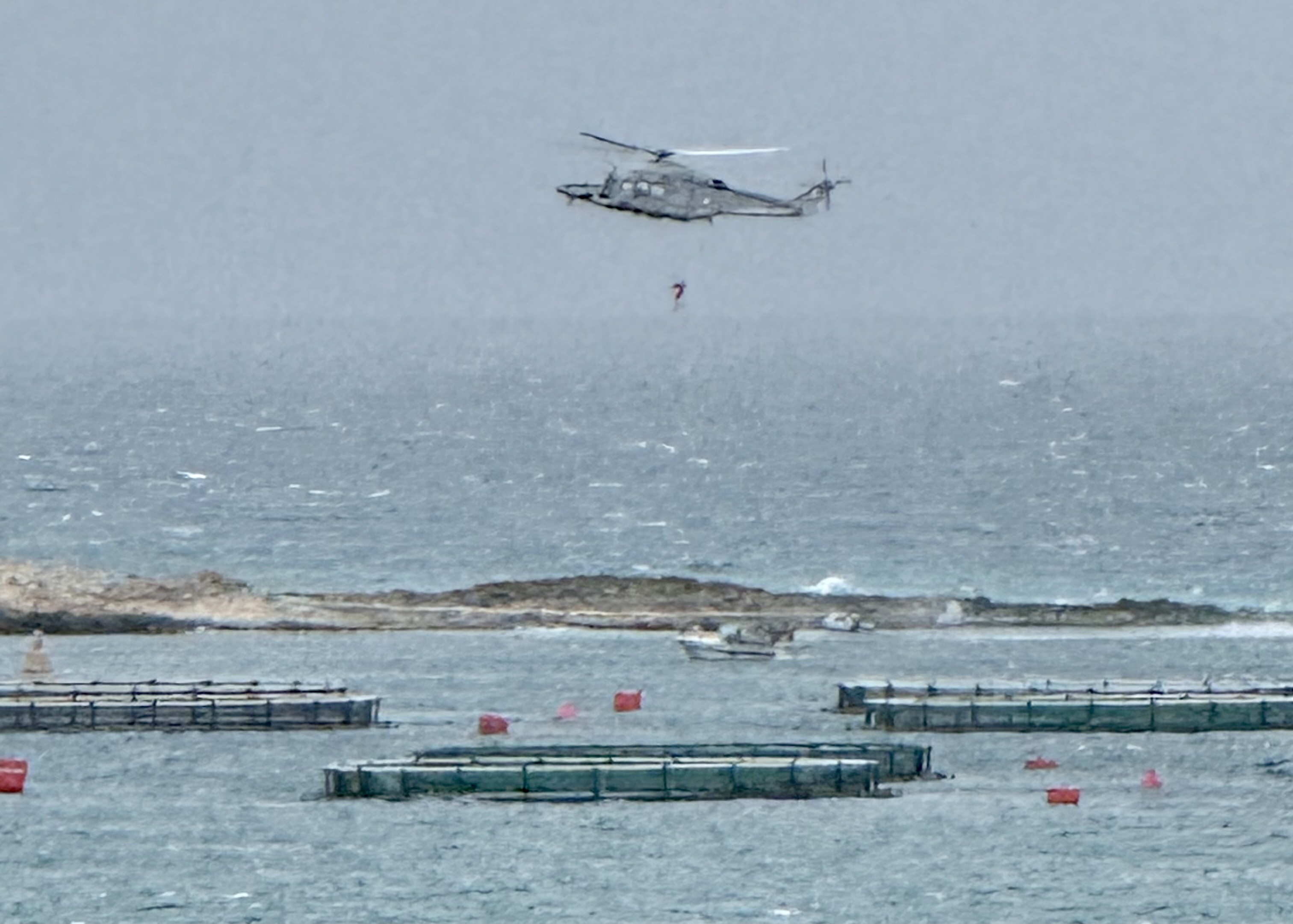
The strip of land in the photo is where legend says St. Paul was shipwrecked. After seeing the way the waves were crashing, I can understand why. The structures in the bottom of the photo are fish farms.
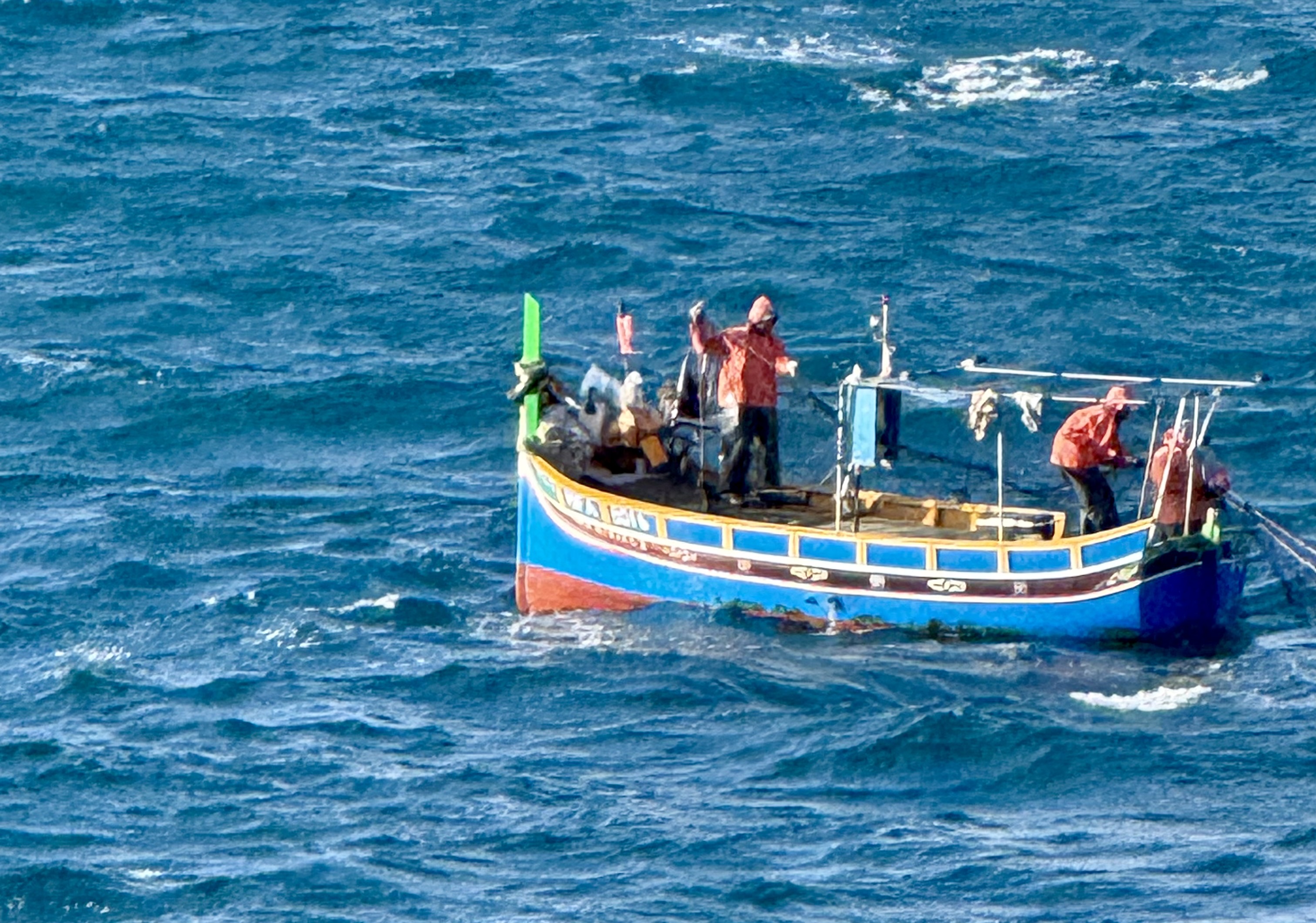
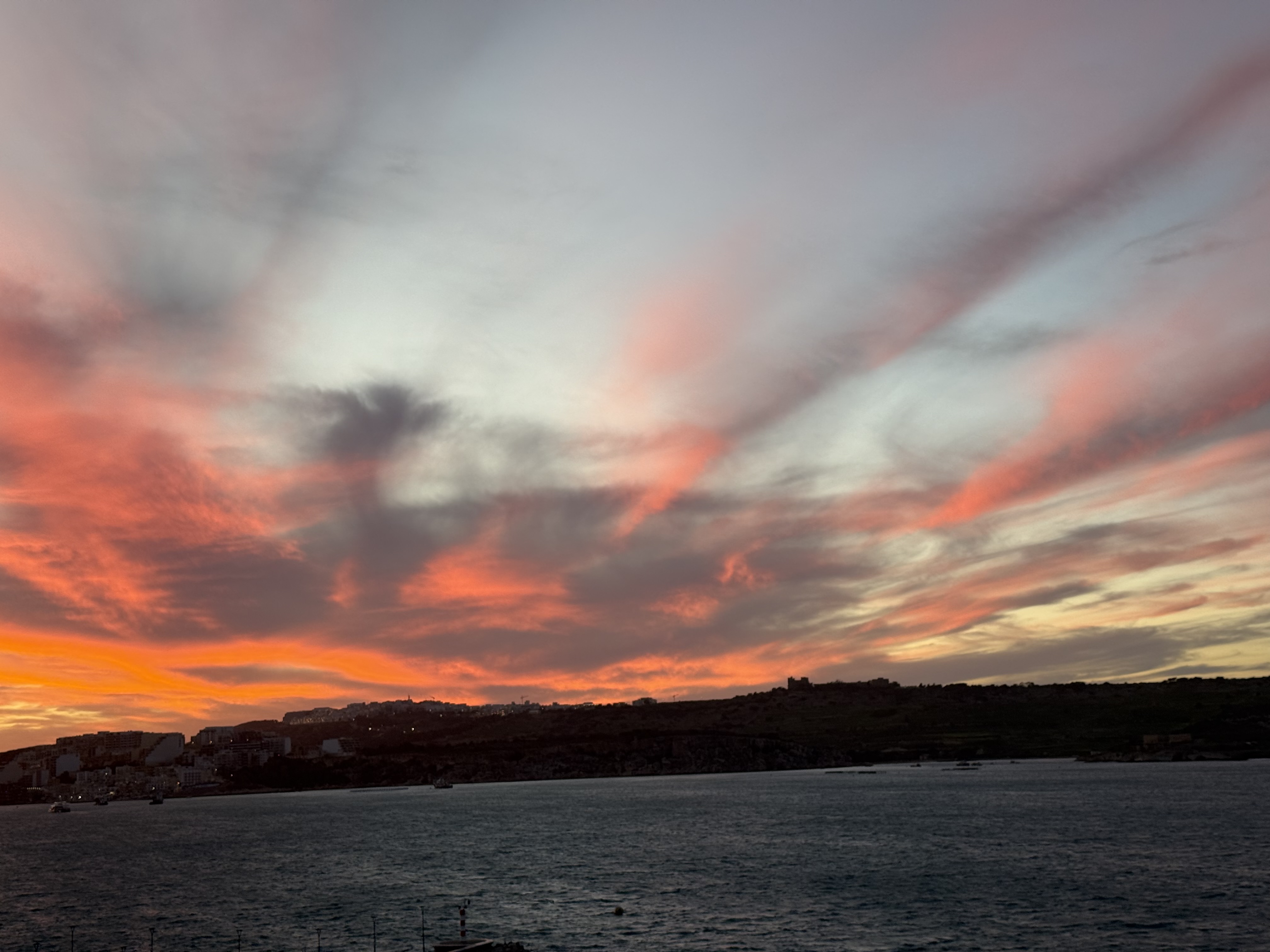
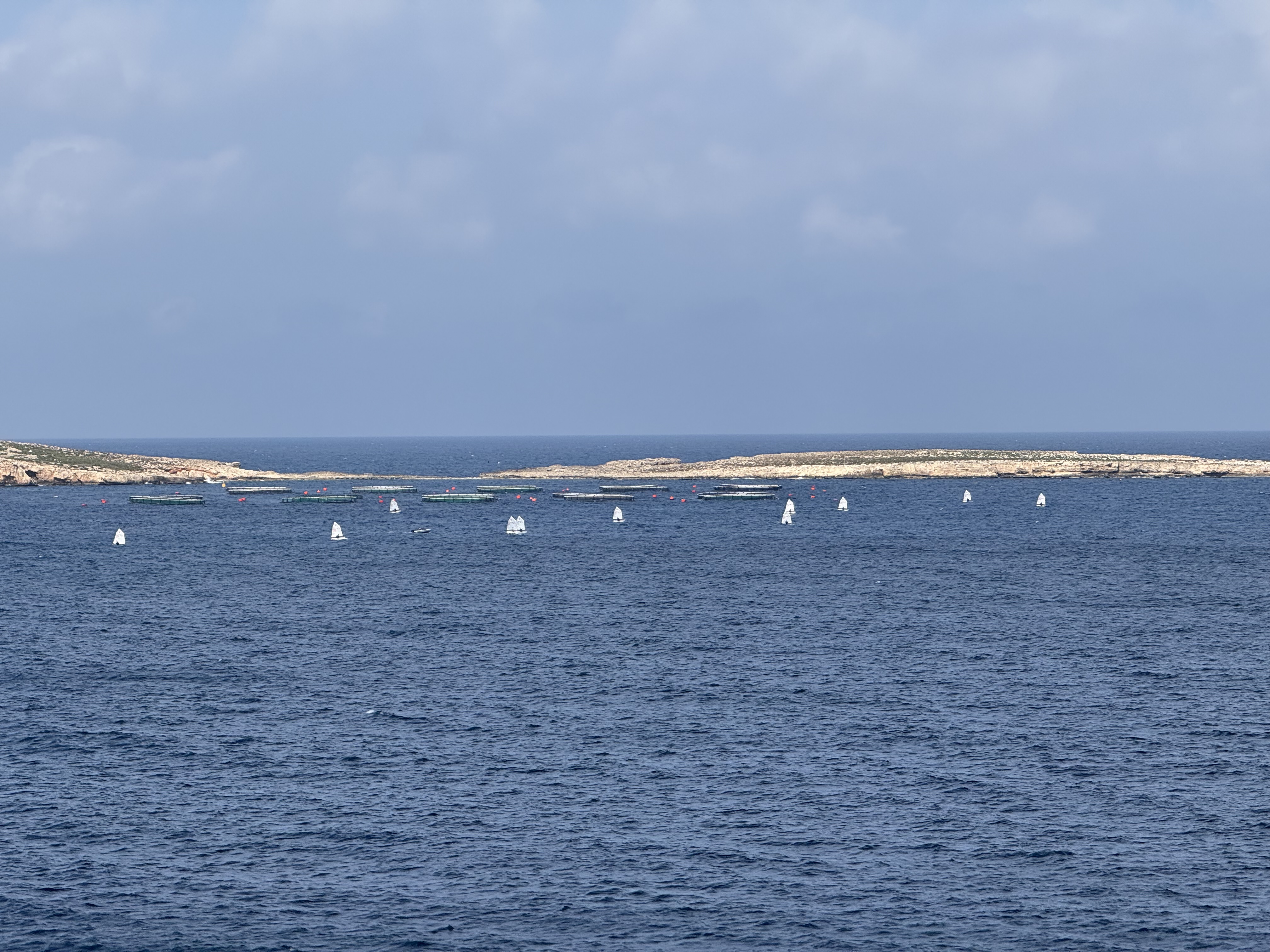
Each day brought something interesting to watch from my balcony. In calmer seas there were usually fishing boats putting out their nets, or sailboats in the bay. The sunsets were always lovely and didn’t last long enough. I often just sat and watched the birds fishing. They would fly back and forth, and suddenly rise up and dive straight down to grab the fish they saw under the water.
I loved my time in Malta, and I found the month I spent there to be a perfect mix of activity, learning, and relaxing. The people I met were all welcoming. Communication was easy, since the country has two official languages: Maltese and English. Prices, at least in the spring season, were reasonable. Malta has a major airport (my flight in came from Dubai and my flight out was to London) and it’s also easy to get there by ferry from Italy. Would I go back? Absolutely!
 Travels with Billie