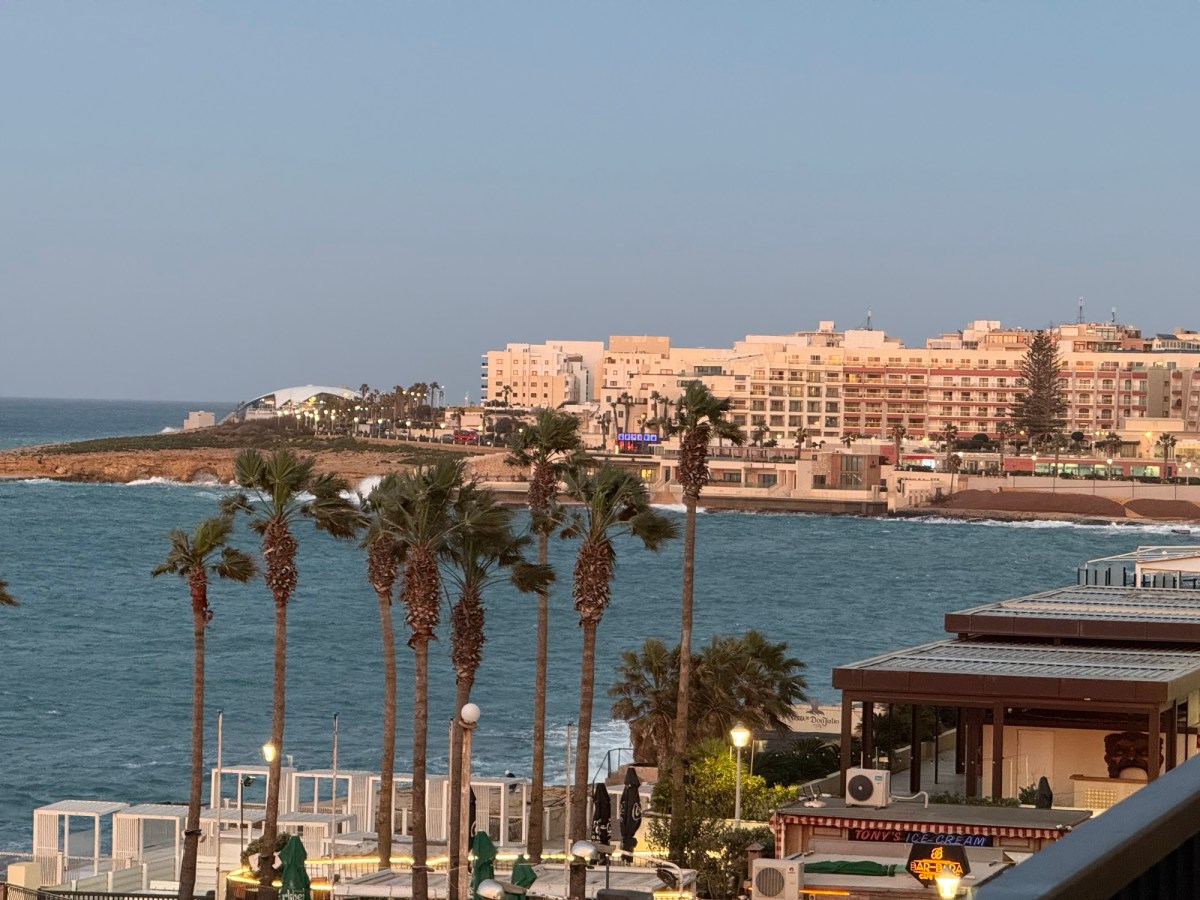
One of my favorite travel hacks is to spend time in a destination. Not just to collect photos of the iconic tourist sites, but to allow time to get to know the locals and their way of life. When you spend a day or two in one place, all you get is a snapshot (literally) of what it’s really like. Spend several days and you begin to get a feel for what life is really like there. The second or third time you walk into the local coffee shop they begin to recognize you, and you start to feel like part of the community. On this trip, I found two restaurants and a coffee shop that began to treat me like an old friend. How I love being greeted with the European kiss on both cheeks!
I decided to stay a month in Malta when I realized prices in the off season were very reasonable, and by booking a full month they were even better. I found a wonderful apartment with a balcony overlooking the Mediterranean Sea. That meant I could sample the local restaurants, or stay in and make use of the kitchen. And the apartment was less costly than renting an apartment in my home town. Since I currently don’t have an actual address, this was cheaper than staying home!
First Impressions
I’ve never been to Malta before, and while I did some research ahead of time, you can never really know what it’s like until you’re there in person. As my flight approached the airport, I caught a glimpse of Valletta and Fort St. Elmo, both of which I knew played an important part in the siege of Malta in the 16th century. There are fortified walls and a jumble of buildings, nearly all the color of the limestone that makes up the very foundation of the island.
Malta and the neighboring island of Gozo are both made of limestone. Unlike many islands around the world that were built by volcanic activity, these islands originated under the sea. It makes me think of the legend of the great earthquake that caused the city of Atlantis. While that one sank, these islands rose. Malta has been inhabited for millennia-there are temples that date back to 4000 years BC. While it was once covered with trees, the Phoenecians cleared most of them for use in shipbuilding. That left only the limestone for building material. As a result, it gives the entire island a decidedly beige hue.
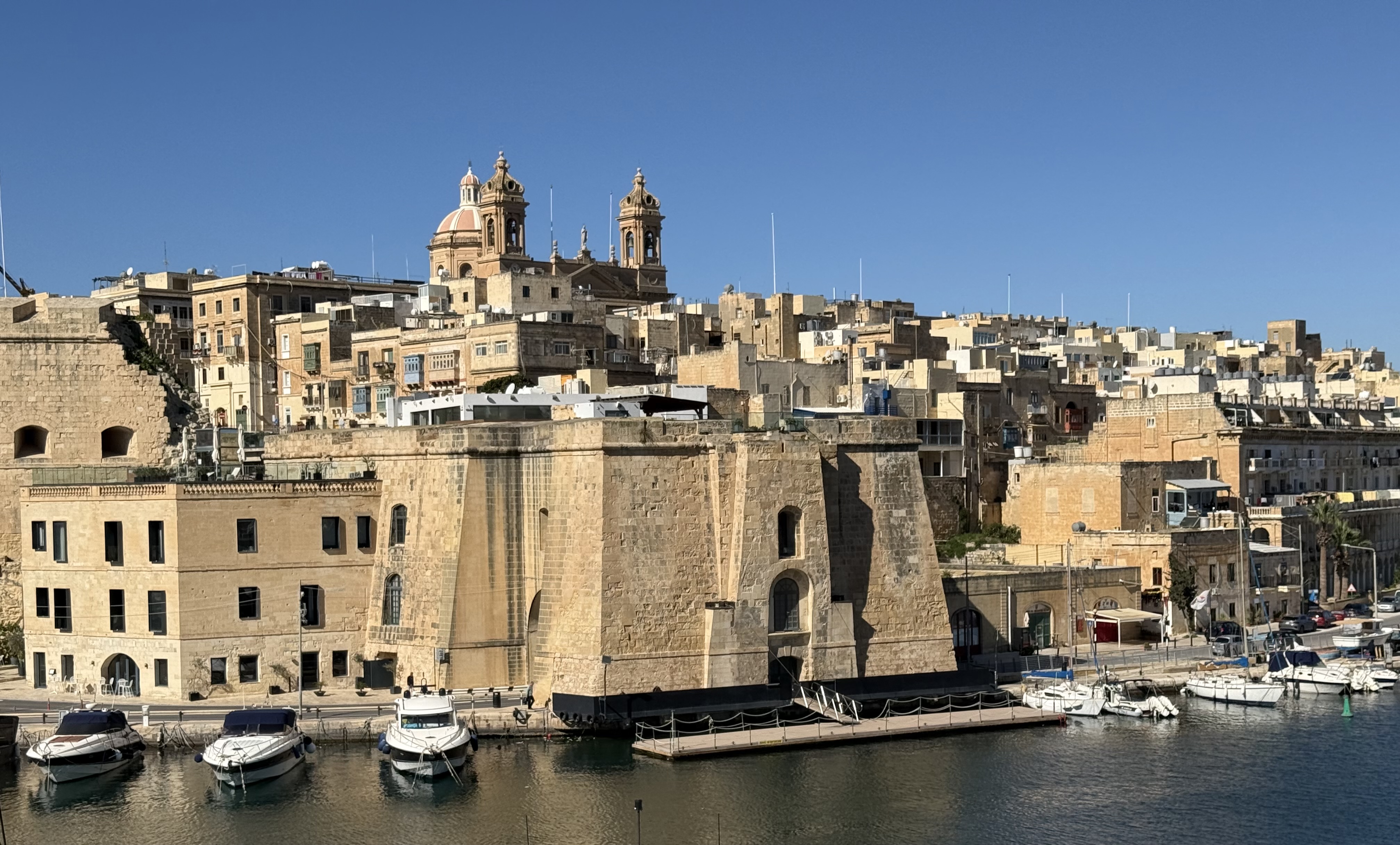
This view of Valletta shows the limestone colors.
Because the island has limited space and has been inhabited for so long (something like 8000 years!), the cities and towns are a jumble of roads and buildings, most of which have been there for hundreds of years. It’s not unusual to be walking along a narrow street that was built in the 1500s, barely wide enough for a car, only to find yourself stepping to the side to allow a car to pass! It’s a real demonstration of history and modern life coming together.
I immediately learned that walking through the streets of my neighborhood could be a challenge. Nothing is in a straight line, and the sidewalks are only wide enough for one person. And calling them a sidewalk is generous. They are bricks that have been patched and broken and raised and lowered over the decades. I found the local grocery store only by using the map app on my phone. Because of the growing influx of tourists and expats, there is a lot of construction going on. Slowly, slowly, the uneven and broken pathways are being replaced with new brickwork, and the infrastructure is being modernized. Oh, and hotels. There are new hotels and apartments going up everywhere.
This is a small island, only about 7 miles wide and 28 miles long. Because of that, resources are limited. Electricity and water are expensive, and in the cities buildings are close and becoming taller. I noticed that while many people have dogs, just like in the USA, those dogs are smaller. It makes me smile to see big burly fellows walking along with a dog about the size of a small teddy bear.
I learned right away to get rid of my assumptions. What I thought was an abandoned construction site across the street and next to the sea – there were clearly squares in the rock – turned out to be ancient salt pans, where the sea was used to collect and dry salt for use. What I thought was another unused lot was actually a bocce field, complete with Italian restaurant and spectator seating.
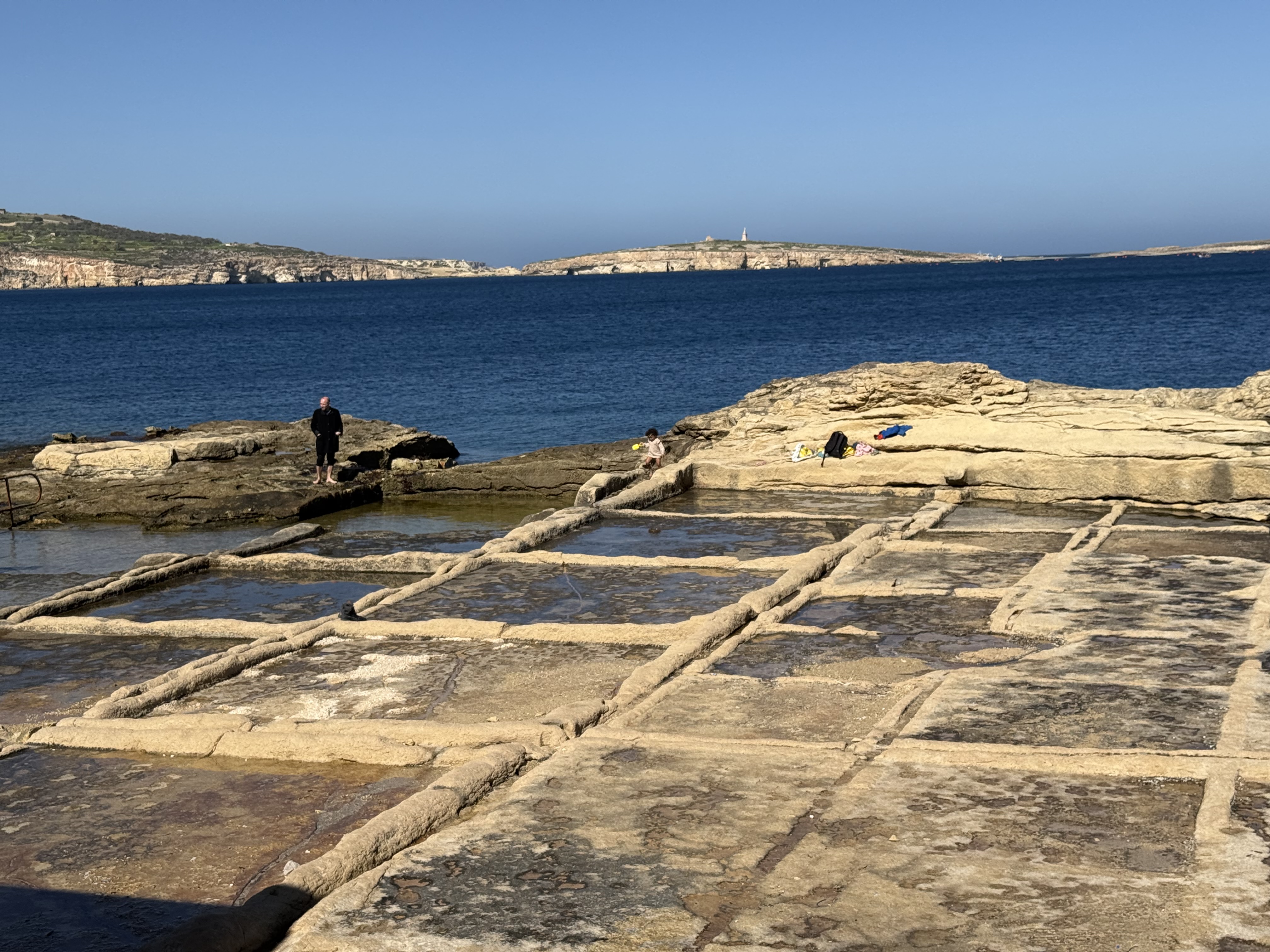
A view of the salt pans from my balcony. And the island beyond is where St. Paul was shipwrecked 2000 years ago.
These are just my first impressions. During my stay I’ve done several excursions around the islands of Malta and Gozo, and every one was an exceptional adventure. In coming posts I’ll share photos and information on all the places I was able to visit. There are churches and ancient temples, museums and walled cities, catacombs and air raid shelters. I’ll share them all with you, dear reader!
 Travels with Billie